

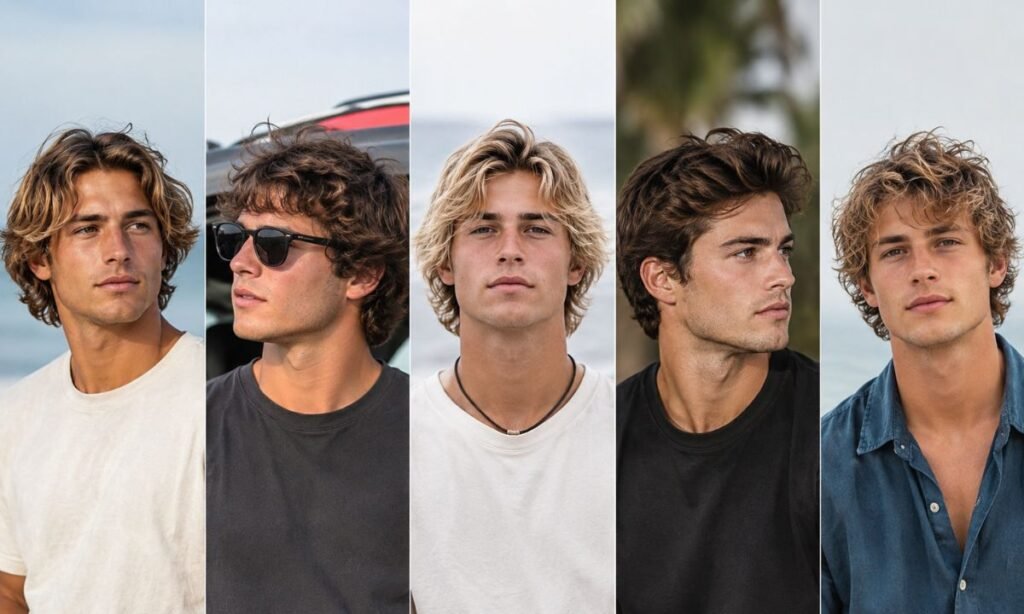
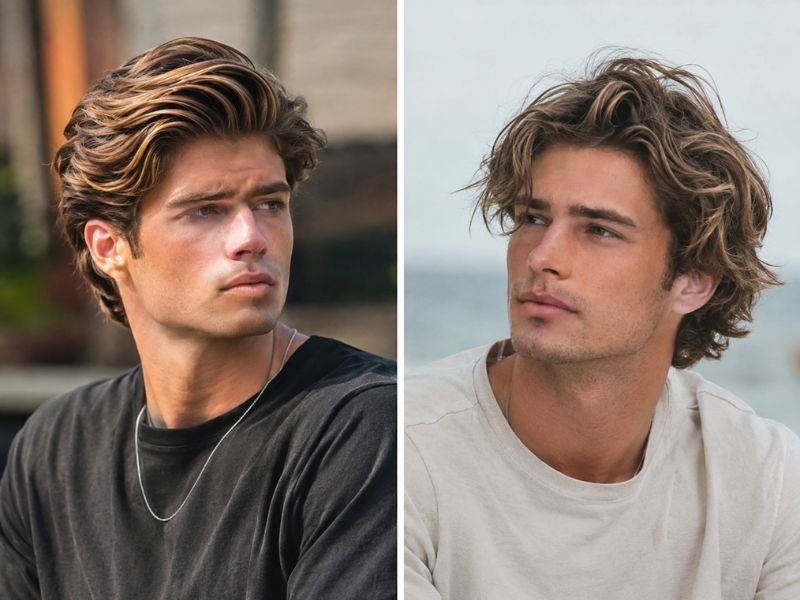
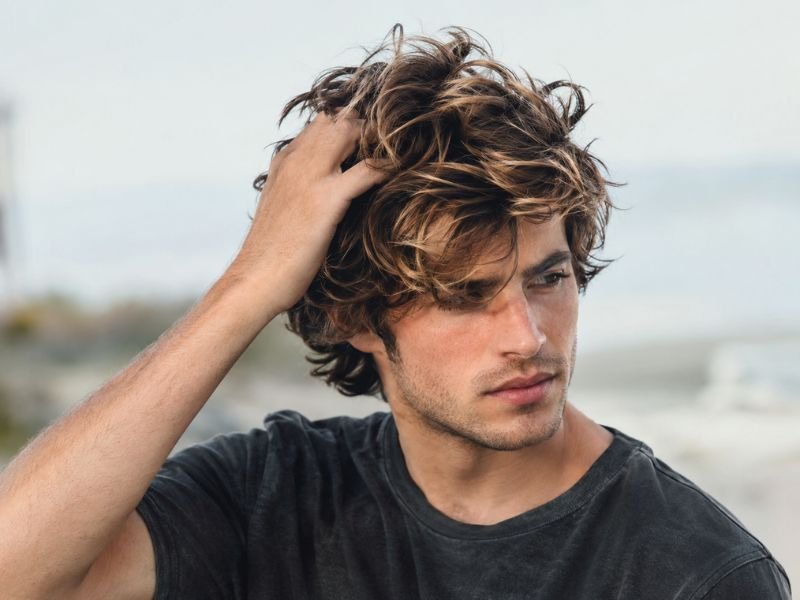
Surfer haircut styles are built around one idea: textured, tousled hair that looks like it dried naturally in the wind, not like it came from a blow-dryer. The defining traits are choppy layers, a matte (never shiny) finish, and just enough movement to look effortless rather than messy on purpose.
In this guide, you’ll find 24 surfer haircut styles for every hair type and length, a step-by-step home styling routine, which face shapes suit which cut, how surfer hair compares to other popular men’s haircuts, and the mistakes that make this style look sloppy instead of intentional.
At a Glance: Surfer Haircut Styles
| Detail | Quick Answer |
| Best hair length | 4 to 8 inches on top (shorter crops to shoulder-length) |
| Best hair texture | Natural wave or curl (straight hair needs more product help) |
| Core products | Sea salt spray, matte clay, texturizing paste |
| Maintenance level | Low to moderate |
| Trim frequency | Every 8 to 12 weeks |
| Best face shapes | Oval, square, round, heart |
| Styling time | 5 to 10 minutes |
| Popular pairings | Beard, tapered or faded sides, sun-kissed highlights |
What Is a Surfer Haircut?
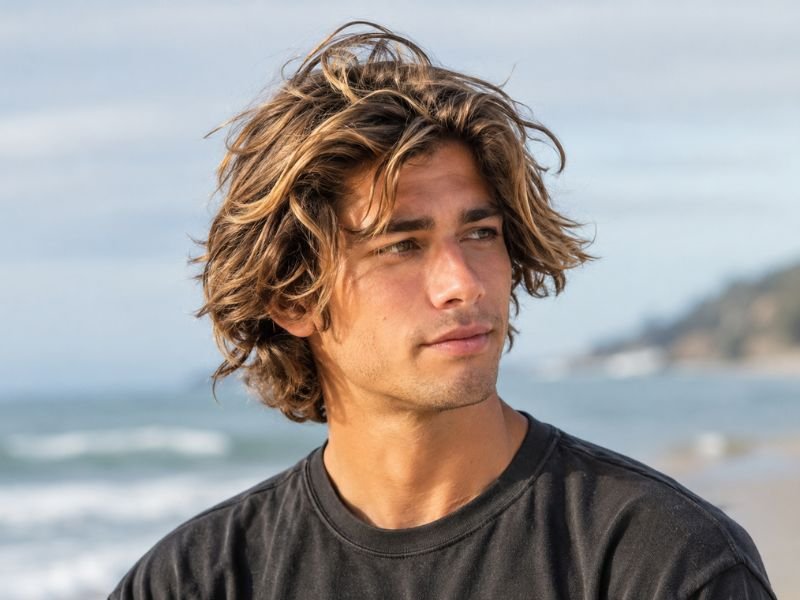
A surfer haircut is a layered, texture-heavy style designed to mimic hair that’s been naturally tousled by sun, wind, and saltwater. It originated with 1960s and 1970s beach and surf culture, when long, sun-bleached hair became a visible marker of that lifestyle. Modern versions keep the relaxed, undone spirit but add deliberate structure, choppy point-cut ends, tapered or faded sides, and layering that creates movement instead of just letting hair grow long and shapeless.
The look isn’t a single cut. It’s a category built on four things: textured layers, choppy ends, a shine-free matte finish, and enough natural-looking movement that the hair reads as windblown rather than combed.
What Length of Hair Works Best for Surfer Haircut Styles?
Most surfer haircut styles work best with at least 4 inches of length on top, since shorter hair struggles to hold the tousled texture that defines the look. For the most authentic, classic surfer effect, 6 to 8 inches gives layers enough room to move and fall naturally.
That said, shorter versions do exist. A textured crop with a matte finish can carry surfer energy at just 2 to 3 inches, provided the ends are point-cut rather than blunt and the sides stay tapered rather than boxy.
24 Best Surfer Haircut Styles to Try in 2026
1. Classic Surfer Shag
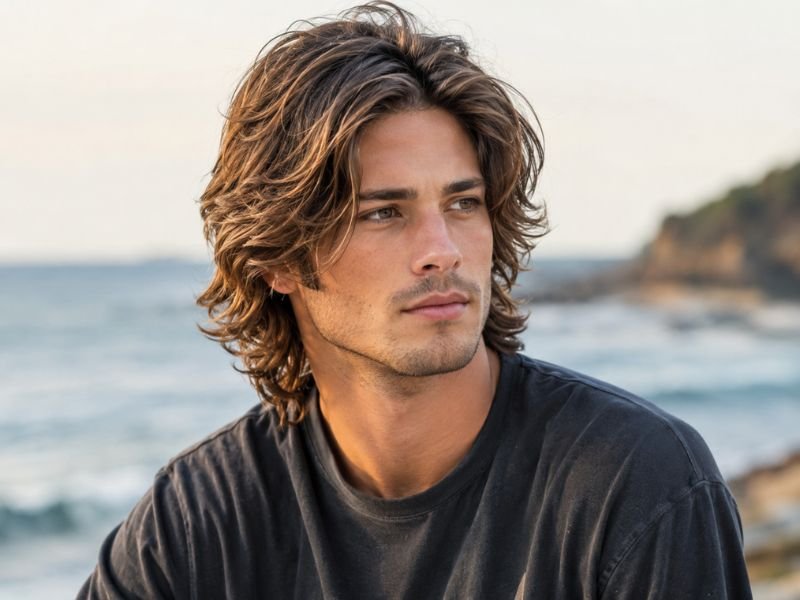
Long, choppy layers with heavy texture throughout. The original surfer look, best on naturally wavy hair.
2. Short Textured Crop
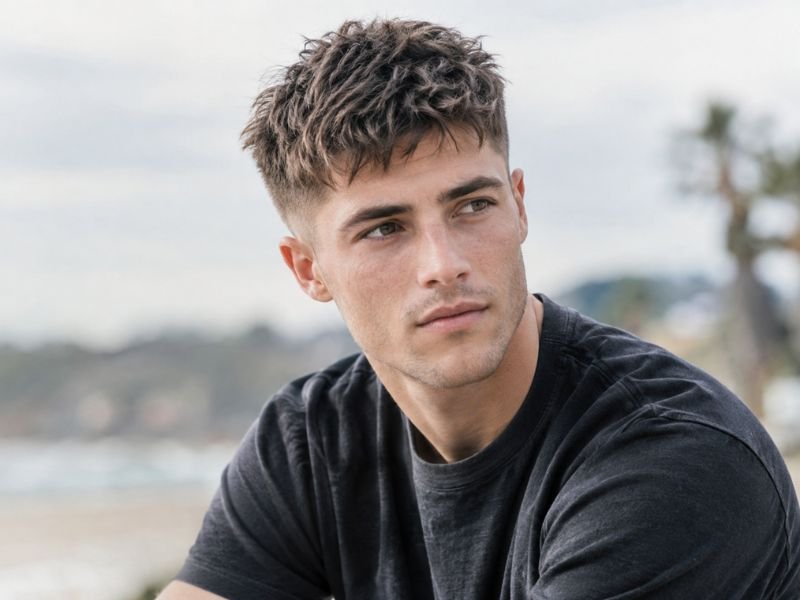
A 2 to 3 inch top with point-cut, piecey ends. The most low-maintenance, office-friendly version of the style.
3. Long Flowing Waves
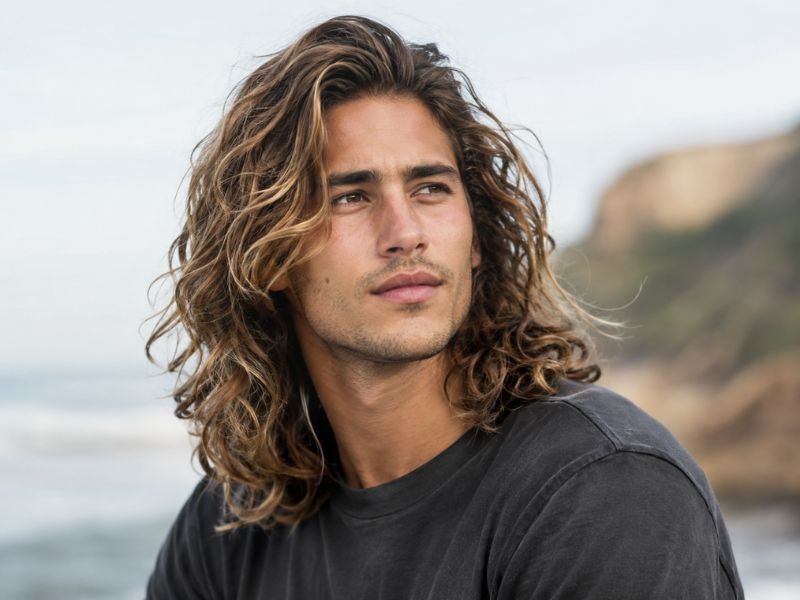
Past-shoulder length with a natural wave pattern. High reward, but the highest maintenance option on this list.
4. Surfer Curtain Fringe
A center-parted fringe that falls on both sides of the face, cheekbone length. Works especially well on straight hair with a little product help.
5. Messy Top Knot
Length pulled into a loose, imperfect bun. A practical option for keeping long surfer hair out of the face without losing the vibe.
6. Wavy Quiff
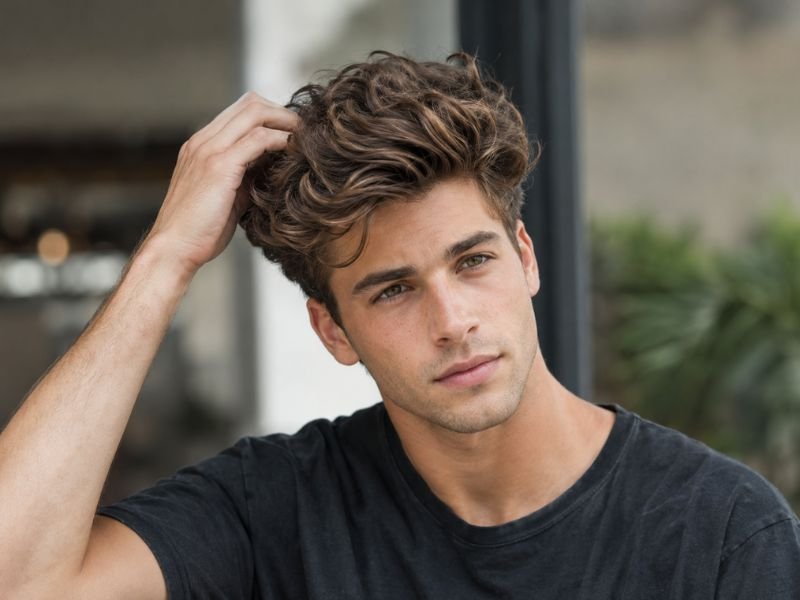
An elevated front section with texture and movement, tapered lower on the sides. A dressier take that still reads as beachy.
7. Low Fade with Textured Top
Short, faded sides paired with longer, tousled length on top. Bridges surfer texture with a cleaner, modern silhouette.
8. Sun-Bleached Layers
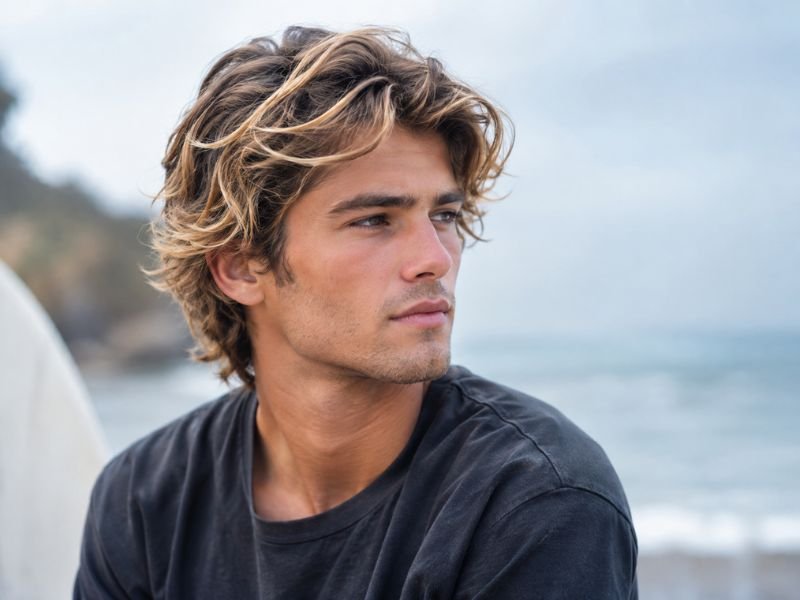
Any of the above cuts paired with balayage or sun-kissed highlights for a naturally lightened, weathered look.
9. Curly Surfer Crop
Shorter length that lets natural curls define the texture on their own, minimal product required.
10. Side-Swept Waves
A deep side part with waves falling across the forehead. Suits rounder faces better than a center part does.
11. Soft Undercut with Tousled Crown
Short, soft-tapered sides under a longer, textured top. A subtler alternative to a hard fade.
12. Wet-Look Slick Back
Hair pushed straight back using a light gel or pomade while damp, left to dry with texture intact rather than a hard shine.
13. Shoulder-Length Straight Surfer
Straight hair grown to shoulder length and styled with a texturizing spray. Low daily effort once it’s grown out.
14. Shag-Surfer Hybrid
Combines shag layering (shorter crown, longer perimeter) with surfer texture for extra volume and movement.
15. Textured Mullet
Short at the front and sides, longer and choppier at the back. A bolder, trend-driven surfer variation.
16. Temple Fade with Wavy Top
A fade that starts higher, at the temple, keeping more length on the sides while the top stays wavy and full.
17. Surfer with Beard Pairing
Any medium-to-long surfer cut paired with stubble or a short beard for a more rugged, island-inspired finish.
18. Choppy Neck-Length Layers
A shorter commitment than shoulder length, with the same choppy, layered texture throughout.
19. Long Curly Flow
Curly hair left to grow long, defined with a curl cream rather than fought into straighter waves.
20. Brushed-Back Beach Waves
Medium-length waves brushed back off the forehead using fingers, not a comb, to keep the texture loose.
21. Mid Fade with Surfer Fringe
A mid-height fade on the sides with a longer, textured fringe left on top for contrast.
22. Surfer Lob (Long Bob)
A longer bob-length cut with heavy layering, popular as a lower-maintenance alternative to full long hair.
23. Highlighted Crop
A short textured crop finished with subtle highlights to fake the sun-bleached effect without growing hair out.
24. Wind-Swept Layers for Thick Hair
Heavier layering specifically cut to remove bulk from thick hair while keeping the tousled shape.
How to Style Surfer Haircut at Home
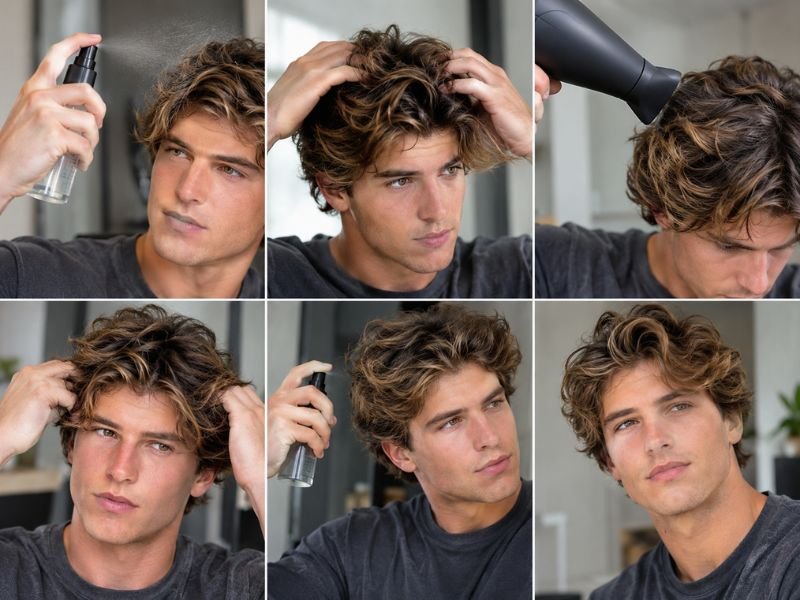
Getting the look right at home comes down to technique, not just product.
- Start with damp, not soaking wet hair. Towel-dry first so product doesn’t get diluted or weigh hair down.
- Apply sea salt spray or a texturizing spray. Focus on the mid-lengths and ends, not the roots.
- Scrunch and tousle. Cup sections of hair in your palm and scrunch upward to encourage natural wave and volume.
- Air-dry or diffuse. A diffuser attachment on low heat speeds this up without flattening the texture the way a regular blow-dryer would.
- Finger-style for separation. Rake fingers through (never a fine-tooth comb) to keep pieces separated and undone.
- Finish with a light-hold product. A small amount of matte clay or paste locks in texture without adding shine or stiffness.
Surfer Haircut Styles for Different Hair Textures
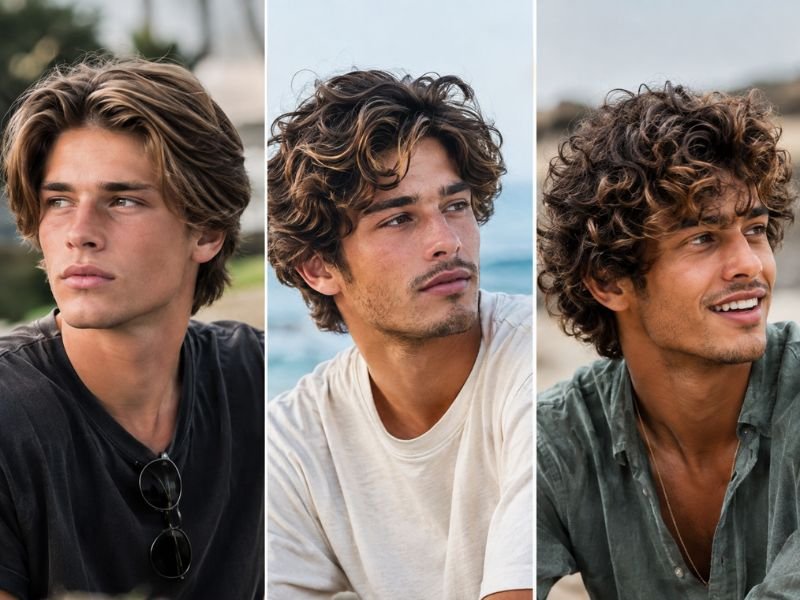
| Hair Texture | How Surfer Haircut Styles Work | Best Products |
| Straight | Needs the most help. Product and a diffuser are essential to fake movement. | Sea salt spray, texturizing powder |
| Wavy | The easiest texture for this style. Natural wave does most of the work. | Light sea salt spray, curl cream |
| Curly | Curls define the shape naturally. Focus on frizz control, not volume. | Curl-defining cream, light gel |
| Thick | Needs layering to remove bulk, or the cut can look heavy instead of tousled. | Matte clay, lightweight paste |
| Fine | Benefits most from texturizing sprays that add grip and fullness. | Texturizing spray, volumizing mousse |
What to Tell Your Barber for Surfer Haircut Styles
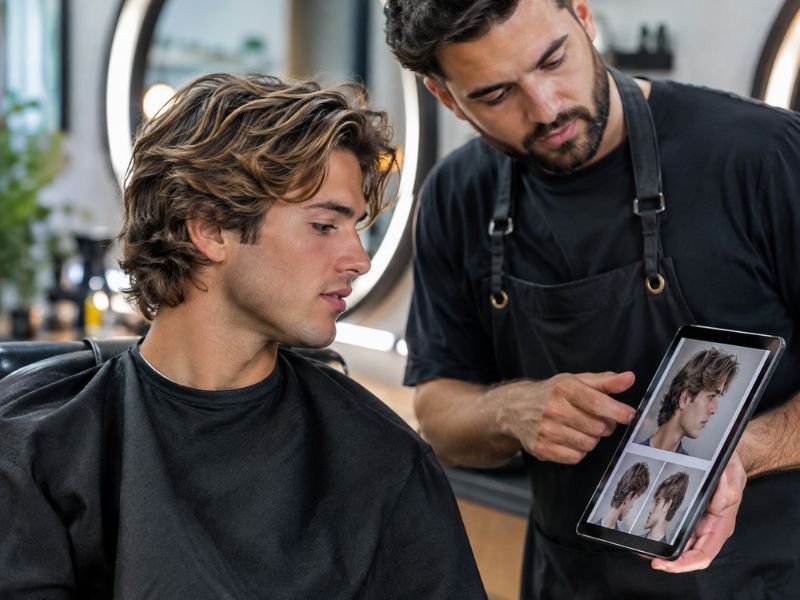
Walking in and saying “surfer haircut” alone isn’t specific enough, since it covers dozens of looks. Be clear about three things:
- Length: Give an exact target, such as “4 inches on top, tapered sides.”
- Cutting technique: Ask for point cutting or razor cutting on the ends rather than blunt scissor cuts, since this is what creates the choppy, piecey finish.
- Sides: Specify whether you want a taper, a fade, or just trimmed length to match, since this changes the whole silhouette.
Bringing a reference photo of one of the 24 styles above is the fastest way to avoid miscommunication.
Face Shape Guide: Which Surfer Haircut Styles Suit You
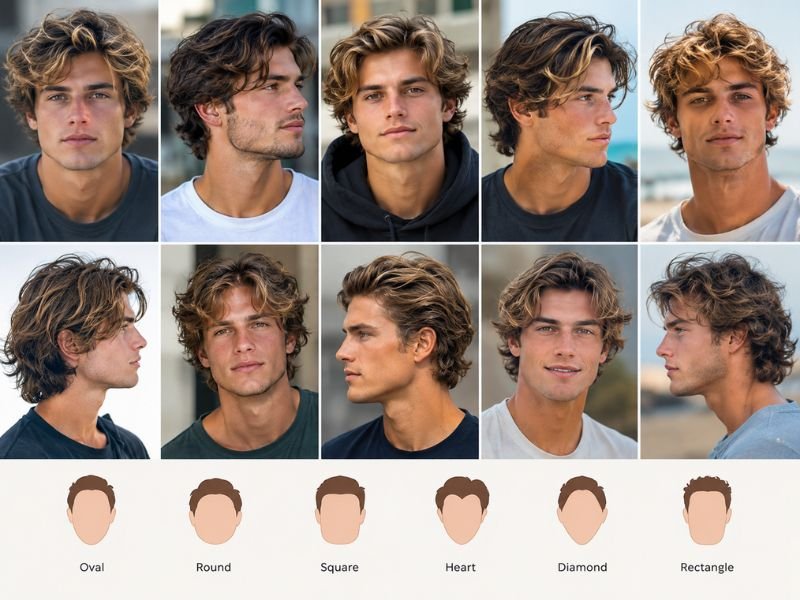
| Face Shape | Best Surfer Haircut Styles | Why It Works |
| Oval | Center-parted curtains, long flowing waves | Oval faces suit almost any length or part |
| Square | Textured crop, low fade with textured top | Softens strong jawlines with forward texture |
| Round | Side-swept waves, temple fade with wavy top | Adds height and length instead of width |
| Heart | Chin-length layers, curtain fringe | Balances a wider forehead with lower volume |
| Long/Oblong | Side part, shoulder-length straight surfer | A side part reduces the appearance of face length |
Surfer Haircut vs Other Popular Men’s Haircuts
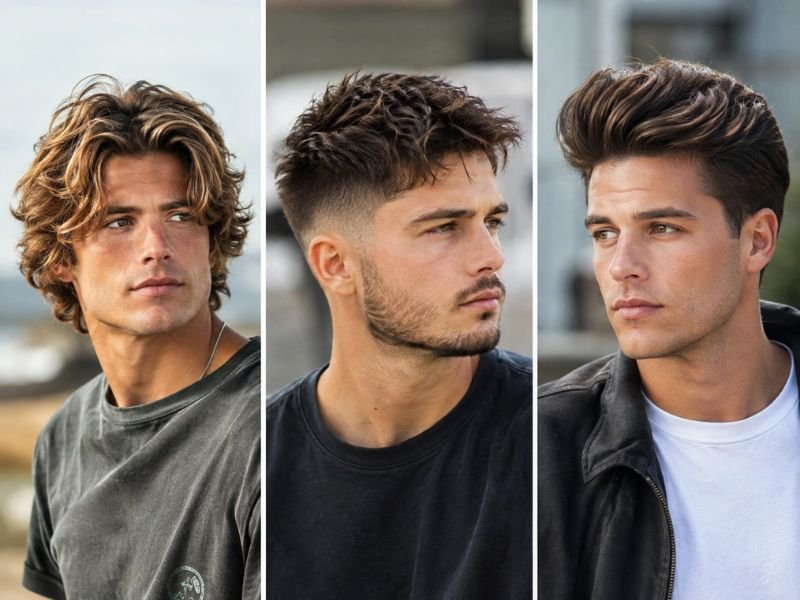
| Haircut | Maintenance | Best Hair Type | Vibe |
| Surfer Haircut | Low to moderate | Wavy, curly | Relaxed, beachy, tousled |
| Textured Crop | Low | Any | Neat but textured |
| Pompadour | High | Straight, thick | Polished, structured |
| Quiff | Moderate | Any | Voluminous, styled-up |
| Fade | Low | Any | Sharp, clean-cut |
| Shag | Moderate | Wavy, fine | Retro, layered, edgy |
Surfer haircut styles sit closer to the shag and textured crop in maintenance, but they lean far more casual than a pompadour or a classic fade, which both rely on deliberate shine and structure rather than natural movement.
Common Mistakes to Avoid With Surfer Haircut Styles
- Using too much product. Overloading with gel or wax creates a stiff, greasy look instead of natural texture.
- Skipping layers. Without layering, long hair just looks heavy, not surfer-textured.
- Blunt scissor cuts on the ends. This creates a thick, blocky edge instead of the choppy finish the style needs.
- Blow-drying on high heat with a brush. This flattens the texture the whole style depends on.
- Ignoring hair health. Surfer hair still needs moisture. Skipping conditioner or leave-in treatment leads to dry, damaged-looking ends, not the good kind of “sun-bleached.”
How Often Should You Trim a Surfer Haircut?
Most surfer haircut styles need a trim every 8 to 12 weeks to keep the layering and choppy ends intentional rather than shapeless. Shorter versions, like a textured crop, need trims closer to every 4 to 6 weeks since the shape grows out faster.
Maintenance and Product Guide
Keeping surfer hair looking good, not just achieving it once, comes down to three product categories:
- Texture: Sea salt spray or texturizing spray for daily styling
- Hold: Matte clay or light paste, never a high-shine gel
- Health: A leave-in conditioner or light hair oil to offset dryness from styling products and, if you’re actually in the sun and water often, real salt and sun exposure
FAQs
What is a surfer haircut?
It’s a layered, textured men’s hairstyle designed to look naturally windblown, with choppy ends and a matte, shine-free finish.
Do you need naturally wavy hair for a surfer haircut?
No. Straight hair can achieve the look with sea salt spray, a diffuser, and point-cut layering, though it takes more daily effort than wavy or curly hair.
How long should hair be for a surfer haircut?
Most surfer haircut styles work best between 4 and 8 inches on top, though shorter textured crops can carry the look at 2 to 3 inches.
What products do you need for surfer hair?
A sea salt or texturizing spray for texture, and a matte clay or paste for light hold, are the two essentials.
Can women get a surfer haircut?
Yes. The same layered, tousled principles apply, often paired with beach waves and sun-kissed balayage for length.
Does a surfer haircut suit round faces?
Yes, with the right styling. Side-swept waves or a temple fade with height on top add length rather than emphasizing width.
How is a surfer haircut different from a shag?
A surfer haircut is built around a beachy, matte, wind-blown finish, while a shag focuses more on heavy, retro-inspired layering that can be styled sleek or messy.
How often do you need to trim a surfer haircut?
Every 8 to 12 weeks for longer styles, and every 4 to 6 weeks for shorter textured crops.
Final Takeaway
Surfer haircut styles work best when the cut, not just the product, does the heavy lifting: layered, point-cut ends, a length that suits your face shape, and a matte, texture-first finish over polish. Whether you go with a short textured crop or long flowing waves, the right sea salt spray, a light-hold clay, and a trim every couple of months are what separate an intentional surfer look from hair that’s just grown out.
