

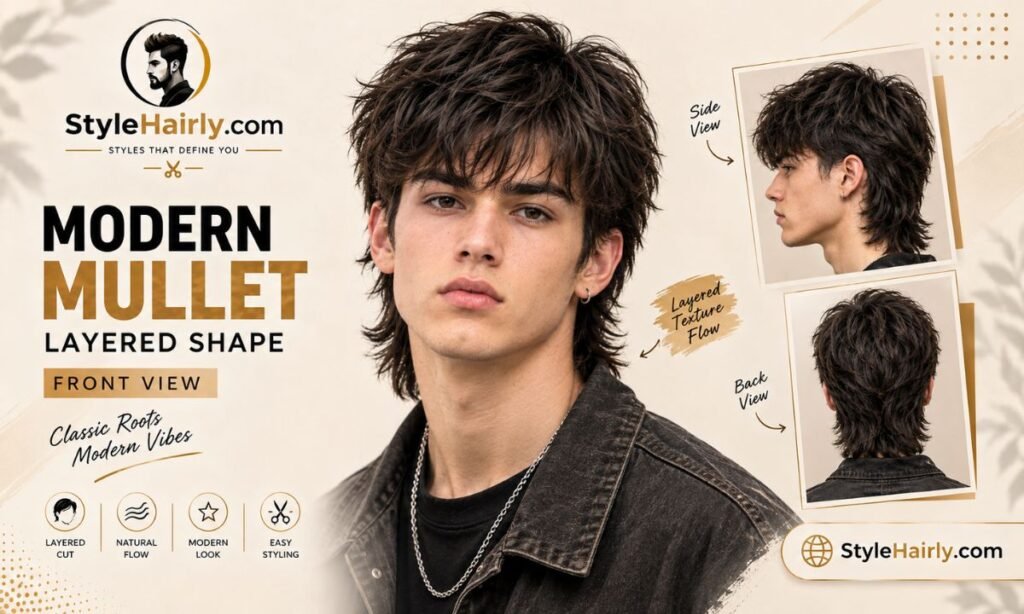
Straight hair often gets left out of mullet conversations because most inspiration photos show waves or curls doing the heavy lifting. If your hair is naturally straight, you may be wondering whether the modern mullet will actually look intentional on you or just uneven.
The modern mullet works very well on straight hair, and in some ways it’s easier to maintain than on textured hair because the clean lines of straight strands show off the haircut’s layering and shape more clearly. The key is choosing the right layer placement, length ratio between the front and back, and a styling routine that builds in movement your hair doesn’t create on its own.
This guide covers how the modern mullet looks on straight hair, which face shapes and hair densities suit it best, how to style it step by step, what to tell your hairstylist, and how to keep it looking sharp between salon visits.
Modern Mullet at a Glance
Best for: Straight hair of any density, especially those wanting a low-maintenance style with a distinct silhouette Hair length: Works on short, medium, and long hair, though medium-to-long is most common Hair types: Fine, medium, and thick straight hair all can work with the right layering Maintenance: Moderate; regrowth is visible at the neckline and face-framing pieces sooner than a blunt cut Styling: Can be worn straight for a sleek look or with added texture for a shaggier finish Main feature: Shorter layers on top and sides with longer length left at the back and nape
What the Modern Mullet Looks Like on Straight Hair
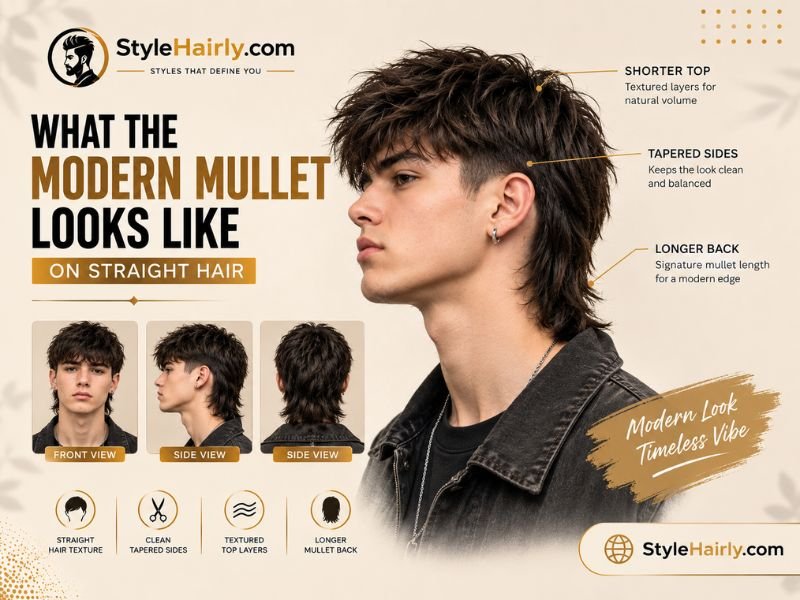
The modern mullet is a softened, wearable version of the retro 80s cut. Instead of a dramatic, blunt line between the short top and long back, today’s version blends the layers gradually so the transition looks deliberate rather than abrupt.
On straight hair specifically, this cut tends to read as sleeker and more graphic than it does on wavy or curly hair. Because straight strands lie flat and reflect light evenly, the layers and the length contrast are more visible. This can be an advantage if you want a clean, editorial look, but it also means uneven layering is harder to hide, which makes the initial cut especially important.
Why Straight Hair Shows the Cut Differently Than Wavy or Curly Hair
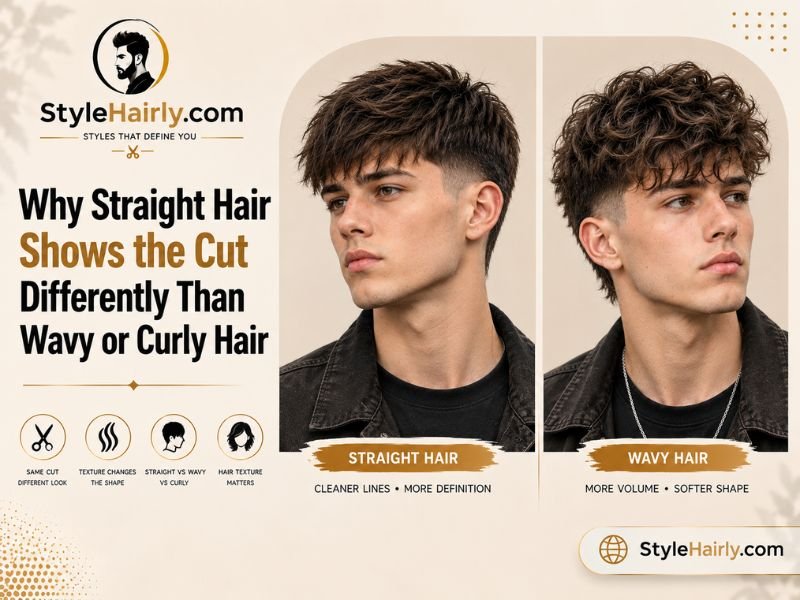
Straight hair has less natural volume at the root and less texture to disguise choppy layers, so the mullet on straight hair relies more on precise cutting than on hair’s natural movement. Wavy and curly mullets often get shape from the hair’s own bend. Straight hair typically needs some styling help, like a round brush blowout or texturizing spray, to get the same lived-in feel.
This isn’t a downside so much as a different starting point. Many people with straight hair actually like that the cut looks more polished and less “undone” without much effort.
Is the Modern Mullet Good for Fine Straight Hair?
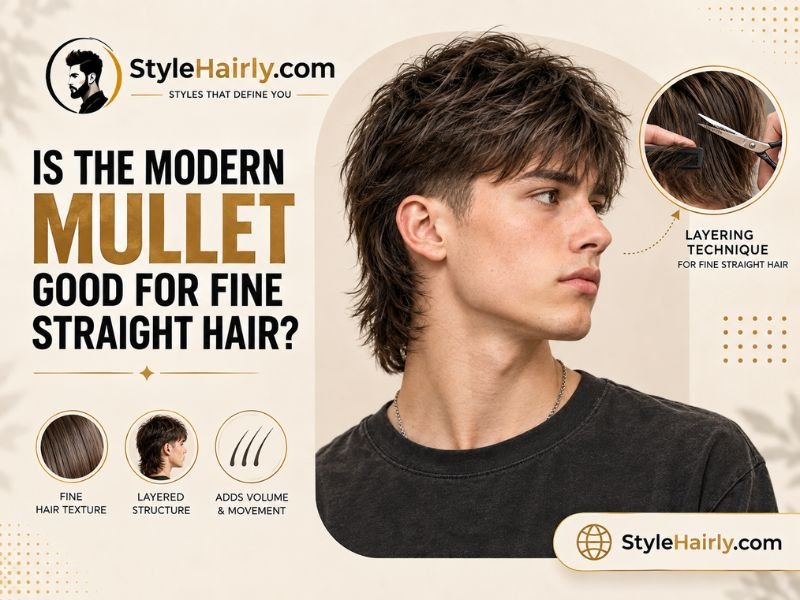
Yes, the modern mullet can work well for fine straight hair, and it’s actually one of the more flattering options because the layering adds the appearance of volume and movement that fine hair often lacks. The shorter pieces around the crown and sides create lift, while the longer back sections keep some visual weight so the style doesn’t look thin at the ends.
For fine hair, it helps to avoid cutting the layers too thin or choppy, since fine strands can look sparse if there isn’t enough density left in each section. A hairstylist experienced with fine hair will usually keep the layering a bit softer and rely on strategic shorter pieces around the face rather than heavy layering throughout.
Is the Modern Mullet Good for Thick Straight Hair?
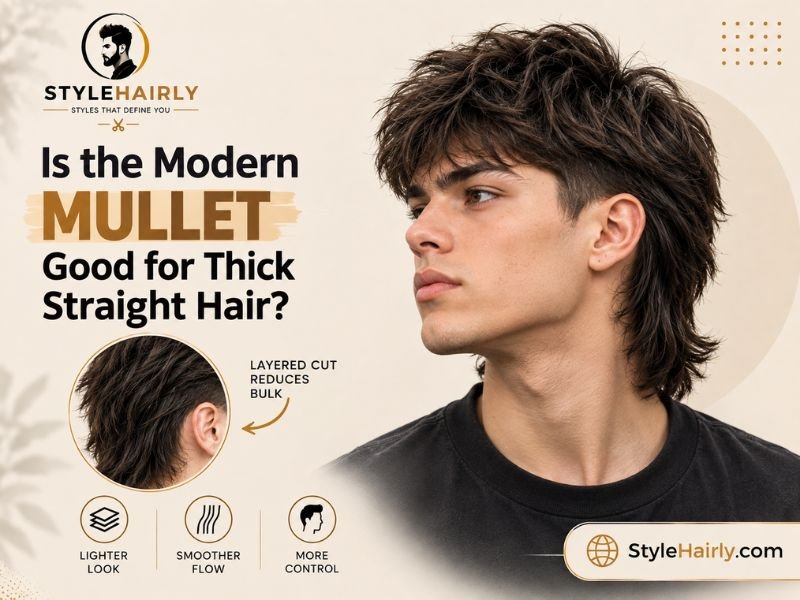
Thick straight hair is often considered ideal for the modern mullet because there’s enough density to support noticeable layering without looking thin or patchy. The layers help remove bulk from thick hair, which can make it easier to style and less heavy feeling day to day.
The main consideration with thick hair is that layers need to be cut with enough precision to avoid a “helmet” effect, where the shorter top pieces sit on top of the longer length instead of blending into it. Point cutting or texturizing techniques are often used on thick straight hair to soften the transition between lengths.
Which Face Shapes Work Well With a Modern Mullet?
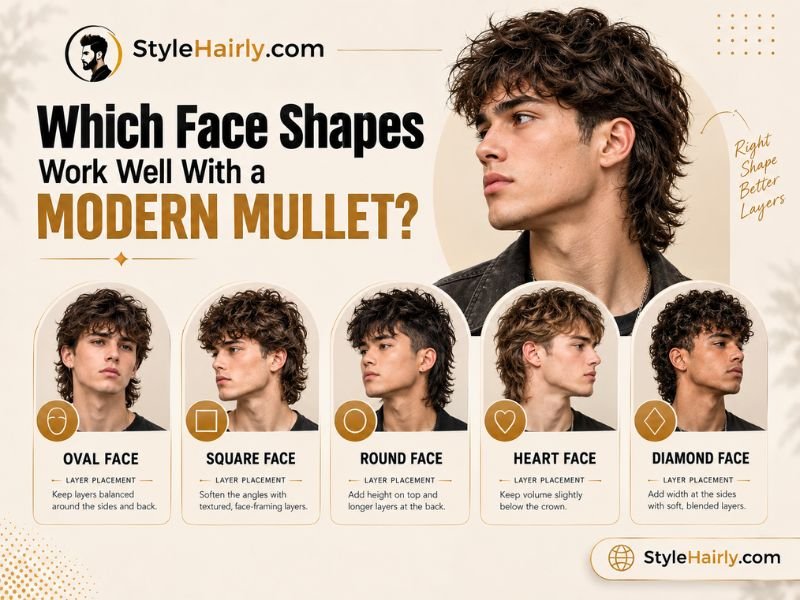
Most face shapes can wear a modern mullet, but the way the layers are placed around the face should be adjusted based on face shape.
| Face Shape | What Often Works Well |
| Round | Longer, angled face-framing layers that elongate rather than add width at the cheeks |
| Square | Softer, wispy pieces around the jaw to break up strong angles |
| Oval | Flexibility with most layer placements since the face shape is already balanced |
| Heart-shaped | Fuller layers around the chin area to balance a narrower jawline |
| Long | Fringe or curtain bangs paired with the mullet to shorten the appearance of the face |
These are general tendencies rather than strict rules. The right placement depends on your individual features, hair density, and how much length you’re comfortable removing.
How to Style a Modern Mullet on Straight Hair
Preparation
Start with clean or slightly second-day hair. Fully clean hair can sometimes be too slippery to hold texture, so a light dry shampoo at the roots can give the style something to grip onto.
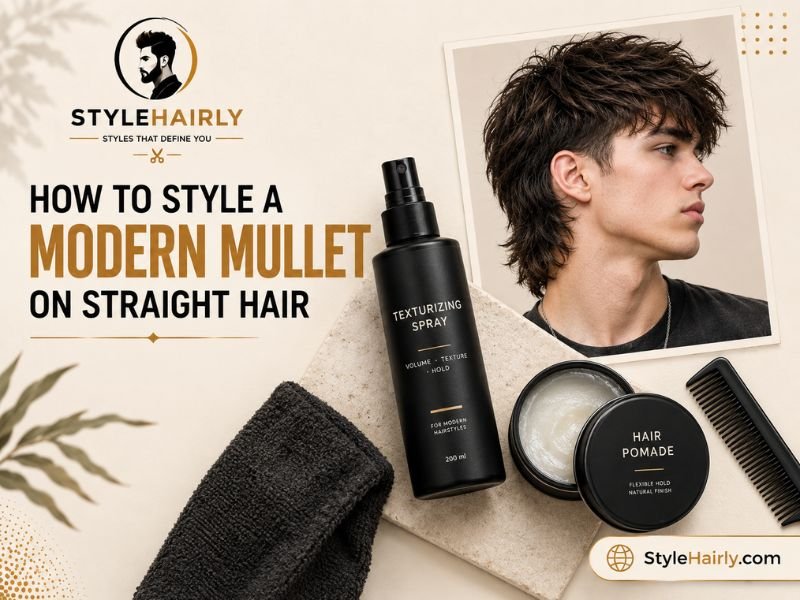
Products and Tools
A heat protectant is essential if you’re using any hot tools. Beyond that, a texturizing spray or salt spray helps create separation in the layers, and a small amount of light-hold pomade or wax can define the ends without weighing straight hair down.
Styling Steps
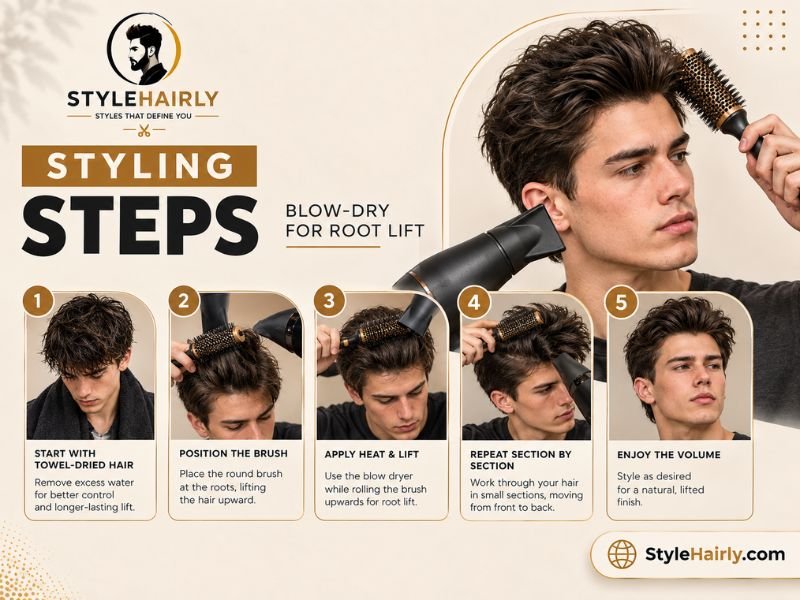
- Apply heat protectant to damp hair before blow-drying.
- Blow-dry the roots with a round brush to build lift at the crown, since straight hair tends to fall flat without this step.
- Use a flat iron or curling wand on the ends and mid-lengths to add slight bends or flicks, especially at the shorter face-framing pieces. This is optional if you prefer a sleek, straight finish instead.
- Spray a texturizing product through the mid-lengths and ends, scrunching lightly with your fingers to break up the straightness.
- Finish with a small amount of pomade on the ends to define pieces and reduce flyaways.
Finishing and Maintenance
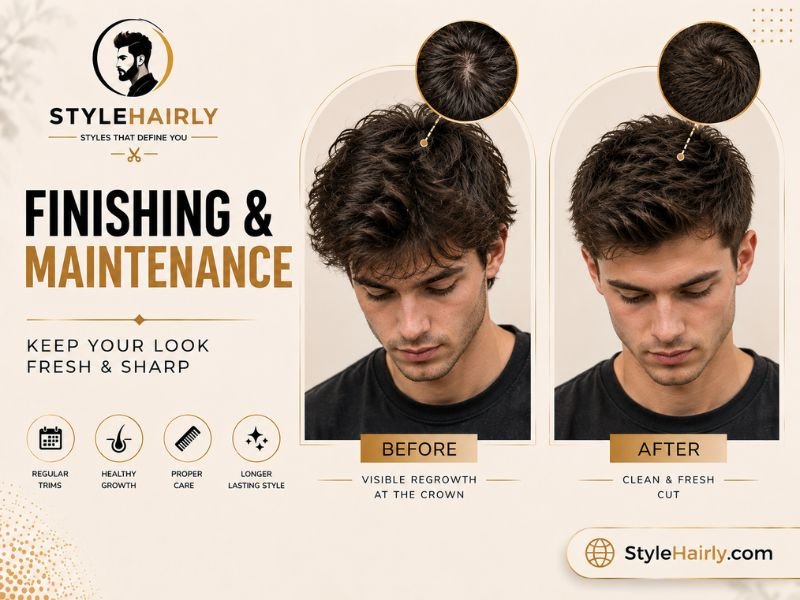
Between wash days, a texturizing spray can refresh the shape without a full restyle. Regular trims, generally every 8 to 12 weeks, help keep the shorter layers from growing out and blending too much into the longer back section, which can cause the mullet shape to lose its definition over time.
What to Tell Your Hairstylist
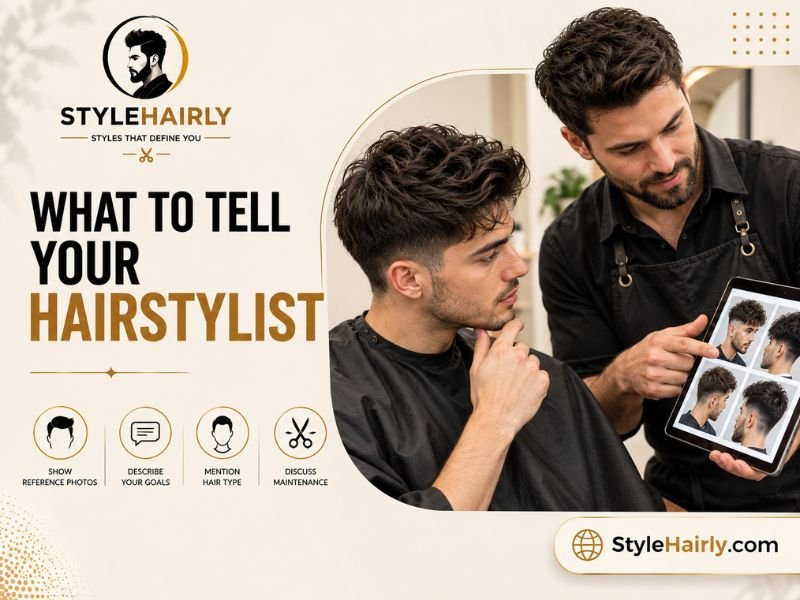
Being specific about what you want helps avoid a result that’s either too subtle or too dramatic. Consider covering:
- Length contrast: How much shorter you want the top and sides compared to the back. A bigger contrast reads as a more traditional mullet, while a smaller contrast looks more like long layers with a slight shape.
- Face-framing preference: Whether you want pieces that hit at the cheekbone, jaw, or chin.
- Bangs or no bangs: Curtain bangs are commonly paired with modern mullets and can be adjusted based on face shape.
- Amount of texture: Ask for point cutting or texturizing shears if you want a shaggier, less blunt finish, since this technique works differently on straight hair than on textured hair.
- What to avoid: If you’re nervous about it looking too retro or too short, say so directly. Hairstylists can adjust the layering to feel more modern and less like a dramatic 80s throwback.
Pros and Cons of the Modern Mullet for Straight Hair
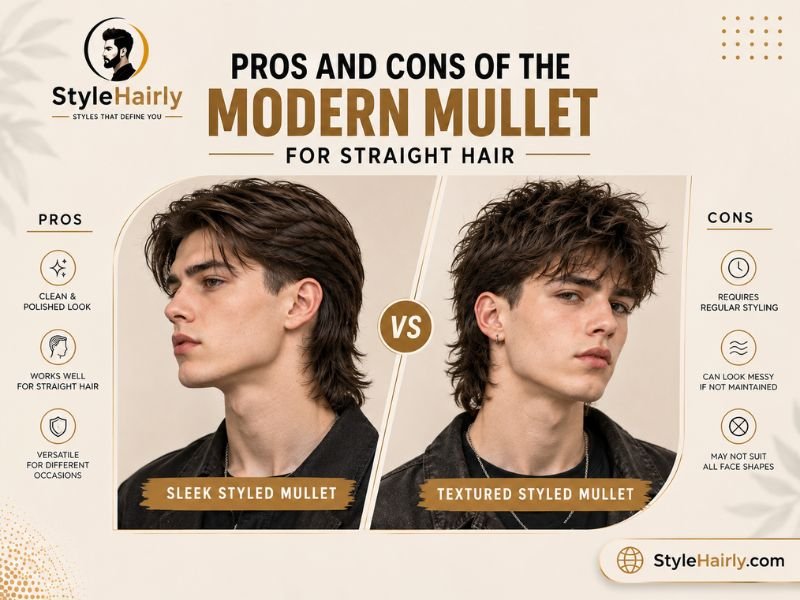
Pros
- Adds the appearance of volume and movement to hair that can otherwise look flat
- The clean lines of straight hair show off the layering and shape clearly
- Works across a range of lengths and densities
- Can be styled sleek or textured depending on the day
Cons
- Regrowth is more noticeable since the shorter layers grow out faster than the length at the back
- Straight hair may need styling tools or product to get a shaggier, less flat finish
- Uneven cutting is harder to disguise without natural wave or curl to soften mistakes
Modern Mullet vs Shag Cut
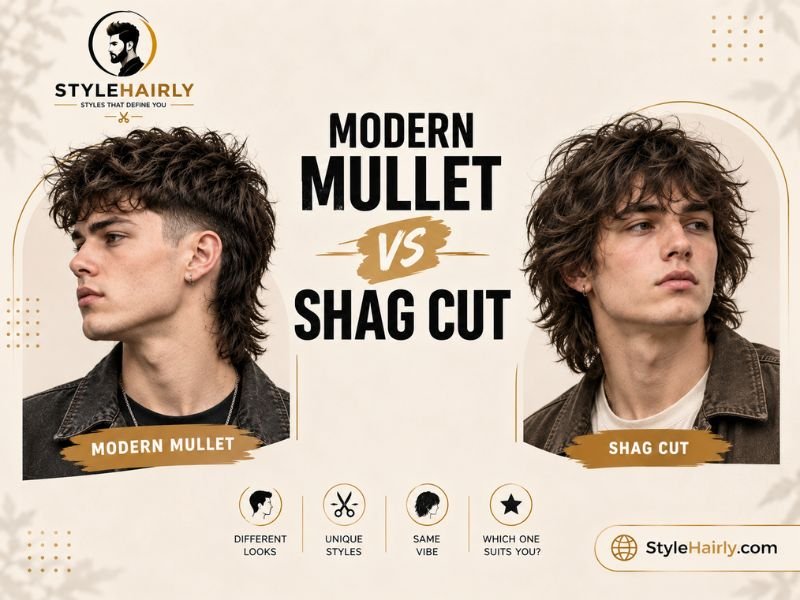
Both styles use heavy layering, but they read differently, which matters when deciding between them.
| Feature | Modern Mullet | Shag Cut |
| Length contrast | Distinct shorter top/sides vs longer back | More even layering throughout |
| Overall look | Bold, retro-inspired silhouette | Softer, more blended texture |
| Maintenance | Moderate, due to visible regrowth at the crown | Similar, though blending is more forgiving |
| Best for | Those wanting a distinct statement cut | Those wanting texture without as strong a shape contrast |
If you like the idea of movement and layering but want something less dramatic than the length contrast of a mullet, a shag cut may be worth discussing with your stylist as an alternative.
Frequently Asked Questions
Is the modern mullet good for thin hair? Yes, it can work well for thin hair because the layering creates the illusion of more volume and density. It’s best to avoid overly thin, choppy layers, which can make thin hair look sparser rather than fuller.
Does the modern mullet work on straight hair without curling it? Yes, many people wear it straight and sleek without adding curls or waves. The layering itself creates the shape, though a straight finish tends to show the length contrast more clearly than a textured one.
Is a modern mullet high maintenance? It’s moderate maintenance. The shorter layers around the crown and face grow out faster than the back length, so most people get trims every 8 to 12 weeks to maintain the shape.
What face shape is best for a modern mullet? Most face shapes can wear it, but the layer placement should be adjusted for your features. Round and square faces often benefit from longer, angled face-framing pieces, while oval faces have more flexibility.
How do I style a mullet if my hair is naturally very straight? A round brush blowout for root lift, plus a texturizing spray through the ends, helps add movement that naturally straight hair doesn’t create on its own. A flat iron can also be used to add slight bends to face-framing pieces.
What should I ask my hairstylist for? Be specific about the length contrast between the top and back, whether you want curtain bangs, and how much texture or point cutting you want in the layers. Mentioning your face shape and any styles you want to avoid also helps.
How long does a modern mullet last before needing a reshape? Most people need a trim every 8 to 12 weeks to maintain the shape, since the shorter layers grow out and blend into the longer length faster than a single-length cut would.
Conclusion
The modern mullet is a solid option for straight hair, particularly if you want a distinct silhouette with some built-in styling versatility. The layering adds volume and movement that straight hair often lacks on its own, and the clean lines of straight strands make the cut’s shape easy to see.
Before your appointment, decide how much length contrast you want, whether you’d like face-framing pieces or bangs, and how much texture you want in the layers. Bringing reference photos and being specific about what to avoid will help your hairstylist tailor the cut to your face shape and hair density, rather than working from a generic version of the style.
