

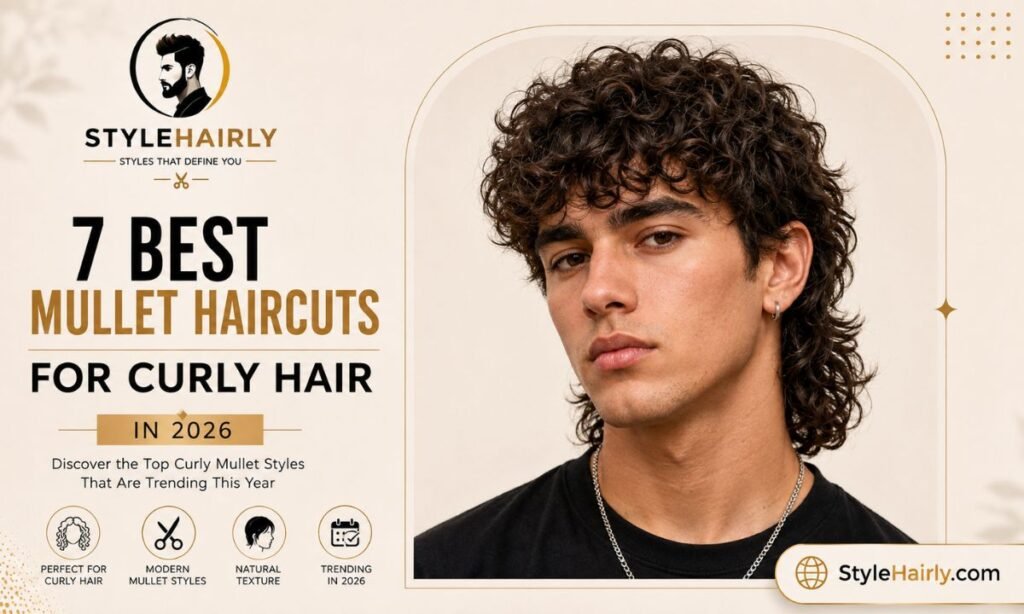
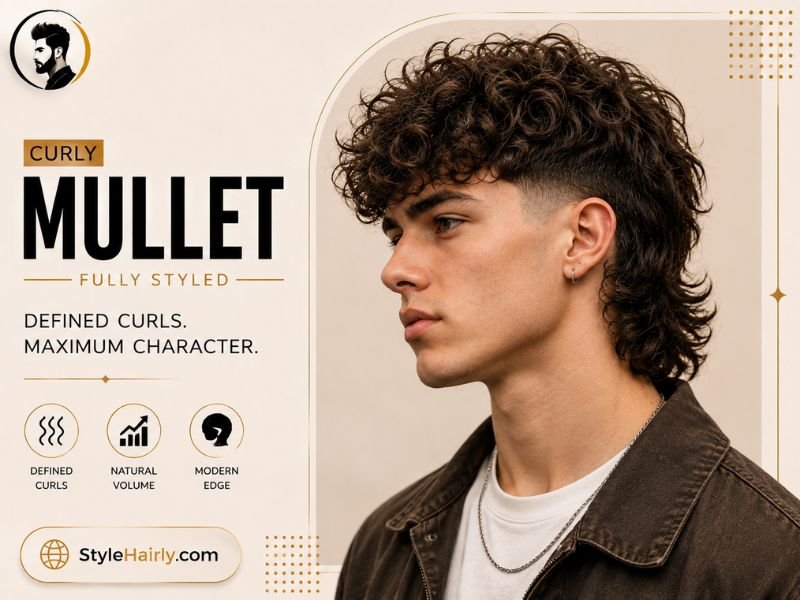
Curly hair adds natural texture and volume to a mullet, but it also raises real questions before you sit in the chair. Will the shorter layers on top spring up shorter than expected? Will the back hold its shape, or will curls pull it into something unrecognizable? These concerns are valid, and they are exactly why a mullet needs a slightly different approach on curly hair than it does on straight hair.
The short answer is that curly hair is actually one of the best textures for a mullet. The natural volume on top and the built-in movement in the back create the contrast that makes a mullet look intentional rather than just “short in front, long in back.
The key is choosing the right variation for your curl pattern and communicating layer placement clearly with your stylist, since curls shrink and behave differently than straight hair when cut dry versus wet.
This guide walks through the best mullet variations for different curl types (wavy, curly, and coily), how face shape affects the look, what to tell your hairstylist so you get consistent results, how to style and maintain the cut, and answers to the questions curly-haired clients ask most often before booking this haircut.
Mullet at a Glance
Best for: Wavy, curly, and coily hair types looking for built-in volume and low daily styling effort Hair length needed: Medium to long hair before cutting (enough length to create back contrast) Hair types: Works across 2B to 4A curl patterns, with adjustments to layer weight Maintenance: Trims typically needed every 8 to 12 weeks to keep shape as curls grow and shrink Styling effort: Low to moderate, often wash-and-go friendly with the right products Main feature: Shorter, layered top and sides with longer length left in the back
Why Curly Hair Works So Well for a Mullet
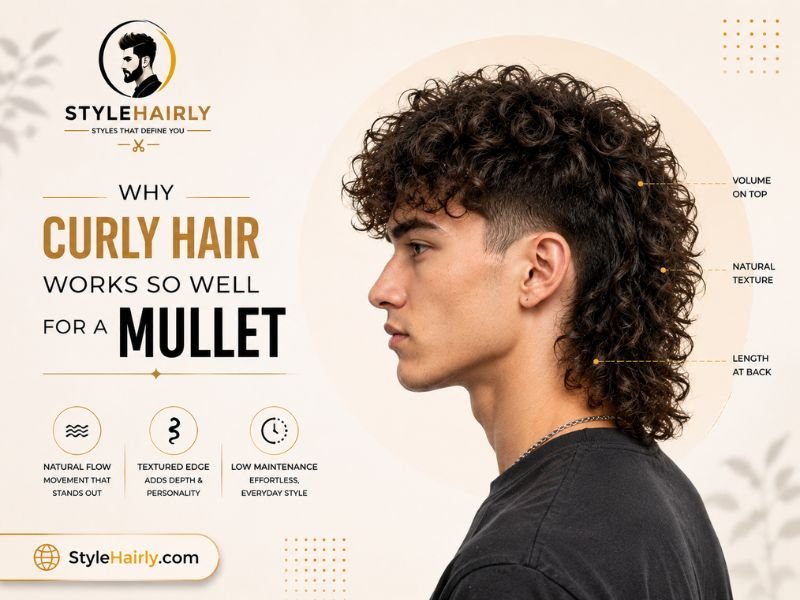
Curly hair works well for a mullet because the natural volume on top creates the exact contrast a mullet is built on, without needing a blowout or heat styling to fake it. On straight hair, a stylist often has to layer aggressively and rely on styling products to build height at the crown. On curly hair, that volume already exists.
The trade-off is shrinkage. Curls coil up as they dry, so a cut that looks balanced when wet can look noticeably shorter on top once it air-dries, especially with tighter curl patterns. A stylist experienced with curly hair should account for this by cutting dry, or cutting wet and leaving extra length in areas prone to more shrinkage. If your stylist normally works with straight hair, it is worth mentioning your curl pattern and shrinkage percentage before they start cutting.
Best Mullet Variations for Curly Hair
Not every mullet variation suits every curl pattern the same way. Here are the versions that tend to work best depending on your texture and how much volume or edge you want.
Curly Shag Mullet
This is the most popular mullet style for curly hair because it softens the classic mullet’s harsh line between the short top and long back. Instead of one dramatic length drop, layers are blended gradually from crown to ends, which suits looser waves (2A to 2C) and medium curls (3A to 3B) particularly well.
This version works best for people who want the mullet silhouette without it reading as retro or costume-like. It also tends to be more forgiving if your curl pattern varies across your head, which is common and normal.
Curly Wolf-Mullet Hybrid
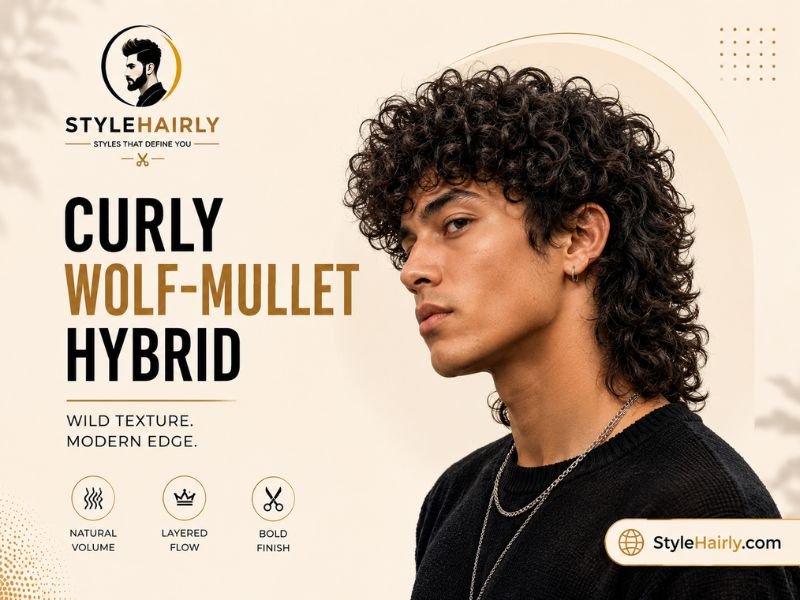
For tighter curls (3B to 4A) with lots of natural volume, a heavier, choppier layering pattern often reads better than fine, feathered layers. This variation borrows from the wolf cut’s texture-heavy layering and applies it to a mullet’s length structure, keeping more visible length in the back while adding aggressive layering through the crown and sides.
This works well if you want a bold, high-volume look and don’t mind a cut that requires almost no blow-drying, since the layers are designed to work with natural curl clumping rather than against it.
Curtain Mullet
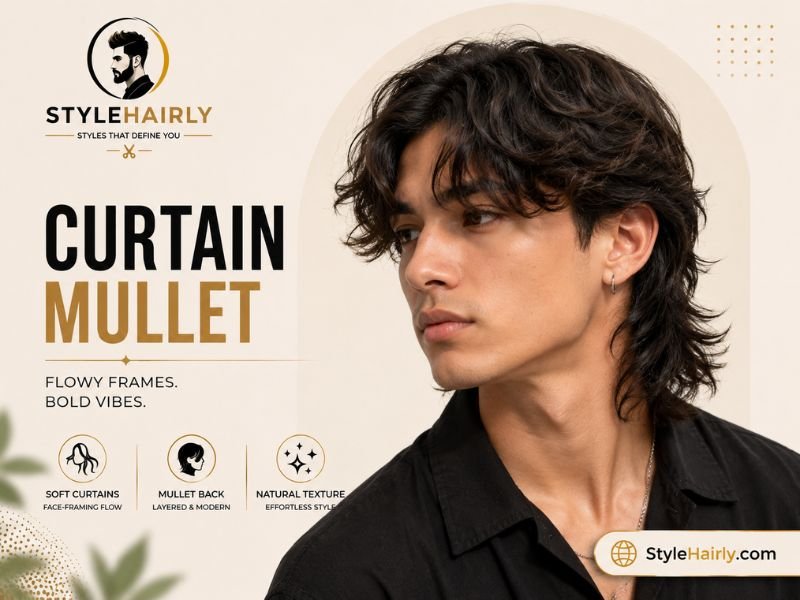
If you want a softer transition into your face, curtain bangs paired with a mullet can work well for wavy to curly hair (2B to 3B). The front pieces are cut slightly longer and layered to fall along the cheekbones rather than straight across the forehead, which avoids the frizz-prone, blunt-bang look that tighter curls can produce with traditional bangs.
Curtain pieces on curly hair need slightly more length than they would on straight hair to account for shrinkage and to keep them from springing up above the brow line.
Coily Mullet with Minimal Layering
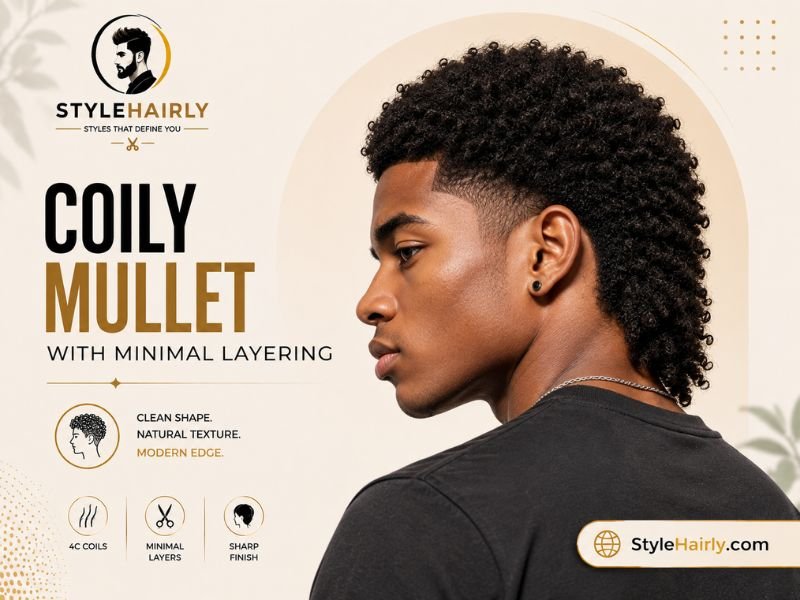
For 4A to 4C hair, heavy layering can sometimes create unwanted volume imbalance because coily hair shrinks more dramatically than looser curl patterns. A mullet with fewer, more strategic layers, mainly concentrated at the crown and nape, often holds shape better and reduces the risk of the top looking disproportionately shorter than intended.
Mullet Variations by Curl Type
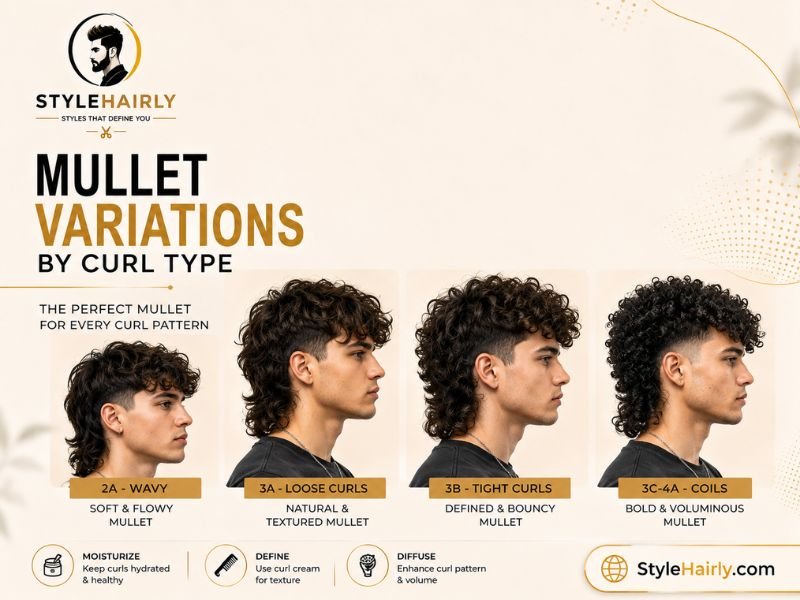
| Curl Type | Recommended Mullet Style | Why It Works |
| Wavy (2A-2C) | Curly shag mullet or curtain mullet | Soft layering blends naturally with looser wave patterns |
| Curly (3A-3B) | Curly shag mullet | Layers work with curl clumping instead of fighting it |
| Curly (3C-4A) | Wolf-mullet hybrid | Heavier layering suits high natural volume |
| Coily (4A-4C) | Coily mullet with minimal layering | Fewer layers reduce shrinkage-related shape loss |
Keep in mind curl patterns often vary across a single head, so your stylist may blend approaches rather than sticking rigidly to one category.
Does Face Shape Matter for a Curly Mullet?
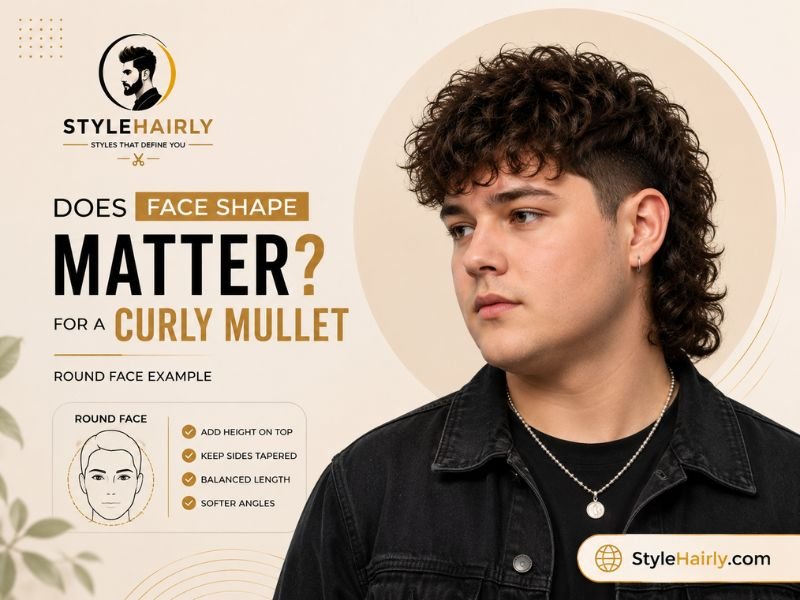
Yes, face shape can influence how flattering a mullet feels, mainly through where layers and length are concentrated around the face. A mullet itself is fairly adaptable, but small adjustments to the front layers can make it work better for different face shapes.
Round faces often benefit from a mullet with more length and less volume directly at the cheeks, since curls stacked at the sides can widen a round face further. Longer face-framing pieces that fall past the jaw tend to be more flattering than short, curled-under pieces.
Square faces can usually handle more volume at the crown, since it balances a strong jawline. Softer, longer front layers help avoid adding harsh angles.
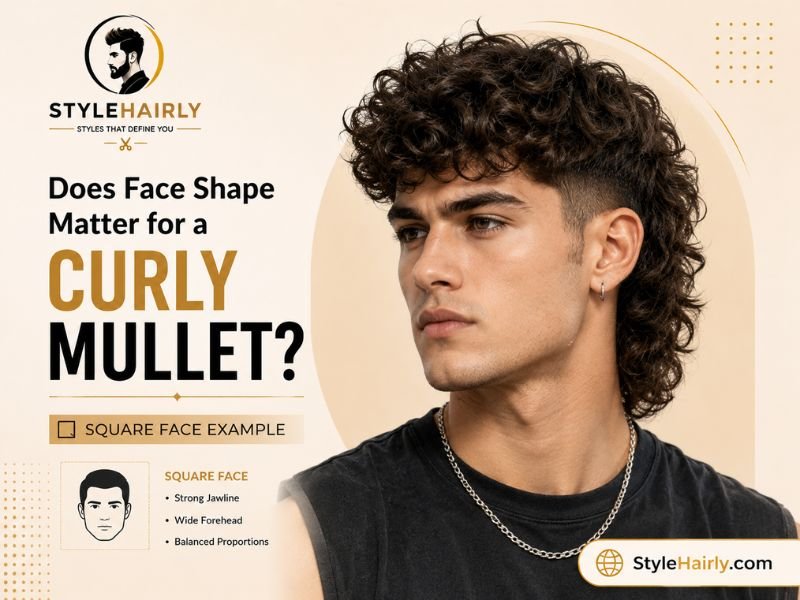
Oval faces generally have the most flexibility and can wear most curly mullet variations, including shorter, choppier top layers.
Heart-shaped faces often do well with a mullet that keeps more volume toward the back and less bulk directly at the temples, since curls piled high near a narrower chin can throw off balance.
Long faces can benefit from a mullet with more width and volume at the sides rather than height at the crown, which helps avoid elongating the face further.
None of these are strict rules. A skilled stylist can adjust layer placement to work with almost any face shape, so treat this as a starting point for the consultation, not a limitation.
What to Tell Your Hairstylist
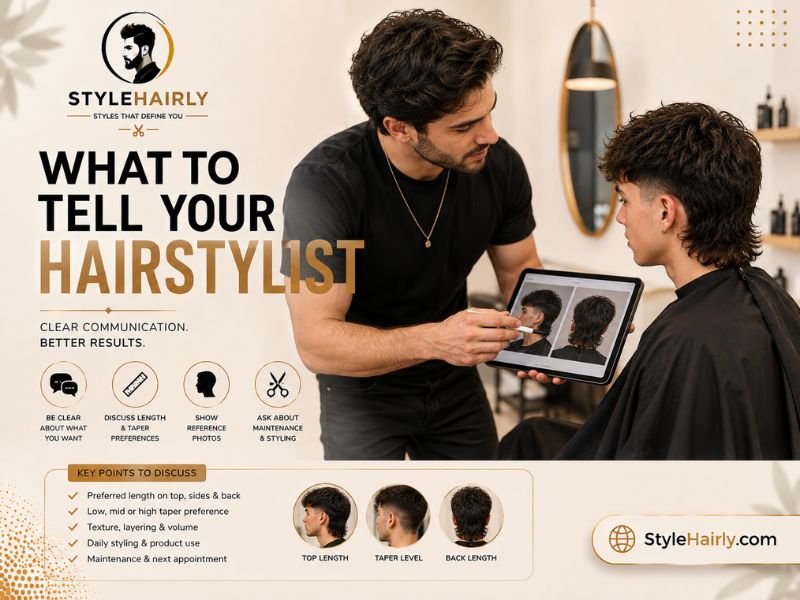
Getting a curly mullet that actually matches what you pictured depends heavily on clear communication before the scissors come out, since curly hair cutting is less standardized than straight hair cutting.
Be specific about:
- Cutting method preference. Ask whether they cut curly hair dry, wet, or a mix of both. Dry cutting is often more accurate for seeing true curl shrinkage, but not every stylist offers it.
- Desired back length. Bring a reference photo and specify where you want the longest pieces to land, such as “collarbone length” rather than just “long.”
- Top length and volume. Clarify whether you want more length left on top for a softer transition, or shorter, choppier layers for a bolder contrast.
- Face-framing preference. Mention if you want curtain-style pieces around the face or a fuller silhouette with no separated front pieces.
- Layer weight. Ask for lighter layering if you have very tight curls prone to shrinkage, or heavier layering if you have looser waves that need more texture to hold shape.
- What to avoid. If you’ve had a mullet before that felt too short on top or too blunt in the back, say so directly. Past experience is useful reference information for your stylist.
How to Style a Curly Mullet
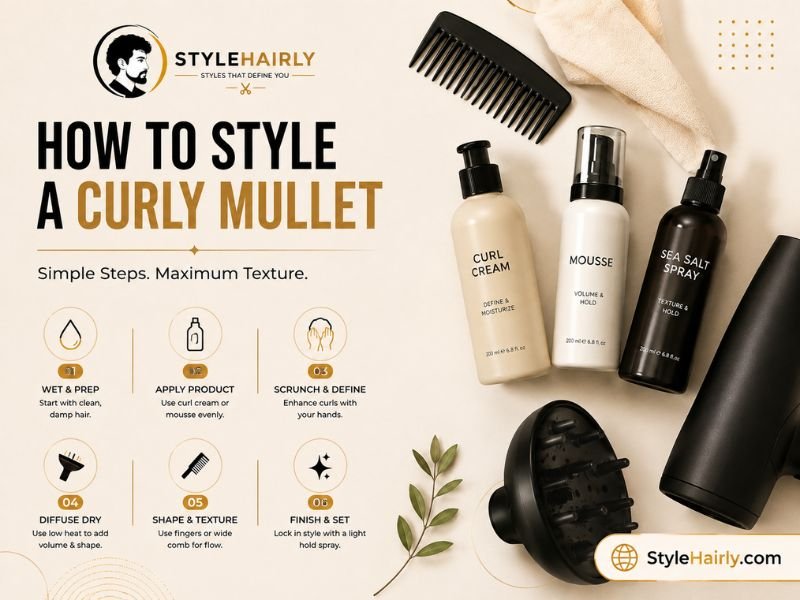
Styling a curly mullet is generally lower effort than styling straight hair into the same shape, since the layers are designed to work with your natural texture rather than against it.
- Start with clean, conditioned hair. Curly hair styles best when it isn’t weighed down by product buildup, so a lightweight, curl-friendly shampoo and conditioner routine matters more than any single styling product.
- Apply a leave-in conditioner or curl cream while hair is soaking wet. This helps define curl clumps and reduces frizz before you add any styling product.
- Add a curl-defining gel or mousse, scrunching upward from ends to roots. This step helps hold the curl pattern as it dries and supports the volume the mullet relies on for shape.
- Air-dry or diffuse on low heat. Diffusing can add extra volume at the crown, which works especially well for shag and wolf-hybrid mullet variations. If you use heat, apply a heat protectant first, even on a low diffuser setting.
- Scrunch out any crunch once fully dry. Once the gel or mousse has set, gently scrunch the hair with your hands to soften any stiffness without disrupting curl definition.
- Refresh between washes as needed. A small amount of water mixed with leave-in conditioner, applied with fingers to reshape curls, can extend the style between wash days.
Maintenance and Growing It Out
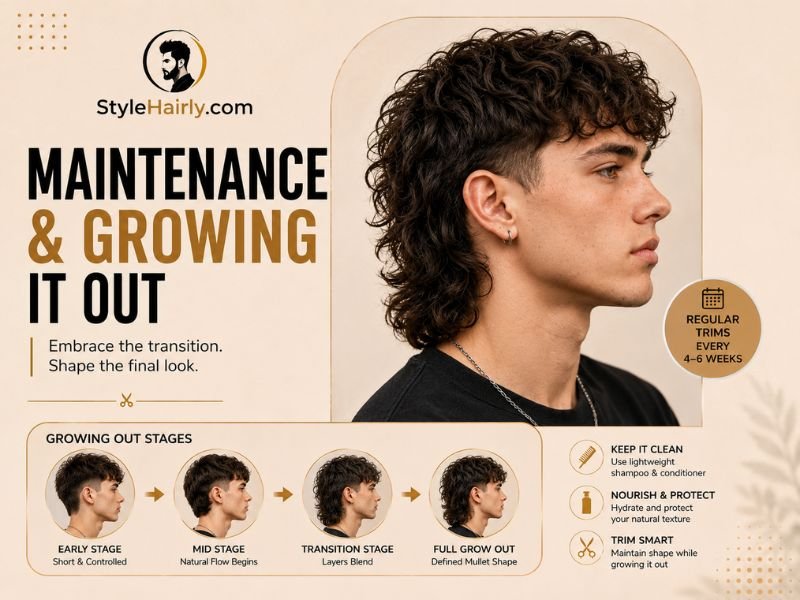
A curly mullet typically needs a trim every 8 to 12 weeks to maintain its shape, though this can vary depending on how fast your hair grows and how much shrinkage your curl pattern has. Because curls shrink as they grow, a mullet that looked balanced right after cutting can start to look top-heavy or lose its length contrast faster than the same cut would on straight hair.
If you’re growing it out, expect a transitional period where the shorter top layers catch up in visible length before the overall silhouette smooths out. Regular trims during this phase, even small ones, help avoid an awkward stage where the layers look uneven rather than intentional.
Pros and Cons
Pros
- Works with natural curl volume instead of requiring heat styling to create shape
- Generally low daily maintenance once you learn your product routine
- Adaptable across a wide range of curl patterns with layer adjustments
- Offers a lot of personality and visual interest compared to a uniform-length cut
Cons
- Requires a stylist comfortable cutting curly hair, since shrinkage miscalculations are common
- Layers grow out unevenly across different curl patterns on the same head, which may mean more frequent trims
- Bold variations, like the wolf-mullet hybrid, may not suit more conservative workplaces or styling preferences
- Can look uneven immediately after cutting until curls fully dry and settle into shape
Curly Mullet vs. Curly Shag
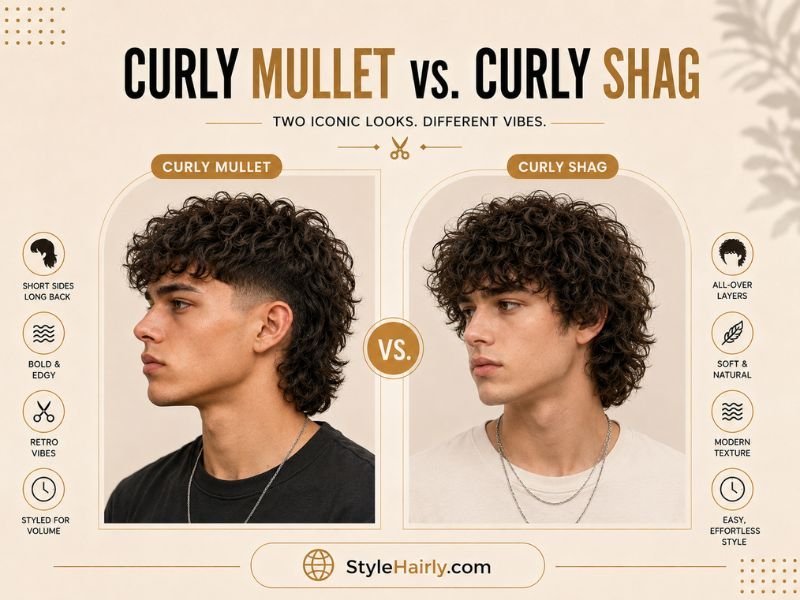
These two cuts get confused often because both rely on heavy layering and curl-friendly texture, but they are not the same haircut.
| Feature | Curly Mullet | Curly Shag |
| Length contrast | Distinct shorter top, longer back | More even length with less back/front contrast |
| Overall silhouette | Structured, with a clear length drop | Rounder, softer, less structured |
| Best for | Those wanting a bold, retro-inspired look | Those wanting texture without a strong length statement |
| Maintenance | Similar trim schedule | Similar trim schedule |
If you like the volume and low-maintenance styling of a shag but aren’t sure about the mullet’s stronger length contrast, ask your stylist to start with lighter length separation. You can always go bolder at your next appointment once you see how it grows in.
Frequently Asked Questions
Is a mullet good for thick curly hair? Yes, thick curly hair often handles a mullet well because it has enough density to support layering without looking thin or patchy. The main consideration is asking for slightly lighter layering at the crown so the top doesn’t become overly bulky.
Does a mullet work on tight coils or 4C hair? It can, though it typically works best with minimal layering rather than heavy, feathered layers, since coily hair shrinks the most dramatically of any curl type. A stylist experienced with textured hair can help determine how much length to leave to account for shrinkage.
Will my curly mullet look shorter than expected after it dries? It’s possible, especially with tighter curl patterns. This is why dry cutting or cutting with shrinkage in mind matters. If your stylist only cuts wet hair and isn’t familiar with curl shrinkage, ask them to leave a bit of extra length rather than cutting to the exact final length you want.
Is a curly mullet high maintenance? Day-to-day styling tends to be lower effort than straight-hair styles, since curls provide natural texture. However, keeping the shape looking intentional usually requires trims every 8 to 12 weeks.
What should I ask my hairstylist for if I want a softer mullet look? Ask for a curly shag mullet with gradual layering and curtain-style face-framing pieces rather than a sharp length drop between the top and back. This creates a blended transition rather than a dramatic line.
Can I style a curly mullet without heat tools? Yes, most curly mullet variations are designed to be wash-and-go friendly. Air-drying with a curl cream or gel is usually enough, though diffusing on low heat can add extra volume at the crown if desired.
How long does a curly mullet usually last before it needs reshaping? Most people find they need a trim within 8 to 12 weeks to maintain the layered shape, though this depends on hair growth rate and curl pattern. Faster-growing hair or tighter curl patterns with more shrinkage may need slightly more frequent trims.
What face shapes should avoid a mullet? No face shape needs to avoid a mullet entirely, but round and heart-shaped faces may want to ask for length and volume adjustments, such as less bulk directly at the cheeks or temples, to keep the proportions balanced.
Conclusion
Curly hair is genuinely well-suited to a mullet because the natural volume and texture do a lot of the visual work that straight hair needs styling products to fake. The main decision points come down to curl pattern, since looser waves generally suit softer shag-style layering while tighter curls and coils often hold shape better with heavier or more minimal layering, respectively. Face shape can guide small adjustments to where volume and length are placed, but it rarely rules out the cut entirely.
The most important factor in getting a good result is working with a stylist who understands how your specific curl pattern shrinks and behaves, and being specific about back length, top volume, and face-framing preferences before they start cutting. From there, a simple curl-friendly styling routine and regular trims every couple of months will keep the shape looking intentional as it grows.

3 thoughts on “7 Best Mullet Haircuts for Curly Hair in 2026”