

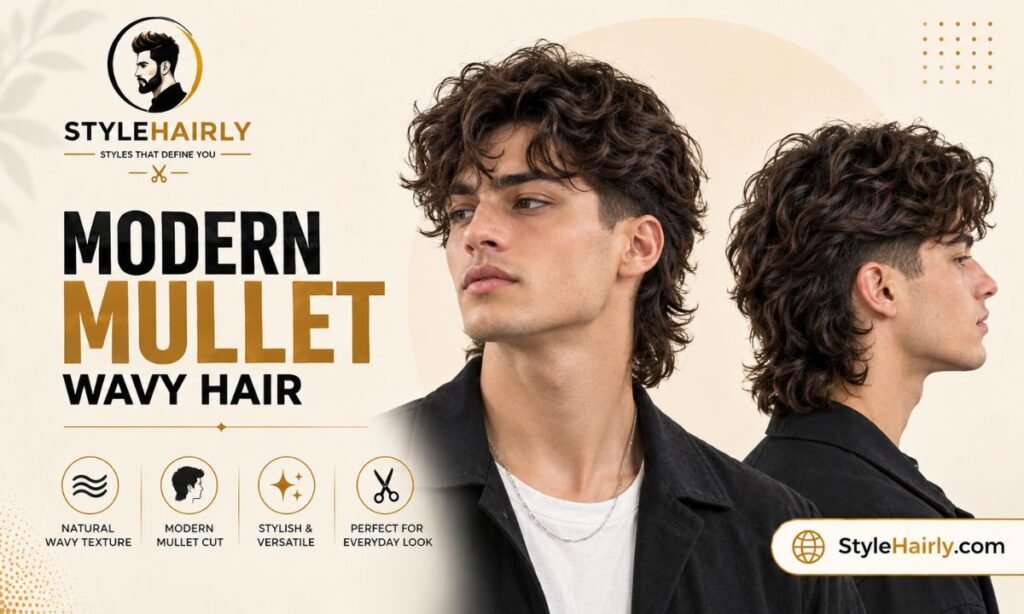
Wavy hair adds texture to a haircut in a way that straight hair usually can’t, and that’s exactly why the modern mullet has become one of the most requested cuts for men with natural wave or curl.
If you’re trying to figure out whether this style will work with your hair, which variation to ask for, or how to keep it looking good between appointments, you’re in the right place.
A modern mullet with wavy hair typically works best when the crown has enough length to show natural movement, the sides are kept shorter and often faded, and the back retains length that connects to the top rather than looking like a separate section.
The exact balance depends on how much wave you have, how thick your hair is, and how much daily styling you’re willing to do.
This guide walks through how the modern mullet differs from the vintage version, which variations suit different hair types and face shapes, how to talk to your barber, and how to style and maintain the cut at home. It also covers the most common style variations people search for, from short and messy takes to faded and colored versions, so you can figure out which one actually fits your hair and lifestyle.
Modern Mullet Wavy Hair at a Glance
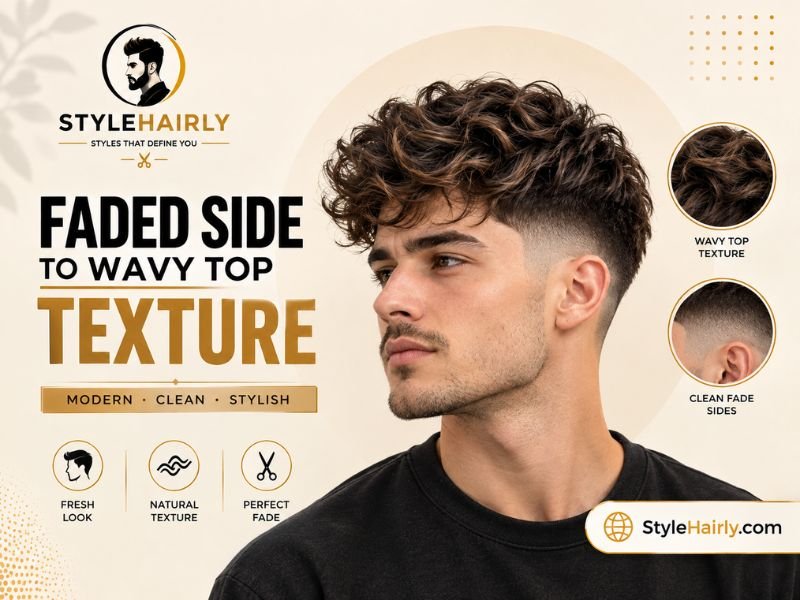
Best for: Straight, wavy, and curly hair with natural movement Hair length needed: Short to medium on top, longer at the nape Maintenance: Moderate, trims every 4 to 8 weeks depending on the fade Styling time: 5 to 10 minutes for most versions Main feature: Shorter, textured top and sides with length retained at the back Works well with: Fades, curtain-style fringes, and natural texture products
These are general guidelines rather than fixed rules. A barber who understands your specific hair density and growth pattern can adjust the cut so it grows out cleanly and suits your face shape.
What Makes a Modern Mullet Different From an Old-School Mullet?
The modern mullet keeps the core idea of the original, shorter on top and sides with length left at the back, but softens the transition and adds deliberate texture instead of the blunt, uniform cut associated with the 1980s version. Barbers now typically blend the sides with a fade or taper, add layers through the crown so wavy or curly hair can move naturally, and keep the back shaped rather than left to grow out on its own.
For wavy hair specifically, this update matters because texture reads differently at different lengths. A cut that looks intentional on straight hair can look uneven on wavy hair if the layers aren’t placed with the wave pattern in mind. That’s part of why “modern mullet” and “wavy mullet” are often searched as their own terms. The wave itself becomes part of the style rather than something to fight against.
Is a Wavy Mullet Right for Your Hair Type and Face Shape?
A wavy mullet tends to suit medium to thick hair with a visible S-shaped wave pattern best, since that texture holds the shape at the crown and adds natural volume at the back without extra product. Fine or thin wavy hair can still wear the style, but it usually needs shorter layering on top and lighter product to avoid looking flat.
Best Hair Types for a Wavy Mullet
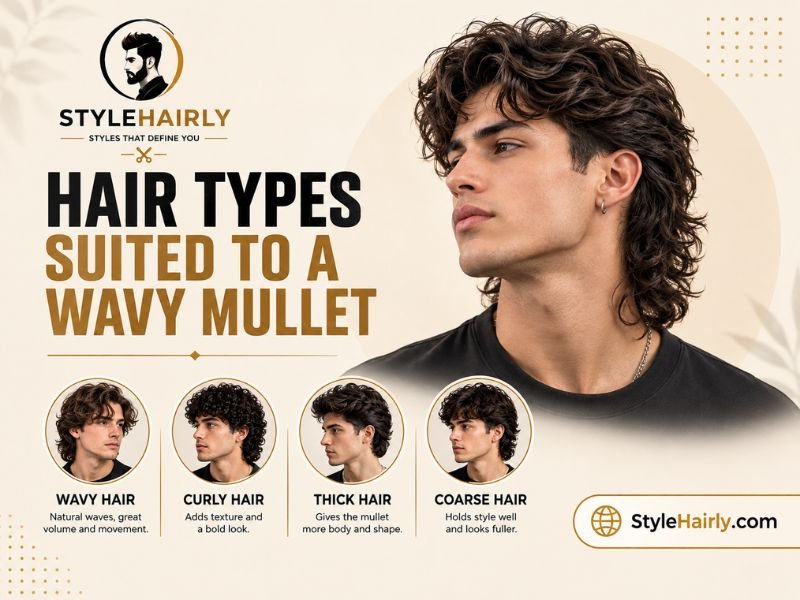
- Wavy, medium-thick hair: Holds shape well and needs the least daily effort.
- Curly hair: Works well but often needs a slightly longer top so curls don’t spring up shorter than expected after they dry.
- Fine, wavy hair: Can look great with shorter layers and a lightweight sea salt or texture spray, since heavier creams tend to weigh fine strands down.
- Straight hair with a slight bend: Can still pull off the look with the help of a texturizing product or a light perm, though the natural movement won’t be as pronounced.
Face Shapes That Suit a Modern Mullet
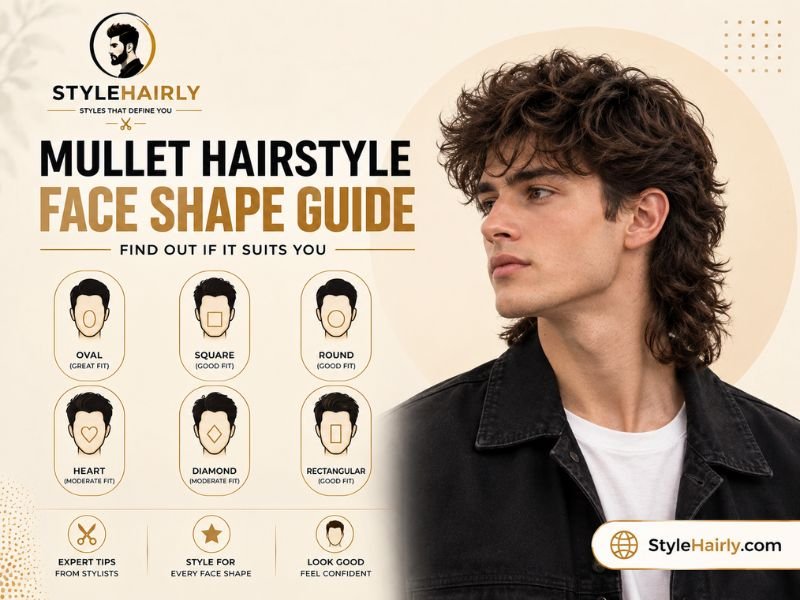
| Face Shape | How the Cut Tends to Work |
| Oval | Most versions work well since the cut doesn’t need to correct much |
| Round | Height at the crown and shorter sides can help elongate the face |
| Square | Softer, wavy layers can balance a strong jawline |
| Long | Extra length at the sides and less height on top can help avoid stretching the face further |
| Heart | Fuller sides and a slightly longer fringe can balance a narrower chin |
These are general tendencies, not guarantees. A consultation with a barber who can see your hairline, density, and jaw structure in person will give you a more accurate read than any general chart.
Popular Modern Mullet Wavy Hair Styles and Variations
The modern mullet isn’t one single haircut. It’s a family of related styles that share the same basic structure but differ in length, fade intensity, texture, and finish. Below are the most commonly requested variations, along with what makes each one distinct.
Classic Modern Mullet Wavy Hair
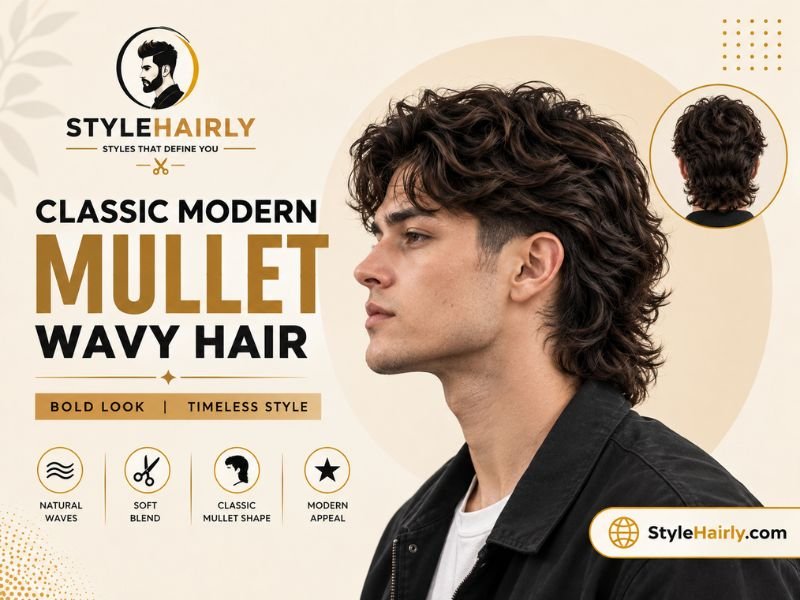
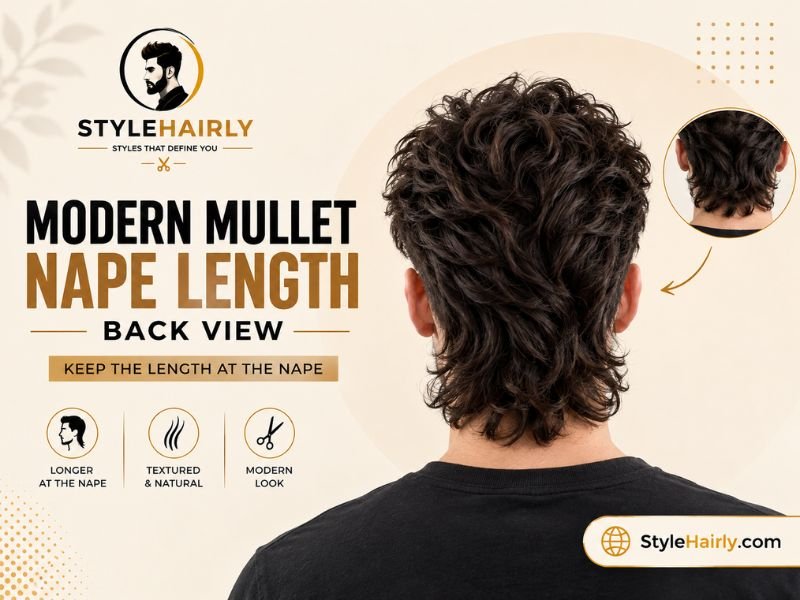
The classic version keeps the traditional mullet proportions, short top and sides with noticeably longer length at the nape, but relies on layering and a soft taper instead of a hard line to blend the sections. This is the most versatile starting point if you’re new to the style, since it doesn’t commit to an aggressive fade or an especially long back section. Wavy hair naturally softens the transition between the top and back, which makes the classic version forgiving even if your barber is still learning your texture.
Modern Mullet with Wavy Hair and Textured Top
This variation puts most of the visual interest at the crown, where the barber leaves extra length and cuts in disconnected layers so the natural wave stands up and separates instead of lying flat. It suits people who want their hair to be the focal point of the style rather than the fade or the back length. Because the texture does most of the work, this version usually needs a matte clay or texture paste worked through damp hair rather than a heavy pomade, which would smooth out the separation the cut is designed to show off.
Short Modern Mullet Wavy Hair
A short modern mullet trims down all three zones, top, sides, and back, so the mullet shape is present but subtle rather than dramatic. This works well for a first attempt at the style, for workplaces with more conservative dress expectations, or for anyone who wants lower daily maintenance. The back length is often just long enough to graze the collar rather than extend well past it, which also means it needs trims a bit more often to keep the proportions from disappearing.
Modern Mullet Wavy Hair Men with Medium Length
The medium-length version adds a bit more length across the top and back compared to the short variation without going as long as the full long mullet. It gives wavy hair enough room to form loose S-waves at the crown while keeping the cut manageable for everyday styling. This tends to be the middle-ground choice for people who want visible movement and a clear mullet silhouette but aren’t ready to commit to significant length at the back.
Long Modern Mullet Wavy Hair
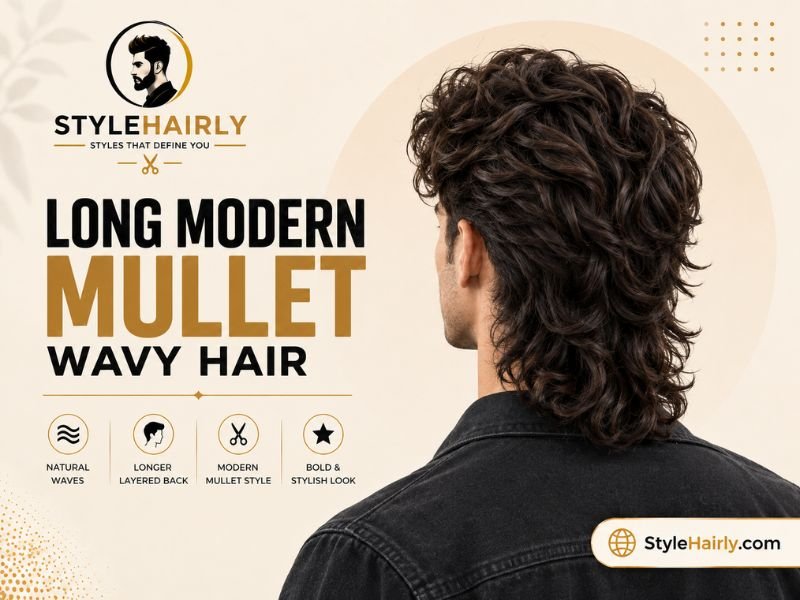
The long version leans into the mullet’s signature feature by keeping several inches of length at the nape while the top and sides stay shorter and more controlled. Wavy or curly hair tends to suit this best because the extra length gives the wave pattern room to form loose curls or ringlets rather than just hanging straight. This variation needs the most patience to grow out and the most regular trims to keep split ends from becoming visible, since longer hair shows damage more readily.
Wavy Modern Mullet for Thick Hair
Thick hair holds volume naturally, so this variation focuses on removing bulk through the crown with layering and thinning shears so the wave pattern can move instead of sitting in a dense, heavy shape. Barbers often use a heavier fade on the sides to offset the volume on top, since thick hair without enough contrast can start to look like it lacks a defined shape. If your hair is thick and wavy, mentioning that specifically to your barber helps them choose the right thinning technique for your density rather than guessing.
Modern Mullet Haircut Wavy Hair with Natural Flow
This version is built around minimal styling. The cut is designed so the hair falls into a wavy, slightly tousled shape as it air-dries, without needing a diffuser, curling iron, or heavy product to look finished. It relies heavily on the barber cutting with the hair’s natural growth pattern and wave direction rather than against it, so getting this right usually takes a barber who asks how your hair naturally dries before cutting it wet.
Messy Wavy Modern Mullet
The messy version deliberately avoids a polished, combed look in favor of a lived-in, textured finish, usually achieved with a light matte product worked through damp or dry hair with the fingers rather than a comb. It tends to suit medium to long versions of the cut best, since shorter hair has less length to create the tousled movement this style relies on. This is one of the lower-maintenance styling approaches on this list precisely because it isn’t meant to look perfectly uniform.
Modern Mullet Wavy Hair Straight
Some people search for this because they have naturally straight hair but want the wavy mullet look, while others have wavy hair they prefer to blow-dry straight for a cleaner finish. For straight hair aiming for a wavy result, a light texturizing spray combined with either a loose curl from a wand or a texturizing perm can help create movement the hair wouldn’t otherwise have. For naturally wavy hair styled straight, a round brush and blow dryer on a medium heat setting, always with a heat protectant applied first, will smooth the wave without fully eliminating the cut’s shape.
Blonde Modern Mullet Wavy Men
Lightening the hair, whether through full color, balayage, or lived-in highlights, adds contrast that makes the layering and texture of a wavy mullet more visible, especially on darker natural hair. Because bleach and lightening treatments can leave hair drier and more prone to frizz, wavy hair that’s been colored blonde usually needs a moisture-focused shampoo and conditioner along with less frequent heat styling to keep the wave pattern healthy rather than brittle. Anyone considering this combination should budget for more frequent trims, since color treatments and split ends tend to show up faster together.
Wavy Mullet
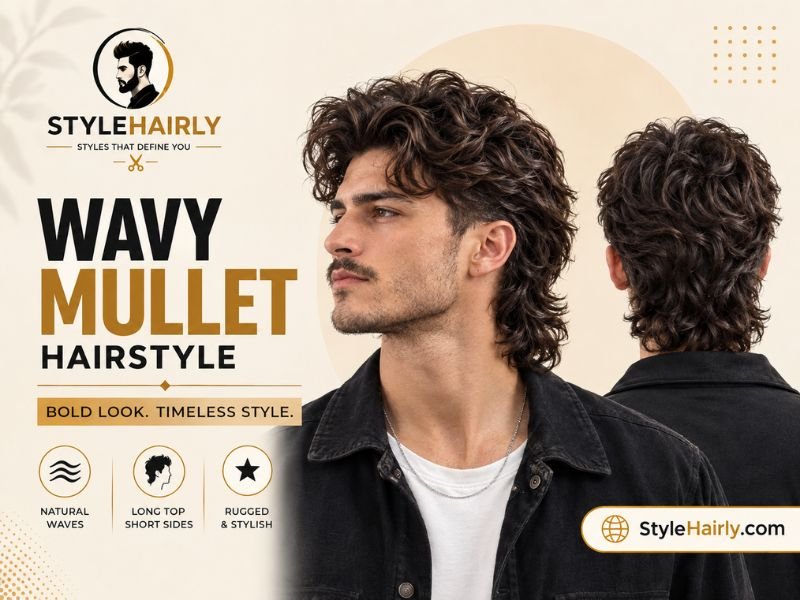
Used broadly, “wavy mullet” simply refers to any mullet cut on hair with natural wave, without specifying length, fade, or finish. It’s often the starting search term for people who haven’t yet decided on a specific variation and are looking at general examples before narrowing down to something like a short, long, faded, or messy version. If you’re still deciding, it’s worth bringing a few reference photos from different variations to your consultation so your barber can point out which elements will actually work with your hair.
Modern Mullet Fade Variations
Fading the sides is one of the most common ways to modernize a mullet, since it creates contrast against the length on top and at the back. Several closely related fade styles come up in searches, and while they overlap, each has a slightly different emphasis.
Modern Mullet Fade Wavy Hair
This is the general term for any mullet where the sides are faded, usually from skin or a very short guard length near the ear up to a longer length that blends into the top. On wavy hair, the fade provides a clean, low-maintenance contrast to the texture on top, so most of the daily styling effort goes into the crown rather than the sides. It’s a good option for anyone who wants their hair’s natural wave to be the main visual feature of the cut.
Modern Mullet Low Fade
A low fade keeps the fading transition close to the hairline, starting just above the ears rather than higher up on the head. This creates a subtler, more understated contrast that tends to suit more conservative or professional settings, since less of the scalp is visible compared to a mid or high fade. It’s also a lower-commitment option if you’re not sure yet whether you want a more dramatic fade.
Fade Mullet Haircut
Used as a general category, “fade mullet haircut” covers any mullet paired with a fade at any height, low, mid, or high. It’s typically the term people search when they know they want the contrast a fade provides but haven’t decided on the exact fade height or the mullet’s length yet. Bringing this general idea to a consultation, along with a photo, gives your barber a starting point to refine based on your face shape and hair density.
Wavy Mullet Fade
This variation specifically pairs a faded side with a wavy or textured top and back, as opposed to a straight or slicked finish. The fade does the structural work of shaping the silhouette, while the wave adds movement and softness at the crown and nape. It’s a popular combination because the contrast between the tight, clean fade and the looser texture on top tends to photograph and style well without much daily effort.
Modern Mullet Fade
As a broader term, this covers any current, updated mullet style that includes a faded side, distinguishing it from the unfaded, more traditional mullet silhouette. Most of the specific fade heights and finishes described above fall under this umbrella. If you mention this term to a barber without more detail, expect them to ask follow-up questions about fade height and how much length you want left on top and at the back.
What to Tell Your Barber for a Modern Mullet Wavy Hair Cut
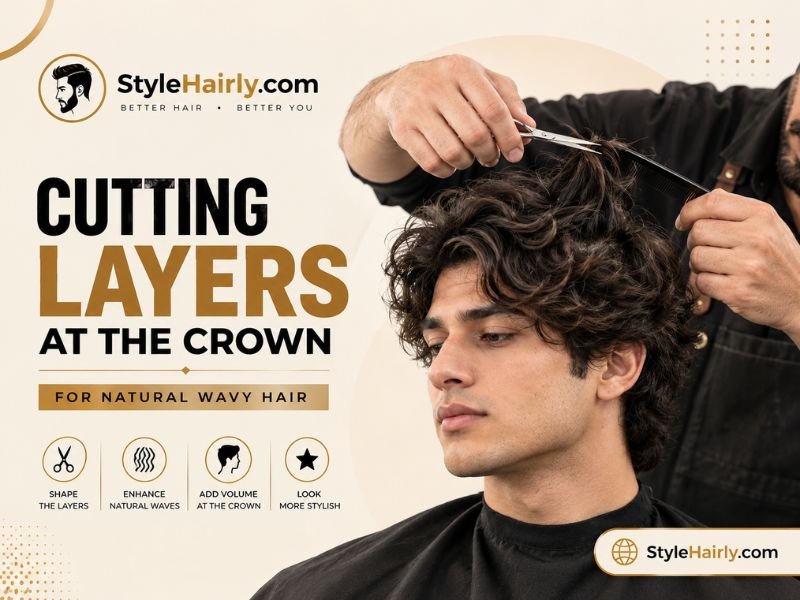
Being specific with your barber makes a significant difference in how close the final result matches what you had in mind. A few useful things to communicate:
- Desired length at the back: Say roughly how far past the collar you want it, or whether you want it just grazing the neckline.
- Fade height and intensity: Specify low, mid, or high, and whether you want it to fade to skin or stop at a guard length.
- How much you want the top to move: Mention if you want maximum texture and separation, or a softer, more natural fall.
- Your hair’s natural drying pattern: Tell your barber how your hair looks when it air-dries, since this affects how they cut for the wave.
- What to avoid: If you don’t want an especially dramatic length difference between the top and back, say so directly rather than assuming it’s implied.
A barber can’t feel your hair’s texture through a photo alone, so combining a reference image with a description of your own hair’s behavior tends to produce a more accurate cut than either one on its own.
How to Style a Modern Mullet with Wavy Hair at Home
Preparation and Products
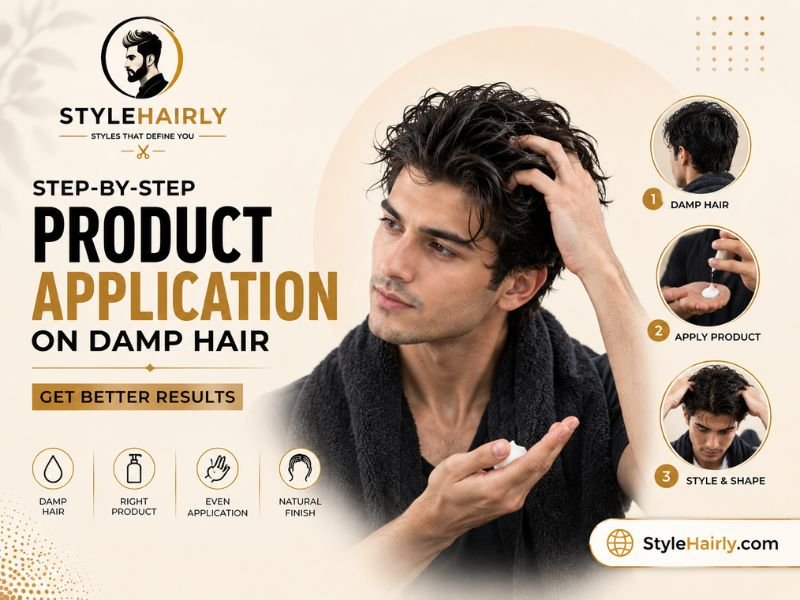
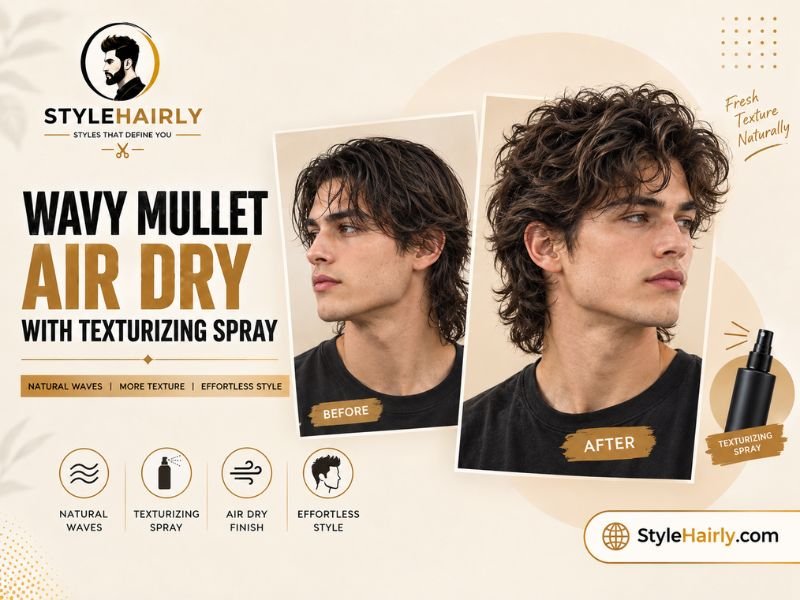
Start with clean, towel-dried hair rather than fully wet or fully dry hair, since most texture products work best on hair that’s damp but not dripping. A lightweight sea salt spray or texturizing cream is usually enough for wavy hair. Heavier pomades tend to weigh down natural wave and can make the style look flatter than intended.
Step-by-Step Styling
- Towel-dry hair until it’s damp rather than wet.
- Apply a small amount of texturizing spray or lightweight cream, focusing on the crown and back where most of the movement should show.
- Scrunch the hair gently with your hands to encourage the natural wave pattern, working from the ends up toward the roots.
- If air-drying, let the hair dry mostly on its own and avoid touching it too much, which can cause frizz.
- If using a diffuser attachment on a blow dryer, use a low heat and low airflow setting, and always apply a heat protectant spray beforehand.
- Once dry, use your fingers rather than a comb to separate any pieces that clumped together, which keeps the texture looking natural instead of stringy.
Finishing and Maintenance
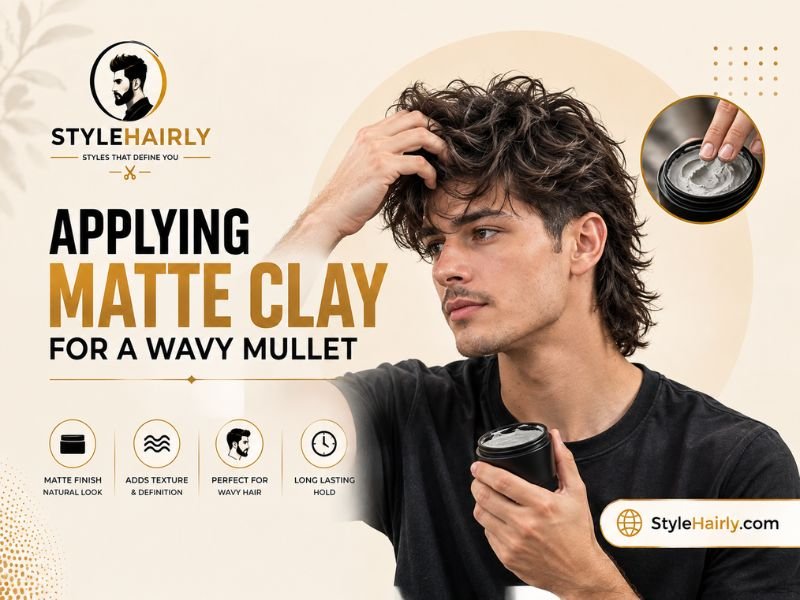
A small amount of matte clay or wax can be pressed lightly into the ends of the hair for extra hold, but a little goes a long way with wavy hair since too much product can make waves look greasy rather than defined. Between cuts, trims every 4 to 6 weeks for faded versions and every 6 to 8 weeks for unfaded, longer versions will keep the shape from growing out unevenly.
Modern Mullet vs Wolf Cut vs Shag: How Do They Compare?
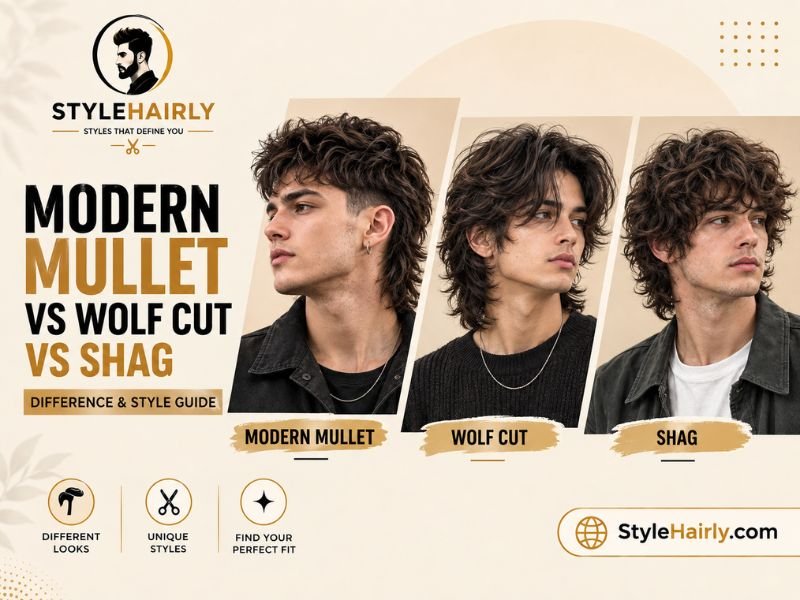
| Feature | Modern Mullet | Wolf Cut | Shag |
| Length contrast | High, short top/sides, long back | Moderate, layered throughout | Low to moderate, softer layering |
| Best hair type | Wavy, thick, or curly | Wavy or curly, medium to long | Fine to medium, straight or wavy |
| Fade compatibility | Very common | Sometimes | Less common |
| Maintenance | Moderate | Moderate to high | Lower |
| Overall look | Bold, retro-modern | Edgy, textured | Soft, casual |
If you want the most dramatic length contrast and don’t mind a bolder statement, the mullet is usually the better fit. If you want heavier layering throughout with less of a defined back section, a wolf cut or shag might suit your hair and lifestyle better.
Pros and Cons of a Modern Mullet Wavy Hair Style
Pros
- Works with natural wave and curl instead of fighting it, which can mean less daily styling effort
- Highly customizable through length, fade height, and finish
- Distinct, recognizable silhouette that stands out from more common short cuts
- Can suit a range of face shapes when the layering is adjusted correctly
Cons
- Requires more frequent trims than a uniform-length cut to maintain the shape
- Faded versions need touch-ups every few weeks to keep the fade crisp
- Growing it out from a shorter cut takes patience while the proportions settle
- Can look uneven if the barber isn’t experienced with cutting wavy or curly texture
Common Mistakes to Avoid
- Skipping the consultation details: Not specifying fade height or back length leaves too much up to interpretation.
- Using heavy products on fine, wavy hair: This weighs hair down and flattens the texture the cut is meant to show off.
- Waiting too long between trims: The contrast that makes a mullet look intentional fades quickly as hair grows out unevenly.
- Applying heat without protection: Diffusing or blow-drying wavy hair without a heat protectant increases the risk of dryness and frizz over time.
- Ignoring natural growth patterns: A cut that ignores how your hair naturally falls or curls will require far more daily effort to maintain than one that works with it.
Frequently Asked Questions
Is a modern mullet good for thin or fine wavy hair?
Yes, but it usually needs shorter layering on top and a lightweight product rather than a heavy cream, since fine hair can look flat if it’s weighed down. A slightly shorter version of the cut also tends to hold its shape better than a longer, heavier variation.
Does a wavy mullet work on curly hair?
It can work well, though curly hair often needs a bit of extra length on top since curls tend to spring up shorter once they’ve fully dried. Discussing your curl pattern with your barber before the cut helps avoid an unexpectedly short result.
What face shape suits a modern mullet best?
Oval and square face shapes tend to have the most flexibility with this cut, though round, long, and heart-shaped faces can also wear it well when the layering and fade height are adjusted to balance the face. A consultation is the most reliable way to confirm what will work for your specific features.
Is a modern mullet high maintenance?
It’s moderate maintenance overall. Faded versions need trims roughly every 4 to 6 weeks to keep the fade sharp, while unfaded, longer versions can typically go 6 to 8 weeks between trims.
How do I style a modern mullet with wavy hair without heat tools?
Apply a lightweight texturizing spray or cream to damp hair, scrunch gently to encourage the natural wave, and let it air-dry without disturbing it too much. This natural-flow approach is one of the lowest-effort ways to style the cut.
What should I ask my barber for if I want a low-maintenance version?
Ask for a short or medium-length version with a low fade and moderate length at the back, and mention that you want minimal daily styling. This combination tends to hold its shape longer between trims than more dramatic length or fade variations.
How long does a modern mullet usually last before it needs reshaping?
Most people need a trim every 4 to 8 weeks depending on the fade height and how quickly their hair grows, with faded versions typically needing more frequent visits than unfaded ones.
Can straight hair be styled to look like a wavy mullet?
Yes, with the help of a texturizing spray and either a loose curl from a curling wand or a texturizing perm, though the movement won’t be identical to naturally wavy hair. A barber or stylist can advise on which approach suits your hair’s condition best.
Conclusion
A modern mullet with wavy hair works because it lets natural texture do most of the visual work instead of fighting against it. Whether you land on a short, low-maintenance version, a longer style with a fade, or a messy, natural-flow finish, the key decisions come down to your hair’s density and wave pattern, how much daily styling you’re willing to do, and how often you can get in for trims. Bring a clear reference and a description of how your hair naturally behaves to your next consultation, and you’ll have a much better shot at leaving with the version that actually suits you.

1 thought on “Modern Mullet Wavy Hair (2026): Best 16 Styles & Tips”