

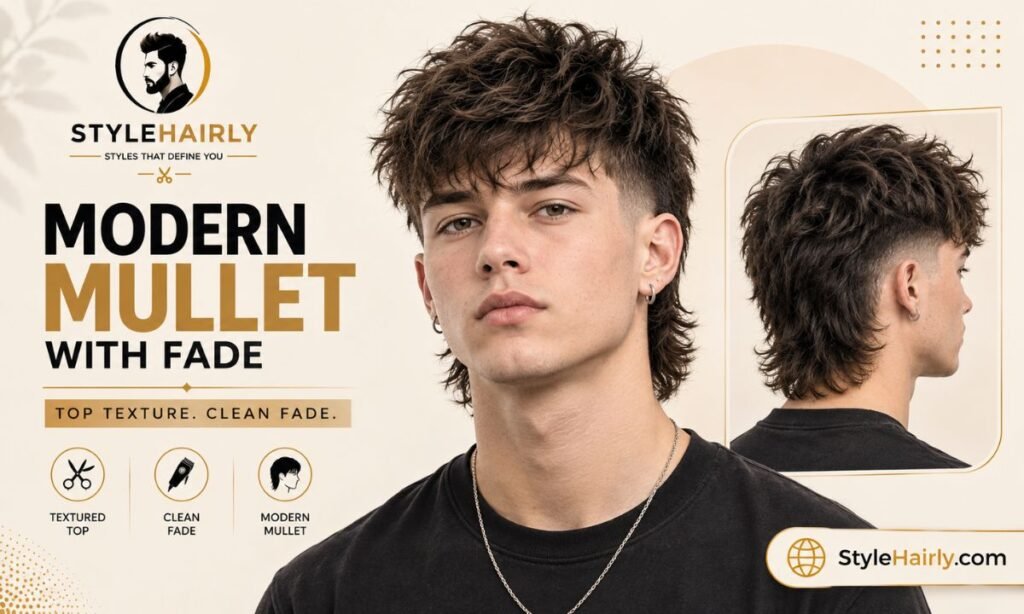
Choosing a modern mullet means figuring out which version actually fits your hair type, your face shape, and how much time you want to spend styling it. With so many fade heights, lengths, and texture options floating around, it is easy to end up in the chair without a clear direction for your barber.
The modern mullet works because it separates the haircut into two zones: a short, controlled fade or taper on the sides and back, and longer, textured hair on top and at the nape.
That contrast is what makes the style feel current rather than dated, and it gives you room to adjust the fade height, the fringe, and the length in the back to suit your hair and your lifestyle.
This guide covers what a modern mullet actually is, which hair types and face shapes suit it, how to style and maintain it, and a full breakdown of the most requested variations, including low, mid, and high taper versions, burst and skin fades, textured fringe options, curly and straight hair adaptations, and length variations from very short to long. It also covers styling with a beard, blonde color options, and a version suited to younger boys.
Modern Mullet at a Glance
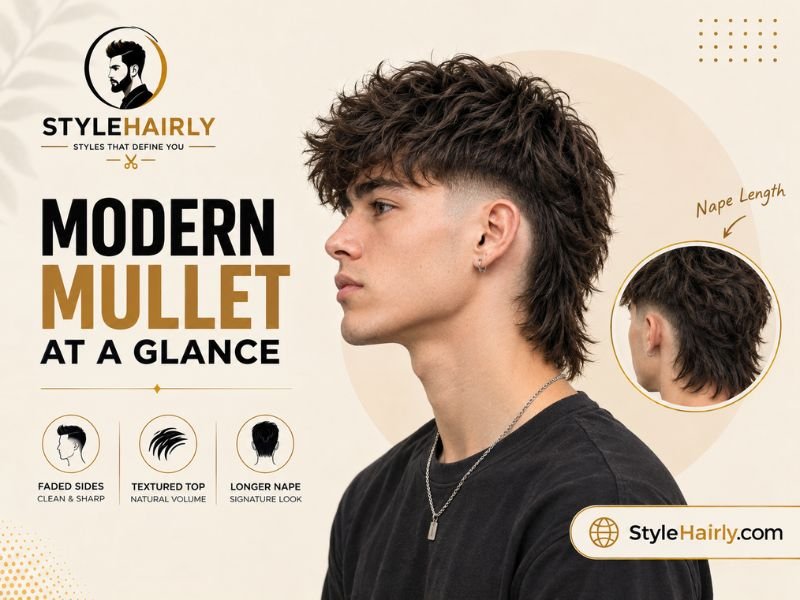
Best for: Men who want short, low-maintenance sides with more length and texture on top Hair length needed: Medium to long on top, short to shaved on the sides Hair types: Straight, wavy, and curly hair can all work with the right cutting technique Maintenance: Trims every 3 to 5 weeks to keep the fade line clean Styling time: 5 to 10 minutes with the right product Main feature: Short sides with noticeably longer hair at the crown and nape
What Is a Modern Mullet Haircut?
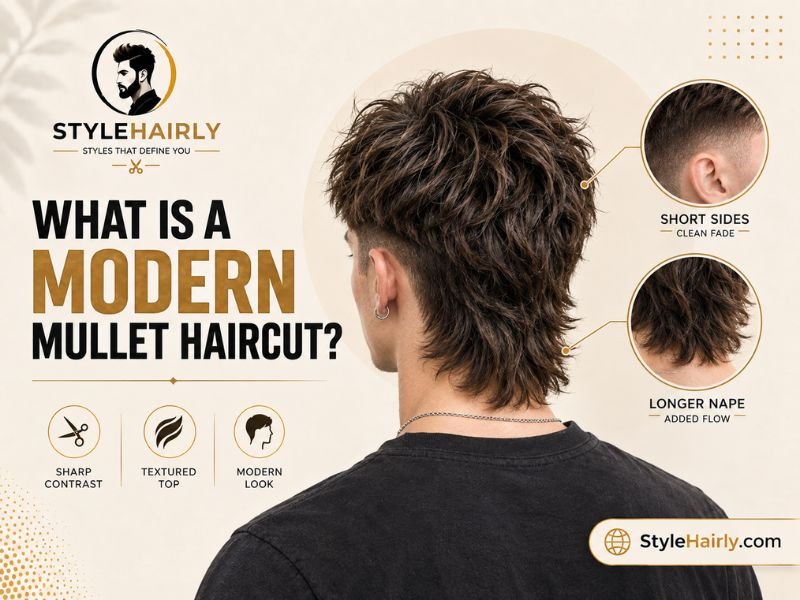
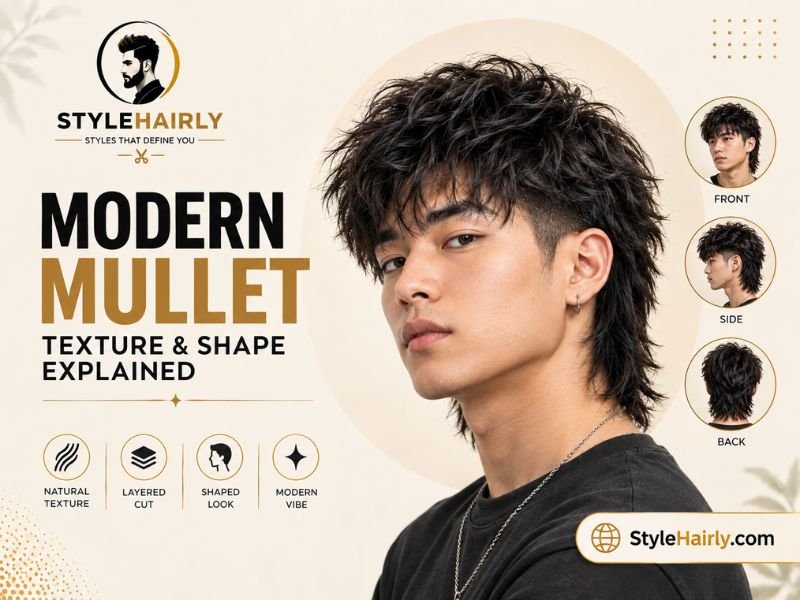
A modern mullet is an updated version of the classic mullet that replaces the abrupt length change of the 1980s style with a blended fade or taper on the sides and back. The top stays long enough to add texture, movement, or a fringe, while the length at the nape is shorter and less exaggerated than the original mullet.
The defining feature is contrast without harsh lines. Where the old-school mullet had a hard stop between short sides and long back, the modern version uses clippers to fade or taper the sides so the transition into the longer top and nape looks intentional rather than accidental. Barbers often combine this with heavier texturizing on top, so the haircut reads as a textured crop or a shag from the front and only reveals the mullet shape from the side or back.
Because the cut is really a framework rather than one fixed look, it adapts easily to different fade heights, top lengths, and finishing styles, which is why there are so many named variations of it.
Which Hair Types and Textures Work Best for a Modern Mullet?
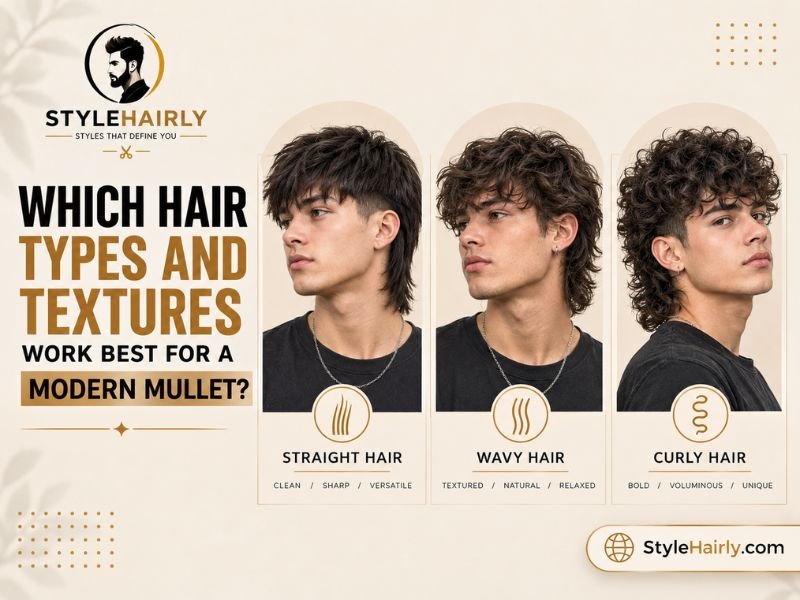
Straight, wavy, and curly hair can all work for a modern mullet, but each texture changes how the top and nape behave and how much styling product you will need. Straight hair tends to look sleeker and needs more product to hold shape, wavy hair naturally adds texture with less effort, and curly hair often needs specific cutting to avoid looking bulky at the crown.
Fine, straight hair usually needs some layering on top to avoid looking flat, plus a lightweight styling product to fake volume. Thick, straight hair holds a mullet shape well but can look heavy if the barber does not thin it out with texturizing shears. Wavy hair is often considered the easiest texture for this cut because the natural bend adds movement to the top and fringe without extra styling. Curly hair works well too, but it usually needs a cut that removes bulk with thinning shears so the curls at the crown do not overwhelm the shorter sides.
Which Face Shapes Suit a Modern Mullet?
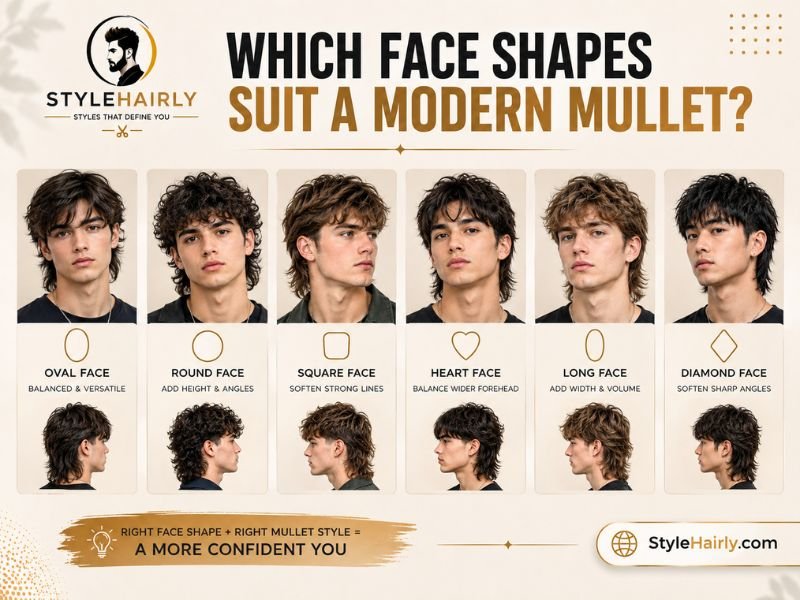
Most face shapes can wear a modern mullet because the fade height and top length can be adjusted to balance the face. Oval and square face shapes tend to have the most flexibility, while round and long faces usually need small adjustments to the fringe or crown height to look balanced.
Round faces often do better with more height at the crown and a side-swept fringe rather than a full blunt fringe, since added vertical length helps offset width. Long faces can benefit from a fuller fringe that breaks up the length of the forehead. Square faces generally suit almost any version, since the strong jawline pairs well with textured length on top. Heart-shaped faces often look good with a slightly longer, softer fringe that balances a narrower chin.
How to Style a Modern Mullet
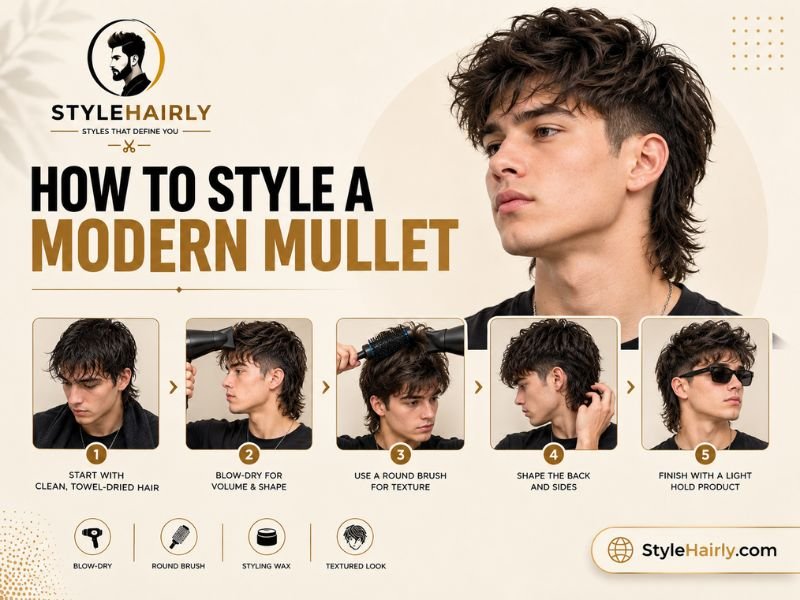
- Prep on damp hair. Towel-dry the hair until it is damp, not dripping, since most styling products work better and distribute more evenly on slightly damp hair.
- Apply the right product. Use a lightweight sea salt spray or texturizing cream for a natural look, or a matte clay or paste if you want more defined separation.
- Blow-dry with direction. Use a round brush or your fingers to blow-dry the top and fringe in the direction you want it to fall, focusing heat at the roots for lift. Always use a heat protectant spray before applying heat to reduce damage.
- Define the pieces. While the hair is still slightly warm, work a small amount of product through with your fingers to separate strands and create texture rather than a flat, uniform layer.
- Set and finish. Finish with a light-hold spray if you want the style to last through the day, especially in humid weather.
Maintenance and Upkeep
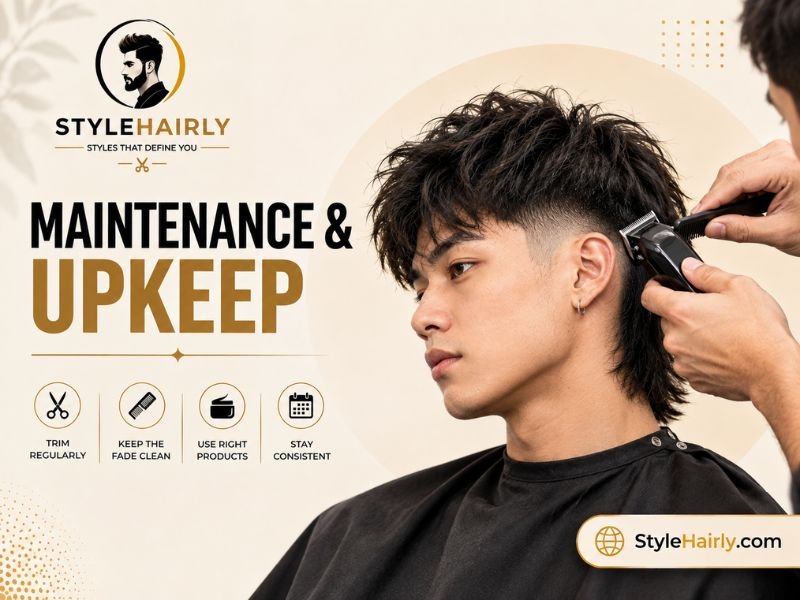
A modern mullet needs more frequent trims than a simple buzz cut or crew cut because the fade or taper on the sides grows out faster than the length on top. Most men need a trim every 3 to 5 weeks to keep the fade line sharp, though the top and nape can often go longer between full cuts if you only want to maintain length there.
Between trims, the sides will start to look less defined first, so many men book a quick “fade refresh” at the barber every couple of weeks if they want the cut to stay crisp. The top and fringe generally just need regular washing, conditioning, and occasional trims of split ends to keep the texture healthy.
Pros and Cons of the Modern Mullet
Pros
- Short sides mean less daily upkeep in the areas that grow the fastest
- The longer top gives you room to change your look with different products or partings
- Works across straight, wavy, and curly textures with adjustments to the cut
Cons
- The fade needs more frequent trims than a uniform short haircut
- Growing it out evenly between cuts can look untidy if the top and sides fall out of balance
- Curly or thick hair may need extra thinning to avoid bulk at the crown
Modern Mullet vs Classic Mullet vs Wolf Cut
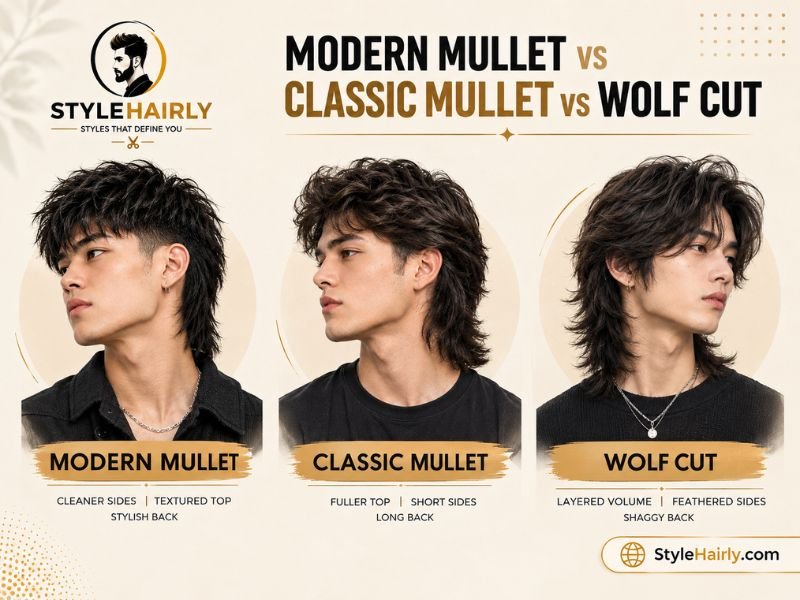
| Feature | Modern Mullet | Classic Mullet | Wolf Cut |
| Side treatment | Clean fade or taper | Often untapered, straight cut | Heavily textured, choppy sides |
| Top length | Medium, styled with texture | Often flatter, less textured | Very layered and voluminous |
| Overall look | Neat, intentional contrast | Retro, less blended | Shaggy, edgy, less structured |
| Best for | Most face shapes and textures | Straight or slightly wavy hair | Thick or curly hair with natural volume |
The modern mullet sits between these two styles. It keeps the length contrast that defines a mullet but blends it the way a wolf cut blends its layers, without going as far into shag territory as the wolf cut does.
Modern Mullet Fade and Taper Styles
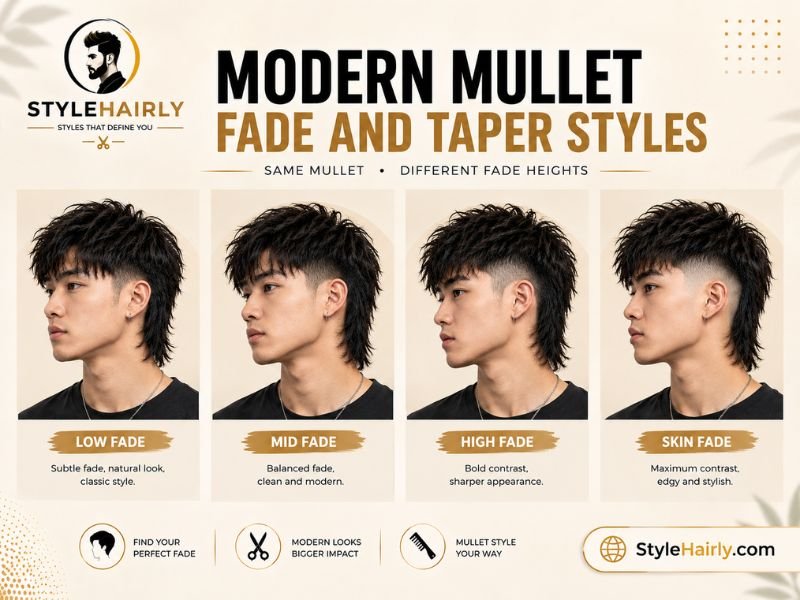
The side treatment is what separates most modern mullet variations from each other. Fade height and taper style change the overall look far more than the top length does, which is why barbers usually start the conversation there.
Low Taper Modern Mullet
A low taper modern mullet keeps the graduation close to the hairline, tapering the hair gradually just above the ears and neckline without exposing much skin. It is one of the more conservative fade choices, which makes it a common pick for workplaces with stricter grooming expectations.
Best for: Fine to medium hair and more formal or conservative settings Styling tip: Ask your barber to leave slightly more length at the taper line so it blends softly rather than looking clipper-cut Maintenance: Trim every 4 to 5 weeks since the graduation grows out less noticeably than a higher fade
Mid Taper Modern Mullet
A mid taper modern mullet moves the graduation up to around the temple area, creating more visible contrast between the short sides and the longer top than a low taper does. It is often the middle-ground choice for men who want some edge without a fully faded look.
Best for: Thick or wavy hair that benefits from more visible contrast Styling tip: Comb the top slightly off to one side to emphasize the taper line Maintenance: Trim every 3 to 4 weeks to keep the taper line from growing shaggy
High Taper Modern Mullet
A high taper modern mullet brings the graduation up near the crown, leaving a much smaller area of longer hair on top compared to lower taper versions. This creates the boldest contrast of the three taper heights while still avoiding a hard skin fade.
Best for: Men who want a sharper, more dramatic silhouette Styling tip: Add volume at the crown with a blow-dryer so the shorter side length does not overwhelm the top Maintenance: Trim every 3 weeks since the higher graduation line grows out visibly faster
Burst Fade Modern Mullet
A burst fade modern mullet curves the fade around the ear in a half-circle rather than running it straight back, leaving slightly more length behind the ear. It is a popular choice for men who want a rounder, softer fade shape instead of a straight taper line.
Best for: Men who want a distinctive fade shape rather than a standard straight taper Styling tip: Keep the nape hair slightly longer to complement the curved fade shape Maintenance: Trim every 3 to 4 weeks, since the curved line needs regular attention to stay clean
Modern Mullet Low Fade
A modern mullet with a low fade uses a true skin or near-skin fade that starts very close to the hairline, giving a cleaner and more defined edge than a low taper while still keeping a subtle look overall. The key difference from a low taper is the amount of skin shown near the neckline and sideburns.
Best for: Men who want a crisper edge without a dramatic overall contrast Styling tip: Ask specifically for “fade,” not “taper,” if you want visible skin near the hairline rather than a soft blend Maintenance: Trim every 2 to 3 weeks, since skin fades grow out and lose their sharp line faster than tapers
Mid Fade Mullet Haircut
A mid fade mullet haircut raises the fade line to the temple with a true skin fade, giving more visual separation than a mid taper while still leaving enough length above the fade to blend into the top. It tends to photograph as the most “barbershop-clean” version of the cut.
Best for: Men who want a defined, groomed look with clear structure Styling tip: Use a comb to create a defined part above the fade line for a sharper finish Maintenance: Trim every 2 to 3 weeks to maintain the crisp fade edge
Fade Mullet Haircut
A fade mullet haircut is the general term for any modern mullet that uses a true skin fade rather than a taper on the sides, regardless of the exact height. It is the broadest category covering the low, mid, and high fade versions described above.
Best for: Anyone who prefers a defined fade over a softer taper, at any height Styling tip: Bring a reference photo of the exact fade height you want, since “fade mullet” alone leaves a lot of room for interpretation Maintenance: Trim every 2 to 3 weeks regardless of fade height to keep the line sharp
Modern Mullet Length Variations
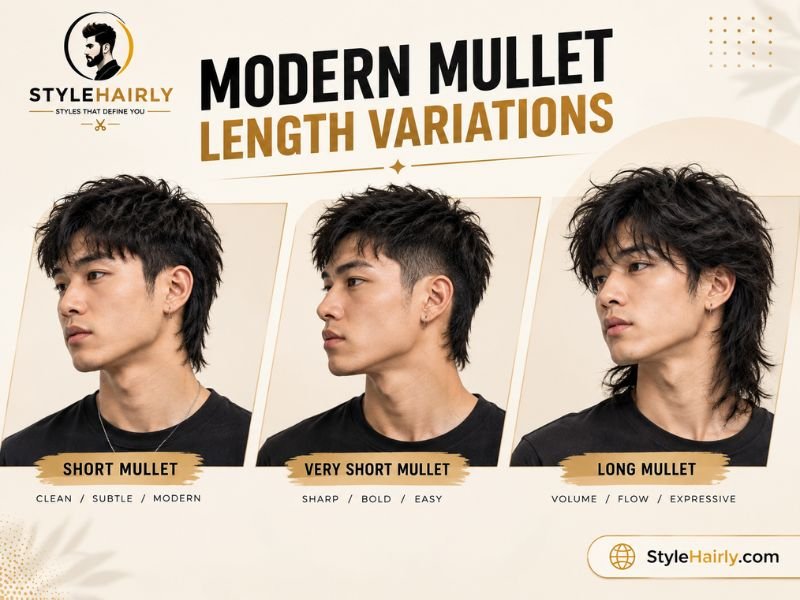
Beyond the fade, overall length is the next biggest factor in how a modern mullet looks and how much upkeep it needs.
Short Modern Mullet Men Haircuts
A short modern mullet keeps the top and nape length noticeably shorter than a classic mullet silhouette, so the style reads as a textured crop with only subtle length at the back rather than an obvious mullet shape. It suits men who want the concept of the cut without a dramatic length difference.
Best for: First-time mullet wearers or workplaces with conservative grooming rules Styling tip: A small amount of matte paste is usually enough since there is less length to control Maintenance: Trim every 3 to 4 weeks to maintain the compact shape
Very Short Mullet Haircut
A very short mullet haircut pushes the length even further down, often pairing a skin fade or heavy taper with just enough length on top to add slight texture and a small amount of extra length at the nape. It is the lowest-maintenance version of the style in terms of daily styling.
Best for: Men who want the mullet concept with minimal daily styling effort Styling tip: A light pomade worked through damp hair is usually enough to add definition Maintenance: Trim every 3 weeks since short lengths show growth quickly
Long Modern Mullet
A long modern mullet, sometimes simply called long modern mullet men haircuts, keeps significant length on top and at the nape, often reaching the collar or beyond at the back while the sides stay tapered or faded. This version leans closest to the classic mullet silhouette while still using a modern, blended fade.
Best for: Thick or wavy hair that can support extra length without looking stringy Styling tip: Use a volumizing spray at the roots before blow-drying to prevent the longer length from falling flat Maintenance: Trim the sides every 3 to 4 weeks, and trim the ends on top and at the nape every 8 to 10 weeks to control split ends without losing length
Modern Mullet Styles by Hair Texture
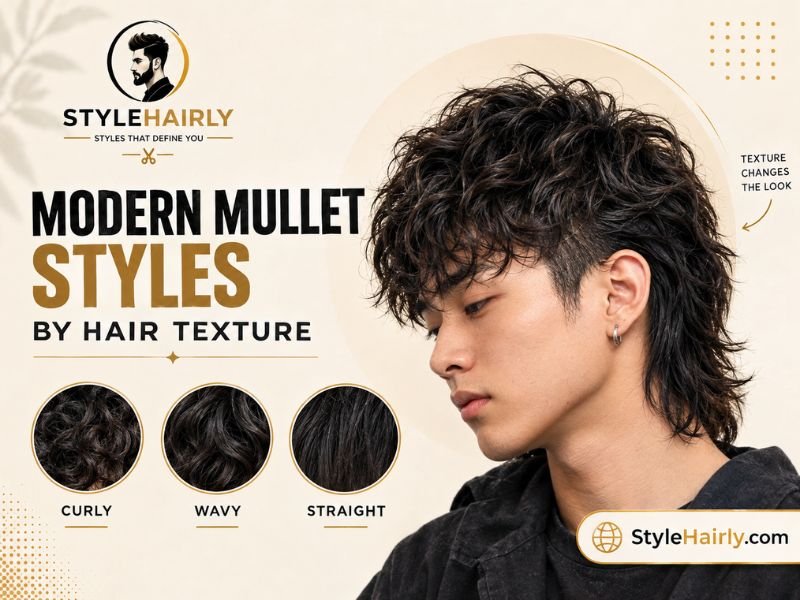
The same fade or taper can look different depending on whether your hair is straight, wavy, or curly, so it helps to think about texture separately from length and fade height.
Curly Modern Mullet
A curly modern mullet uses natural curl pattern to add volume and texture on top while the sides stay faded or tapered for contrast. Curly hair often needs extra thinning at the crown so the curls do not create excess bulk against the shorter sides.
Best for: Natural curls or coils that hold shape without heat styling Styling tip: Apply a curl cream or gel to damp hair and let it air dry or diffuse to avoid frizz Maintenance: Trim every 5 to 6 weeks on top since curls hide length loss well, but keep the fade refreshed every 3 weeks
Wavy Modern Mullet
A wavy modern mullet is often considered one of the easiest versions to style because the natural wave pattern already provides texture and movement without much product or heat. It tends to suit both shorter and longer top lengths equally well.
Best for: Natural waves that need minimal styling to look intentional Styling tip: A light sea salt spray enhances the natural wave pattern without weighing it down Maintenance: Trim every 4 to 5 weeks, since waves disguise minor unevenness better than straight hair
Straight Hair Modern Mullet
A modern mullet on straight hair, sometimes searched as modern mullet men haircuts straight hair, tends to look sleeker and more defined but can also look flat on top without the right layering. Barbers usually add point-cutting or texturizing on top to fake movement that straight hair does not create on its own.
Best for: Straight hair that wants added texture without a perm or heavy product use Styling tip: Blow-dry with a round brush to add lift at the root, then finish with a matte paste for texture Maintenance: Trim every 4 weeks, since straight hair shows a growing-out fade more clearly than textured hair does
Fluffy Modern Mullet
A fluffy modern mullet emphasizes soft, rounded volume on top rather than sharp, piecey texture, usually achieved with layered cutting and a diffuser or round brush during styling. It works particularly well on wavy or lightly curly hair that already has some natural body.
Best for: Hair with natural body that can hold soft volume without heavy product Styling tip: Diffuse dry on low heat with your head tilted forward to build volume at the roots Maintenance: Trim every 4 to 5 weeks, keeping length on top so the fluffy shape does not lose its rounded silhouette
Modern Mullet Styling and Finish Variations
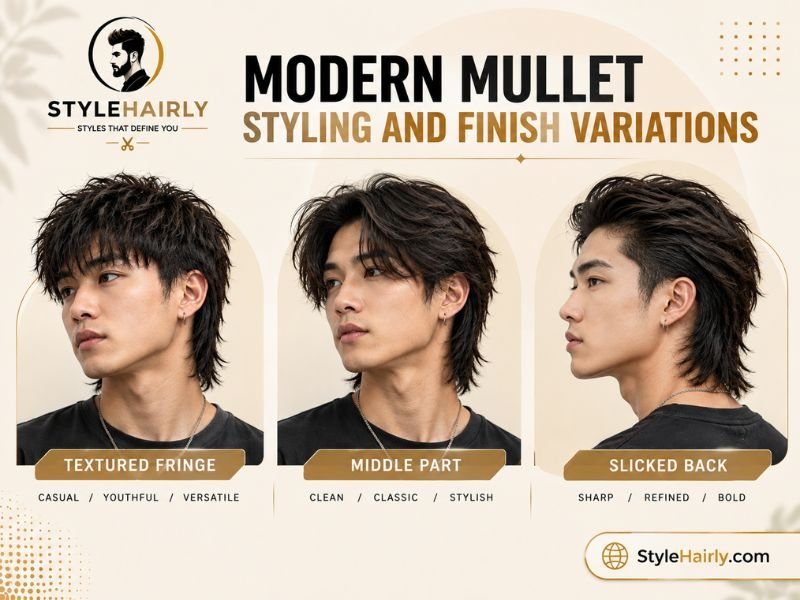
Beyond fade, length, and texture, the way the top and fringe are cut and finished creates several more distinct looks within the modern mullet family.
Textured Fringe Modern Mullet
A textured fringe modern mullet uses point-cutting or texturizing shears on the front section to create a broken, piecey fringe rather than a solid, blunt line. It gives the front of the haircut a casual, undone look that pairs well with most fade heights.
Best for: Men who want a relaxed, lived-in look rather than a precise, blunt fringe Styling tip: Apply a small amount of clay to dry hands and pull through the fringe piece by piece for separation Maintenance: Trim the fringe every 4 to 5 weeks to keep the pieces from growing too heavy
Modern Mullet with Fringe
A modern mullet with a fuller fringe keeps the front section thicker and more solid rather than heavily textured, creating a softer, more uniform line across the forehead. It tends to suit men who want more forehead coverage than a piecey textured fringe provides.
Best for: Men who want more forehead coverage or want to soften a longer face shape Styling tip: Blow-dry the fringe forward and slightly down rather than up and back to keep the fuller shape Maintenance: Trim every 3 to 4 weeks since a fuller fringe shows growth around the eyes more quickly
Middle Part Modern Mullet
A middle part modern mullet uses a center part on top instead of a side part or brushed-back finish, which tends to give the style a slightly more fashion-forward, 90s-inspired look. It generally requires a bit more length on top to hold the part cleanly.
Best for: Straight to wavy hair with enough length on top to fall evenly on both sides Styling tip: Use a comb while the hair is damp to set the part before blow-drying Maintenance: Trim every 4 to 5 weeks, keeping the sides even so the part does not look lopsided
Slick Back Modern Mullet
A slick back modern mullet combs the top straight back off the face using a strong-hold gel or pomade, creating a polished, put-together look that contrasts with the more textured versions of the cut. It is a common choice for more formal occasions.
Best for: Straight to wavy hair with enough length on top to comb back cleanly Styling tip: Apply pomade to damp hair and comb back in sections for an even, streak-free finish Maintenance: Trim every 4 weeks, keeping length on top consistent enough to slick back evenly
Warrior Cut Modern Mullet
A warrior cut modern mullet combines the mullet’s short-sides, long-top structure with the longer, often center-parted or braided length at the crown and nape associated with the warrior cut trend. It usually keeps more overall length than a standard modern mullet.
Best for: Thick or wavy hair that can support extra length at the crown and nape Styling tip: A small braid or twist at the crown can add definition if you are growing the top out longer Maintenance: Trim the sides every 3 to 4 weeks while trimming only the ends on top every 8 to 10 weeks to preserve length
Modern Mullet Color and Pairing Options
Blonde Modern Mullet
A blonde modern mullet uses lightened or bleached hair on top to create extra contrast against the darker or faded sides, which tends to draw more visual attention to the length and texture of the cut. It works on natural blondes as well as through coloring services on darker hair.
Best for: Men who want the top of the haircut to stand out as a focal point Styling tip: Use color-safe, sulfate-free shampoo to prevent the blonde from fading or turning brassy Maintenance: Root touch-ups are typically needed every 4 to 6 weeks alongside the regular fade trims
Modern Mullet with Beard
Pairing a modern mullet with a beard balances the added length on top with facial hair, which many men find helps the overall look feel more proportioned, especially with shorter fade heights. The beard length and shape should generally complement, not compete with, the top length.
Best for: Men who already grow facial hair evenly and want a cohesive, styled look Styling tip: Ask your barber to line up the beard and the sideburns in the same visit so the fade connects cleanly into the beard Maintenance: Trim the beard every 1 to 2 weeks alongside the regular mullet fade schedule
Mullet Cut Hairstyle for Boys
A mullet cut hairstyle for boys typically uses a shorter, simpler version of the adult modern mullet, often with a light taper instead of a skin fade and less dramatic length on top. It keeps the style low-maintenance and easy for parents to manage between trims.
Best for: Younger boys who want the mullet look without the upkeep of a full skin fade Styling tip: A light, kid-friendly styling cream is usually enough since younger hair often has natural texture already Maintenance: Trim every 5 to 6 weeks, since a softer taper grows out less noticeably than a sharp fade
What to Tell Your Hairstylist

Bring a clear photo reference and be specific about these details so your barber can match what you actually want:
- Fade or taper preference: Say whether you want a soft taper or a defined skin fade, and specify the height (low, mid, or high)
- Top length: Give an approximate length in inches or reference how it should fall, such as “long enough to touch my eyebrows”
- Fringe style: Specify whether you want a textured, piecey fringe or a fuller, more solid one
- Nape length: Mention if you want a noticeable mullet-style length at the back or a more subtle version
- What to avoid: Mention if you want to avoid too much thinning if you have fine hair, or too much bulk left in if you have thick or curly hair
Results vary depending on your natural hair density, growth pattern, and how your hair responds to cutting, so treat these as a starting point for the conversation rather than a guarantee of an exact result.
Frequently Asked Questions
Is a modern mullet good for thin hair?
Yes, but it works best with layering on top to create the appearance of volume, since very thin hair can look flat without added texture in the longer sections.
Does a modern mullet work on curly hair?
Yes, curly hair works well with a modern mullet, though it usually needs extra thinning at the crown so the natural curl volume does not overwhelm the faded or tapered sides.
What face shape is best for a modern mullet?
Oval and square face shapes generally have the most flexibility, while round and long faces often look better with adjustments to fringe fullness and crown height.
Is a modern mullet high maintenance?
The sides need trims every 2 to 4 weeks depending on the fade height, but the top can often go longer between cuts, making it a moderate-maintenance style overall.
How do I style a modern mullet at home?
Apply product to damp hair, blow-dry the top and fringe with direction using a round brush or your fingers, then finish by separating pieces with a small amount of clay or paste.
What should I ask my hairstylist for when getting a modern mullet?
Be specific about the fade height, top length, fringe style, and how much length you want at the nape, and bring a reference photo to avoid miscommunication.
How long does a modern mullet last before it needs reshaping?
The fade or taper on the sides usually needs attention every 2 to 4 weeks, while the overall shape on top typically holds for 8 to 10 weeks before it needs reshaping.
Can I get a modern mullet with straight hair?
Yes, straight hair works well for a modern mullet, though most barbers add texturizing on top to prevent the longer length from looking flat.
Conclusion
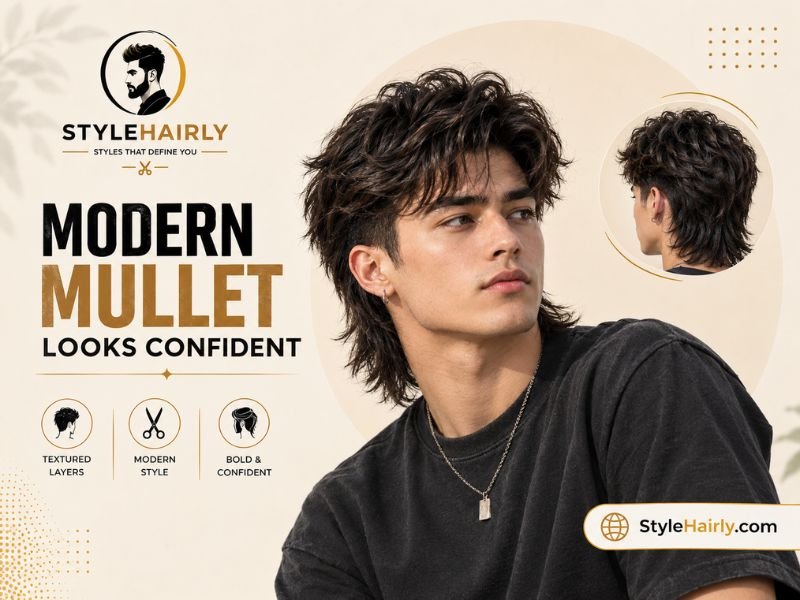
A modern mullet works because it gives you room to adjust the fade height, top length, and finishing style to match your hair type and how much upkeep you actually want. If you have thick or curly hair, look for versions that include thinning on top so the crown does not look bulky against the fade. If you have fine or straight hair, ask about layering and texturizing so the top has movement instead of looking flat.
Start the conversation with your barber by picking a fade height and a rough top length, then use the specific variation names in this guide, such as low taper, burst fade, or textured fringe, to describe exactly what you want. That level of detail is usually the difference between a modern mullet that looks intentional and one that just looks like an overgrown haircut.

3 thoughts on “7 Modern Mullet Men Haircuts to Try in 2026: The Complete Style, Fade, and Maintenance Guide”