

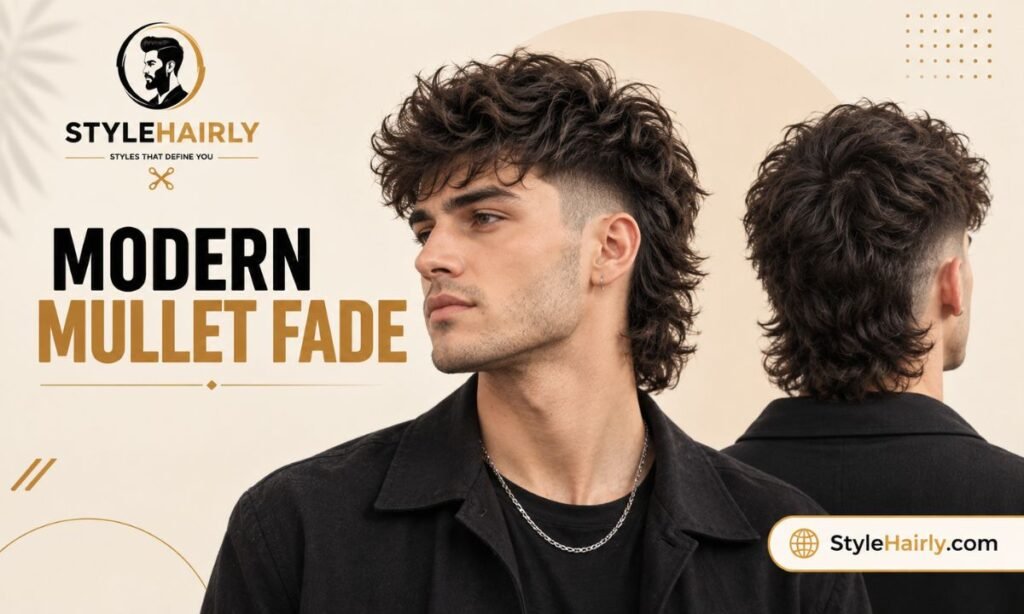
If you’re trying to figure out whether a modern mullet fade will actually suit your hair, or you just want to know which version to ask your barber for, you’re in the right place. This style has become one of the most requested cuts for men who want short, clean sides paired with longer hair on top and at the back, and there’s a lot of variation hiding under that one name.
A modern mullet fade combines a classic mullet’s short-front, long-back silhouette with a tight fade on the sides. It works across most hair types and face shapes when the proportions are adjusted correctly, and it’s genuinely low maintenance compared to styles that need daily heat styling. This guide covers what the cut actually looks like, who it suits, fifteen popular variations, common mistakes, product recommendations, barber communication tips, outfit pairings, and honest comparisons with related styles.
Below you’ll find everything needed to walk into a barbershop with a clear idea of what to ask for, plus the practical details competitors often leave out, like which variations genuinely work for curly hair and what to avoid if your hair is fine.
What Is a Modern Mullet Fade?
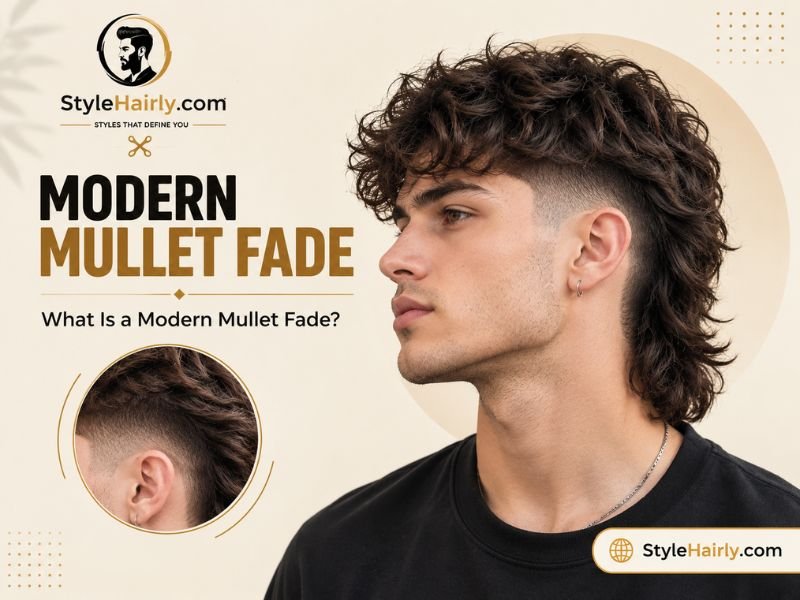
A modern mullet fade is a contemporary take on the classic mullet haircut, built around short, tapered or faded sides and back combined with longer hair left on top and at the nape. Unlike the exaggerated 1980s mullet, the modern version keeps the transition between short and long sections tighter and more deliberate, which makes it look intentional rather than accidental.
The defining features are a fade or taper on the sides (ranging from low to high depending on preference), noticeably shorter hair through the front and crown, and length retained toward the back of the head that can range from a subtle flip to several inches of hair. Texture is usually left visible on top rather than slicked down, which is part of what separates the modern version from older mullet styles.
Barbers typically build this cut by fading the sides first, then blending that fade into the length at the back so there’s no harsh line where short meets long. The front and top are cut with enough length to style forward, back, or textured up, while the back is left long enough to create the signature mullet silhouette without looking unfinished.
This style sits in a flexible middle ground. It reads as edgy and current in a way the classic mullet doesn’t always manage, but it still keeps a barbershop-fresh, low-effort quality because the fade does most of the visual work.
Why Choose a Modern Mullet Fade?
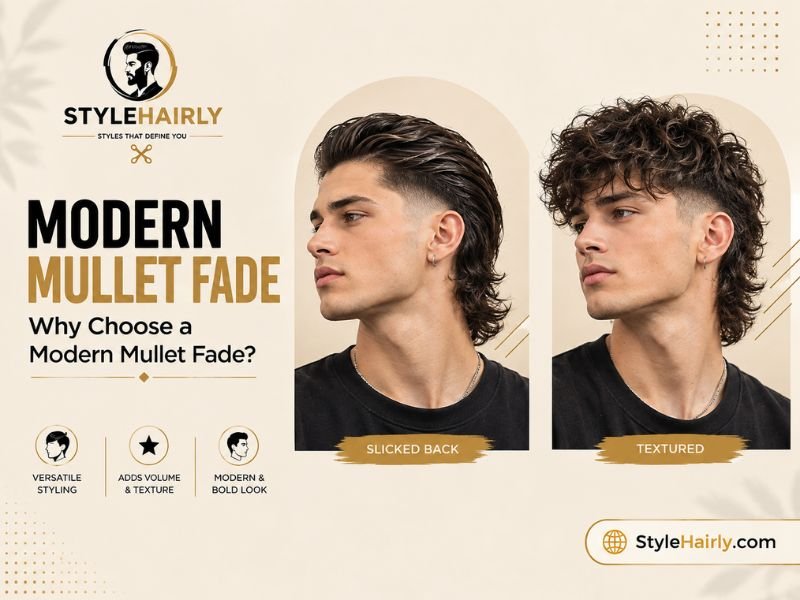
The main appeal is that it delivers a distinctive, current look without requiring constant styling effort. Because the sides are faded short, they stay neat between trims, and the length on top and at the back gives you room to change the style day to day, from slicked back to textured and messy, without needing a full restyle.
It also photographs and reads well in person because of the contrast between the tight fade and the longer sections. That contrast is what makes the cut feel deliberate rather than like hair that’s simply grown out unevenly. For men who want a cut that stands out from a standard short back and sides but don’t want the commitment of fully long hair, this middle ground is a practical answer.
Another reason people choose it is versatility with facial hair, hats, and accessories. Because the sides are short, the style pairs easily with beards of almost any length, and hats sit cleanly without disturbing the shape the way they can with an all-over long cut.
Who Should Get a Modern Mullet Fade?
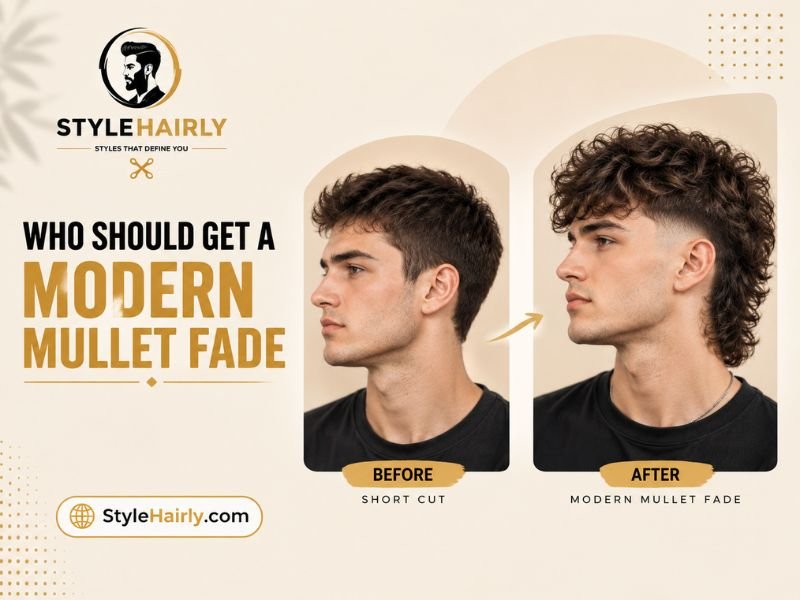
This cut tends to suit people who want visible change from their current style without going through a long growing-out phase, since the back length can be built up gradually while the sides stay maintained. It also works well for anyone who wants a lower daily styling commitment than a fully long haircut requires, because the short sides need little more than a comb-through or light product.
It may be a less practical choice for anyone who needs a strictly conservative or uniform look for workplace requirements, since the length contrast is noticeable even at its most subtle. It’s also worth thinking twice if you’re not willing to keep up with fade maintenance, because a growing-out fade looks noticeably different from a fresh one and can start to look unkempt faster than the longer sections do.
People who already have some length at the back of their hair, or who are comfortable growing it out over a few months, will generally have an easier first cut than someone starting from a completely short style.
Best Hair Types for Modern Mullet Fade
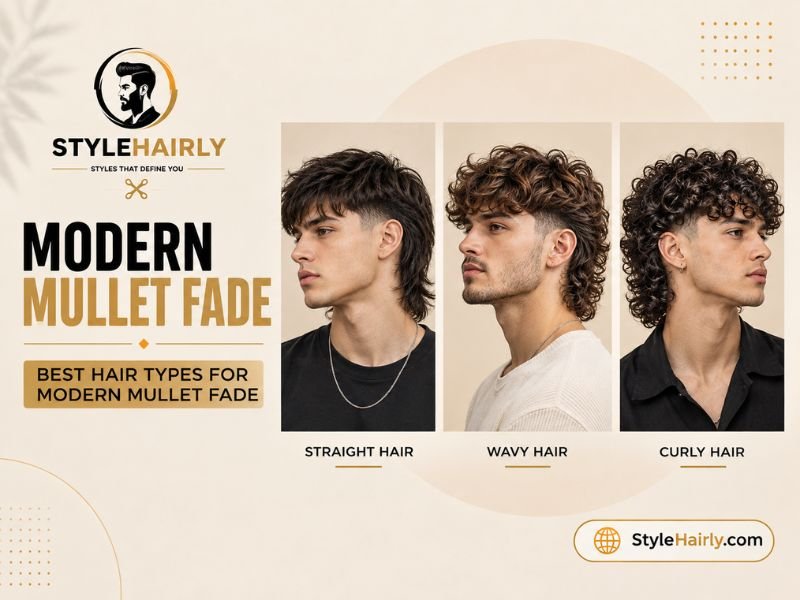
| Hair Type | How It Works | Notes |
| Straight | Shows a crisp, clean line between the fade and the length | Back section may need product to hold shape |
| Wavy | Adds natural texture and movement to the longer sections | Often needs the least daily styling effort |
| Curly | Adds volume and definition, especially on top | Sides can shrink up after a fade, so ask for slightly more length than the target look |
| Thick | Holds shape well and creates strong contrast with the fade | May need thinning at the back to avoid bulk |
| Fine | Can look flat at the back without some layering | Texturizing on top helps create the illusion of density |
Straight hair tends to show off the sharp line between the fade and the longer sections most clearly, which is part of why this style photographs so well on straight-haired clients. Wavy hair usually needs the least daily effort because the natural movement does a lot of the styling work on its own.
Curly hair can work very well with a modern mullet fade, but curls shrink noticeably once cut, so it helps to tell your barber to leave extra length in both the fade transition and the back section to account for shrinkage after the hair dries and curls back up.
Thick hair holds the shape of the cut well but can look heavy at the back if left too dense, so some barbers will thin out the underside of the longer section to keep movement without losing length. Fine hair is the type that benefits most from texturizing scissors or a point-cutting technique on top, since flat, fine hair at the back can make the style look thin rather than intentional.
Best Face Shapes
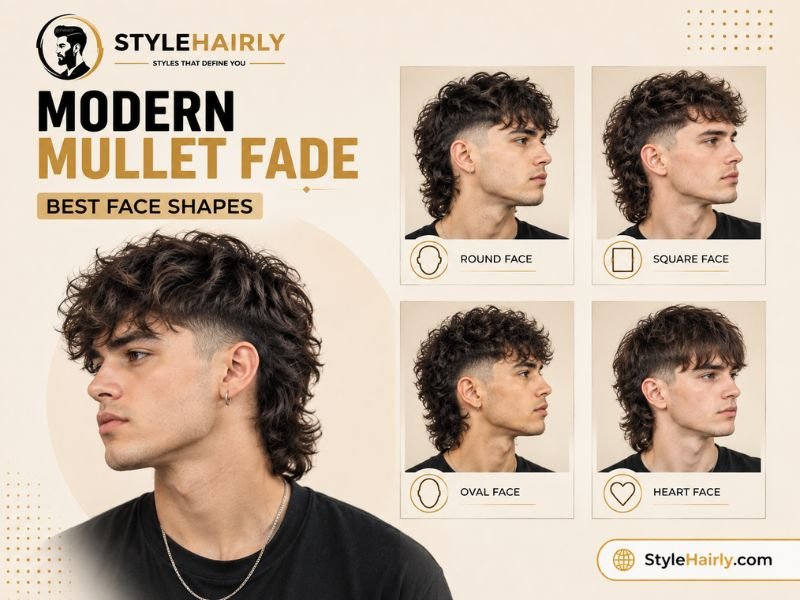
| Face Shape | How the Style Works |
| Oval | Works with nearly any fade height and length combination |
| Square | A slightly higher fade can soften strong jaw angles |
| Round | A higher fade and more height on top can add length visually |
| Heart | Volume at the back balances a narrower chin |
| Long | A lower fade and more width at the sides can help balance proportions |
Oval faces generally have the most flexibility with this cut since the proportions are already balanced, so almost any fade height or back length will work. Square faces often look good with a slightly higher fade, since it draws attention upward and can soften an angular jawline.
Round faces can benefit from more height and texture on top paired with a higher fade, which elongates the face visually. Heart-shaped faces, which tend to be wider at the forehead and narrower at the chin, are often balanced out nicely by the extra volume a mullet fade creates at the back of the head. Long faces usually do better with a lower fade and slightly more width kept at the sides, since a very high fade can make the face look even longer.
None of these pairings are absolute rules. A skilled barber will adjust fade height and length based on your actual proportions during a consultation rather than face shape alone.
15 Best Modern Mullet Fade Styles
The core modern mullet fade concept has a lot of room for personalization. The variations below cover the most requested combinations of fade height, texture, and hair type, so you can walk in with a specific reference instead of a vague description.
Modern Mullet Burst Fade
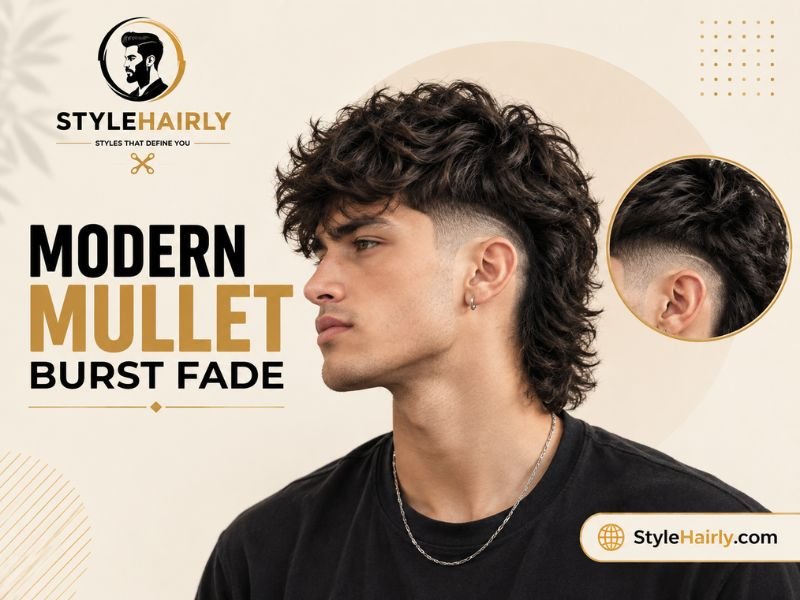
A burst fade curves around the ear instead of running in a straight line, which creates a rounded, sweeping transition rather than a sharp horizontal one.
Best for: Men who want a softer, more rounded transition around the ear instead of a straight fade line. Styling tip: Ask your barber to keep the burst tight around the ear while leaving more length toward the back for a smoother blend into the mullet section. Maintenance: Trim every 3 to 4 weeks to keep the burst shape crisp, since curved fade lines grow out faster than straight ones.
Low Fade Modern Mullet
The fade starts close to the bottom of the head, leaving more length through the middle and upper sides compared to higher fade placements.
Best for: A subtler, more everyday-wearable version of the style, including workplaces with conservative grooming expectations. Styling tip: Minimal product is needed since more length is retained at the sides, so a light matte pomade is usually enough. Maintenance: Can typically go 4 to 5 weeks between trims since the fade line sits lower and grows out more gradually.
Modern Mullet Taper Fade
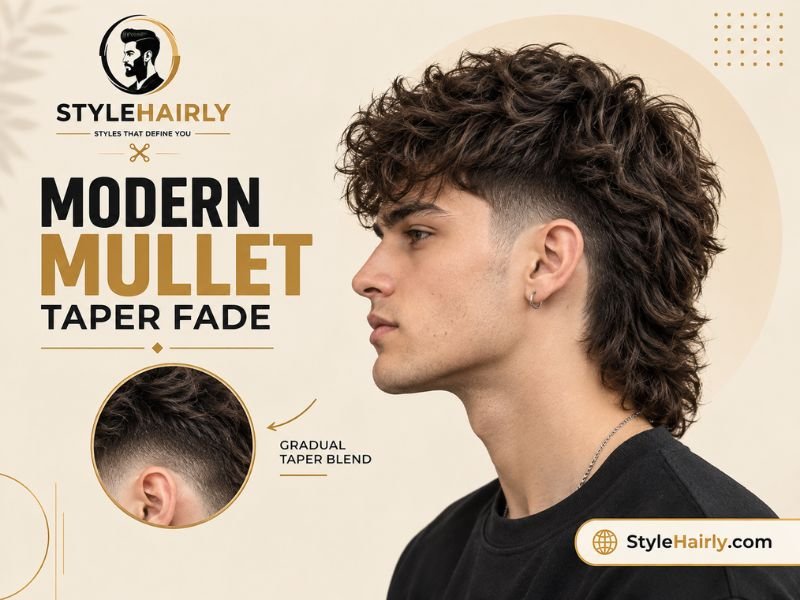
A taper fade gradually shortens the hair toward the hairline and neck without cutting all the way down to skin, giving a softer finish than a skin fade while still keeping the sides tidy.
Best for: Men who want a fade effect without going as short or as sharp as a skin fade. Styling tip: Because tapers blend more gradually, this version tends to grow out more evenly, which is helpful if you don’t want frequent trims. Maintenance: Every 4 to 6 weeks, since the softer blend doesn’t show regrowth as obviously as a high-contrast fade.
Modern Mullet Fade Curly Hair
This version keeps natural curl pattern intact on top and at the back while fading the sides for contrast.
Best for: Naturally curly hair types who want definition and volume without straightening or heat styling. Styling tip: Apply a curl cream or light gel to damp hair and let it air dry or diffuse to keep curl definition without frizz. Maintenance: Curls shrink after cutting, so budget for slightly more length at each trim and expect to visit the barber every 4 to 6 weeks for the fade upkeep.
Modern Mullet Skin Fade
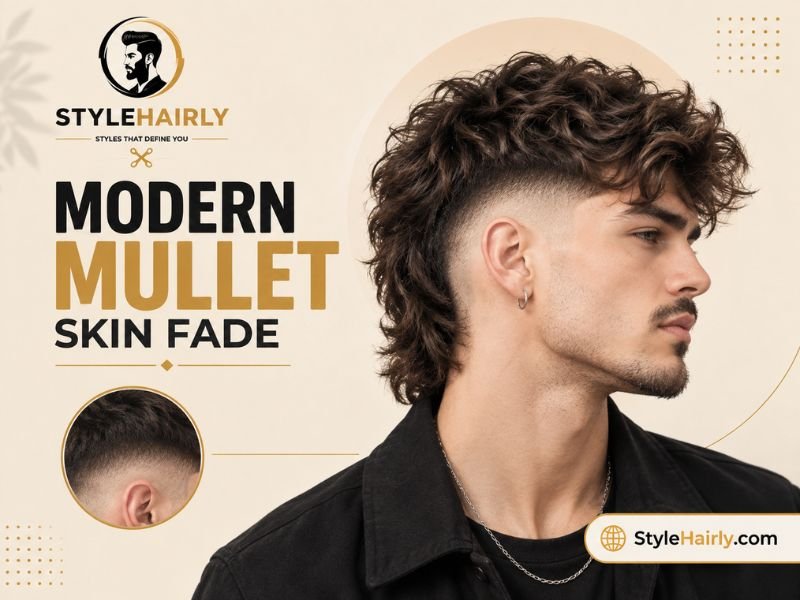
The sides are faded all the way down to bare skin for maximum contrast against the longer top and back sections.
Best for: Men who want the sharpest possible contrast and don’t mind more frequent maintenance. Styling tip: Keep the top textured and slightly messy so the overall look doesn’t feel too severe against the bare-skin sides. Maintenance: Skin fades grow out fastest of all fade types, so plan on a touch-up every 2 to 3 weeks to keep the line clean.
Mid Fade Modern Mullet
The fade starts around the middle of the head, balancing the subtlety of a low fade with the definition of a high fade.
Best for: Men who want a noticeable fade without it being the most dramatic part of the haircut. Styling tip: This height works well with most hair textures and doesn’t require heavy product to look finished. Maintenance: Every 3 to 5 weeks depending on how quickly your hair grows and how crisp you want the line to stay.
Modern Mullet No Fade
Instead of a faded transition, the sides are tapered or cut with clippers without the sharp contrast a true fade creates.
Best for: Men who want a mullet silhouette without the more overtly trendy look a fade adds. Styling tip: Since there’s less contrast to rely on, texture and movement on top do more of the visual work, so consider a texturizing product. Maintenance: Lower maintenance overall, often every 5 to 6 weeks, since there’s no sharp line that needs constant upkeep.
Drop Fade Modern Mullet
A drop fade curves downward behind the ear rather than staying level, following the natural curve of the head.
Best for: Men who want a fade that feels more custom-shaped to their head rather than a straight horizontal line. Styling tip: This cut relies heavily on the barber’s skill with curved lines, so it’s worth choosing someone experienced with drop fades specifically. Maintenance: Every 3 to 4 weeks to keep the curve defined, since the dropped section can blur faster than a straight fade.
Modern Mullet Fade Straight Hair
Straight hair shows the cleanest possible line between the fade and the longer sections, making this one of the more graphic, high-contrast versions of the cut.
Best for: Straight hair types who want maximum definition between the short and long sections. Styling tip: A light pomade or styling cream helps keep the part and shape clean without weighing straight hair down. Maintenance: Every 3 to 5 weeks, since straight hair shows fade regrowth more obviously than wavy or curly textures.
Modern Mullet Fade Wavy Hair
Wavy hair adds natural texture and body to the top and back sections without much extra styling effort.
Best for: Men who want visible texture without relying on curling products or heat tools. Styling tip: A sea salt spray or light texturizing paste enhances the natural wave pattern instead of flattening it. Maintenance: Every 4 to 6 weeks, since wave patterns tend to soften fade lines gradually rather than showing sharp regrowth.
Modern Mullet Burst Fade Curly Hair
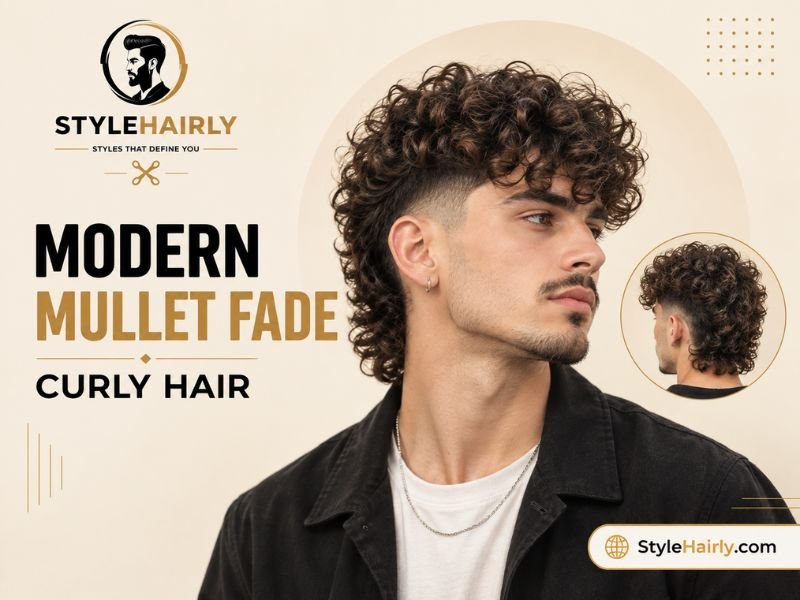
This combines the rounded burst fade shape with natural curl texture, giving a soft transition around the ear alongside curl volume on top.
Best for: Curly-haired men who specifically want the rounded burst shape instead of a straight fade line. Styling tip: Curl definition products work best applied right after a shower while hair is still damp. Maintenance: Every 4 to 6 weeks, accounting for curl shrinkage the same way as other curly variations.
Modern Mullet High Fade
The fade starts higher up the head, near or above the temple, creating the most dramatic contrast with the longer top and back sections.
Best for: Men who want a bold, high-contrast look and are comfortable with more frequent upkeep. Styling tip: Balance the higher fade with enough length and texture on top so the proportions don’t feel top-heavy. Maintenance: Every 2 to 3 weeks, since high fades show regrowth the fastest of all placement options.
Long Modern Mullet Fade
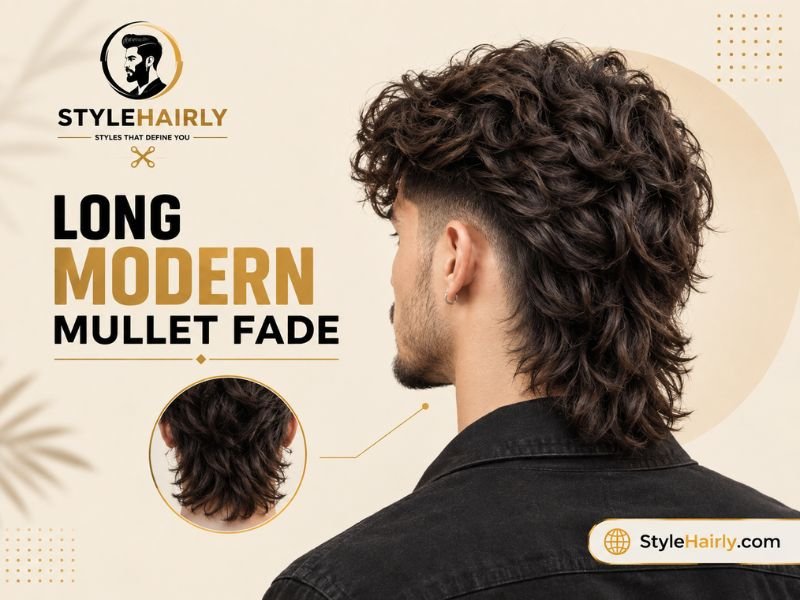
This version keeps significantly more length at the back and sometimes the top, exaggerating the mullet silhouette more than shorter variations.
Best for: Men who are further along in growing out the back section or who want a more statement-making version of the cut. Styling tip: Longer sections benefit from occasional trims to the ends even while the length is being maintained, to avoid split ends and a stringy appearance. Maintenance: The fade itself still needs trimming every 3 to 4 weeks, but the long sections can go longer between length trims.
Modern Mullet Fade with Beard
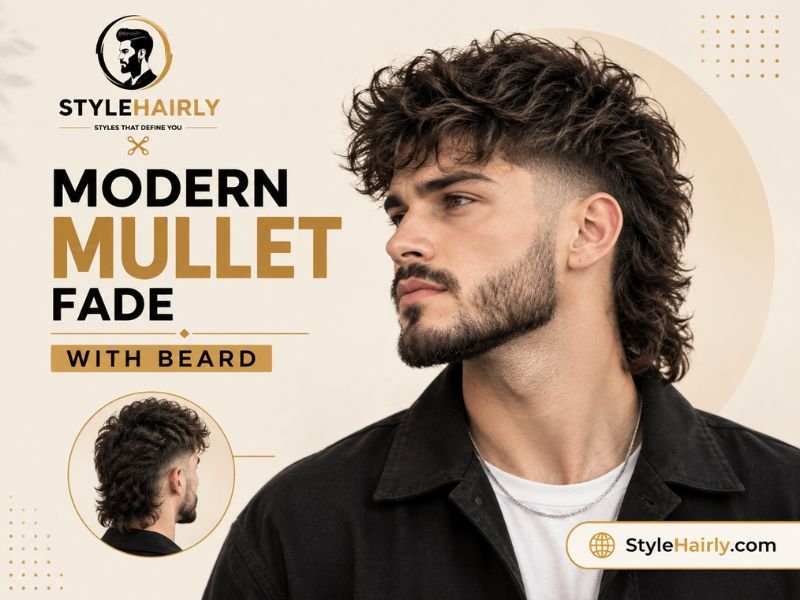
Pairing the cut with a beard, whether short stubble or a fuller beard, is less a separate haircut and more a styling combination worth planning for at the consultation.
Best for: Men who already grow facial hair easily and want the beard and haircut to look intentionally coordinated. Styling tip: Ask your barber to line up the beard and the fade in the same appointment so the transitions match in height and sharpness. Maintenance: Beard trims typically need attention more often than the haircut itself, so plan for touch-ups between full haircut appointments.
Short Modern Mullet Fade
This keeps the back and top length shorter than other variations, offering a subtler mullet silhouette that’s easier to maintain and more workplace-friendly.
Best for: First-time mullet fade wearers who want to try the style without a dramatic length commitment. Styling tip: Minimal styling is needed, often just a comb-through or light texturizing product. Maintenance: Every 3 to 5 weeks, and this version is generally the easiest to keep looking fresh between visits.
Common Styling Mistakes
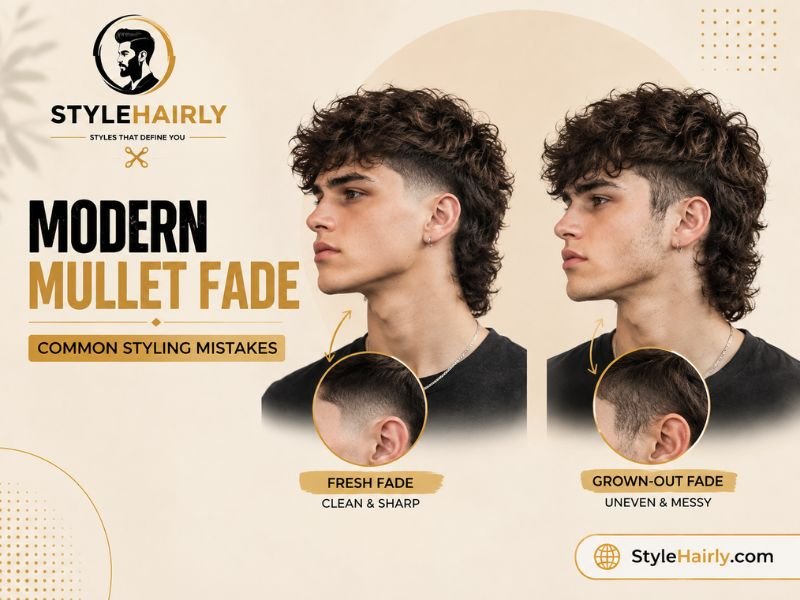
Avoiding a few predictable mistakes will keep this cut looking intentional rather than simply grown out or neglected.
Skipping Regular Trims
Letting the fade grow out too long before a touch-up is one of the fastest ways to make the whole cut look unkempt, since the contrast between short and long sections is the main thing that makes it read as a deliberate style. Once the fade line softens too much, the cut starts to look like an ordinary short haircut that’s simply grown out unevenly.
Using Too Much Product
Overloading the top or back with gel, pomade, or wax can flatten texture and make thick or curly hair look greasy rather than styled. A little product goes further than most people expect, especially on shorter top lengths.
Ignoring Hair Texture
Trying to force straight-hair styling techniques onto curly or wavy hair, or vice versa, usually works against the hair’s natural behavior. Products and techniques should match your actual texture rather than a reference photo taken on different hair.
Poor Blow Dry Technique
Rough towel-drying or blasting hair with high heat close to the scalp can create frizz and disrupt the shape the barber cut in. Air drying or gentle diffusing, followed by light styling, generally preserves the cut’s shape better than aggressive blow-drying.
Neglecting the Back
Because the back of a mullet fade isn’t as visible in the mirror day to day, it’s easy to forget it needs attention too. Split ends and uneven length at the back are common when people focus styling effort entirely on the top and front.
Best Hair Products & Maintenance
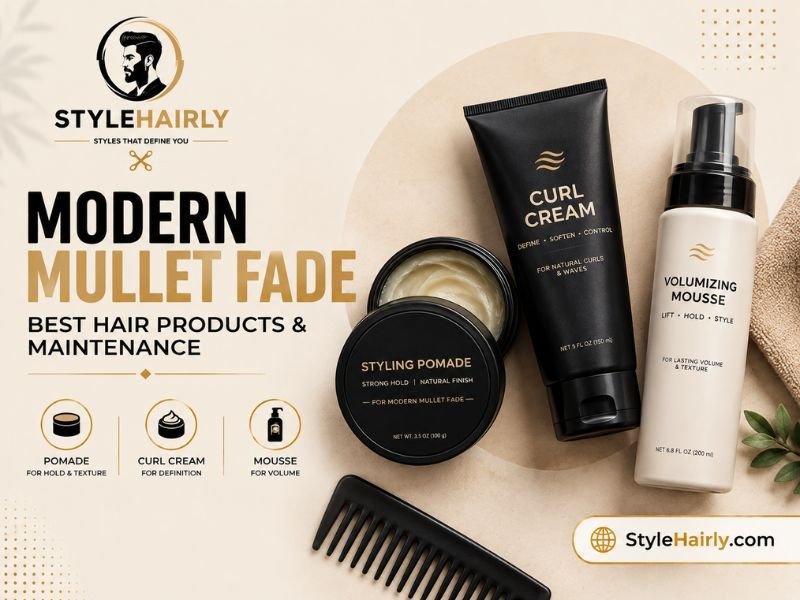
The right product depends mostly on hair texture and the length being styled. For straight hair, a light pomade or styling cream keeps the top controlled without stiffness. For wavy or curly hair, a leave-in conditioner followed by a curl cream or texturizing paste supports natural movement instead of fighting it. For fine hair, a volumizing mousse applied at the roots before drying helps prevent the flat look that fine hair is prone to at the back.
A wide-tooth comb is useful for detangling longer sections without disrupting curl or wave pattern, and a boar-bristle brush can help distribute natural oils through longer hair between washes.
Maintenance Tips
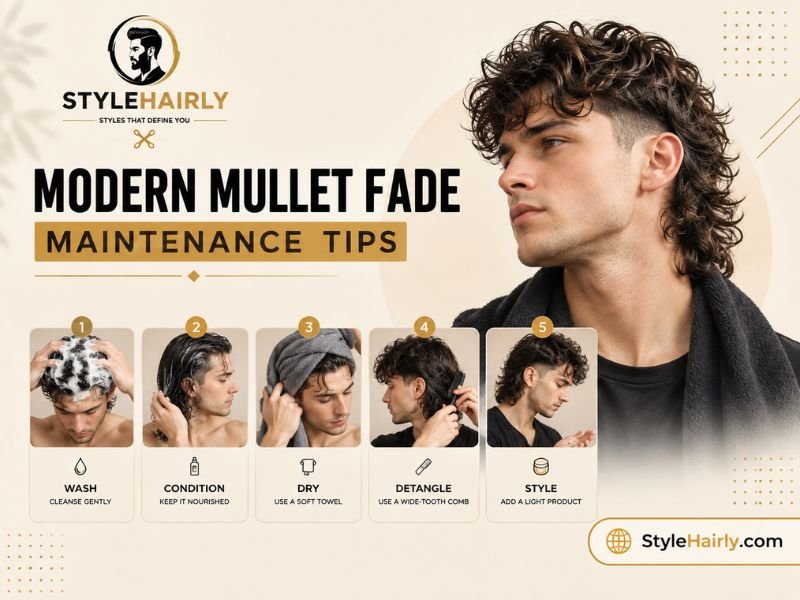
Regular trims are the single most important maintenance factor for this style, since the fade grows out faster than the longer sections and needs the most frequent attention to stay sharp. Washing less frequently, every 2 to 3 days rather than daily, can help preserve natural oils that keep longer hair looking healthy rather than dry or brittle. Deep conditioning treatments every 1 to 2 weeks are worth considering for longer back sections, especially on curly or color-treated hair that’s more prone to dryness.
Pros and Cons
Pros
- Low daily styling effort once the cut is established
- Works across most hair types with minor adjustments
- Highly customizable through fade height and back length
- Pairs well with beards and most face shapes
Cons
- Requires more frequent barber visits than a simple short cut, especially with higher fades
- The growing-out phase between fade trims can look messy if neglected
- Not ideal for strict, conservative grooming environments
- Curly hair needs extra planning to avoid excessive shrinkage after fading
Barber Tips
Being specific with your barber is the easiest way to avoid a result that doesn’t match what you pictured. Bring a reference photo if possible, and be clear about three things: how high you want the fade to start, how much length you want to keep at the back, and how much texture or bulk you want removed from the top.
It also helps to mention your hair type directly, especially if you have curly or very thick hair, since barbers will often leave extra length to account for shrinkage or bulk that isn’t obvious until the hair dries. If you’re growing the back section out from a shorter cut, tell your barber that upfront so they can shape the current length rather than cutting it shorter than necessary.
Ask specifically whether they’re comfortable with fade work, since not every barber specializes in sharp fade lines, and this is the part of the cut most likely to go wrong in inexperienced hands.
Best Outfit Ideas for a Modern Mullet Fade
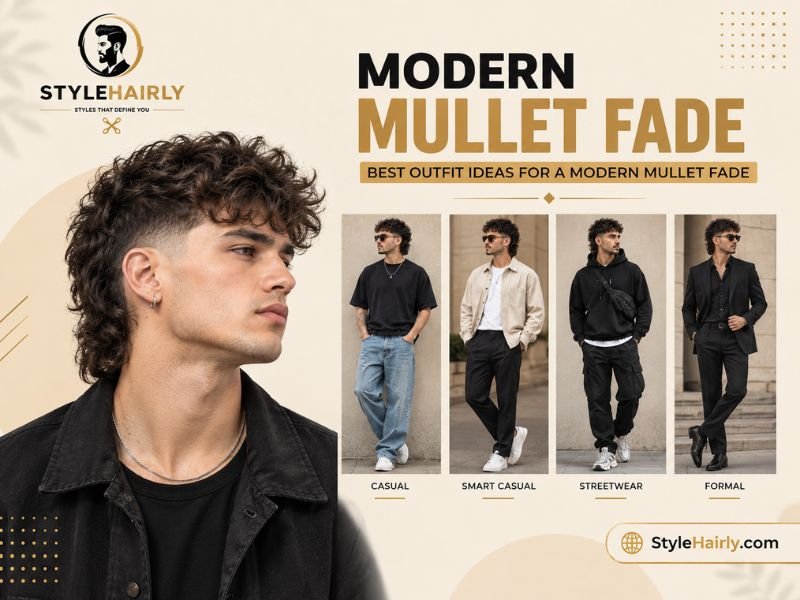
The haircut pairs naturally with a range of styles because the short sides keep the overall look clean even when the outfit leans casual or edgy.
Casual Style
A plain t-shirt, straight-leg jeans, and simple sneakers let the haircut stand out without competing for attention. This works especially well with shorter or mid-length versions of the cut.
Streetwear Style
Oversized hoodies, cargo pants, and chunky sneakers complement the edgier, high-fade or skin-fade versions of the style particularly well.
Smart Casual
A structured jacket over a plain shirt, paired with tailored trousers, works well with lower fade and shorter mullet variations that read as more polished.
Denim Look
A denim jacket with contrasting denim or dark trousers pairs naturally with wavy or textured versions of the cut, especially longer back sections.
Summer Outfit
Lightweight linen shirts and shorts suit the lower maintenance, shorter mullet fade variations, since less product and styling effort is needed in hot weather.
Winter Outfit
Beanies and knit sweaters work surprisingly well with this cut since the short sides prevent hats from disturbing the shape, while the longer back adds visible texture below the hat line.
Is a Modern Mullet Fade Worth It?
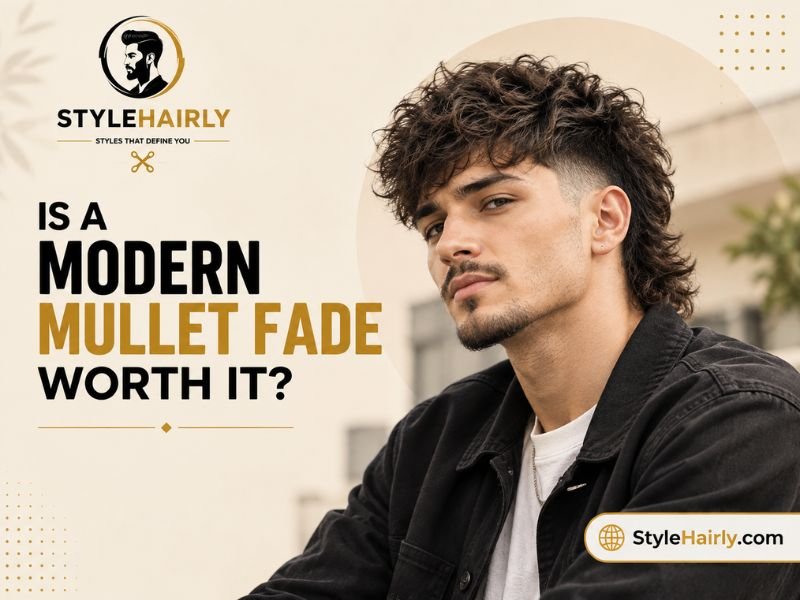
For most men who want a distinctive look without a heavy daily styling routine, yes, it’s generally worth it. The main trade-off is more frequent barber visits to maintain the fade compared to a simple all-over short cut, but in exchange you get a versatile style that adapts to different hair types, face shapes, and personal style choices without needing to fully commit to either a short or long haircut.
It’s less worth it if your lifestyle or workplace requires a conservative, low-maintenance grooming standard, or if you’re not willing to keep up with fade touch-ups every few weeks. In that case, a lower fade or no-fade mullet variation, or a different haircut entirely, may suit you better.
Modern Mullet Fade vs Other Popular Hairstyles
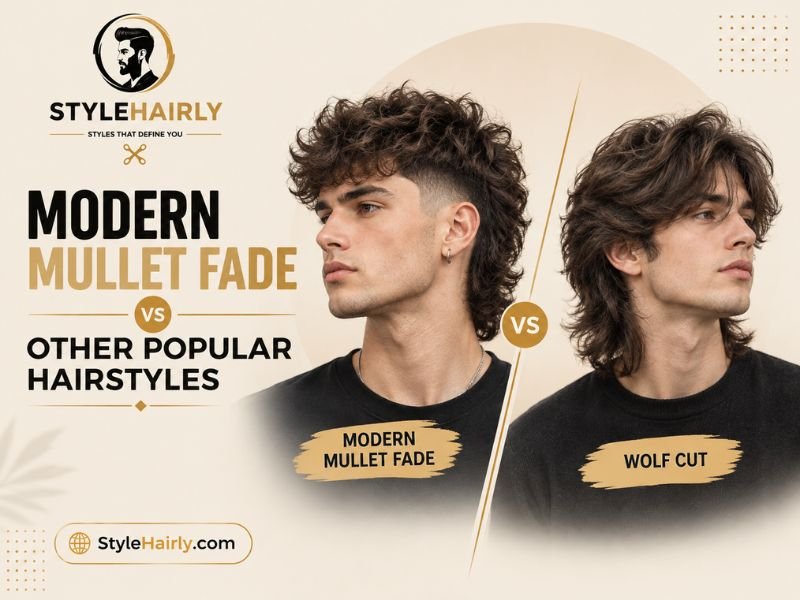
Modern Mullet Fade vs Modern Mullet
The core difference is the sides. A standard modern mullet is typically tapered rather than faded, giving a softer, less sharply defined transition. The fade version creates more visible contrast and generally requires more frequent maintenance to keep that contrast sharp.
Modern Mullet Fade vs Burst Fade
A burst fade on its own is a side and back treatment that can be applied to many haircuts, not just mullets. A modern mullet fade specifically pairs a burst-style transition with a mullet’s characteristic longer back section, so the burst fade alone doesn’t include the length retained at the back.
Modern Mullet Fade vs Taper Fade
A taper fade is a softer, more gradual blend than a true fade, and it can be used with or without mullet-length hair at the back. A modern mullet fade tends to show more contrast overall, while a taper fade offers a subtler, more traditional grooming look.
Modern Mullet Fade vs Low Fade
A low fade is one specific height option within the mullet fade family, not a separate haircut. Choosing a low fade over a higher one results in a more subtle, workplace-friendly version of the same overall style.
Modern Mullet Fade vs High Fade
Similarly, a high fade is a more dramatic height variation of the same cut. It creates sharper contrast and a bolder look but requires more frequent trims than lower fade heights.
Modern Mullet Fade vs Skin Fade
A skin fade takes the sides down to bare skin, creating the highest possible contrast with the longer sections. It’s the most maintenance-intensive fade option and grows out faster than taper or low fade alternatives.
Modern Mullet Fade vs No Fade
Without a fade, the sides are simply tapered or clipped short without the sharp gradient. This version relies more on the length contrast alone to create the mullet silhouette and needs less frequent barber visits.
Modern Mullet Fade vs Wolf Cut
A wolf cut is a heavily layered, textured style that blends mullet and shag influences with choppy layers throughout, rather than a clean fade on the sides. It tends to suit wavy or curly hair especially well and creates a shaggier, more tousled look overall, while a modern mullet fade keeps a cleaner, more graphic short-to-long contrast.
Frequently Asked Questions
Is a modern mullet fade good for thin hair?
It can work well for thin hair as long as some texturizing is done on top and at the back to avoid a flat appearance. Volumizing products applied at the roots also help create the illusion of more density.
Does a modern mullet fade work on curly hair?
Yes, curly hair works well with this style, but curls shrink after cutting, so it’s worth asking your barber to leave extra length in both the fade and the back section to account for that shrinkage.
What face shape is best for a modern mullet fade?
Oval faces have the most flexibility, but square, round, heart, and long face shapes can all work well with adjustments to fade height and the amount of volume left on top.
Is a modern mullet fade high maintenance?
It requires more frequent trims than a basic short haircut, typically every 2 to 5 weeks depending on fade height, but daily styling effort is generally lower than fully long hairstyles.
How do I style a modern mullet fade at home?
Use a texturizing product suited to your hair type, work it through damp or dry hair with your fingers, and focus most of your effort on the top and front since the sides need little more than a comb-through.
What should I ask my barber for?
Be specific about fade height, how much length to keep at the back, and how much bulk to remove from the top. Mention your hair type directly, especially if it’s curly or very thick.
How long does a modern mullet fade usually last before needing reshaping?
The fade itself typically needs a touch-up every 2 to 5 weeks depending on height, while the longer back section can usually go 8 to 12 weeks between length trims.
Can I get a modern mullet fade with a beard?
Yes, and it’s a popular pairing. Ask your barber to line up the beard and fade together in the same appointment so the transitions match in height and sharpness.
Conclusion
A modern mullet fade works because it gives you a distinctive silhouette without demanding constant styling effort, and the fifteen variations above show just how adjustable it is across hair types, face shapes, and personal style preferences. The main decisions that matter most are fade height, how much length you’re comfortable keeping at the back, and how often you’re realistically willing to visit the barber for touch-ups.
If you’re unsure where to start, a low or mid fade with a moderate back length is generally the easiest entry point, since it’s forgiving as it grows out and works across most hair textures. From there, you can go bolder with a higher fade or longer back section once you know how the style fits your routine.

2 thoughts on “12 Best Modern Mullet Fade Styles That Still Turn Heads (2026)”