

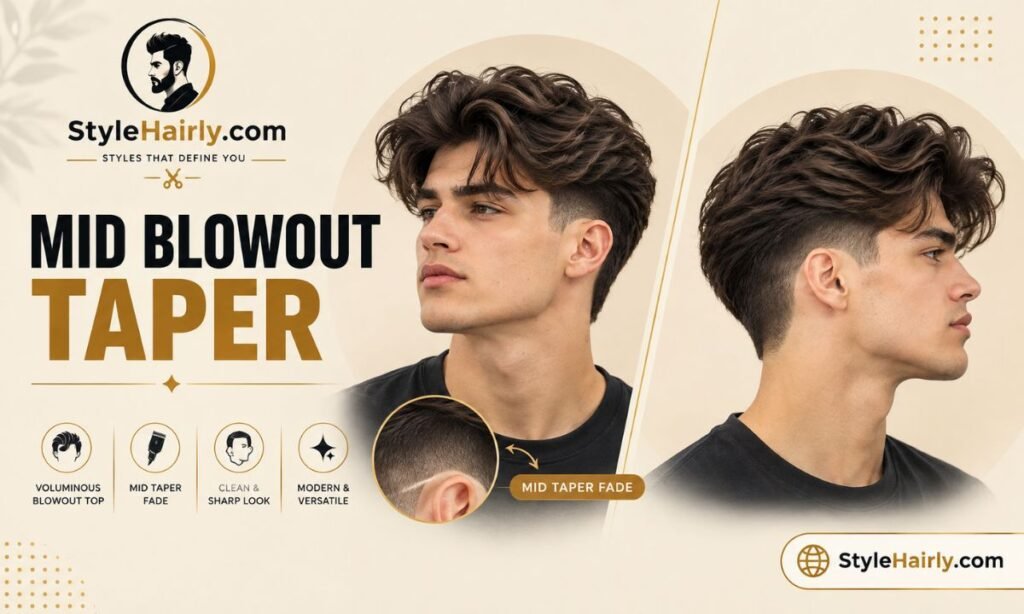
A mid blowout taper is a haircut where the clipper blend starts around the middle of the side of the head, roughly between the top of the ear and the temple, and fades down toward the neckline. The top is left long enough to blow-dry upward and outward, creating rounded volume that contrasts with the tapered sides.
The word “blowout” refers to that styling step, not the cut itself. A barber can cut the taper perfectly, but if you never pick up a blow dryer, you end up with a plain taper haircut instead of the fuller, lifted look shown in reference photos. It is one of the most versatile taper heights because it works across most hair types and face shapes without leaning too subtle or too bold.
Mid Blowout Taper at a Glance
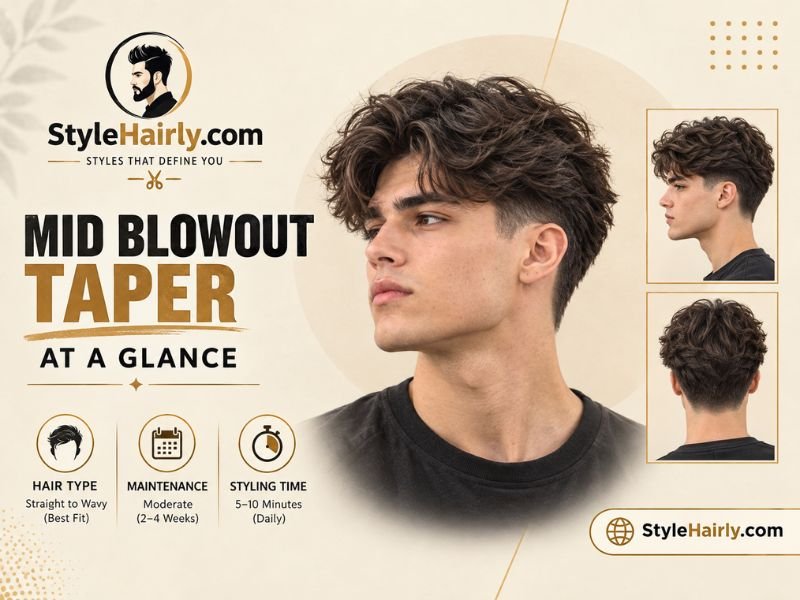
| Detail | Summary |
| Best for | Most hair types and face shapes, especially first-time taper clients |
| Fade start point | Roughly midway between the temple and the top of the ear |
| Hair types | Straight, wavy, curly, and coily, with different drying techniques for each |
| Maintenance | Taper touch-up every 2 to 3 weeks, top trim less often |
| Styling time | 5 to 10 minutes with a blow dryer most days |
| Styling commitment | Moderate to high, since the look depends on daily drying |
What Defines a Mid Blowout Taper
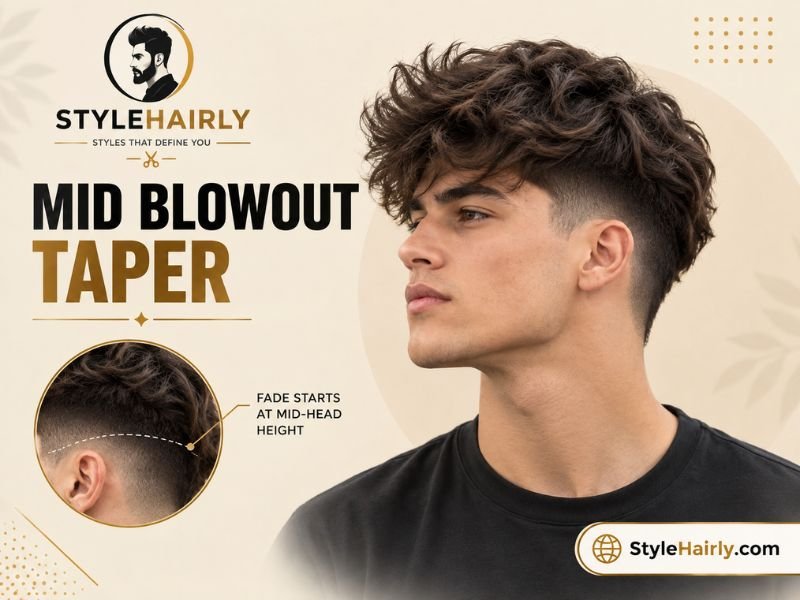
A mid blowout taper is defined by two separate decisions: where the fade begins on the side of the head, and how the top is dried afterward. The fade itself starts at the middle of the head’s side profile rather than close to the ear or high above it. That single measurement is what separates it from a low or high taper. The blowout half of the name describes the finishing step, where the longer top hair is dried upward and outward with a round brush or fingers to build volume rather than left to sit flat.
Hair Type Suitability
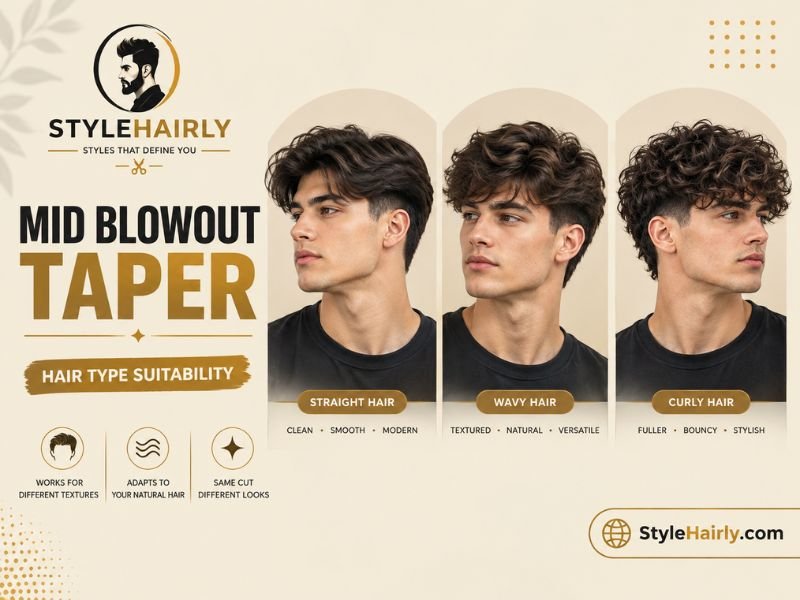
This style adapts to straight, wavy, curly, and coily hair, but the styling method changes with each. Straight hair usually needs the most help from products and directional drying because it has the least natural lift. Wavy hair often needs the least effort since the waves already create texture that a blow dryer can shape into volume. Curly and coily hair can get dramatic natural height on top, though a barber who regularly works with that texture should handle the cutting so the shape holds up as it dries and shrinks.
Density Considerations
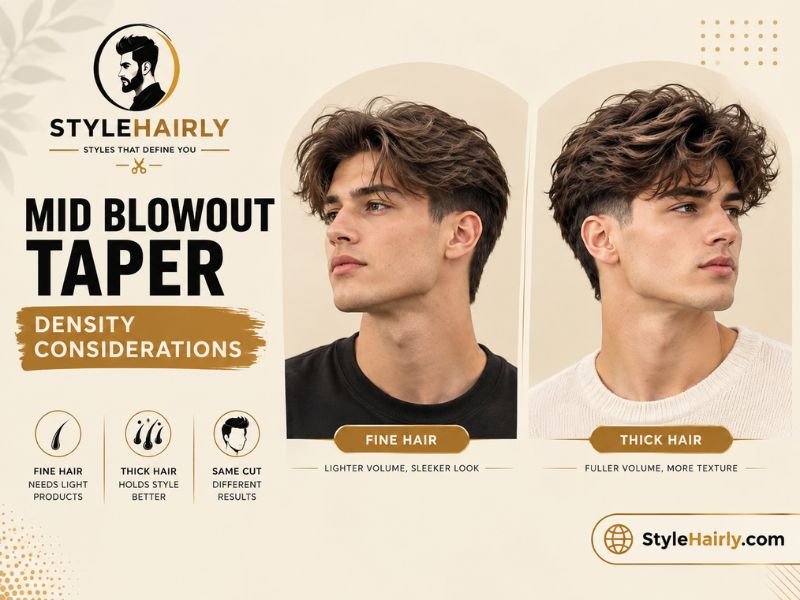
Fine hair tends to need extra grip from a lightweight mousse or texture powder because there is less hair to hold a shape once it dries. Thick hair often needs weight removed from the top section, otherwise the volume spreads out sideways instead of lifting upward. Getting the density right is what determines whether the top looks lifted or simply heavy.
Texture and Growth Pattern Considerations
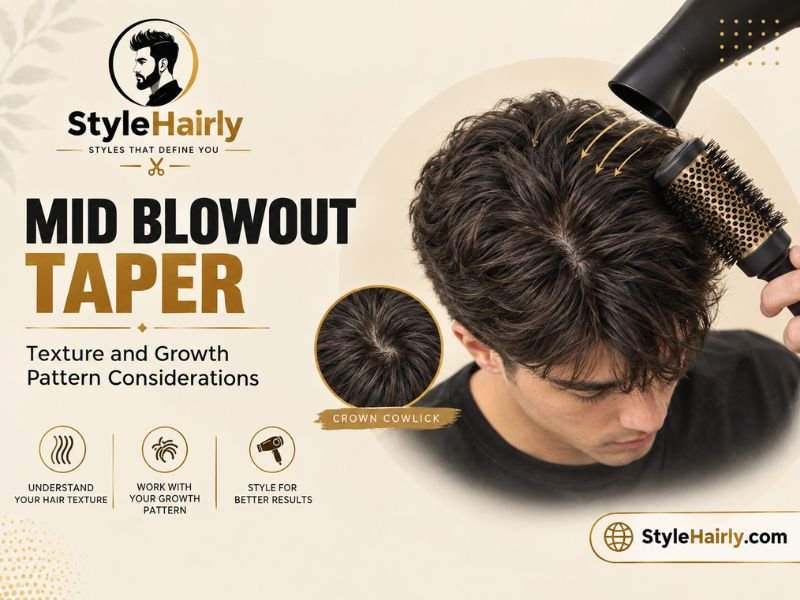
A cowlick or a growth swirl at the crown or hairline is one of the details people forget to mention to their barber. That swirl will always push hair in its own direction, so the top needs to be cut around it rather than fought every morning with product. Natural texture, whether it is a slight wave or a tighter curl pattern, also affects how much product and drying time the style needs to hold its shape through the day.
Face Shape Suitability
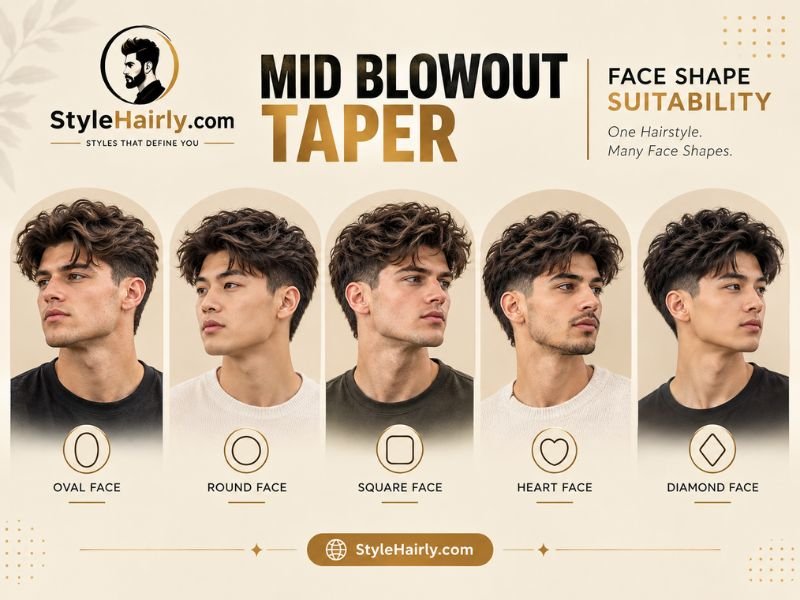
A mid taper works on most face shapes because the height is moderate rather than extreme. Round faces often benefit from extra height at the crown since it elongates the face. Square and angular faces usually look balanced with a mid taper because the moderate fade does not add extra width at the sides. Oval and heart-shaped faces have the most flexibility and can typically wear the style with almost any top length.
| Face Shape | How It Typically Looks | Styling Tip |
| Round | Elongates the face when extra height is added at the crown | Keep the top slightly longer and dry straight up |
| Square | Balances well since the moderate fade avoids extra width | A textured, slightly softer top works better than a sharp one |
| Oval | Works with almost any top length or texture | Flexible, so style based on personal preference |
| Heart-shaped | Flexible, though very high volume at the crown can widen the upper face | Keep crown height moderate rather than extreme |
Mid Blowout Taper vs Low and High
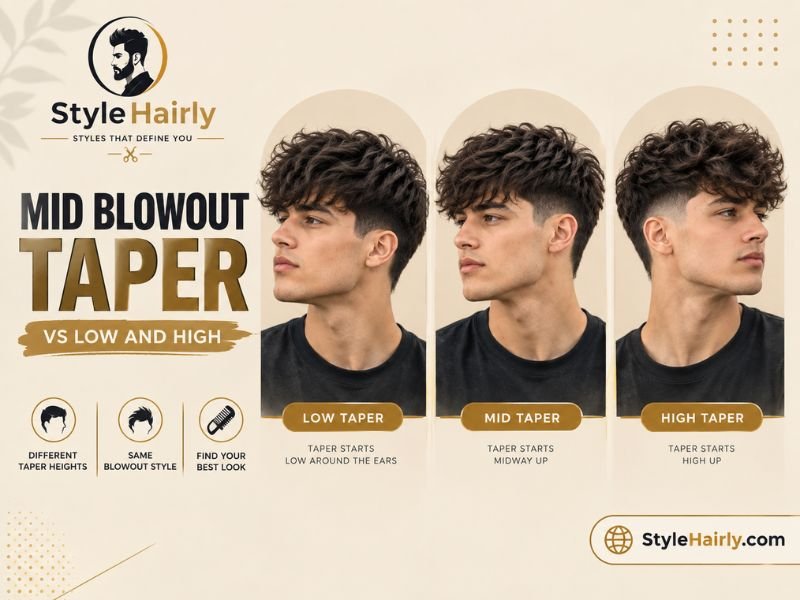
Height changes how much contrast the cut shows, not how the top is styled. A low taper keeps the blend close to the ear, so the sides look barely trimmed and the overall effect is subtle even with a full blowout on top. A high taper moves the blend above the temple, creating a sharper, more noticeable line that some workplaces or more conservative settings may read as bolder. The mid taper is the middle ground, giving a visibly fresh haircut without the stronger contrast of a high fade.
| Height | Where the Blend Starts | Overall Look | Touch-Up Frequency |
| Low taper | Close to the ear and neckline | Subtle, barely noticeable change | Every 3 to 4 weeks |
| Mid taper | Roughly midway between the ear and temple | Visibly fresh but not extreme | Every 2 to 3 weeks |
| High taper | Above the temple | Bold, high contrast | Every 1 to 2 weeks |
Who the Mid Blowout Taper Suits Best
This height tends to work well for people who want a haircut that looks deliberate but still professional, and who are comfortable spending a few minutes each morning with a blow dryer. It suits most hair densities and textures with only small adjustments to product and drying technique. It is also a common recommendation for someone getting their first taper, since it is forgiving if the barber’s exact height varies slightly from one visit to the next.
When to Choose a Different Height
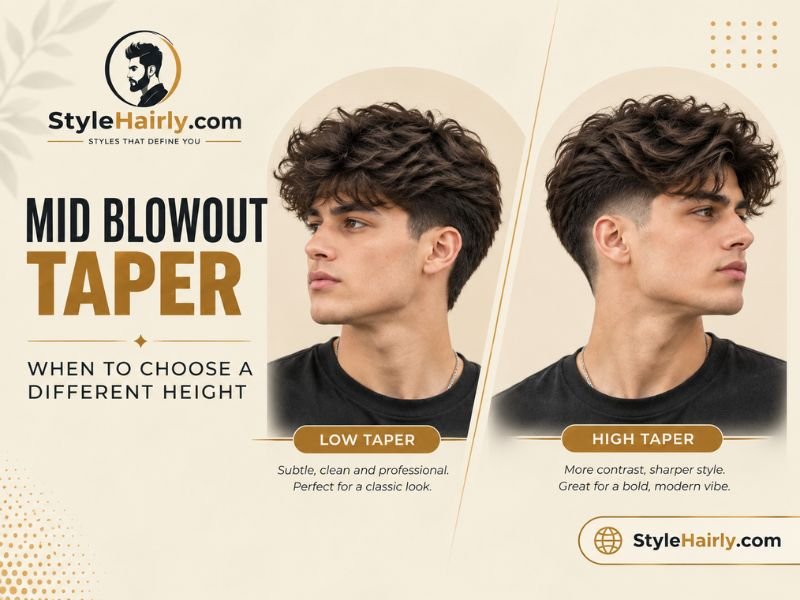
A low taper may be a better fit if you want the change to be nearly unnoticeable to people outside your regular barber, or if you are easing into short sides for the first time. A high taper may suit you better if you specifically want a bolder, more defined line and do not mind more frequent touch-ups, since the visible regrowth at a higher blend line tends to show sooner than a mid or low taper.
How to Ask for a Mid Blowout Taper
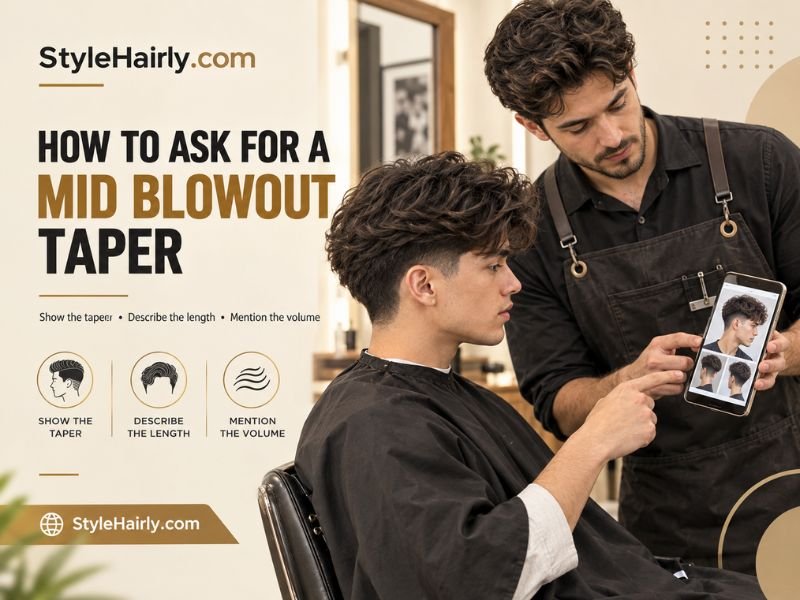
Bring a reference photo if you have one, since “mid” is not a universal measurement between barbers. Say the taper height first: “mid taper, starting around the middle of the side, not close to the ear and not above the temple.” Then describe the top separately: how much length to leave, whether you want it textured or smoother, and whether you have a cowlick or growth pattern the barber should plan around. Finish by mentioning how much time you are realistically willing to spend styling it, since that affects how much weight the barber leaves on top.
Styling and Maintenance Routine
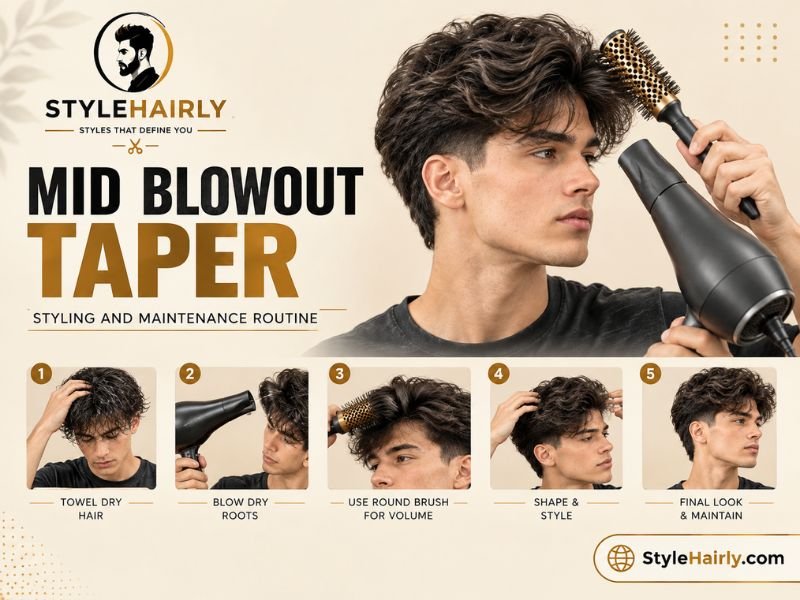
Start with towel-dried, damp hair and a small amount of volumizing mousse or a light styling cream worked through the roots. Use a blow dryer on a medium heat setting, always with a heat protectant if the hair is color-treated, and direct the airflow upward and slightly back from the front hairline. Once the top is mostly dry, use your fingers or a round brush to push the direction you want, then let it cool for a few seconds before adding a small amount of clay, pomade, or texture powder to lock the shape without weighing it down. Rebook with your barber when the taper line stops looking blended rather than on a fixed schedule, since regrowth speed varies by person.
Pros and Cons
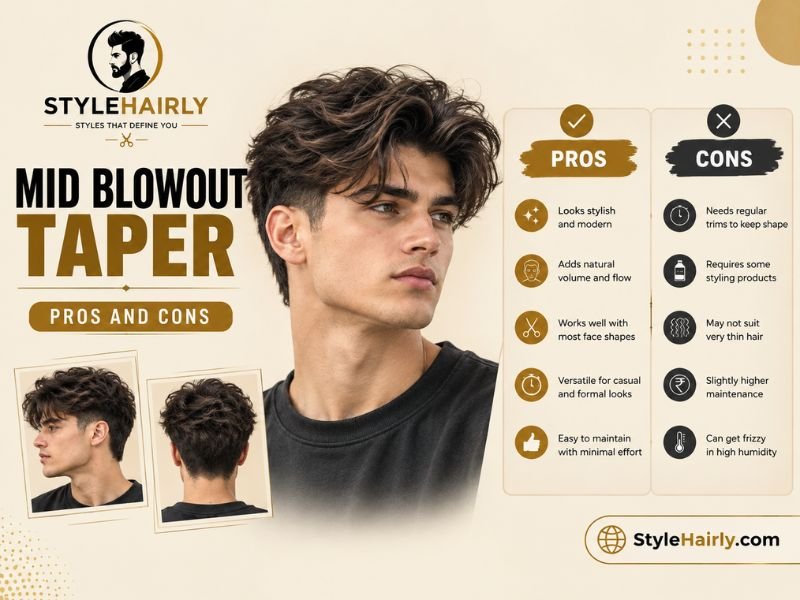
The height works across most hair types and face shapes, it looks professional while still photographing well casually, and it is a fade height most barbers can execute cleanly and consistently. The main trade-off is that the look depends on a daily blow-dry, so it takes more morning time than a low-maintenance buzz cut, and the taper line needs touch-ups every two to three weeks to stay looking blended.
| Pros | Cons |
| Works across most hair types and face shapes | Depends on a daily blow-dry to look right |
| Looks professional and photographs well casually | Falls flat and looks like a plain taper if skipped for several days |
| Easy for most barbers to execute cleanly | Taper line needs touch-ups every 2 to 3 weeks |
Common Mistakes to Avoid
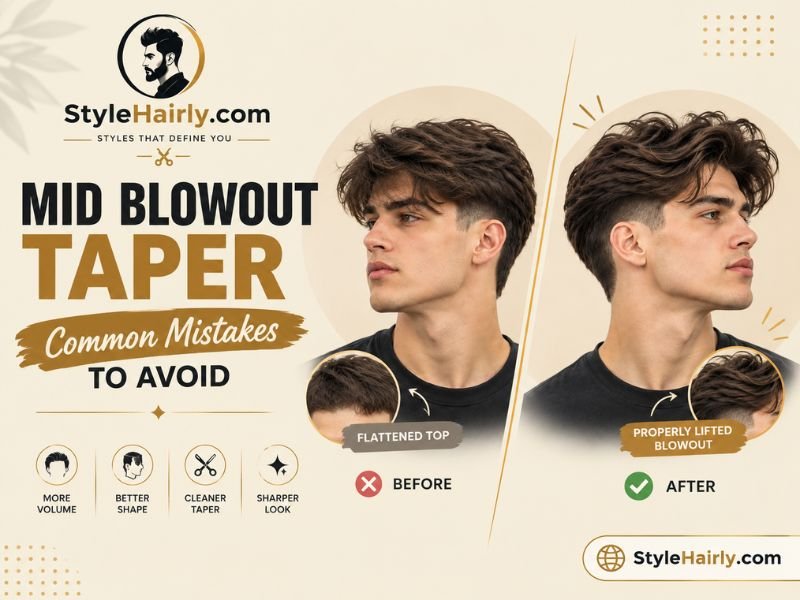
Drying the hair downward or without direction is the most common mistake, since it flattens the volume the cut is designed to create. Overloading the top with heavy product is another, as it weighs the hair down and cancels out the blowout effect. Skipping heat protectant on color-treated or chemically processed hair can lead to dryness and breakage over time. Waiting too long between taper touch-ups also causes the blend to grow out unevenly, which makes the whole cut look less intentional even if the top still looks fine.

Frequently Asked Questions
Is a mid blowout taper good for thin or fine hair?
Yes, but fine hair usually needs a lightweight mousse or texture powder for extra grip, since there is less hair to hold volume once it dries. Avoid heavy pomades, which can flatten fine hair instead of lifting it.
Does a mid blowout taper work on curly hair?
Yes. Curly hair often creates strong natural volume on top, and a diffuser attachment paired with a curl cream can enhance the shape further. The cutting should still be done by a barber experienced with curly textures.
How long does a mid blowout taper last before it needs a touch-up?
The taper line typically starts to look uneven after about two to three weeks, though the top can usually go longer between full haircuts since it carries more length.
Do I need to blow-dry it every day?
Not strictly every day, but the look depends on regular blow-drying to maintain the lifted volume. Skipping it for several days in a row usually makes the top sit flatter and closer to a plain taper.
What face shape is best for a mid blowout taper?
Most face shapes work with this height because it is a moderate fade rather than an extreme one. Round faces often benefit from extra height at the crown, while square and oval faces have flexibility with most top lengths.
What should I tell my barber if I have a cowlick?
Mention the exact location of the cowlick or growth swirl before the cut starts. A barber can cut around it so the top dries in the direction you want instead of fighting the natural growth pattern every morning.
Is a mid blowout taper high maintenance?
It sits in the middle. The taper itself needs touch-ups every few weeks like most fades, and the daily styling takes more time than a low-maintenance buzz cut, but it is less demanding than styles that require multiple products or longer drying routines.
Conclusion
A mid blowout taper works for most people because it balances visible contrast with everyday practicality. The height suits a wide range of hair types and face shapes, and the main factor that determines whether it looks right day to day is whether you are willing to spend a few minutes with a blow dryer. If that routine sounds manageable, describing the fade height and your top preferences clearly to your barber, along with any cowlicks or growth patterns, is the most reliable way to get the result you want. If the daily styling feels like too much, a low taper or a shorter, lower-maintenance top may be a better long-term fit.

1 thought on “Mid Blowout Taper: The Complete Guide to 1 Top Height ”