

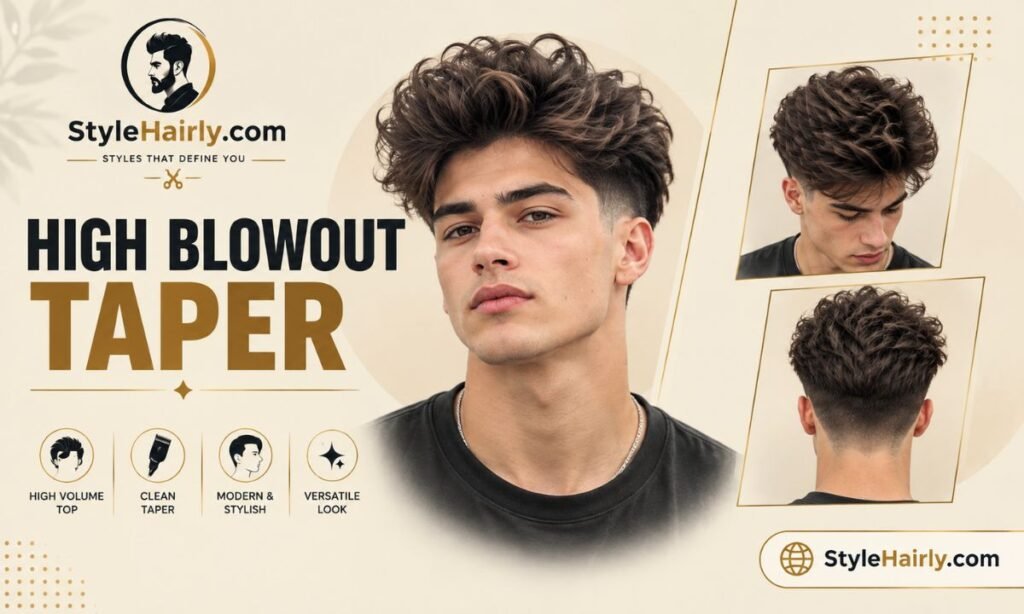
The high blowout taper pairs a skin-high fade with a rounded, voluminous top, creating one of the sharpest contrast styles a barber can give you. It is a bold, high-maintenance cut that trades easy upkeep for a striking, high-impact look.
This guide covers what defines the cut, how it compares to lower fade heights, who it tends to suit best, how to ask for it clearly in the chair, and how to style and maintain it once you have it.
High Blowout Taper at a Glance
Best for: Thick to medium hair density, hair types that hold volume well Fade height: High, typically starting above the temple and ear Top length: Longer, rounded, and full compared to the sides Maintenance: Frequent, usually every one to three weeks Styling time: A few minutes daily with a blow dryer and round brush or comb Main feature: Sharp contrast between the skin-high fade and a rounded, voluminous top
These are general guidelines. Your barber will adjust the exact fade height and top length based on your hair density, growth pattern, and how your hair naturally sits.
What Defines a High Blowout Taper
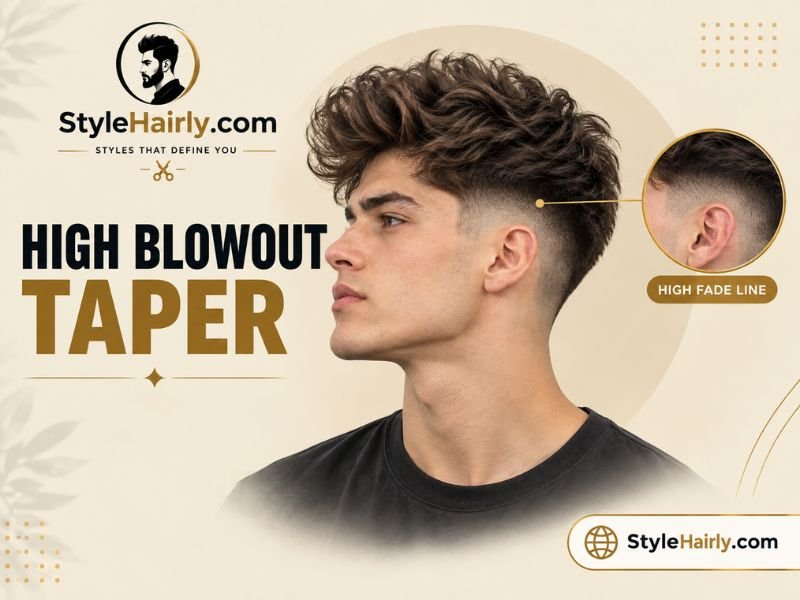
A high blowout taper is defined by two things happening at once: an aggressive fade that starts high on the head, and a top section that is deliberately styled fuller and rounder than a typical taper. The combination is what separates it from a standard high fade.
The fade portion usually starts near the top of the ear or just above the temple, which is considerably higher than a mid or low fade. From there, it tapers down to skin or very close to skin at the neckline and sideburns. Because the fade begins so high, there is very little transitional hair between “short” and “long.” That abrupt line is part of the design, not a flaw.
The “blowout” part refers to how the top is dried and shaped. Instead of laying flat or being combed into a sleek shape, the top is blow-dried upward and outward using a round brush, which builds volume at the root and gives the top a rounded, almost pushed-up silhouette. This is different from a pompadour, which relies more on product and a defined shape with a clear part or sweep, and different from a textured crop, which is styled to look more tousled and undone.
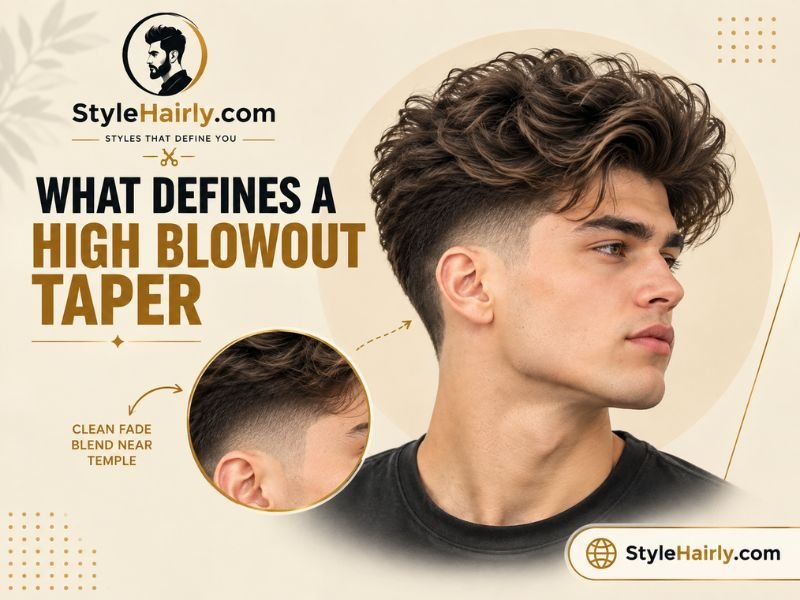
Common characteristics of a well-executed high blowout taper include:
- A clean, high fade line with no visible transition zone
- Noticeable volume and lift at the crown and front hairline
- A rounded top profile rather than a flat or pushed-to-one-side shape
- Sharp visual contrast between the skin fade and the fuller top
Because the fade sits so high, this cut requires more frequent upkeep than lower fades. As the hair grows out, the skin-high portion fills in quickly and the sharp line softens within a couple of weeks for most people.
High Blowout Taper vs. Low and Mid Fades
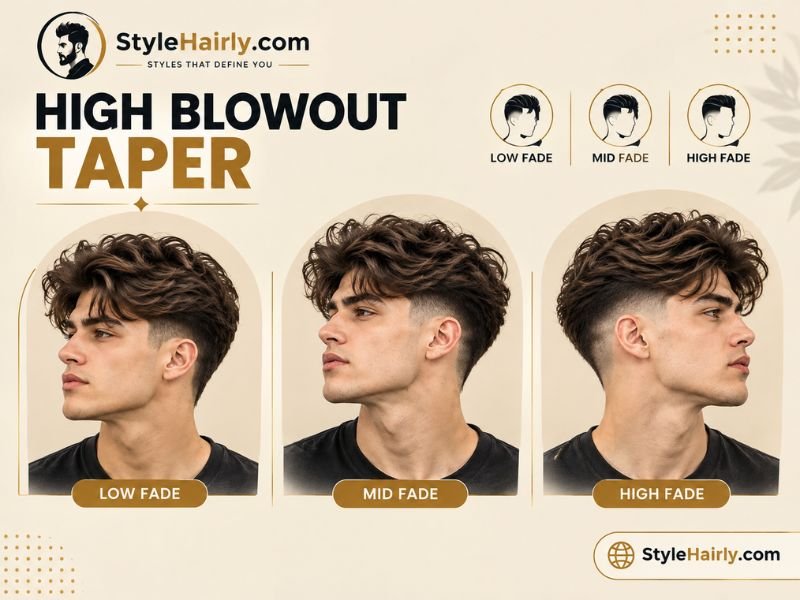
The main difference between a high, mid, and low blowout taper is where the fade begins, and that single decision changes the whole look of the haircut.
A low fade starts near the bottom of the head, right above the ears and neckline, so most of the sides keep some length. This creates a softer, more gradual transition and tends to look more conservative, which is why it is common in office settings and more traditional environments.
A mid fade starts around the middle of the sides, roughly at ear level. It offers a balance between contrast and versatility, and it is often the safer choice for someone who wants a defined fade without the sharp statement of a high fade.
A high fade, which is what the high blowout taper uses, starts well above the ear, sometimes close to the temple. This leaves a much smaller area of longer hair on top relative to the shaved sides, which is what creates the dramatic contrast the style is known for.
| Fade Height | Where It Starts | Visual Impact | Maintenance Frequency |
| Low fade | Near the neckline and above the ears | Subtle, blends easily | Every 3 to 4 weeks |
| Mid fade | Around ear level | Balanced, noticeable but not extreme | Every 2 to 3 weeks |
| High fade (used in blowout tapers) | Above the temple, near the top of the ear | Bold, high contrast | Every 1 to 3 weeks |
If you are unsure which height to choose, think about how often you are realistically willing to get a trim. A high fade looks its sharpest for a shorter window of time, so it demands more frequent visits to stay looking intentional rather than grown out.
High Blowout Taper vs. High Fade: What’s the Difference
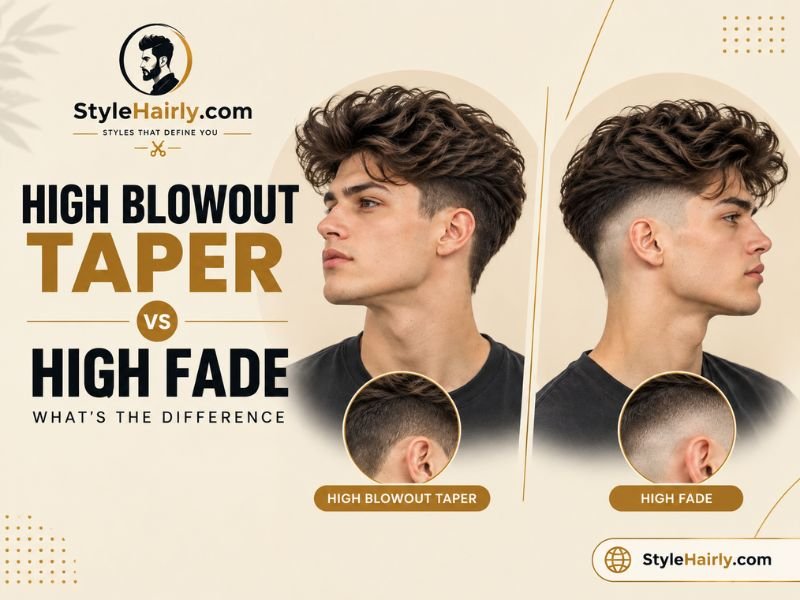
A high blowout taper and a high fade are often used interchangeably, but they are not identical. A taper leaves slightly more length through the sides and blends more gradually, while a fade takes the same area down to skin or very close to it in a tighter, more compressed gradient.
In practice, this means a high blowout taper tends to grow out a little more gracefully than a pure high fade, since there is more length left in the band around the temple and ear to soften as regrowth comes in. If you want the most extreme version of the contrast, ask your barber for a “high skin fade with a blowout top” instead. If you want something with slightly more forgiveness between visits, “high blowout taper” is the term to use.
Who the High Blowout Taper Suits Best
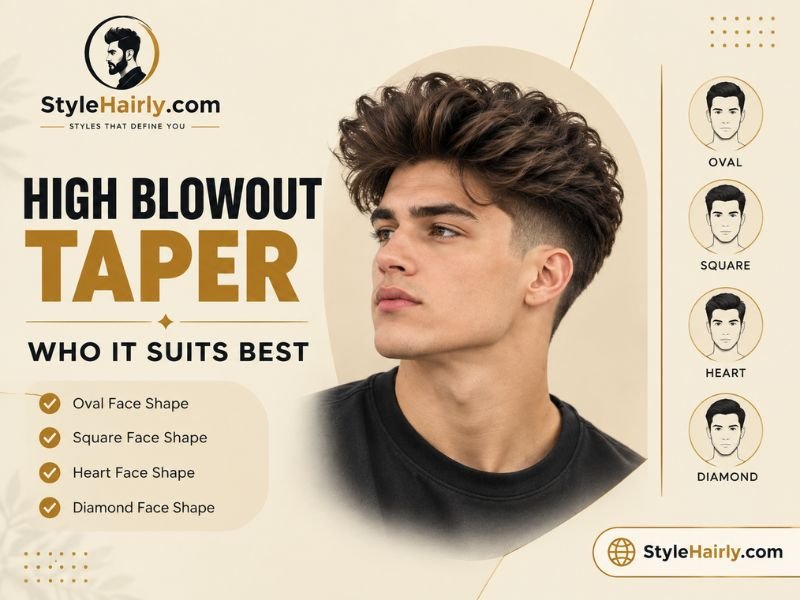
The high blowout taper tends to work best on medium to thick hair that has some natural body, since the top needs enough density to hold volume when it is blown out. Very fine or thin hair can still work with this cut, but it usually needs extra help from styling products to achieve the same rounded, lifted look.
Hair texture also plays a role. Straight hair blows out into a smoother, rounder shape with less effort. Wavy hair can add natural texture to the blowout, giving it a slightly more dimensional look instead of a completely smooth surface. Very curly or coily hair can still be tapered high on the sides, but the top styling approach usually shifts toward working with the curl pattern rather than forcing a blown-out, rounded shape, since curly hair responds differently to a round brush and heat.
Face shape is another factor worth considering, though it is not an absolute rule:
- Round faces often benefit from the added height and lift on top, since it creates the illusion of length and helps balance wider cheeks.
- Square and angular faces tend to pair well with the sharp contrast of a high fade, since the style complements strong jawlines rather than competing with them.
- Long or oval faces can usually still wear this cut, but a barber may reduce the amount of height and volume slightly so the top does not add too much extra vertical length.
People who tend to get the most satisfying results from a high blowout taper are those who do not mind a bold, attention-drawing style, who are comfortable committing to more frequent barber visits, and who have a few extra minutes each morning to style the top properly. If your daily routine is wash and go with no styling time, this may not be the lowest-maintenance choice available.
| Hair Type or Face Shape | Suitability | Notes |
| Thick, straight hair | Very suitable | Holds the rounded blowout shape with the least effort |
| Wavy hair | Suitable | Adds natural texture and dimension to the blowout |
| Fine or thin hair | Possible with extra product | May need volumizing mousse and careful blow-drying to hold shape |
| Curly or coily hair | Suitable with adjusted styling | Top usually styled with a diffuser instead of a round brush |
| Round face | Often flattering | Added height helps balance wider cheeks |
| Square face | Often flattering | Sharp contrast complements a strong jawline |
| Long or oval face | Works with adjustments | Barber may reduce top volume to avoid extra vertical length |
When to Choose a Different Height
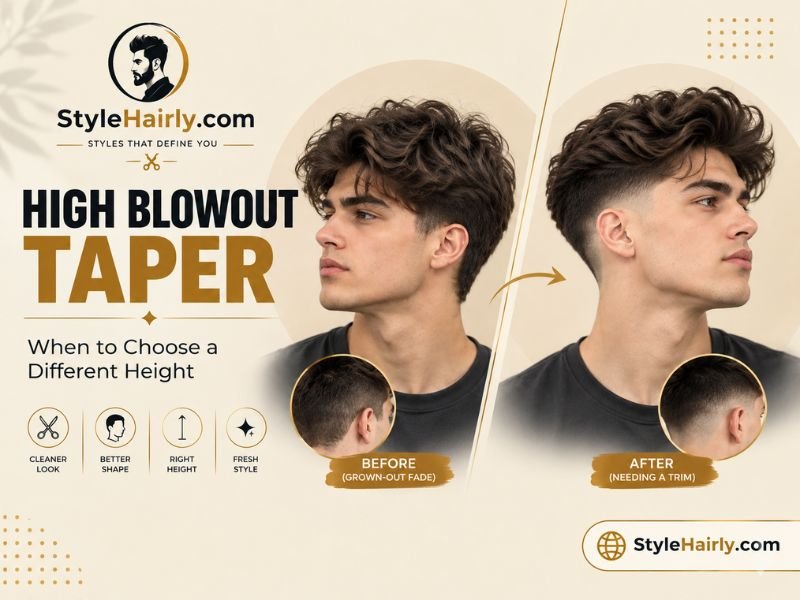
A high blowout taper is not the right fit for everyone, and there are a few practical situations where a lower fade height makes more sense.
If your hair is very fine and lacks natural volume, a high fade can sometimes make the contrast look uneven, since the top may struggle to hold the rounded shape by midday. A mid fade with slightly shorter top length can be easier to maintain and still offer noticeable contrast without depending as heavily on styling.
If you have a workplace with a conservative dress code or grooming policy, a low or mid fade often reads as more traditional and may draw less attention than a high blowout. It is worth checking your workplace’s expectations before committing to a bolder style.
If you are not able to get to a barber every one to two weeks, the sharp line of a high fade will grow out and lose definition faster than a lower fade would. In that case, a mid fade tends to look presentable for a longer stretch between appointments.
Finally, if you have a cowlick, double crown, or a hairline that grows in an unusual pattern, mention this to your barber before choosing a high blowout taper. These growth patterns can sometimes fight against the rounded blowout shape, and your barber may recommend adjusting the top length or fade height to work with your natural growth instead of against it.
Head shape is worth a mention too. Because so little hair is left on the sides at this height, any bumps, dents, or flat spots on the head become more visible than they would with a lower fade. If this is a concern, ask your barber how the cut will look on your specific head shape before committing.
How to Ask for a High Blowout Taper
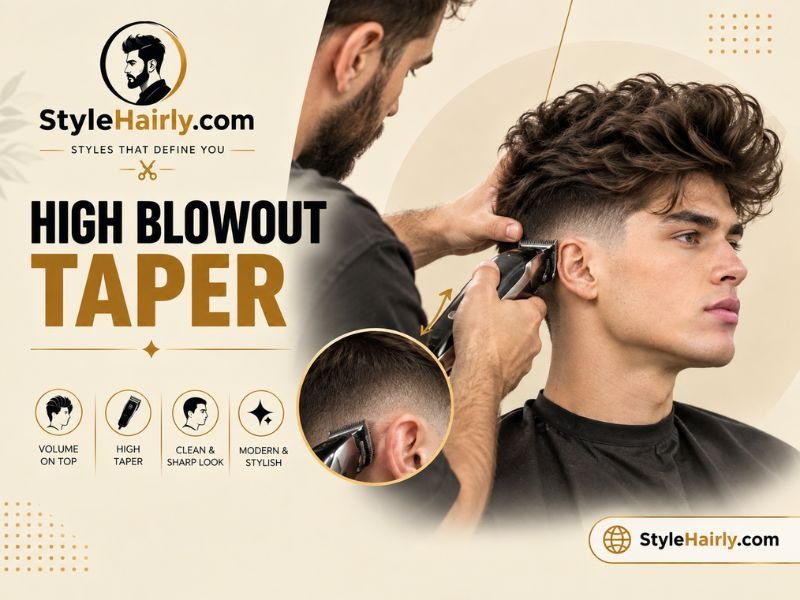
Walking into a barbershop and simply asking for “a blowout taper” can lead to a result that is not quite what you pictured, since the term covers a range of possible heights and top lengths. Being specific helps your barber match the cut to your expectations.
Here is what to communicate clearly:
Fade height. Say that you want a high fade, starting above the temple or near the top of the ear. You can also say “skin fade” if you want the bottom portion to fade all the way down to bare skin rather than leaving a short guard length.
Top length. Let your barber know roughly how long you want the top, since this determines how much volume can realistically be built into the blowout. A common range is two to four inches, but your barber can advise based on your hair density.
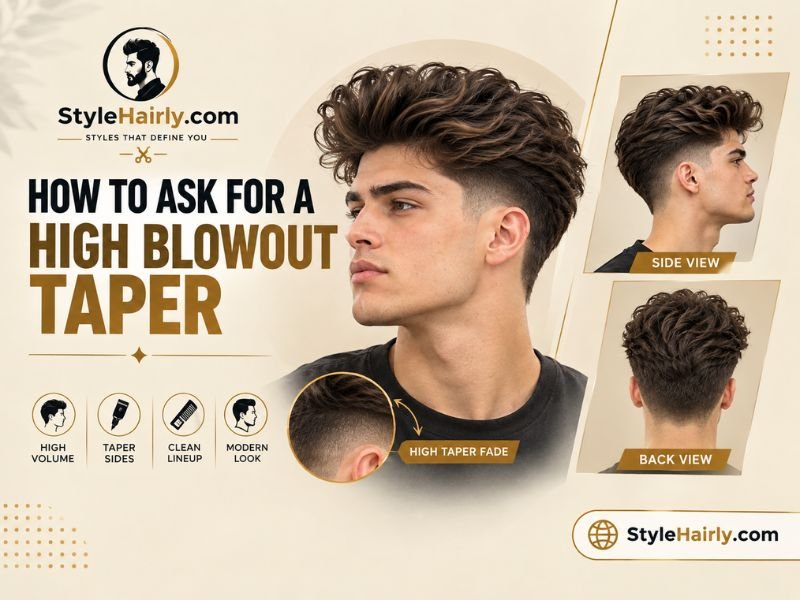
Amount of volume. Some people want a very rounded, almost pushed-up top, while others prefer a slightly flatter blowout with less height. Describing this as “more volume” or “a softer, less rounded top” gives your barber a clearer target.
Blending preference. Ask for a seamless blend between the fade and the top so there is no harsh visible line where the two sections meet, unless you specifically want a more defined disconnect.
Reference photos. Bringing one or two photos of the style you want, taken from the front and the side, remains one of the most reliable ways to avoid miscommunication. Hair terminology varies between barbers, so a photo often communicates more accurately than words alone.
It also helps to mention your daily styling routine and how much time you are willing to spend on it, since your barber can adjust the cut to be more forgiving if you know you will not be styling it perfectly every single day.
Styling and Maintenance Routine
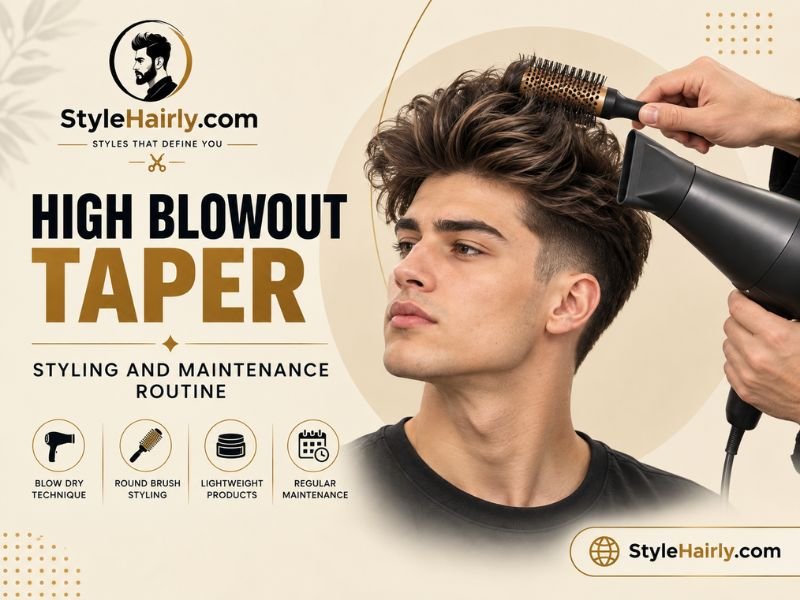
Getting the rounded, voluminous look of a high blowout taper takes a bit more effort than a wash and go style, but the routine is straightforward once you have the right tools.
1. Preparation Start with clean, towel-dried hair that is not dripping wet. Apply a heat protectant spray if you are using a blow dryer, along with a small amount of volumizing mousse or a light styling cream worked through from root to tip.
2. Tools A blow dryer with a concentrator nozzle and a round brush are the key tools for building the rounded shape. The brush size affects the amount of curve you get, so a larger barrel creates a softer round shape while a smaller one creates tighter lift.
3. Styling steps Section the top hair and lift it at the root with the round brush while directing warm air from the dryer upward and slightly back. Work in small sections, moving from the front hairline toward the crown, rotating the brush outward to encourage the rounded silhouette. Keep the dryer moving and avoid holding it in one spot for too long to prevent heat damage.
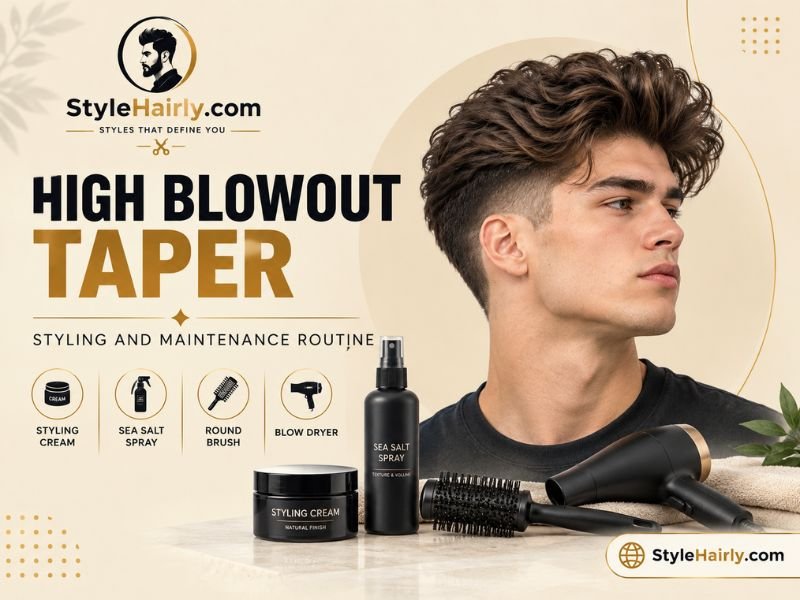
4. Finishing Once the top is dry and shaped, apply a small amount of matte paste or pomade to hold the volume in place without weighing the hair down. Avoid overly wet or shiny products, since they tend to flatten the rounded shape rather than support it.
5. Maintenance between visits Because the fade sits so high, regrowth is more noticeable here than on lower fades. Most people need a trim every one to three weeks to keep the line sharp. Between visits, some people ask their barber to do a quick “fade cleanup” at home-friendly barbershops, though this should still be done by a professional to avoid uneven results.
If you want to stretch the time between full haircuts, focus your at-home styling on keeping the top volume consistent, since a slightly grown-out fade is far less noticeable when the top styling stays neat and intentional.
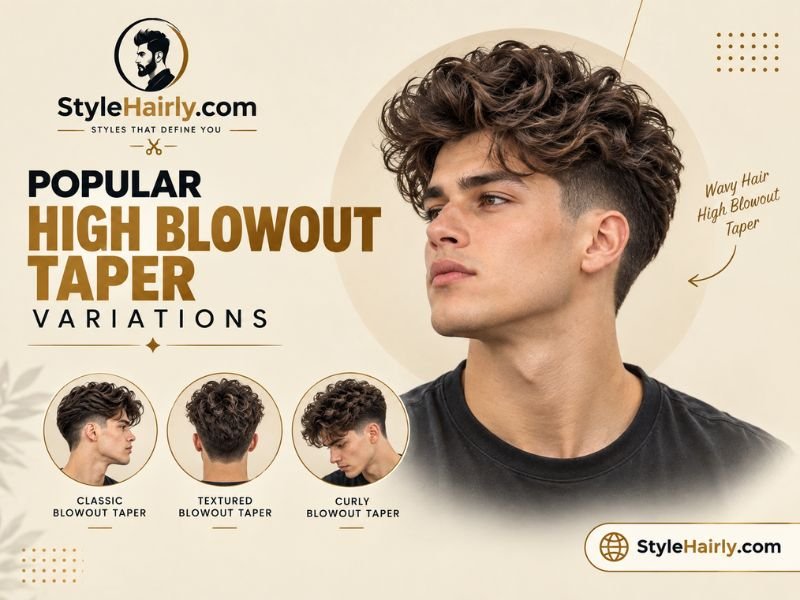
Popular High Blowout Taper Variations
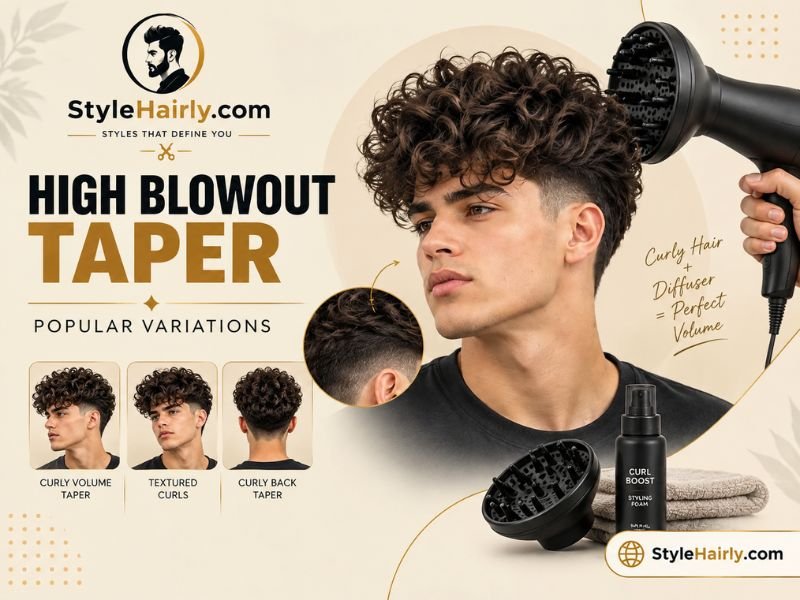
The high blowout taper is a base style, and most barbers can adapt it into a few different looks depending on the top styling and fringe treatment.
Textured fringe high blowout taper. The top is cut with more texture and worn slightly forward as a fringe instead of swept straight back, giving the cut a more casual, lived-in feel while keeping the sharp high fade underneath.
High blowout taper Edgar cut. This version pairs the high fade with a straight, sharply lined fringe across the forehead for a bolder, more graphic look. It works best on straight or thick hair that holds a crisp line.
Curly high blowout taper. On curly or coily hair, the top is styled with a diffuser and curl cream instead of a round brush, letting the natural curl pattern create the volume rather than forcing a smooth, rounded shape.
Mentioning one of these variation names to your barber, along with a reference photo, can help narrow down exactly which version of the high blowout taper you are picturing.
Pros and Cons of a High Blowout Taper
| Pros | Cons |
| Sharp, high-contrast look that stands out | Requires trims every 1 to 3 weeks to stay sharp |
| Adds visible height and volume | Daily styling takes a few extra minutes |
| Works well with several top variations | Not ideal for very fine or thinning hair |
| Can suit round and square face shapes well | Bumps or flat spots on the head become more visible |
| Grows out slightly better than a full skin fade | Less forgiving for conservative workplace dress codes |
Frequently Asked Questions
Is a high blowout taper good for thin hair?
It can work, but thin hair needs extra volumizing product and careful blow-drying to hold the shape through the day.
Does a high blowout taper work on curly hair?
Yes. The fade works the same, but the top is usually styled with a diffuser instead of a round brush.
What face shape is best for a high blowout taper?
Round and square face shapes tend to pair especially well with the added height and sharp contrast.
Is a high blowout taper high maintenance?
Yes. It needs trims every one to three weeks plus a few minutes of daily styling.
How do I style a high blowout taper at home?
Apply a volumizing product to damp hair, blow-dry the top up and back with a round brush, then finish with matte paste.
What should I ask my barber for?
Specify the fade height, top length, desired volume, and whether you want a seamless blend. Bring a reference photo.
How long does a high blowout taper last before it needs reshaping?
The fade line usually softens within one to two weeks, so a trim every one to three weeks keeps it sharp.
How long does it take to grow enough hair for the blowout on top?
At least two to three inches on top, which usually takes a few months from a short starting cut.
Conclusion
The high blowout taper is a bold, high-contrast style that rewards people who are willing to keep up with frequent trims and a short daily styling routine. The sharp fade line and rounded, voluminous top are what make it stand out, but those same features are also what make it demand more upkeep than a lower fade.
If you have medium to thick hair, do not mind visiting your barber every couple of weeks, and want a cut that makes a clear style statement, this is worth discussing with your barber. If your hair is very fine, your schedule does not allow for frequent trims, or you prefer a lower-effort routine, a mid or low fade can give you a similar tapered look with less maintenance. Either way, being specific about fade height, top length, and volume when you sit down in the chair is what will get you the closest match to the result you have in mind.

1 thought on “High Blowout Taper: 6 Best Rules Before You Commit ”