

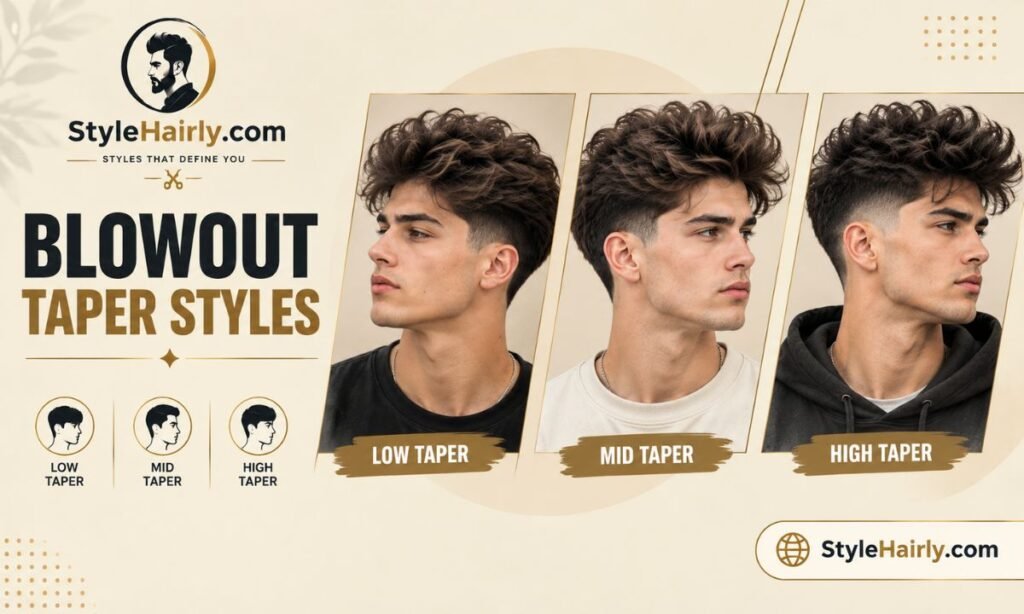
A blowout taper is not one single haircut. It is a family of blowout taper styles built from the same idea: a clean, gradually shortened taper on the sides paired with a fuller, voluminous top that gets blow-dried upward and outward.
This guide breaks down every major version, sorted by fade height, hair type, and top styling, along with practical guidance on which one fits your hair and how to describe it to your barber.
Blowout Taper Styles at a Glance
Core structure: Tapered sides and back, voluminous blow-dried top Fade height options: Low, mid, or high Top length needed: Roughly two to five inches, depending on the amount of volume you want Hair types it works on: Straight, wavy, curly, and coily, with adjusted styling for each Maintenance: Every two to four weeks, depending on fade height Daily styling: A few minutes with a blow dryer and round brush or diffuser
Blowout Taper Styles by Height
The fade height is the first decision to make, since it changes both how bold the style looks and how often you need a trim.
Low Blowout Taper
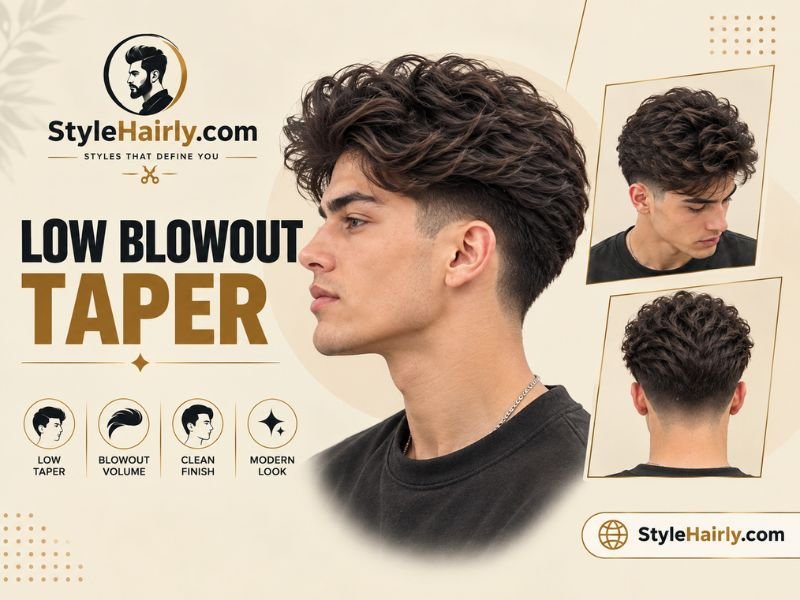
The low blowout taper keeps the fade close to the ears and neckline, leaving most of the sides with some length. This is the most subtle version of the style and works well in professional or conservative settings where a sharp, high-contrast fade might feel out of place.
Because there is more hair left on the sides, regrowth blends in gradually rather than creating a visible line. Most people can go three to four weeks between trims and still have the style look presentable.
Mid Blowout Taper
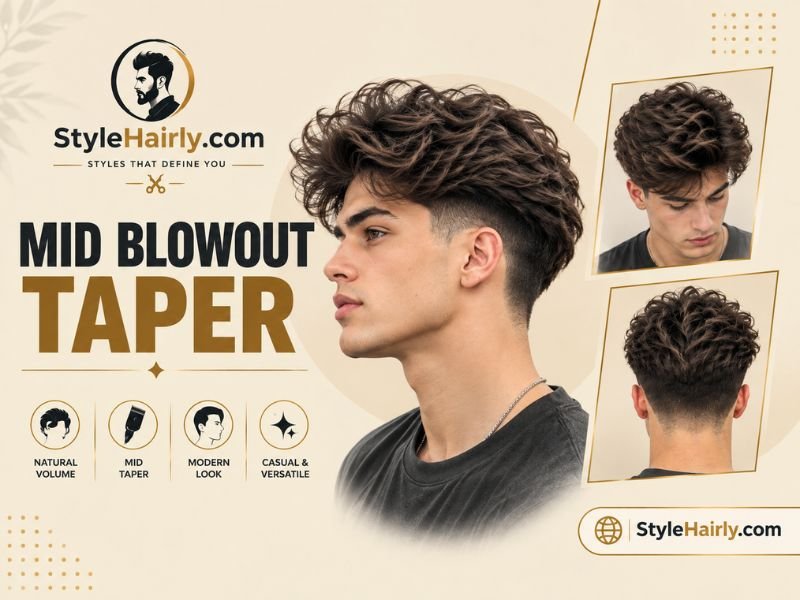
The mid blowout taper starts around the temple or ear level, offering a middle ground between subtle and bold. It shows a clear taper without going as extreme as the high version, which makes it a common choice for people who want their haircut to look intentional without drawing constant attention.
This height also tends to suit a wider range of face shapes, since it adds a moderate amount of visual height without the strong contrast that comes with a high fade.
High Blowout Taper
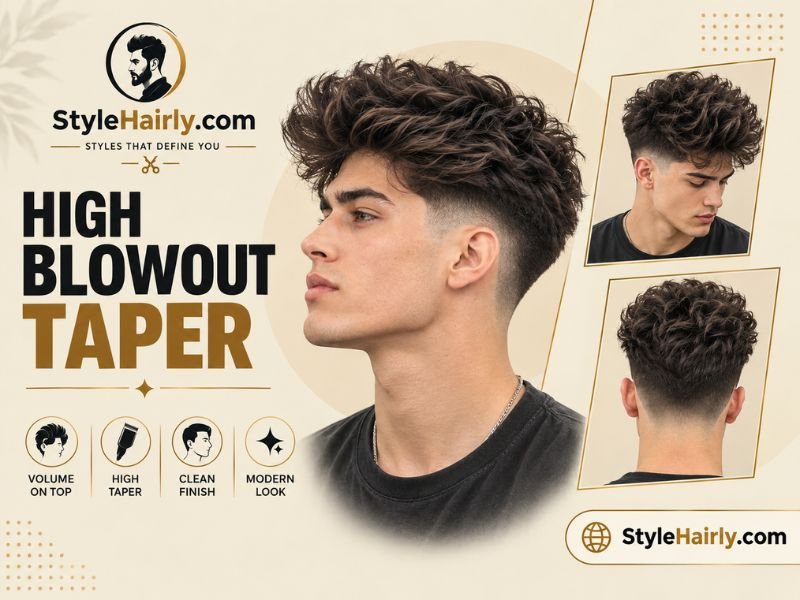
The high blowout taper starts well above the ear, close to the temple, and creates the sharpest contrast between the tapered sides and the voluminous top. It is the boldest version and reads as a clear style statement rather than a background haircut.
Because the taper sits so high, it grows out faster than the low or mid versions. Most people need a trim every one to three weeks to keep the line looking sharp.
Which Height Is Right for You
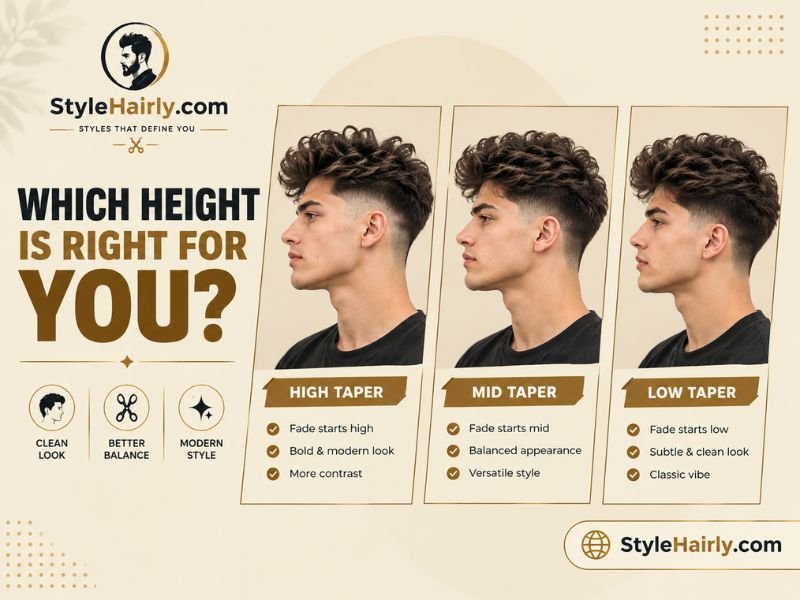
The right height mostly comes down to two things: how often you can realistically get a haircut, and how much contrast you actually want.
| Height | Best For | Trim Frequency | Visual Impact |
| Low | First-timers, conservative settings, low-maintenance preference | Every 3 to 4 weeks | Subtle, blends easily |
| Mid | Balanced look, most face shapes, everyday versatility | Every 2 to 3 weeks | Noticeable but not extreme |
| High | Bold statement looks, style-forward settings | Every 1 to 3 weeks | Sharp, high contrast |
If you are choosing between blowout taper styles for the first time, starting with a mid blowout taper is often the easiest way to see how the style suits you before committing to the higher-maintenance high version.
Taper vs. Fade: What’s the Difference
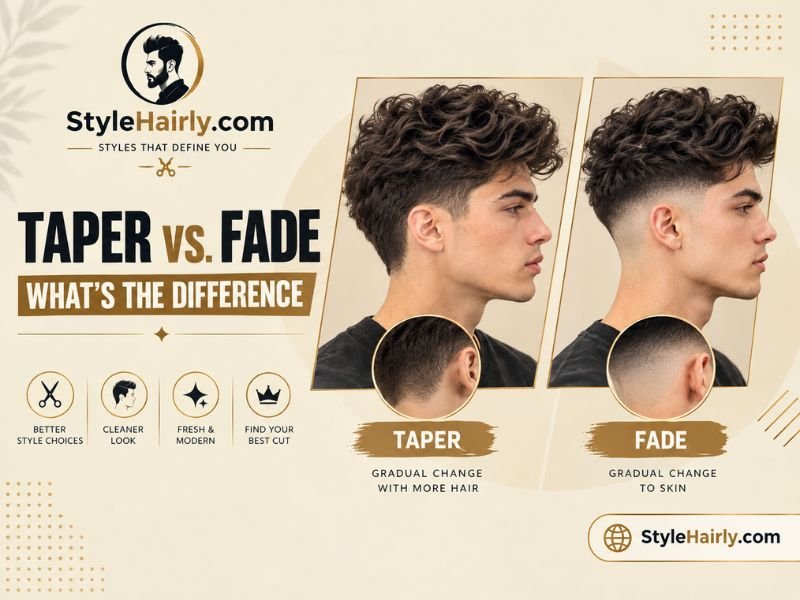
A taper and a fade are related but not the same thing, and the terms get mixed up often. A taper gradually shortens the hair near the edges, such as the sideburns, behind the ears, and along the neckline, while leaving more length above that area. A fade takes the same area down to skin or very close to it, creating a sharper, more compressed gradient.
In practice, this means a blowout taper generally grows out more gracefully than a blowout fade, since there is more length left to soften the line as regrowth comes in. If your barber uses “blowout taper” and “blowout fade” interchangeably, ask specifically whether they mean skin at the edges or a softer taper, since the two grow out very differently.
Blowout Taper Styles by Hair Type
The core structure of a blowout taper stays the same across hair types, but how the top is styled to get the “blown-out” look changes quite a bit depending on your natural texture.
Blowout Taper for Curly Hair
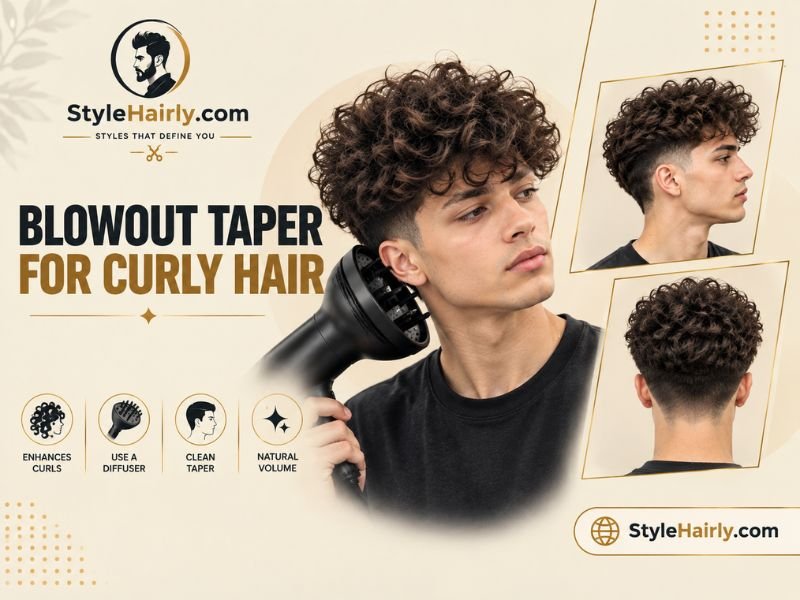
Curly hair naturally has lift, which works in its favor for a blowout taper. Instead of using a round brush to force a smooth, rounded shape, curly hair is usually styled with a diffuser attachment and a curl-defining cream, letting the natural curl pattern create volume rather than fighting against it.
Curly hair can also hold the style with slightly less daily effort than straight hair, since the curls provide built-in texture and shape once they are dry.
Blowout Taper for Wavy Hair
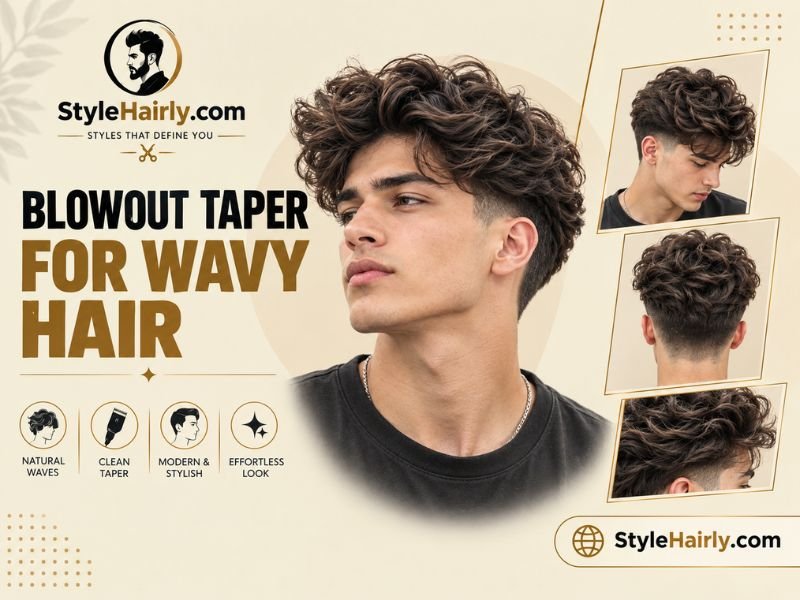
Wavy hair sits in a useful middle ground for this style. It has enough natural texture to add dimension to the blowout without needing heavy diffusing, and it usually responds well to a light mousse and a quick round-brush blow-dry.
Wavy hair tends to hold the shape through the day better than very straight hair, since the natural wave pattern helps the top keep some lift even as styling products wear off.
Blowout Taper for Straight Hair
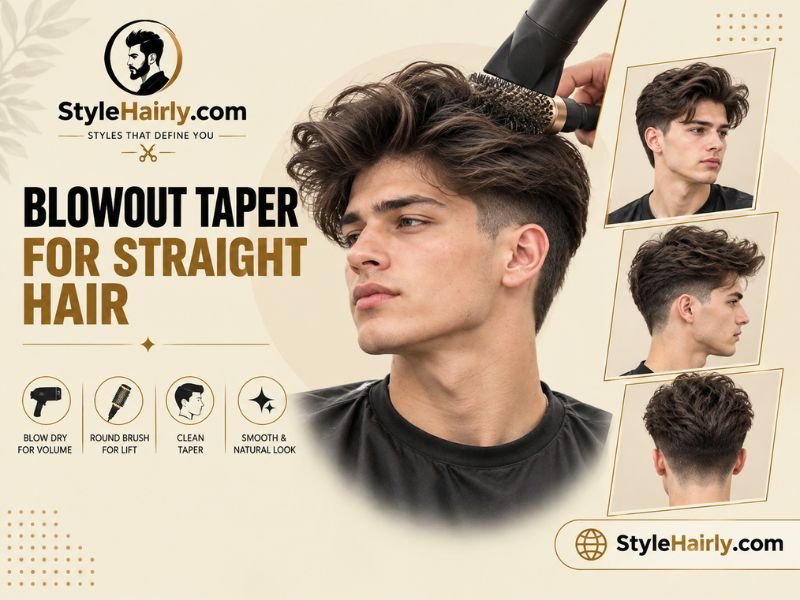
Straight hair gives the smoothest, most rounded version of the blowout, but it usually needs a bit more product and technique to hold that shape, since straight hair has the least natural volume of the three types.
A volumizing mousse applied to damp hair, followed by a round-brush blow-dry that lifts at the root, is typically necessary to keep straight hair from falling flat by midday. Some barbers also cut light texture into the top of straight hair specifically to help it hold the blowout shape longer.
| Hair Type | Recommended Tool | Styling Note |
| Curly | Diffuser attachment | Works with the natural curl pattern instead of against it |
| Wavy | Round brush, light mousse | Holds shape well with minimal daily effort |
| Straight | Round brush, volumizing mousse | Needs the most product and technique to hold volume |
Blowout Taper Style Variations
Beyond height and hair type, the blowout taper can be adjusted through how the top and front are cut and styled.
Blowout Taper with Textured Fringe
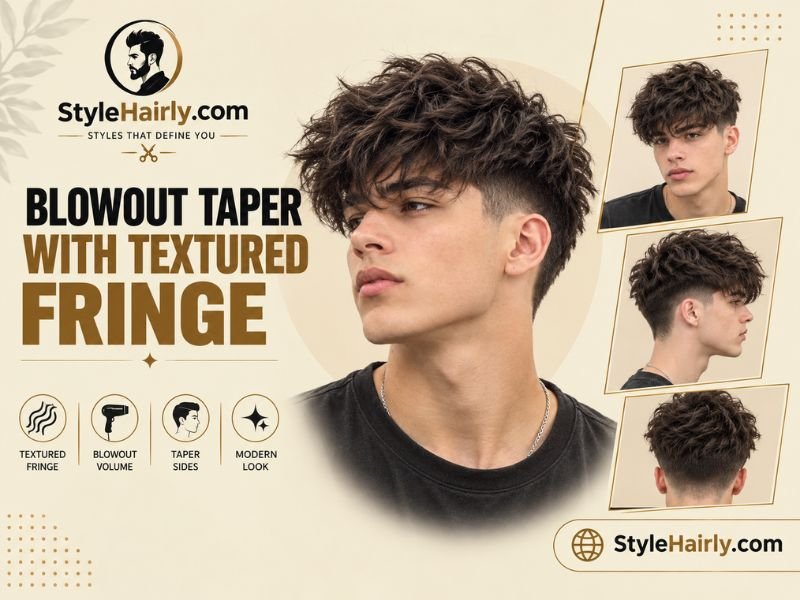
This variation cuts extra texture into the top and lets the front fall forward as a fringe instead of sweeping it straight back. It gives the cut a more casual, undone feel while keeping the tapered sides clean underneath. It tends to work best with a bit of natural wave or added texture, since fully straight hair can make the fringe look flat.
Drop Fade Blowout Taper
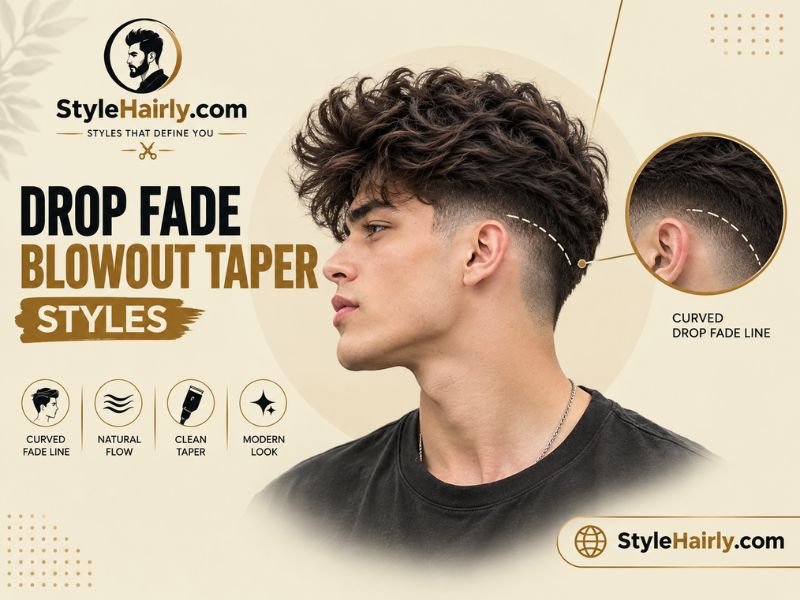
A drop fade blowout taper curves the taper line downward behind the ear instead of keeping it level, following the natural curve of the head. This adds a bit more visual interest to the side profile and is a popular choice for people who want their blowout taper to look slightly more custom.
Blowout Taper with Beard or Line-Up
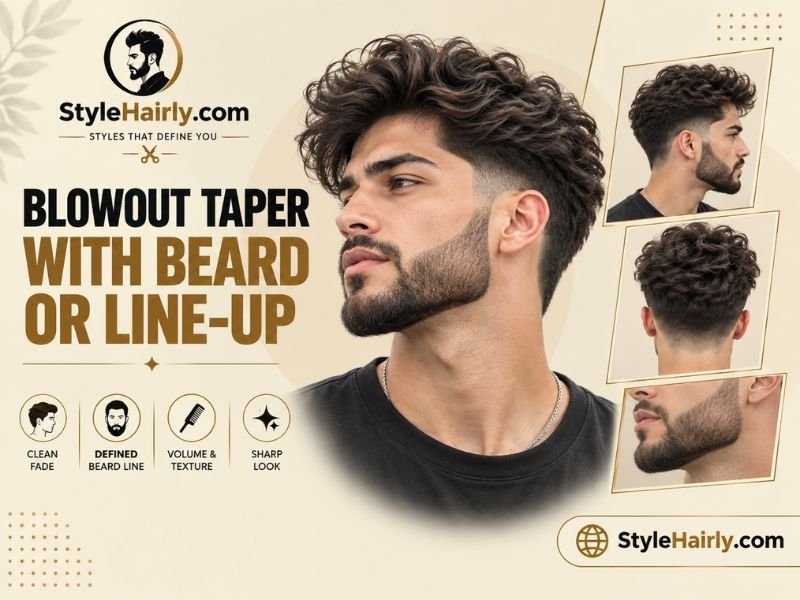
Pairing the blowout taper with a defined beard line or a sharp hairline line-up creates a more polished, put-together look. This combination is common for people who want the haircut to read as deliberate and groomed rather than casual, especially at the mid or high fade heights.
Best Face Shapes for Each Blowout Taper Style
| Face Shape | Recommended Height and Style |
| Round | Mid or high taper with taller top volume to add length |
| Square | High taper for sharp contrast that complements the jawline |
| Oval or long | Low or mid taper with softer, less exaggerated volume |
| Heart-shaped | Low or mid taper with a fuller top to balance the chin |
Blowout Taper vs. Other Popular Haircuts
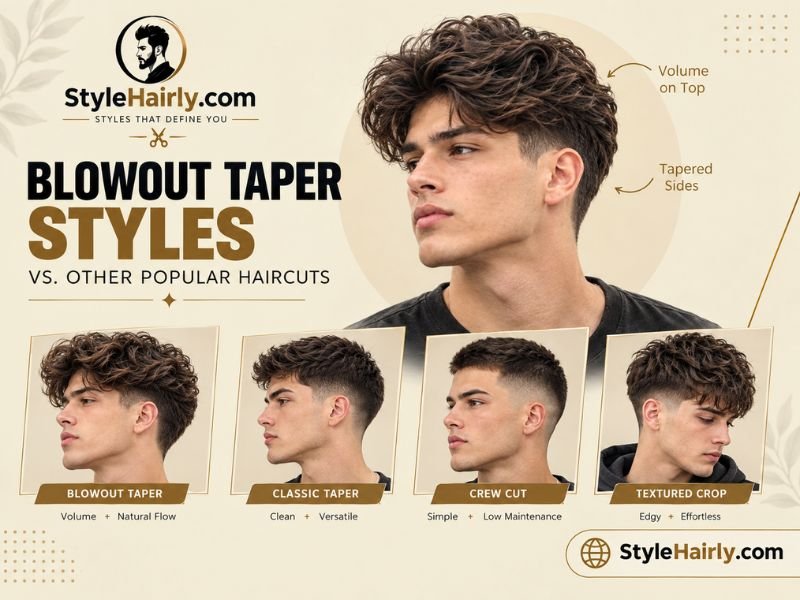
| Haircut | Volume on Top | Maintenance | Best For |
| Blowout taper (any height) | High, styled upward | Every 1 to 4 weeks depending on height | Bold, voluminous look with a clean taper |
| Textured crop | Low to moderate, tousled | Minimal daily styling | Casual, low-effort texture |
| Pompadour | High, swept back with defined shape | Daily styling with stronger hold | Polished, structured look |
| Skin fade only | Flat or minimal | Trim every 2 to 3 weeks | Low-maintenance sharp sides without top volume |
Common Mistakes to Avoid
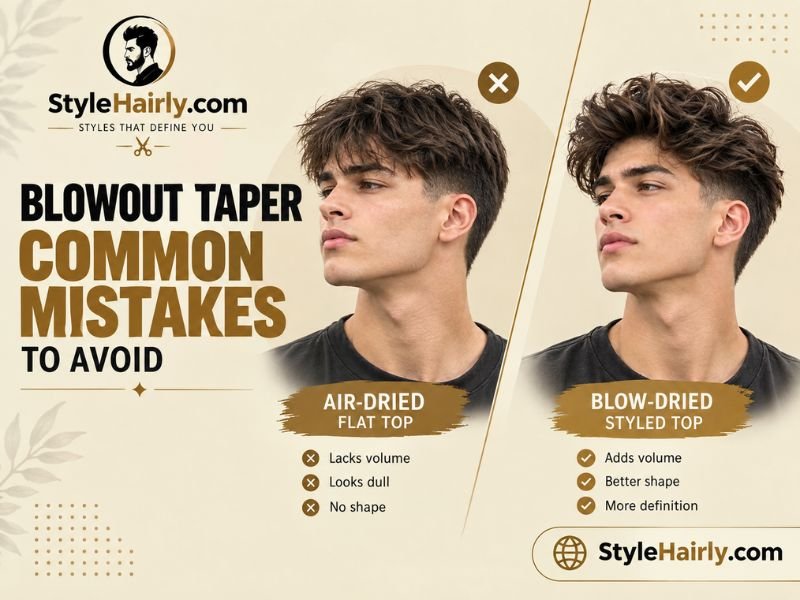
A blowout taper that looks wrong is usually not a cutting problem. It is almost always a styling problem, since the top has to be blow-dried to look the way it is designed to look.
- Skipping the blow-dry. Letting the top air-dry after a cut usually leaves it looking like an awkward medium-length haircut rather than a styled blowout. The volume has to be built in with heat and a brush.
- Using too much product too early. Heavy pomade or gel applied before blow-drying can weigh the hair down and prevent it from lifting properly. Lighter products, like mousse, work better as a base.
- Choosing a fade height that does not match your maintenance schedule. A high blowout taper that grows out for four weeks without a trim starts to look uneven rather than intentional. Match the height to how often you can realistically get to the barber.
- Not specifying the top length. Leaving this detail vague can result in a top that is either too short to style properly or longer than you wanted. Giving a rough length in inches helps avoid this.
Not Sure Which Blowout Taper Style to Pick
If you are still deciding, start by narrowing things down with two questions: how bold do you want the contrast to be, and how much time are you willing to spend styling it each day.
For a low-effort, easy-to-maintain option, a low blowout taper on wavy or curly hair is usually the most forgiving combination. For a balanced, everyday style, a mid blowout taper works on nearly any hair type and face shape. For the boldest look, a high blowout taper with a textured fringe or a drop fade detail creates the most striking result, but it also asks for the most upkeep.
Once you have a direction, describe it to your barber using specifics rather than just the general term. A useful script looks something like this: “Blowout taper, [low/mid/high] on the sides, skin or soft edge depending on what you prefer, and about [X] inches on top so I can blow it out for volume.” Bringing a reference photo alongside that description remains one of the most reliable ways to make sure you and your barber are picturing the same result.
Frequently Asked Questions
What is the difference between a blowout taper and a regular taper?
A regular taper stays close to the head, while a blowout taper leaves extra length on top to be blow-dried into a fuller, rounded shape.
Which blowout taper height is best for a round face?
Mid and high heights usually work best, since the added top volume helps balance out width at the cheeks.
Does a blowout taper work on thin or fine hair?
Yes, but it needs extra volumizing product and careful blow-drying to hold the shape through the day.
How long does hair need to be for a blowout taper?
At least two to three inches on top. Growing to that length from a short cut usually takes a few months.
Can I style a blowout taper without a blow dryer?
Not easily. The blow dryer and brush are what lift the hair at the root to create the volume.
Is a blowout taper high maintenance?
It depends on the height. Low is fairly low maintenance, while high needs trims every one to three weeks.
What should I tell my barber for a blowout taper?
Give the fade height, the top length in inches, and say you want it cut and styled for a blowout. Bring a reference photo.
Can curly hair get a blowout taper?
Yes. The sides are tapered the same way, and the top is styled with a diffuser and curl cream instead of a round brush.
Conclusion
The blowout taper is less a single haircut and more a flexible framework, and the blowout taper styles above show just how adjustable it is by height, hair type, and top treatment. A low blowout taper suits people who want something easy to maintain, a mid blowout taper offers the most balanced everyday option, and a high blowout taper delivers the boldest contrast for those willing to keep up with more frequent trims.
Whichever version you are leaning toward, being specific about fade height and top length when you sit down in the chair, ideally with a reference photo in hand, is what will get you the closest match to the look you actually want.

2 thoughts on “Blowout Taper Styles: Every Bold Variation Guide (2026)”