

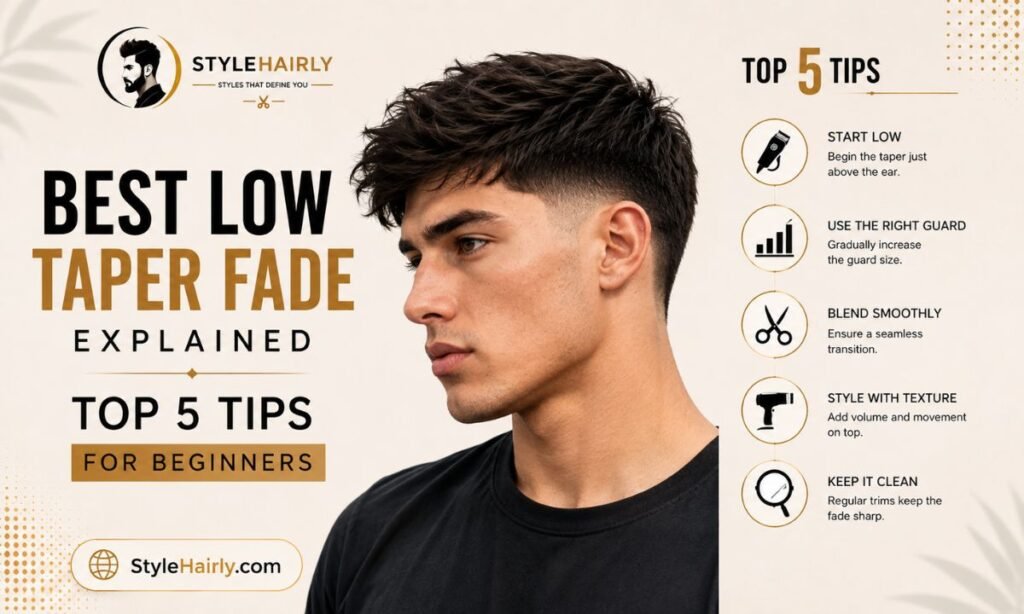
Walking into a barbershop and asking for “a fade” can get confusing fast. Barbers will usually follow up with a question: low, mid, or high? If you don’t know the difference, it’s easy to end up with a cut that’s shorter or more dramatic than what you actually wanted.
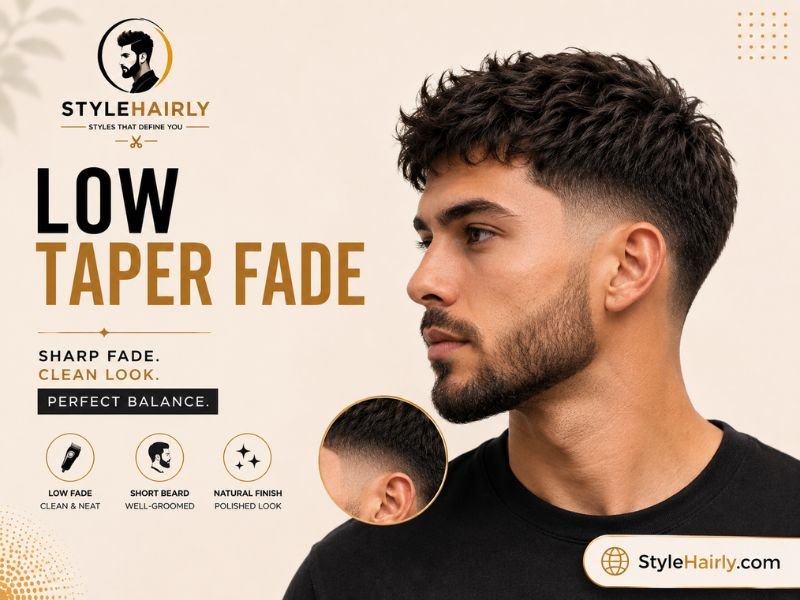
A low taper fade is one of the most versatile and beginner-friendly fades available. It keeps the fading close to the hairline and neckline, blending gradually into longer hair on top, which makes it a safe starting point if you’re new to fades and want a subtle, workplace-friendly result rather than a bold, high-contrast look.
This guide explains what a low taper fade actually is, how it works with different hair types and face shapes, how it compares to mid and high fades, what to tell your barber, and how to style and maintain it once you’re home.
Low Taper Fade at a Glance
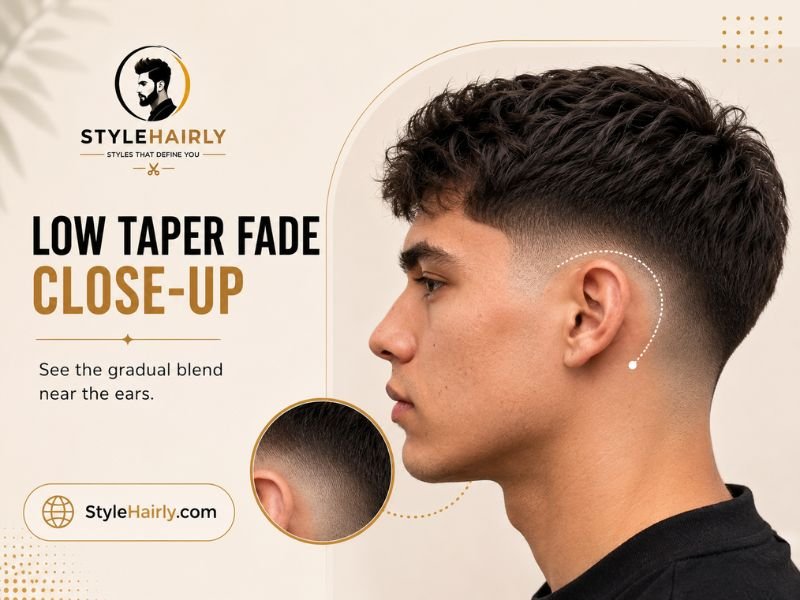
- Fade location: Starts low, near the ears and neckline
- Contrast level: Subtle to moderate
- Best for: First-time fade clients, professional or conservative settings
- Hair types: Works on straight, wavy, curly, and coily hair
- Top length: Usually left longer, giving styling flexibility
- Maintenance: Generally lower than mid or high fades
- Main feature: Gradual, low-key blend that’s easy to grow out
What Is a Low Taper Fade?
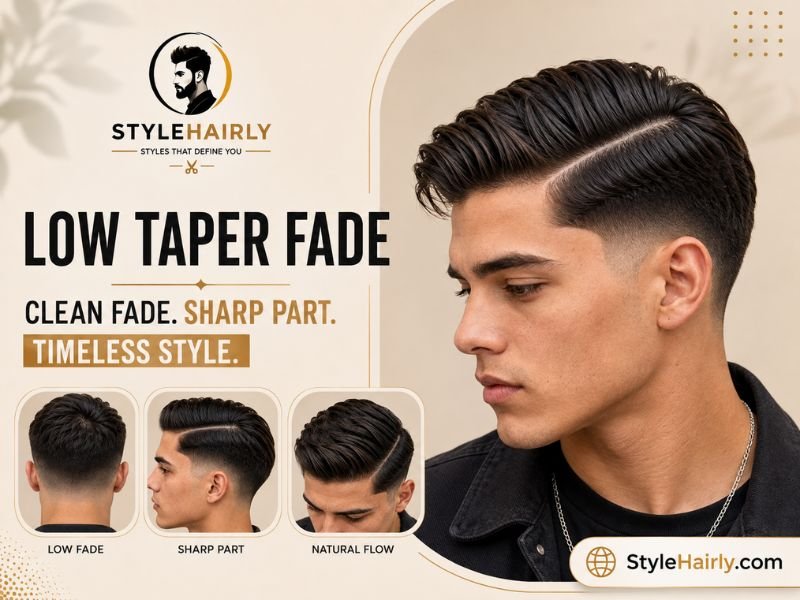
A low taper fade is a haircut where the hair gradually shortens starting low on the head, typically around the ear line and neckline, while the top and sides stay comparatively longer. The word “taper” refers to this gradual shortening rather than an abrupt line, so the transition looks smooth instead of choppy.
The key difference between a low, mid, and high taper fade is simply where that fading begins. A low fade starts closest to the bottom of the head, which means less of the head shows heavily faded skin or very short hair. This makes the low taper fade a more understated option compared to mid or high fades, which start higher up and create a more visible, high-contrast look.
Because the fade stays low, more of your natural hair length and texture on top remains the focal point of the haircut. That’s part of why this style is often recommended to people who are trying a fade for the first time it modifies the sides and back without dramatically changing the overall silhouette of the haircut.
How a Low Taper Fade Works With Different Hair Types
A low taper fade can work on nearly any hair type, but the way it looks and behaves changes depending on your texture. Understanding this ahead of time helps you set realistic expectations before you sit in the chair.
Straight Hair
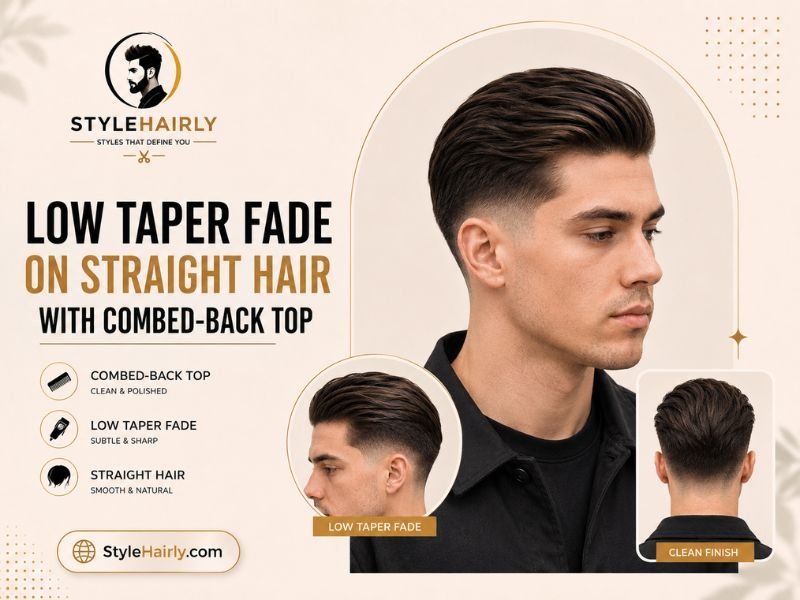
On straight hair, a low taper fade tends to look clean and precise, since straight strands lie flat and show the blend line clearly. The top can be styled in several directions combed back, styled into a side part, or left slightly textured because straight hair holds most styling shapes without much resistance.
One consideration: straight hair can look flat without some product or texture added on top, so many barbers recommend leaving a bit more length or adding light layering to prevent the top from appearing too plain next to the faded sides.
Wavy Hair
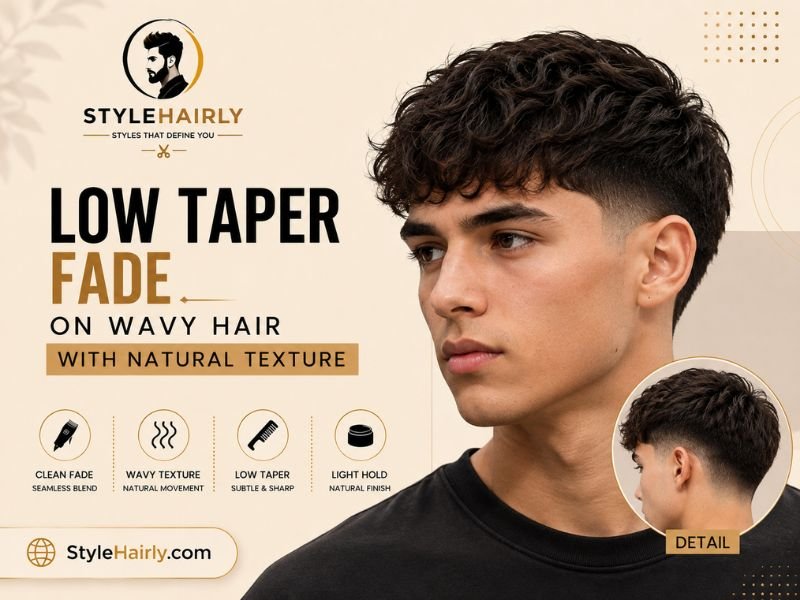
Wavy hair often pairs well with a low taper fade because the natural movement on top contrasts nicely with the clean, gradual taper on the sides. The waves add visual texture without requiring heavy styling.
If your waves tend to frizz, a lightweight cream or light-hold pomade can help define the pattern without weighing it down, and keeping the top at a moderate length (rather than very short or very long) usually shows off the wave pattern most effectively.
Curly and Coily Hair
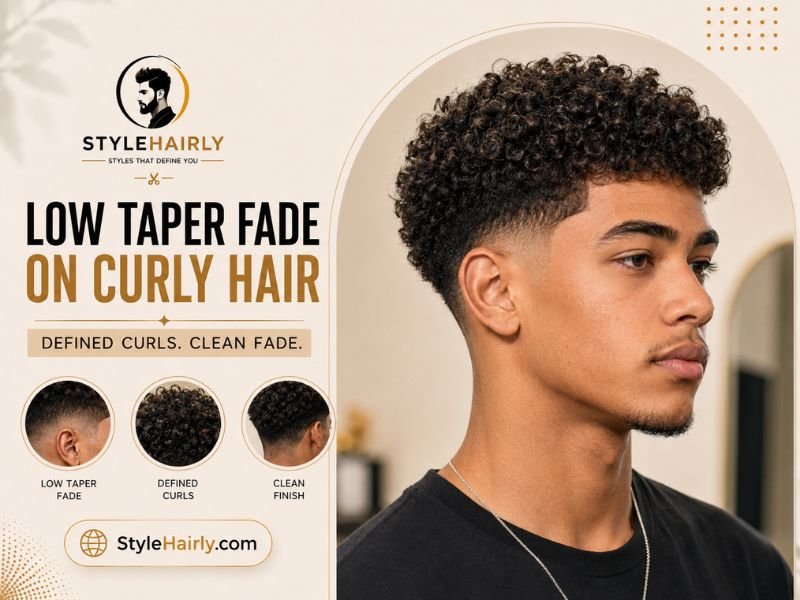
A low taper fade works well on curly and coily hair, and it’s a popular choice because it keeps more volume and curl definition on top while still cleaning up the sides and back. Since curls shrink as they dry, it often helps to communicate desired length based on stretched hair length, not just how long the curls look when dry.
Coily hair in particular may need more frequent touch-ups at the taper line, since new growth at the nape and sides becomes noticeable faster than on straighter hair textures.
Is a Low Taper Fade Right for Your Face Shape?
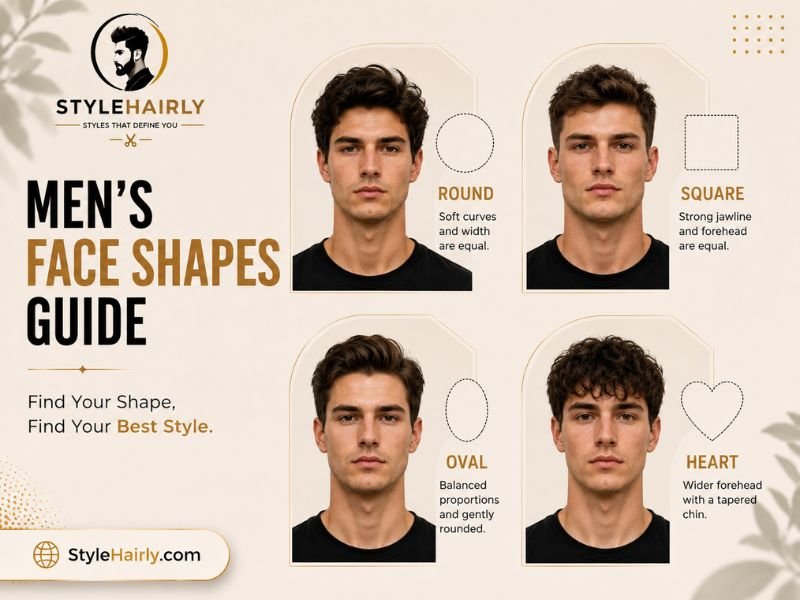
Yes, a low taper fade can work with most face shapes, since it primarily affects the sides and back rather than dramatically reshaping the top. That said, how the top is styled alongside the fade can be adjusted to complement your face shape.
| Face Shape | How a Low Taper Fade Can Be Adjusted |
| Round | More height and length on top can help elongate the face; avoid very short, flat top styles |
| Square | Works well with most top lengths; textured, slightly rounded top styles can soften strong jawlines |
| Oval | Generally flexible — most top lengths and styles work well |
| Long/Rectangular | Shorter top length with less added height can help balance overall proportions |
| Heart | Fuller sides near the temples (kept slightly longer than usual) can balance a narrower jawline |
These are general tendencies, not fixed rules the right choice depends on your individual features, hair texture, and personal preference, and a barber can give more specific input in person.
Low Taper Fade vs Mid Taper Fade vs High Taper Fade
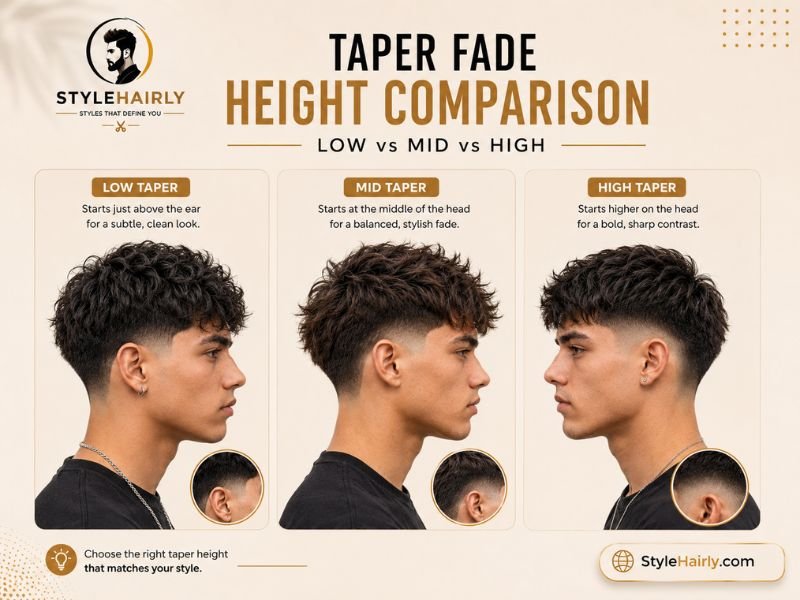
Choosing between fade heights mostly comes down to how much contrast you want and how often you’re willing to get touch-ups.
| Feature | Low Taper Fade | Mid Taper Fade | High Taper Fade |
| Fade starting point | Near the ears/neckline | Above the ears | Above the temple line |
| Visual contrast | Subtle | Moderate | Bold |
| Best for | First-timers, conservative settings | Balanced, versatile look | Statement styles, more dramatic contrast |
| Maintenance frequency | Lower | Moderate | Higher |
| Grows out gracefully? | Yes, blends easily as it grows | Somewhat | Less — regrowth is more noticeable |
If you’re unsure which to choose, a low taper fade is generally the easier option to grow out between appointments and the least likely to feel like a drastic change, which is why it’s often suggested to people trying a fade for the first time.
What to Tell Your Barber
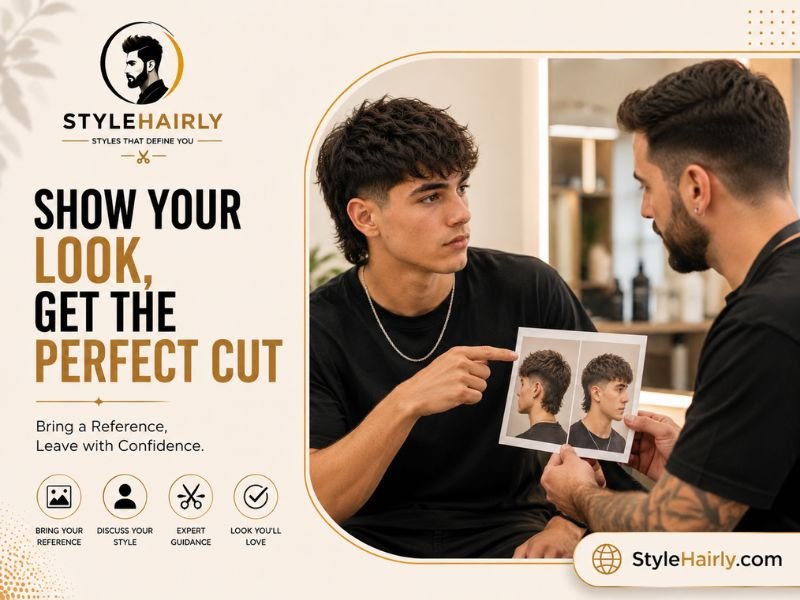
Clear communication makes a big difference in getting the result you want, especially if it’s your first fade. Consider covering these points during your consultation:
- Fade height: Specify “low” clearly, and mention you want the fading to start near the ears/neckline rather than higher up.
- Top length: Bring a reference photo or describe how much length you want to keep on top (for example, enough to comb over versus enough for texture only).
- Contrast level: Let your barber know if you want a subtle blend with less visible contrast, or if a bit more definition at the fade line is fine.
- Hairline and neckline preference: Mention if you want a natural-looking hairline versus a sharper, more defined edge.
- Guard number familiarity: If you’ve had fades before, mention what guard length worked for you previously; if not, ask the barber to explain their guard system so you can request the same result next time.
Avoid vague requests like “just fade it” without specifying height this is one of the most common reasons beginners end up with a higher, more dramatic fade than intended.
How to Style a Low Taper Fade at Home
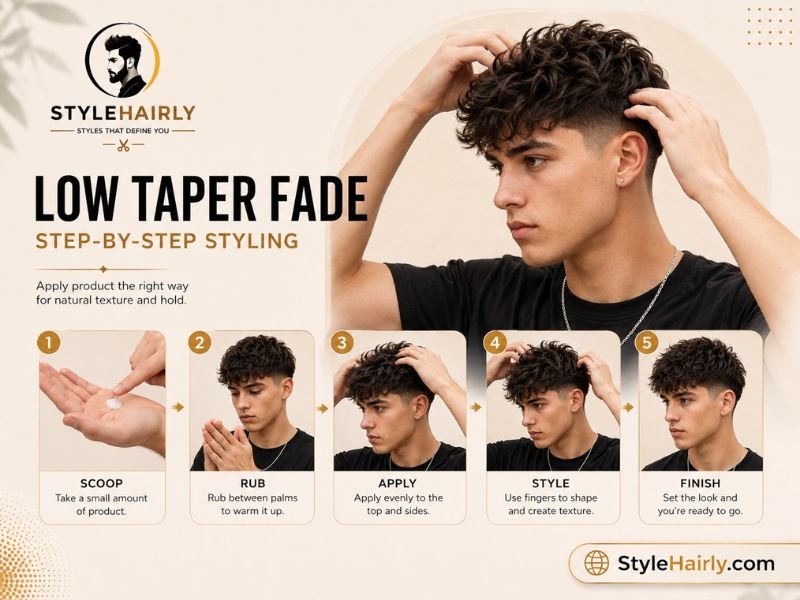
Once you’re home, keeping the top styled well is what makes the haircut look intentional between barber visits.
- Start with clean, towel-dried hair. Excess product buildup or fully wet hair makes styling harder to control.
- Choose a product suited to your hair type. A matte clay or paste works well for straight or wavy hair looking for texture; a lightweight cream or curl cream suits wavy, curly, or coily hair that needs definition without heaviness.
- Apply a small amount and work it through with your fingers, focusing on the top section where length remains.
- Use a comb or your fingers to shape the top in your preferred direction combed back, side part, or textured and tousled.
- Let it air dry or blow-dry on a low heat setting, using a heat protectant spray if you’re using heat tools regularly to reduce damage over time.
- Touch up the sides lightly if needed with a small amount of product to keep the fade area looking neat, but avoid overloading this area since it’s already short.
Maintenance: How Often Will You Need a Trim?
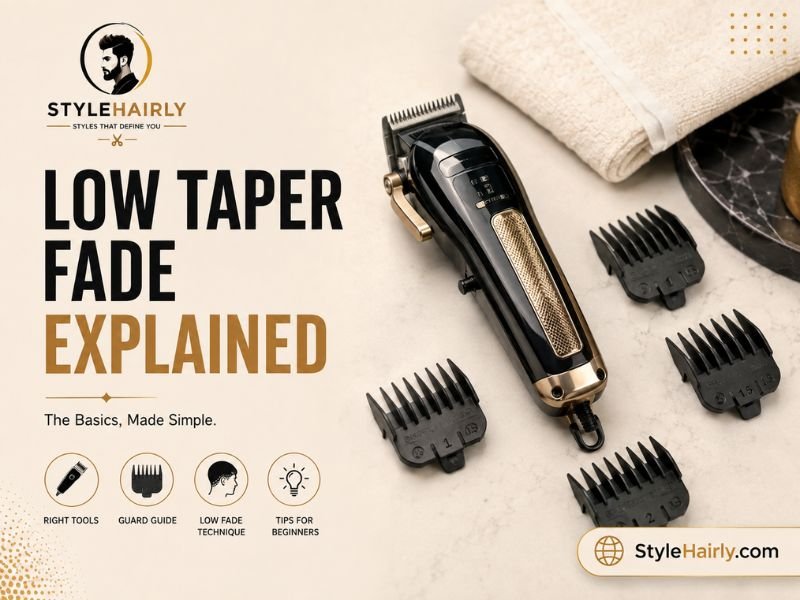
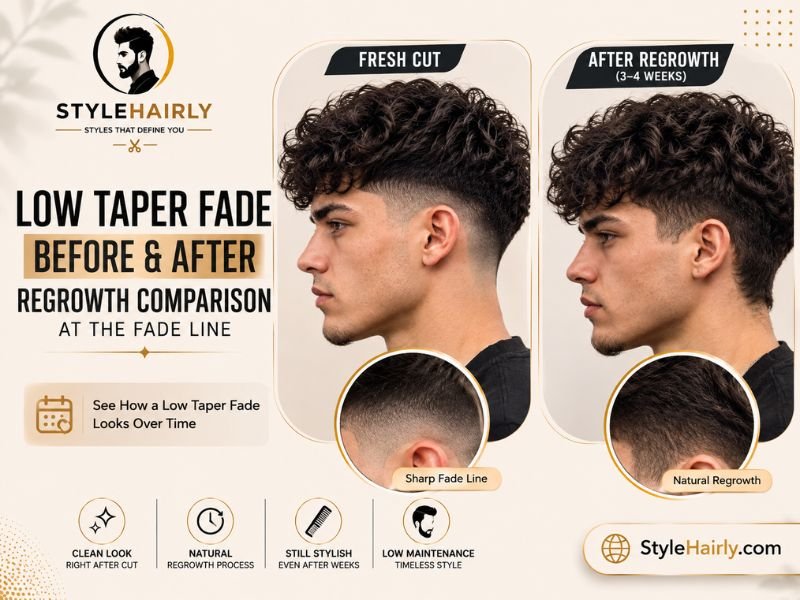
A low taper fade generally requires a touch-up every three to five weeks, though this varies based on how fast your hair grows and how sharp you want the fade line to stay. Because the fade starts low, regrowth is less noticeable at first compared to mid or high fades, which is one of its practical advantages for people who don’t want frequent barbershop visits.
Between full haircuts, some people opt for a quick neckline and edge cleanup at the two- to three-week mark to keep the lower fade area crisp without a full re-fade.
Pros and Cons of a Low Taper Fade
Pros
- Subtle, professional-looking result that suits most workplaces and settings
- Easier to grow out between appointments compared to mid or high fades
- Works across straight, wavy, curly, and coily hair types
- Leaves more length on top for styling versatility
Cons
- Less dramatic contrast if you’re specifically looking for a bold, high-impact look
- Still requires regular trims to keep the fade line clean, even if less frequent than higher fades
- Can look uneven if the barber isn’t experienced with gradual blending techniques
Common Mistakes Beginners Make
- Not specifying “low” clearly, which can result in a mid or high fade instead
- Skipping the consultation and reference photos, leading to miscommunication about top length or contrast
- Overusing heavy pomades on curly or coily hair, which can weigh down curl pattern and reduce definition
- Waiting too long between trims, letting the fade line grow out unevenly rather than scheduling a touch-up
- Applying too much heat without protection, which can cause dryness or damage over time on styled hair
Frequently Asked Questions
Is a low taper fade good for beginners getting their first fade?
Yes, a low taper fade is often recommended for beginners because it offers a subtle transition and is less dramatic than mid or high fades, making it a lower-risk way to try a fade for the first time.
Does a low taper fade work on curly hair?
Yes, a low taper fade works well on curly hair, keeping curl volume and definition on top while cleaning up the sides and back. It’s worth mentioning your curl pattern to your barber so they can account for shrinkage when cutting length.
Is a low taper fade high maintenance?
A low taper fade is generally lower maintenance than mid or high fades, with most people getting touch-ups every three to five weeks depending on hair growth speed and how crisp they want the fade line to stay.
What’s the difference between a low taper fade and a skin fade?
A low taper fade gradually shortens hair without necessarily going down to bare skin, while a skin fade (sometimes called a bald fade) fades all the way to the skin at its shortest point. A low fade can be done as either a taper or a skin fade, depending on how short you want the bottom section to go.
Can I style a low taper fade without heat tools?
Yes, most low taper fade styles can be air-dried and shaped with fingers or a comb using a small amount of product, especially if the top length is kept short to medium.
How long does a low taper fade last before it needs reshaping?
Most people need a touch-up roughly every three to five weeks, though it depends on individual hair growth rate and how noticeable you want any regrowth at the fade line to be.
What should I ask my barber for if I want a subtle look?
Ask specifically for a “low taper fade” with a gradual blend and minimal contrast, and mention that you’d like the fade to start close to the ears and neckline rather than higher on the head.
Conclusion
A low taper fade is a practical starting point if you’re new to fades: it keeps the sides and back neat with a gradual blend, works across most hair types and face shapes, and is easier to grow out and maintain than higher fades. The main things that determine how well it turns out are clear communication with your barber about fade height and top length, and choosing styling products suited to your specific hair texture. If you’re still unsure, bringing a reference photo to your first appointment and asking your barber to explain their guard system is one of the simplest ways to get a result that matches what you have in mind.

6 thoughts on “Best Low Taper Fade Explained:Top 5 Tips for Beginners”