

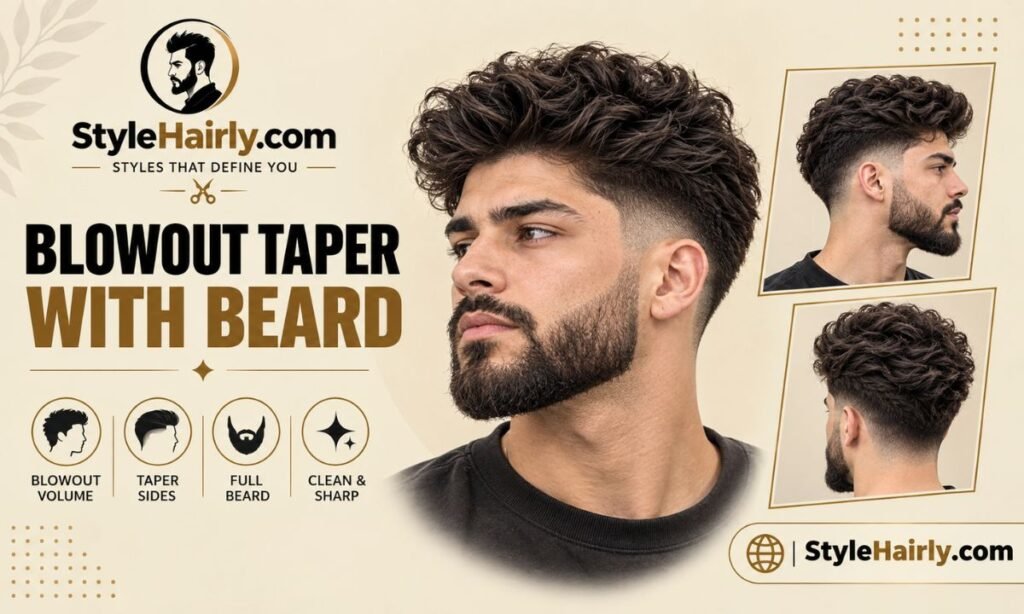
A blowout taper with beard pairs a tapered, voluminous top with facial hair that is groomed and blended to match, rather than treated as a separate feature. Done well, the taper, the sideburns, and the beard read as one continuous shape instead of three disconnected parts.
This guide covers how having a beard changes the taper height decision, the cheek line detail most people overlook, how the pairing shifts depending on beard length, and exactly how to describe what you want to your barber.
Quick Facts at a Glance
Key principle: The taper should blend into the beard, not stop abruptly at the sideburns Most overlooked detail: The cheek line, where the beard’s upper edge is defined Best taper heights by beard: Low with a full beard, mid with a medium beard, high with stubble Maintenance: Beard trims every 1 to 2 weeks, taper trims every 2 to 4 weeks Common mistake: Cutting the taper without blending it into the beard, leaving a visible disconnect
How a Beard Changes the Taper Height Decision
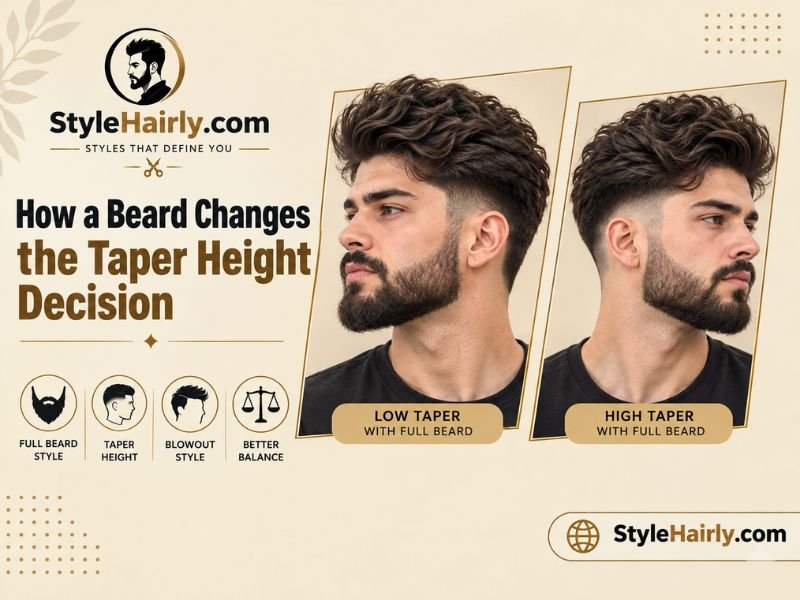
A beard adds visual weight to the lower half of the face, and the taper height should generally balance against that weight rather than ignore it. A full or thick beard already adds plenty of fullness on its own, so pairing it with a low or mid taper tends to look more balanced than adding a sharp, high-contrast taper on top of it.
A high taper, by contrast, tends to pair best with lighter facial hair, like stubble or a short boxed beard, since there is less lower-face volume competing with the sharp contrast on the sides. If your beard is on the fuller side and you still want a high taper, your barber may recommend thinning the beard slightly or keeping it tighter to the jawline so the two elements do not visually compete.
| Beard Type | Suggested Taper Height | Why |
| Stubble | Low, mid, or high | Minimal facial hair volume works with any taper height |
| Short boxed beard | Mid | Balances structure on both the top and the jawline |
| Full or long beard | Low or mid | Avoids competing with the beard’s natural fullness |
The Cheek Line: The Most Overlooked Detail
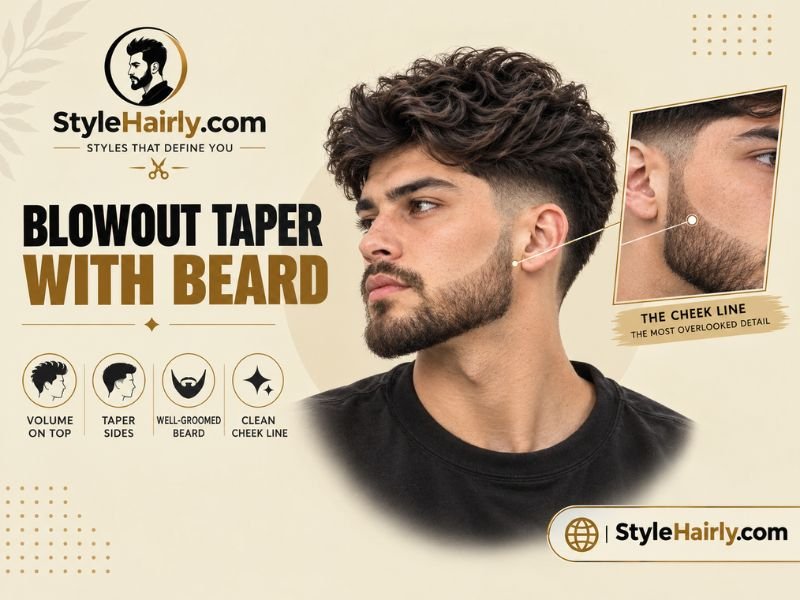
The cheek line, which marks where the beard’s upper edge is trimmed along the cheekbone, is one of the most commonly neglected details when pairing a taper with facial hair. A ragged, undefined cheek line can make an otherwise sharp haircut look unfinished, since the eye tends to travel from the clean taper down toward the face.
A clean cheek line does not need to be razor-sharp for every beard style. A softer, more natural cheek line often suits a fuller beard, while a crisper, more defined line tends to match sharper taper heights and more polished overall looks. Mentioning this detail specifically to your barber, rather than assuming it will be handled automatically, helps avoid an inconsistent finish.
Blending the Taper into the Beard
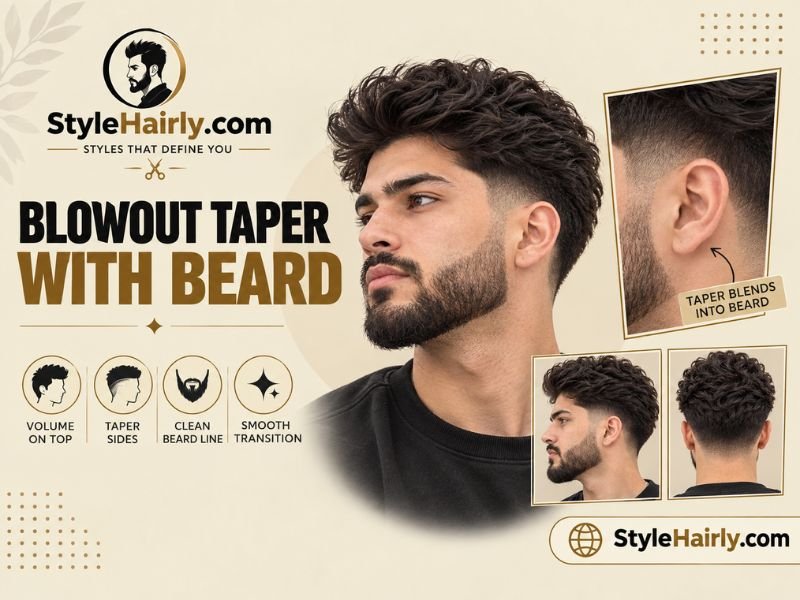
The taper and the beard should connect through a smooth transition rather than meeting at a hard, visible line. This is usually achieved by tapering the sideburns down into the beard using progressively longer guard lengths, sometimes called a “beard connection” or “burst” around the ear, so the hair gradually shortens into the beard rather than stopping abruptly.
Skipping this blending step is one of the most common reasons the pairing looks disconnected rather than cohesive. If your barber tapers the sides but leaves the sideburns and beard untouched, the result can look like two separate haircuts stacked on top of each other instead of one unified style.
Blowout Taper with Beard by Beard Length
The right combination of taper height, cheek line style, and blending technique shifts depending on how much facial hair you are working with.
Stubble Beard (1 to 5mm)
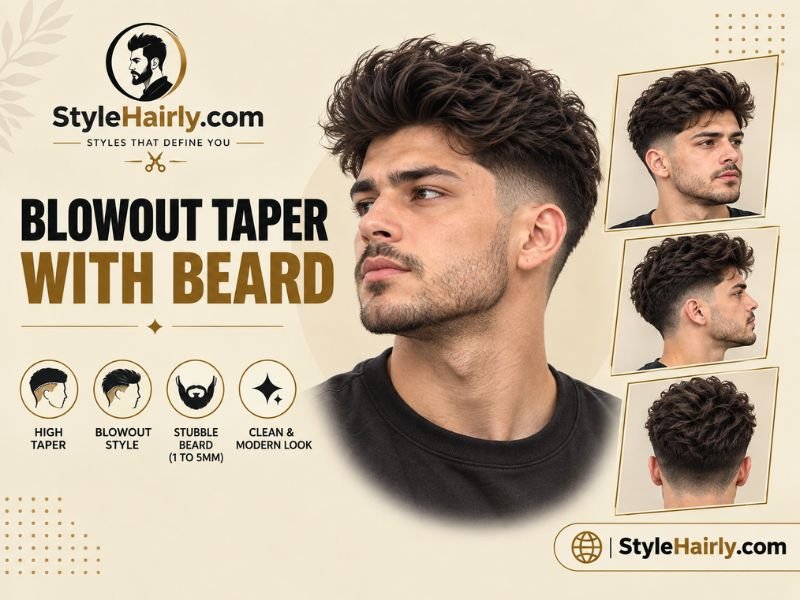
Stubble pairs well with any taper height, including high, since there is very little facial hair volume to balance against. This combination tends to read as modern and low-effort, and the blend between the taper and the stubble is usually quick to maintain since there is minimal length difference to work with.
Medium Beard (1 to 3cm)
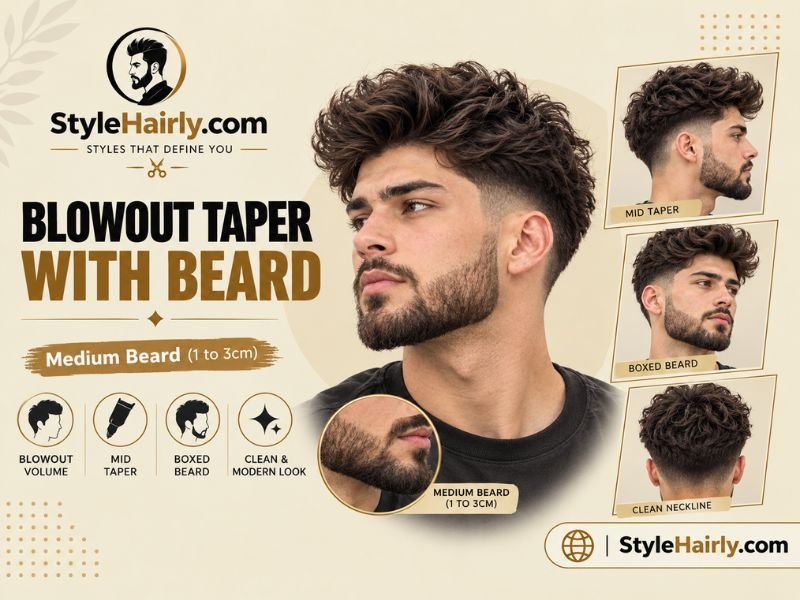
A medium, often boxed or lightly shaped beard tends to pair best with a mid taper, since both elements carry a similar level of structure. This is a common choice for a professional, polished look, since the beard adds definition without overwhelming the cut.
Full or Long Beard
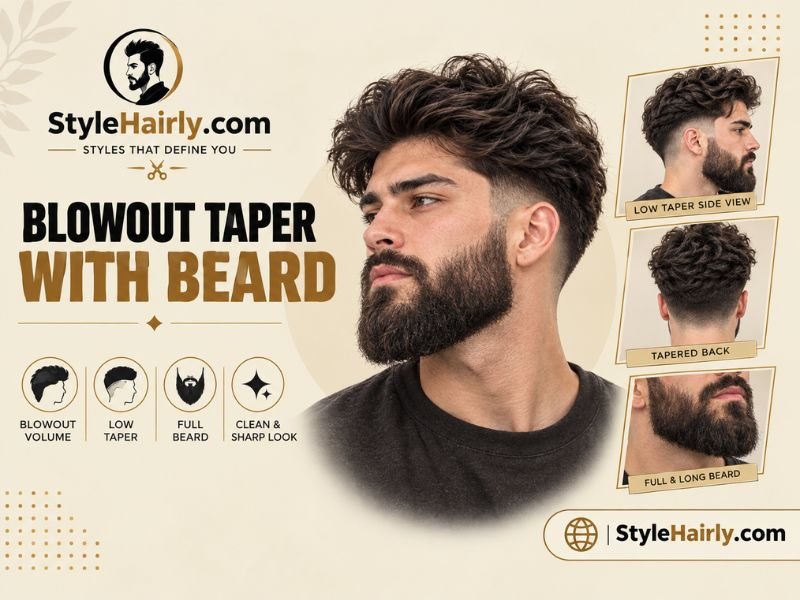
A full or long beard usually pairs best with a low or mid taper, since the beard itself is already adding significant volume and shape to the face. The blending technique matters even more here, since there is more length difference between the tapered sides and the fuller beard to smooth over.
| Beard Length | Best Taper Height | Cheek Line Style |
| Stubble (1 to 5mm) | Low, mid, or high | Light and natural, minimal shaping needed |
| Medium (1 to 3cm) | Mid | Defined but not razor-sharp |
| Full or long | Low or mid | Softer line that follows the natural cheekbone |
How to Ask for a Blowout Taper with Beard
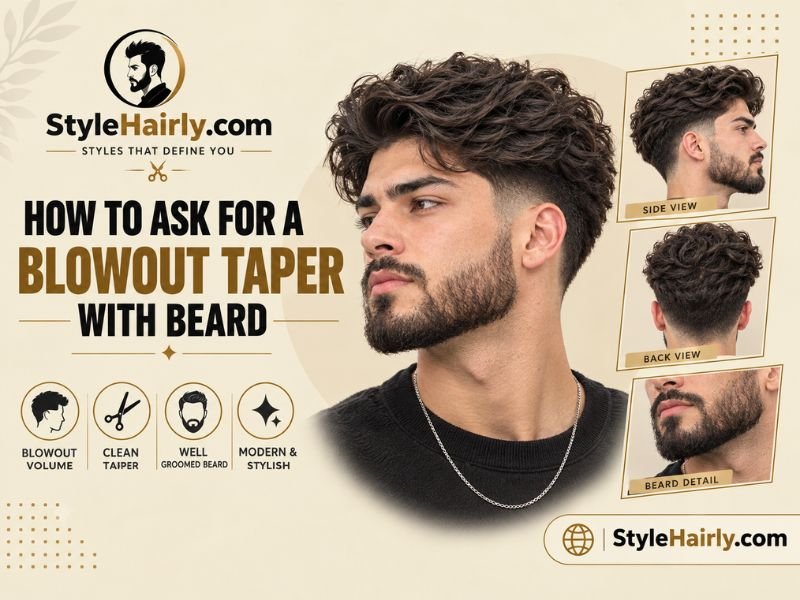
Being specific about both the hair and the beard in the same conversation helps your barber treat them as one connected style rather than two separate services.
A useful script looks something like this: “Blowout taper, [low/mid/high] on the sides, and I’d like it blended into my beard rather than stopping at the sideburns. Keep the cheek line [natural/defined], and trim the beard to [length or guard number].”
It also helps to mention:
- The taper height you want on the sides
- How much length you want left on top for the blowout
- Whether you want the beard trimmed shorter during the same appointment
- Your cheek line preference, natural or sharply defined
- Whether you want the sideburns fully connected into the beard or slightly separated
Bringing a reference photo that shows both the haircut and the beard together, rather than just the top styling, gives your barber the clearest picture of the finished look you have in mind.
Best Face Shapes for This Pairing
| Face Shape | How the Pairing Works |
| Round | A more angular beard shape with a defined cheek line adds structure |
| Square | A slightly rounded beard softens an already strong jawline |
| Oval | Works well with most beard lengths and taper heights |
| Long or oblong | A fuller beard on the sides and chin helps balance the face’s length |
How It Compares to Other Pairings
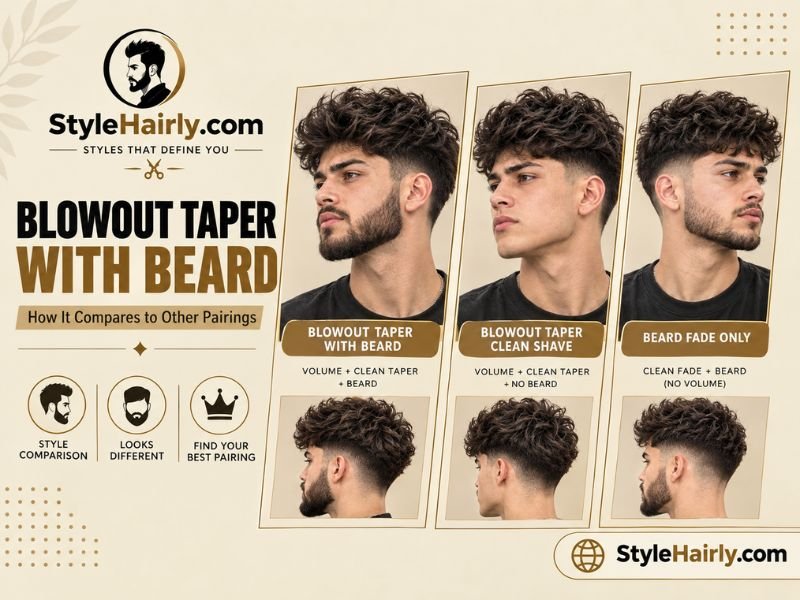
| Style | Lower Face | Contrast Level | Best For |
| Blowout taper with beard | Groomed beard blended into the taper | Moderate to high, balanced by beard length | A cohesive, masculine look with structure on both ends |
| Blowout taper, clean shave | Bare | High, all contrast comes from the taper | A sharper, more youthful look |
| Beard fade without a blowout top | Faded beard, flat or short top | Low to moderate | A low-maintenance option without daily top styling |
| Blowout taper with light stubble | Light stubble | High | A modern, slightly rugged but still low-effort combination |
Common Mistakes to Avoid
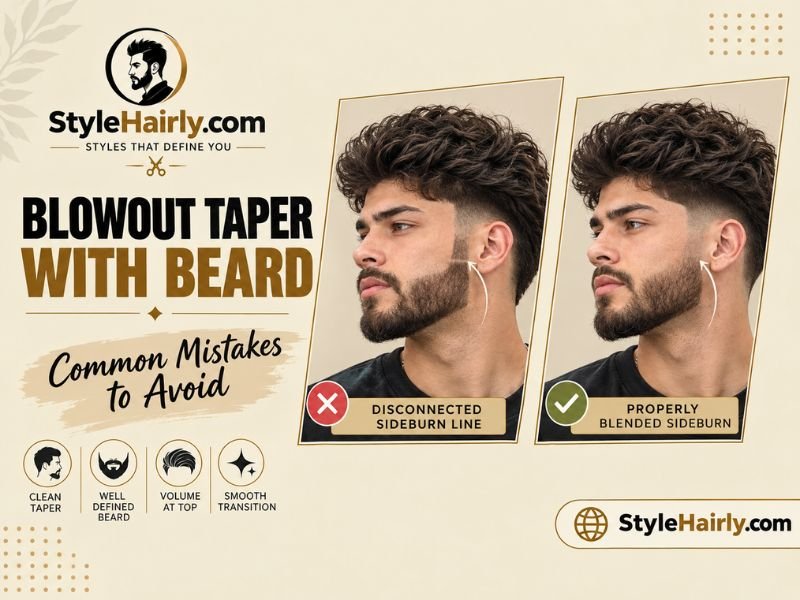
- Not blending the taper into the beard. Leaving a visible line at the sideburns makes the cut and the beard look like two separate styles.
- Ignoring the cheek line. A ragged cheek line undercuts an otherwise clean haircut.
- Choosing a high taper with a very full beard. This combination can look top-heavy on the sides and bottom-heavy at the same time, competing rather than balancing.
- Treating the beard trim as a separate appointment with no communication. Ask for both to be done together, or at least mention your current beard length when booking a haircut.
Maintenance and Upkeep
The taper generally needs a refresh every two to four weeks, depending on the height chosen, while the beard usually needs trimming every one to two weeks to keep the cheek line and overall shape clean. Because the two elements are meant to blend together, letting the beard grow out significantly between cuts can create a visible mismatch with the sharper taper underneath it.
Daily beard oil or balm helps keep the connection point between the taper and the beard looking groomed rather than patchy, especially in the first week or two after a fresh cut when the blended area is most visible.
Frequently Asked Questions
Does a beard change what taper height I should get?
Yes. Fuller beards generally pair better with a low or mid taper, while stubble works with any height, including high.
What is the cheek line, and why does it matter?
It is the upper edge of the beard along the cheekbone. A clean cheek line finishes the overall look, while a ragged one can make the cut look unfinished.
How do I ask my barber to blend the taper into my beard?
Say you want the sideburns tapered down into the beard rather than stopping abruptly, sometimes called a beard connection or burst.
Can I get a blowout taper with a full beard?
Yes, though a low or mid taper usually balances better with a full beard than a high taper does.
How often does the beard need trimming with this style?
Roughly every one to two weeks, more often than the taper itself, to keep the cheek line and shape looking clean.
Should I get my beard trimmed at the same appointment as my haircut?
It helps a lot, since your barber can blend the taper and beard together in one visit rather than guessing how they will match up later.
Does stubble work with a high taper?
Yes. Stubble adds minimal volume, so it pairs well with any taper height, including high contrast options.
What if my barber does not blend the sideburns into my beard?
Ask specifically for the sideburns to be tapered into the beard length rather than left at their own length, since this is easy to miss if not requested directly.
Conclusion
A blowout taper with beard works best when the two elements are treated as one connected style rather than a haircut and a beard trim done separately. Matching the taper height to your beard length, paying attention to the cheek line, and making sure the sideburns blend smoothly into the beard are what separate a cohesive, polished result from one that looks like two mismatched pieces. Communicating all of this clearly to your barber, ideally in one appointment, is the simplest way to get a finish that looks intentional from top to bottom.

1 thought on “Blowout Taper with Beard: The Perfect Blend Guide (2026)”