

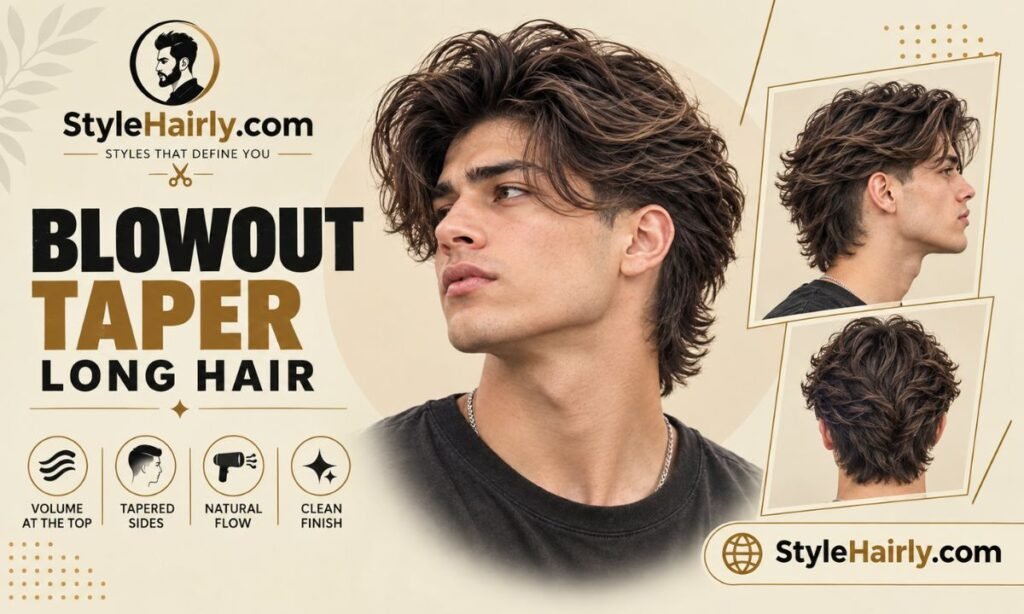
A blowout taper long hair style keeps the same tapered sides as the shorter versions, but the top is left long enough to fall into a full, flowing shape instead of a compact rounded one. It is a different balancing act: enough length to move, without so much bulk that it collapses under its own weight.
This guide covers what actually counts as “long” for this style, which taper height works best when there is more length on top, how a barber cuts it differently from a standard blowout taper, and how to style it yourself once you are home.
Blowout Taper Long Hair at a Glance
Top length: Roughly 4 to 8 inches or longer Best taper height: Low or mid, in most cases Key cutting focus: Removing weight and bulk, not overall length Hair types it favors: Straight and wavy hold shape most easily; curly needs more product support Maintenance: Sides tapered every 2 to 4 weeks, top trimmed far less often Daily styling: A blow dryer, a brush or comb, and a lightweight cream or light-hold paste
What Counts as Long Hair for a Blowout Taper
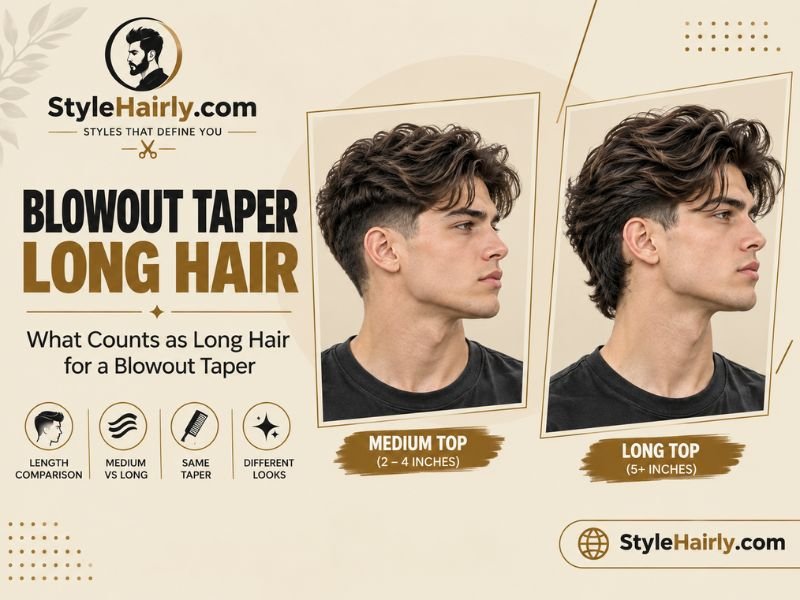
Long hair, in the context of a blowout taper, generally starts around four inches on top and can extend well past that into shoulder-grazing lengths. Below that, the top is usually considered medium length, which is closer to what a standard blowout taper uses to build its rounded, lifted shape.
The distinction matters because the styling goal changes as the hair gets longer. A medium-length top is styled to lift and round out, while a long top is styled to flow and move, often falling forward or back rather than staying rounded on top. Once hair passes roughly six inches, gravity starts working against volume, and the cut has to compensate by removing weight so the hair does not just hang flat.
Which Taper Height Suits Long Hair Best
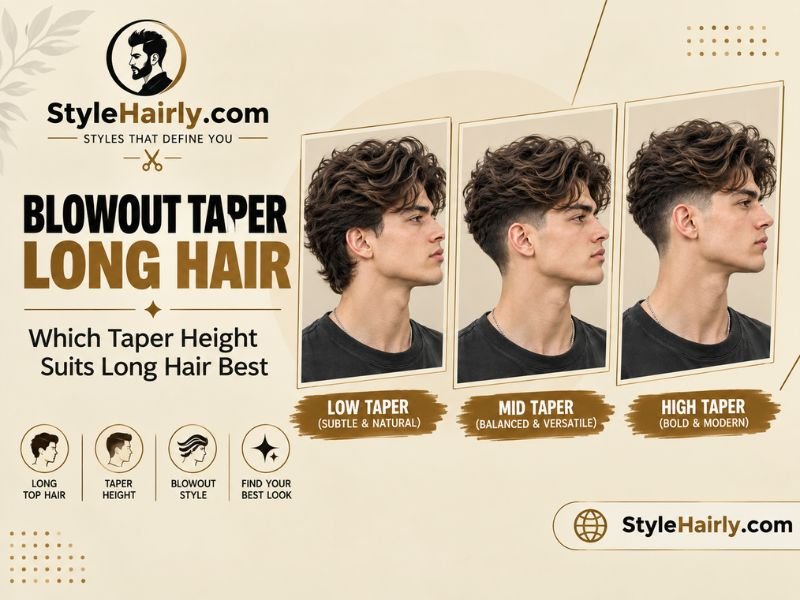
A low or mid taper is usually the better match for long hair on top, since the length itself already adds plenty of visual weight and contrast. Pairing that much length with a high, skin-tight taper can sometimes look disconnected, since the eye has to jump from a very short side straight into a lot of length with very little in between.
A high taper is not off the table, but it tends to work best when the top is on the leaner, less bulky end of the long-hair range, so the contrast reads as intentional rather than mismatched. If you are unsure, starting with a mid taper gives you a clear, defined line on the sides without competing too hard with the volume on top.
| Taper Height | Works Well With Long Hair When | Watch Out For |
| Low | You want the sides to blend gently and keep some length | Less contrast, more of a subtle taper than a bold one |
| Mid | You want a clear taper line without overwhelming the top | Slight imbalance if the top is very thick and heavy |
| High | The top has been thinned and is not too bulky | Can look disconnected if the top is left thick and heavy |
How to Cut a Blowout Taper for Long Hair
Cutting a blowout taper for long hair is less about the taper itself, which follows the same basic technique regardless of top length, and more about how the top is handled so it can actually be styled once it is long.
Cutting With the Blown Shape in Mind
A barber cutting this style has to think ahead to how the hair will sit once it is blow-dried, not just how it looks lying flat and wet. Hair is usually cut slightly shorter around the crown and slightly longer toward the front and sides so that when it is blown back or forward, the shape falls the way it is meant to rather than looking uneven or top-heavy on one side.
Removing Bulk, Not Length
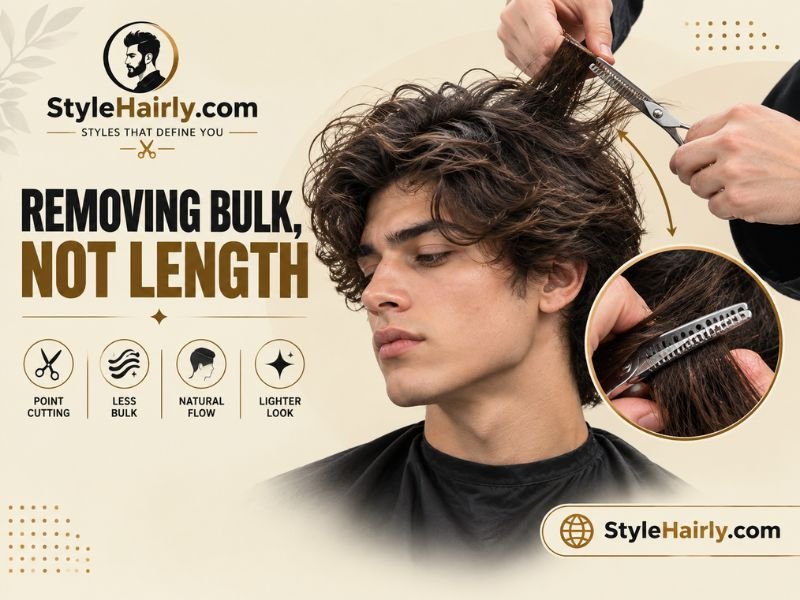
This is the step that separates a long blowout taper that moves well from one that just sits like a heavy helmet. Point cutting and thinning techniques remove internal weight from the hair without shortening the visible length, which lets the top keep its length while still having enough movement to style. Skipping this step is one of the most common reasons a long blowout taper looks flat and lifeless instead of full and flowing.
Layering for Movement
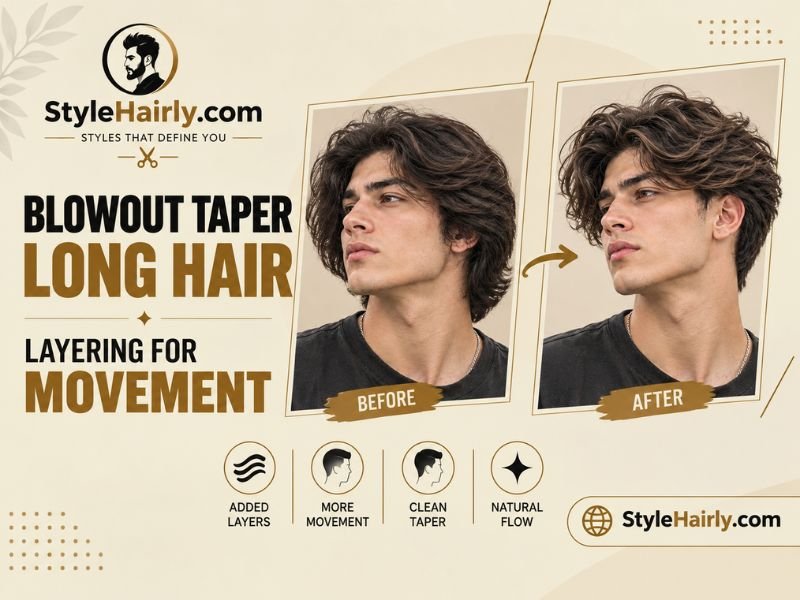
Soft layers cut through the top and crown break up the hair into sections that can move somewhat independently, rather than all falling as one solid, heavy mass. This is what gives a long blowout taper its swept, flowing quality instead of a stiff, single-shape silhouette. Layering is usually kept subtle here, since choppy or heavy layering can undercut the smooth, full look this style is going for.
Styling a Blowout Taper with Long Hair at Home
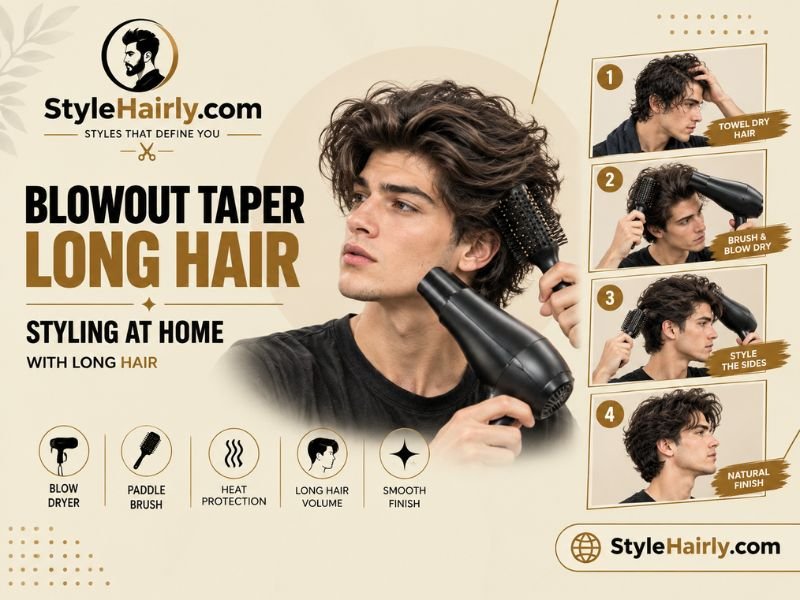
Styling long hair on top takes a bit more time than a shorter blowout taper, mainly because there is simply more hair to dry and shape.
- Start from damp, towel-dried hair. Hair that is too wet takes longer to style and is more prone to falling flat once dry.
- Apply a lightweight cream or light-hold paste. Heavier products can weigh long hair down fast, so less is generally more here.
- Blow-dry in sections, directing hair back or to the side. Use a paddle brush or a wide-tooth comb to guide the hair as you dry, rather than a round brush, since the goal is flow rather than tight curl or lift.
- Finish with a cool shot of air. This helps set the direction of the hair once it is mostly dry, similar to how a shorter blowout taper is finished.
- Add a small amount of texture product if needed. A light texturizing spray or paste can add grip for hair that is naturally too smooth to hold shape on its own.
| Hair Type | Recommended Product | Styling Note |
| Straight | Light-hold paste or cream | Holds direction well but may need texture spray for grip |
| Wavy | Sea salt spray, light cream | Natural texture helps the style fall with less effort |
| Curly or coily | Curl cream, lightweight gel | Diffusing rather than brushing helps preserve length and pattern |
Best Face Shapes for a Blowout Taper with Long Hair
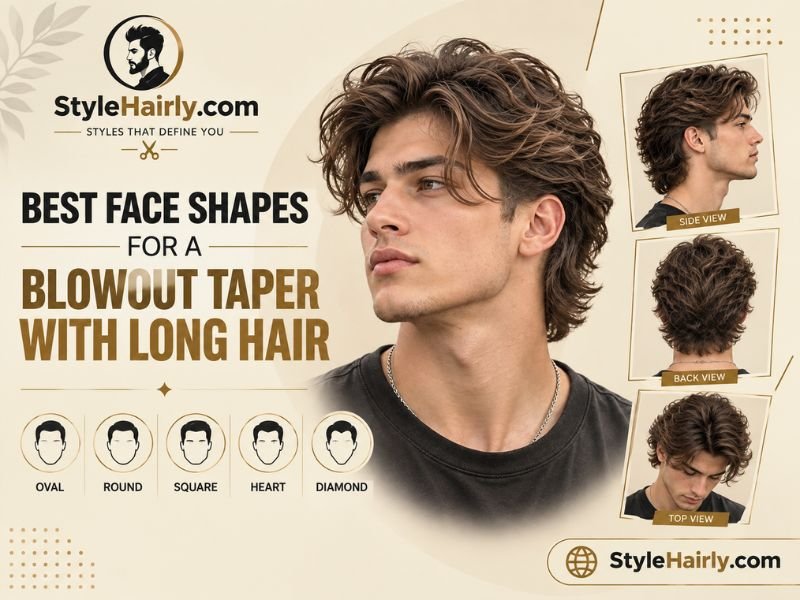
| Face Shape | How It Works |
| Oval or square | Handles the extra length well without much adjustment needed |
| Round | A side-swept styling direction helps avoid adding width |
| Long or oblong | Keep the top styled with less added height, and lean on a low taper with a textured fringe rather than height on top |
| Heart-shaped | A fuller, side-swept top balances a narrower jawline |
Blowout Taper Long Hair vs. Other Long Haircuts
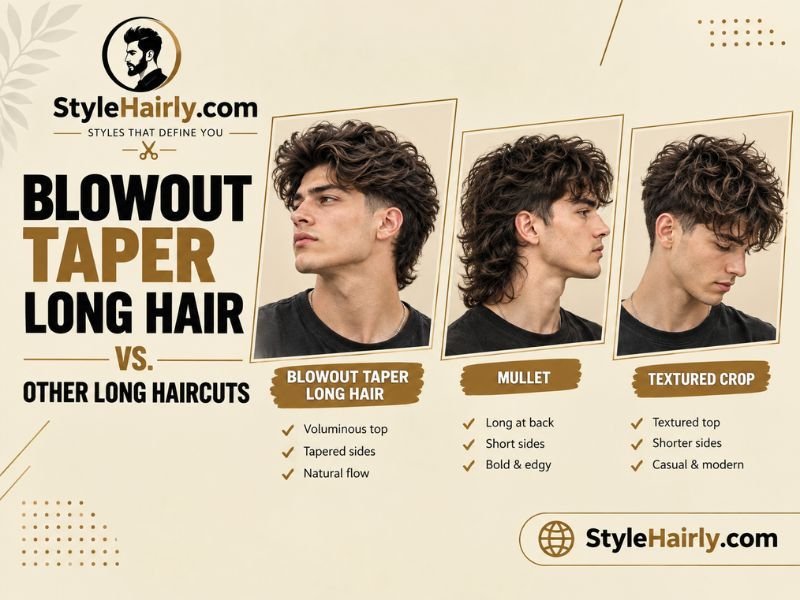
| Haircut | Top Length | Sides | Best For |
| Blowout taper, long hair | Long, flowing | Tapered, low or mid | A full, flowing top with a clean, defined side taper |
| Blowout taper mullet | Long at the back, fuller on top | Tapered on the sides | A bolder, more dramatic length contrast |
| Long taper fade (no blowout styling) | Long, unstyled or naturally worn | Tapered or faded | A lower-effort look without the daily blow-dry step |
| Textured crop with added length | Medium to long, tousled | Tapered or faded | A casual, undone look rather than a smooth, flowing one |
Common Mistakes to Avoid
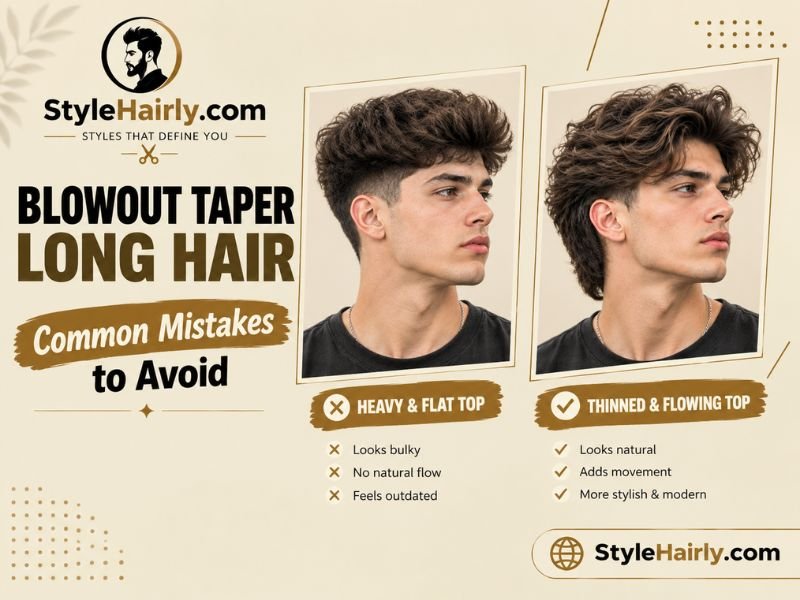
Most long blowout tapers that look heavy or flat come down to one of these avoidable issues rather than the taper itself.
- Skipping the bulk removal. Cutting long hair to length without thinning it out leaves the top too heavy to style properly.
- Using too much heavy product. Thick creams or waxes on already-long hair collapse it further instead of helping it hold shape.
- Choosing a high taper without thinning the top first. This combination often looks disconnected rather than intentionally bold.
- Drying hair from fully soaking wet. This takes longer and tends to leave the style falling flatter than styling from a damp starting point.
Maintenance Timeline for a Long Hair Blowout Taper
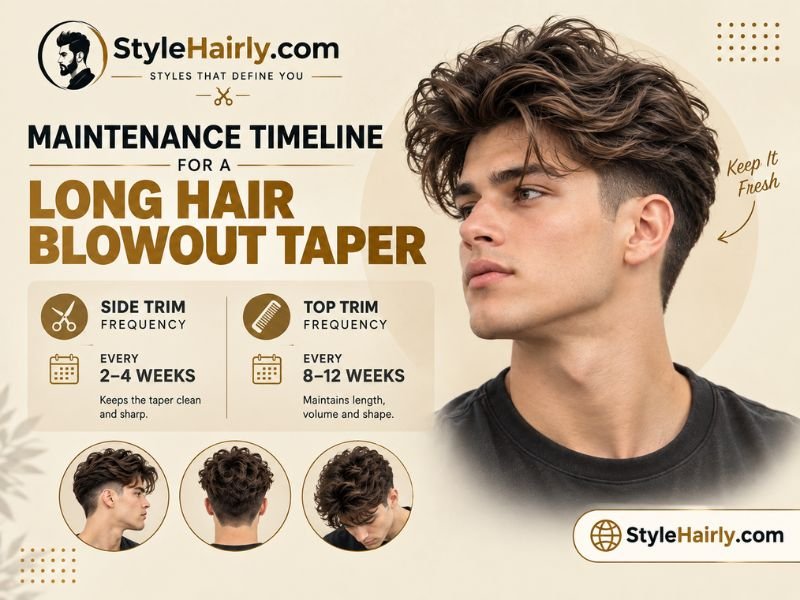
The sides need attention far more often than the top with this style. Most people get the taper refreshed every two to four weeks, depending on the height chosen, while the top itself may only need a trim every two to three months to maintain its length and remove split ends.
Because the top grows out slowly in visual impact compared to the sides, a long blowout taper can start to look mismatched if the taper is left too long between trims, even while the top still looks fine. Keeping the sides on a more frequent schedule than the top is what keeps the overall shape looking intentional.
Frequently Asked Questions
How long does hair need to be for this style?
Most versions start around four inches on top, with the style becoming more distinct the longer it gets.
Is a high taper a bad choice for long hair?
Not necessarily, but it works best when the top has been thinned so it does not look disconnected from the very short sides.
Does long hair on top need more product than shorter styles?
Usually less, not more. Heavy products weigh long hair down, so a lighter cream or light-hold paste tends to work better.
How often do the sides need a trim?
Roughly every two to four weeks, depending on the taper height and how sharp you want the line to stay.
Can curly hair grow into a long blowout taper?
Yes. Curly hair often needs a diffuser and curl cream rather than a round brush, and the longer length can help relax tighter curl patterns.
What is the difference between this and a blowout taper mullet?
A mullet keeps extra length specifically at the back and crown, while a standard long blowout taper is generally even in length across the top.
Will removing bulk make my hair look shorter?
No. Point cutting and thinning remove internal weight without shortening the visible length, so the hair keeps its length but moves more easily.
How do I stop the top from looking flat by midday?
Style from damp hair with a lightweight product, and consider a texturizing spray for extra grip if your hair is naturally very smooth.
Conclusion
A blowout taper long hair look follows the same basic structure as any other version, a tapered side paired with a styled top, but the top styling and cutting technique shift to handle the extra length and weight. Choosing a low or mid taper, having bulk removed rather than just length trimmed, and styling with lighter products are what keep this version looking full and flowing instead of heavy. Once the cutting technique and the at-home routine are dialed in, this is one of the more versatile ways to wear longer hair with a clean, defined edge.

2 thoughts on “Blowout Taper Long Hair: The Essential Cutting Guide (2026)”