

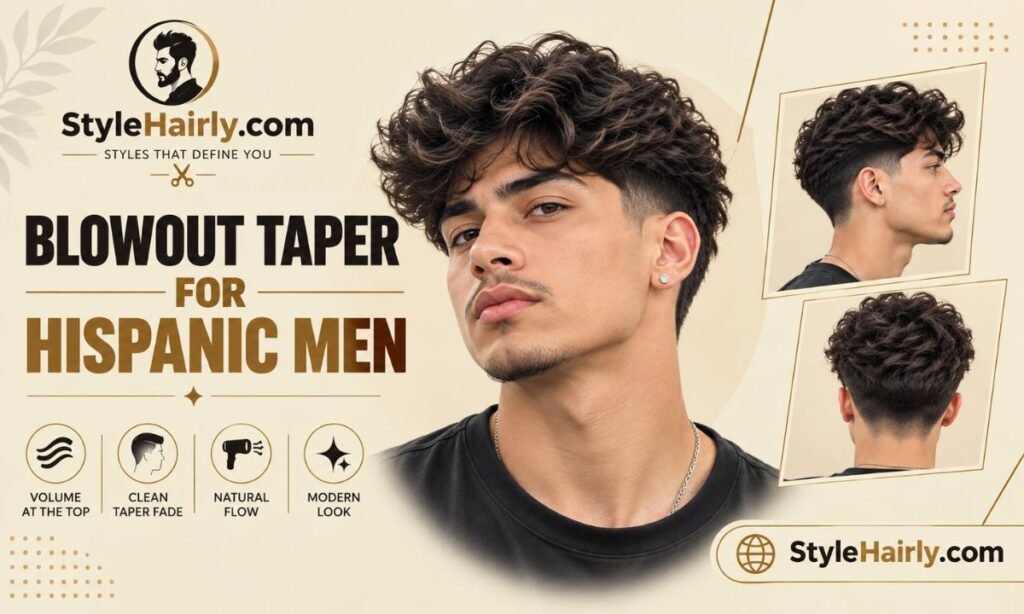
Hispanic hair covers one of the widest textures ranges in men’s barbering, from pin straight to tightly coiled, and most of it shares one trait that makes the blowout taper work so well: thickness. That density is exactly what a blowout taper needs to build height on top while the sides stay tight and controlled. This guide breaks down how the cut performs on each Hispanic hair type, the exact styling routine for each one, which face shapes it suits, and how it stacks up against other popular men’s cuts.
You’ll learn which taper height fits thick, wavy, and curly hair best, the specific products and blow-dry technique for each texture, how to avoid the bulk and heaviness that dense hair sometimes causes, and the precise wording to use in the barber chair so you leave with the cut you actually asked for.
At a Glance: Blowout Taper for Hispanic Hair
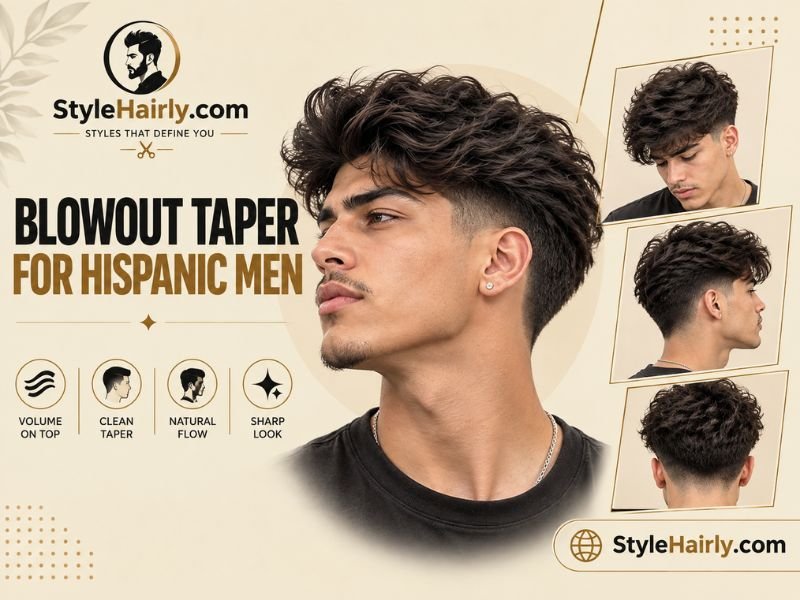
| Detail | Quick Answer |
| Best hair type | Thick, straight to wavy |
| Recommended taper height | Mid or high |
| Key styling product | Sea salt spray or volumizing mousse |
| Blow-dry tool | Vent brush, medium heat |
| Works on curly hair? | Yes, with a Denman brush and dry cutting |
| Average maintenance | Cut every 3 to 4 weeks |
| Best face shapes | Round, square, oval |
Hispanic Hair Types and How Each Suits the Blowout Taper
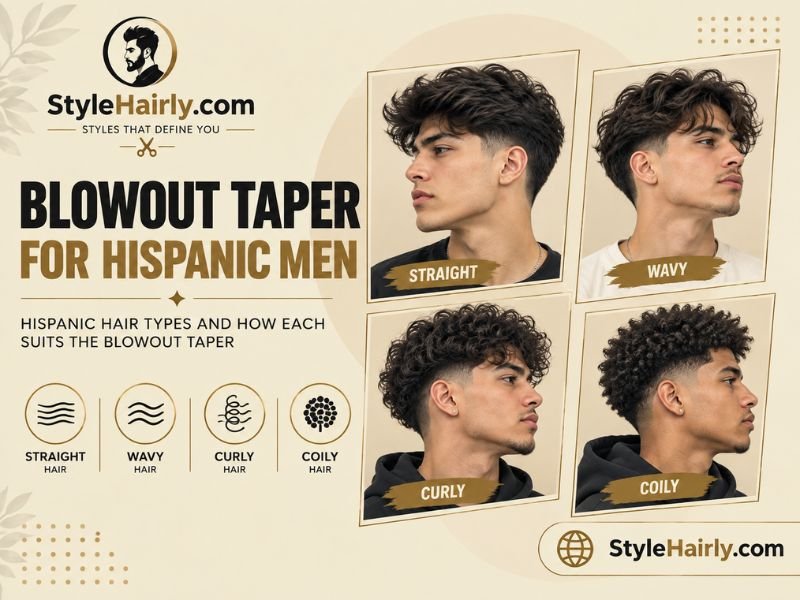
Hispanic heritage spans dozens of countries and an equally wide range of hair textures, so there is no single “Hispanic hair type.” What most textures share is above-average density, and that density is what makes the blowout taper for Hispanic men such a reliable pairing. The table below breaks down how each common texture performs.
| Hair Type | How It Performs | Recommended Taper Height |
| Thick straight | Clean, sharp silhouette with crisp taper lines. Needs mousse to hold lift through the day | Mid to high |
| Thick wavy | Natural body creates volume with minimal effort. The most common and most photogenic result | Mid to high |
| Loosely curly | Texture adds movement and softens the contrast between the blowout and the fade | Mid |
| Tightly curly or coily | Highest volume potential of all textures, but needs dry cutting to account for shrinkage | Mid to high |
The Thickness Advantage
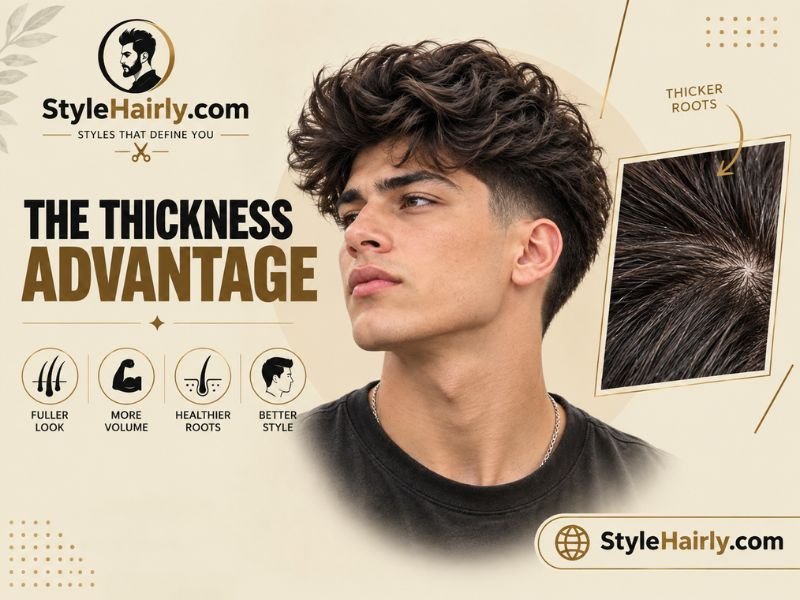
Thick hair is the single biggest reason the blowout taper for Hispanic men works so consistently. Density fills out the dramatic shape a mid or high taper creates, holds that shape under its own weight through the day, and hides the early stages of regrowth better than fine hair does. If your hair is on the thicker end, a higher taper height tends to look more intentional because there is enough volume to balance the contrast against the sides.
Face Shape Suitability for the Blowout Taper
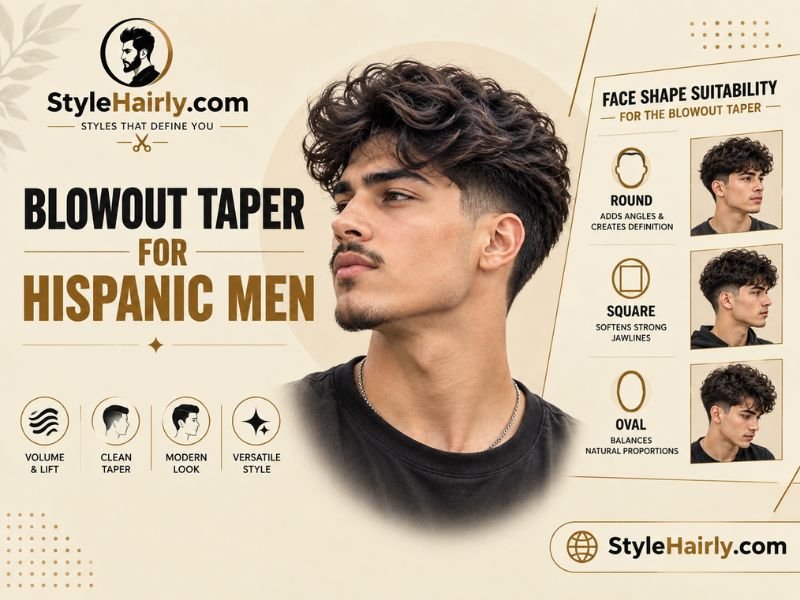
The blowout taper adds height and forward volume on top, which changes how it reads against different face shapes. Choosing the right height matters as much as choosing the right face shape fit.
| Face Shape | Suitability | Notes |
| Round | Excellent | Added height elongates the face and balances width |
| Square | Excellent | Volume on top softens a strong jawline |
| Oval | Excellent | Works with almost any taper height, few restrictions |
| Diamond | Good | Mid height works best, avoid too much width at the temples |
| Heart | Good | Keep sides tighter to balance a wider forehead |
| Rectangular or long | Use caution | A very high taper can add unwanted length, a low or mid height is safer |
If your face is already on the longer side, ask your barber to keep the top height moderate rather than maximizing it. The taper still works, it just needs a shorter build on top to avoid stretching the face further.
Styling a Blowout Taper on Hispanic Hair
The overall routine is the same across textures: prep damp hair, blow-dry upward and back, then finish with a light hold product. What changes is which products you reach for and how much lift the hair needs help building.
Thick Straight Hair
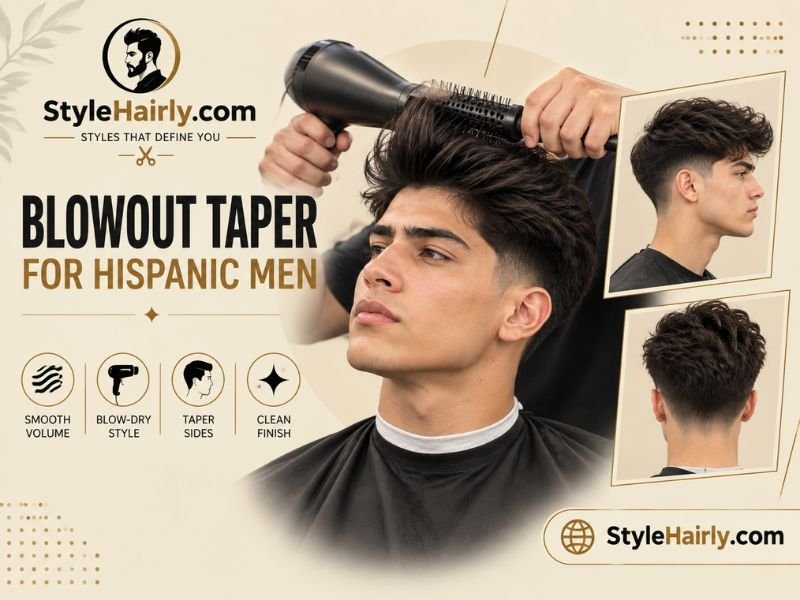
Apply volumizing mousse to damp roots before drying. Use a vent brush and medium heat, always directing airflow from the roots toward the ends to build lift. Finish with a 20 second blast of cool air to lock the shape in place, then work a small amount of matte clay through the surface with your fingertips for texture. Straight hair holds the blowout shape well once it’s set, so the main challenge is building enough height during the blow-dry rather than maintaining it later in the day.
Thick Wavy Hair
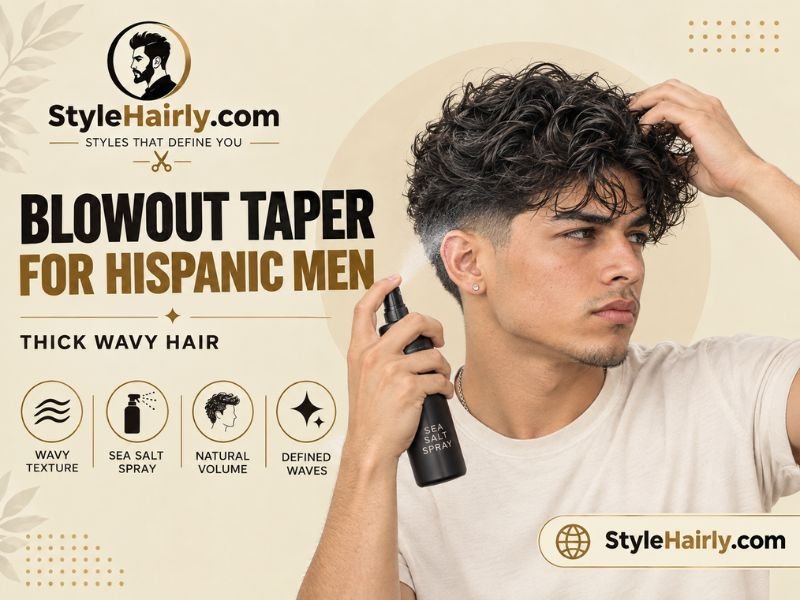
Sea salt spray is the product to reach for here. Work it through damp hair with your fingers, then blow-dry upward using a vent brush. The natural wave already gives the hair body, so the volume looks effortless with minimal product. Clay is optional for this texture, since the wave pattern creates its own surface interest without added definition.
Curly and Coily Hair
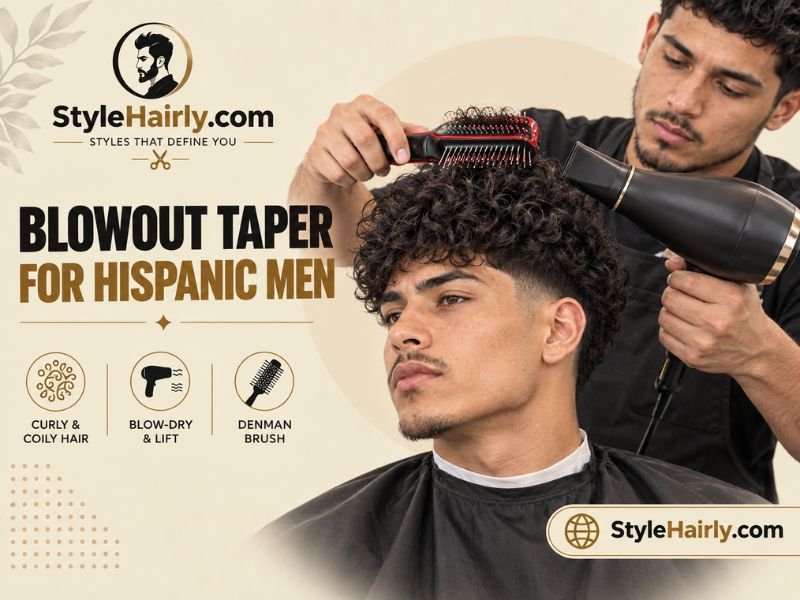
Apply a leave-in conditioner followed by curl cream to damp hair before drying. Use a Denman brush or a wide-tooth pick to stretch and lift each section as you dry upward. If your curl pattern shrinks noticeably when it dries, tell your barber to cut it dry rather than stretched, so the finished length matches what you expect. Finish with a light matte clay, or leave some natural curl pattern intact for a softer, more textured look.
Managing Thickness and Bulk
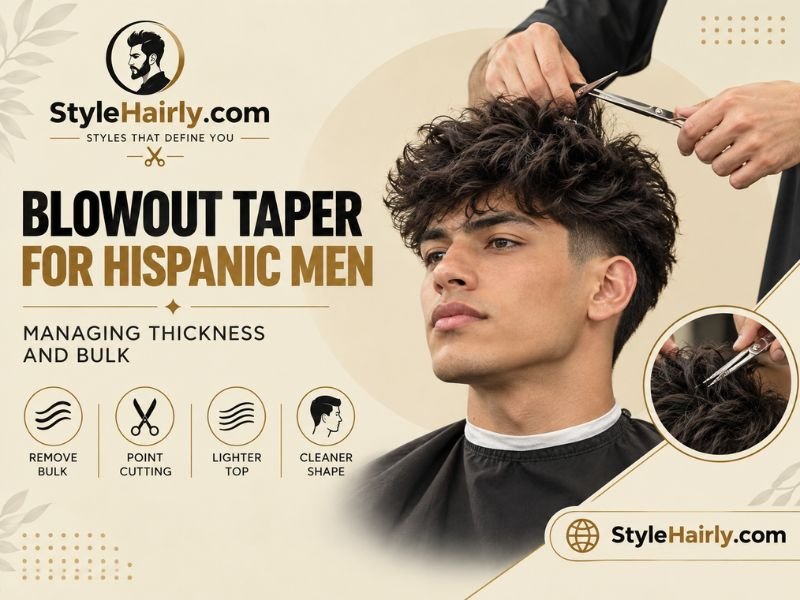
Very thick Hispanic hair can occasionally feel heavy even after a full styling routine, and volume sometimes collapses under the sheer weight of the hair itself. If that happens, ask your barber to add internal texture through point cutting or razoring on your next visit. This removes bulk without shortening the visible length and makes the blow-dry noticeably more effective afterward.
Choosing a Taper Height
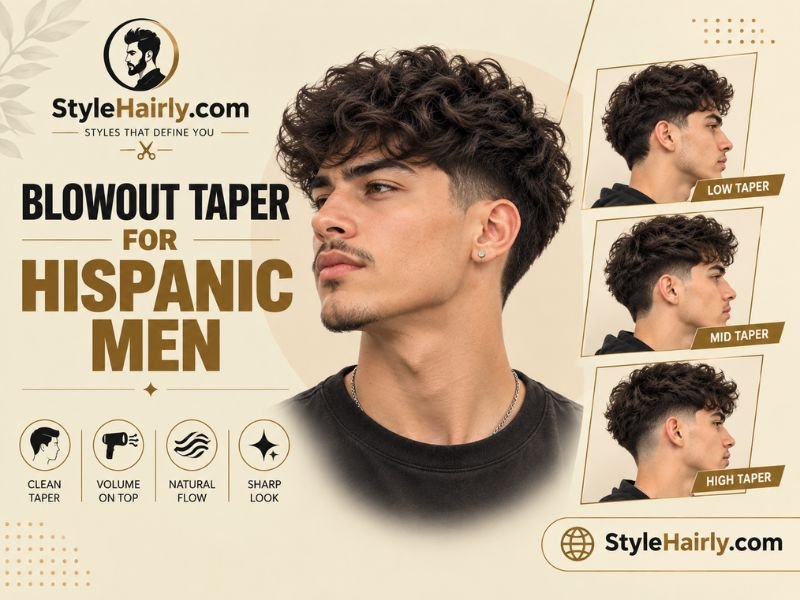
Taper height changes how dramatic the cut looks and how it interacts with face shape and hair thickness.
- Low taper: Keeps more length around the ears and neckline, the most subtle option, works well for professional settings.
- Mid taper: The most balanced and versatile choice, suits nearly every hair type and most face shapes.
- High taper: Creates the most contrast and the boldest silhouette, best suited to thick or dense hair that can fill the height.
Most barbers recommend starting with a mid taper if you’ve never had a blowout taper before, then moving to a high taper on a future visit once you know how the cut suits you.
Blowout Taper vs Other Popular Haircuts
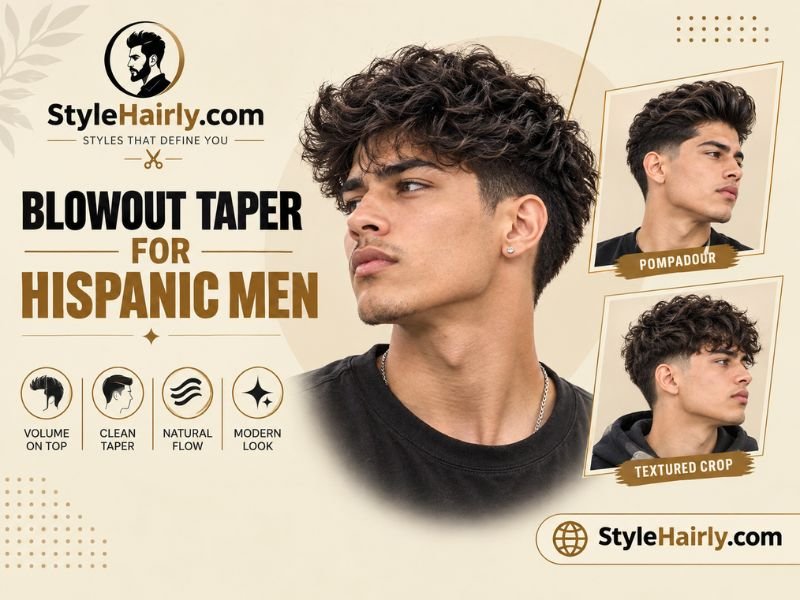
The blowout taper isn’t the only option for men who want volume and a clean fade. Here’s how it compares to a few other common requests.
| Haircut | Volume Style | Best Hair Type | Maintenance | Best Face Shapes |
| Blowout taper | Blown-out, upward volume | Thick, straight to curly | Every 3 to 4 weeks | Round, square, oval |
| Pompadour | Swept back and up, structured | Straight to wavy, medium thickness | Every 2 to 3 weeks | Oval, square, heart |
| Textured crop | Short, forward-swept fringe | Straight to wavy | Every 3 to 4 weeks | Round, square |
| Low taper fade with slick back | Flat, polished, low profile | Straight, fine to medium | Every 3 to 5 weeks | Any face shape |
| Curly shag | Loose, layered, natural texture | Curly to coily | Every 5 to 8 weeks | Oval, heart |
The blowout taper stands out from these alternatives because it relies on natural hair density rather than product-built structure, which is why thick Hispanic hair tends to produce better results with less daily effort than a pompadour or a slick back requires.
What to Ask for in the Chair
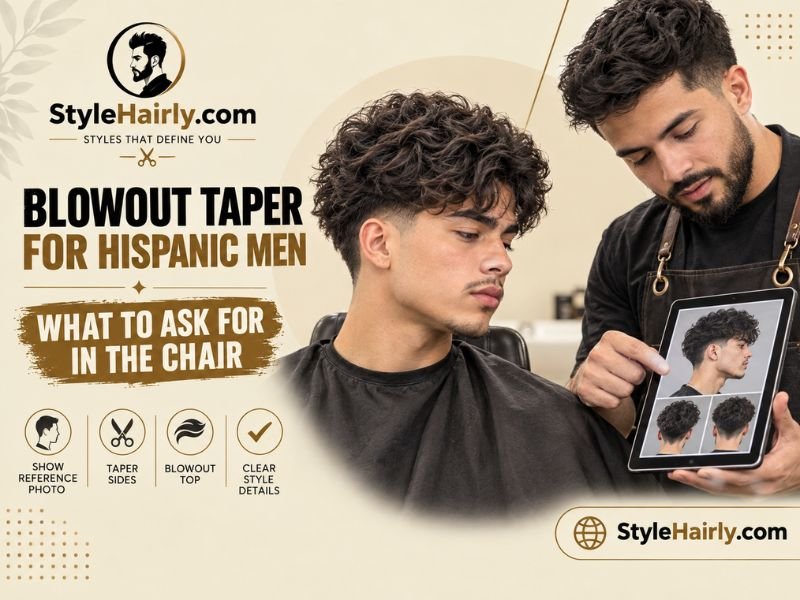
A clear barber consultation is what separates a sharp blowout taper from an inconsistent one. Use this wording as a starting point:
- State your height: Say “mid blowout taper” or “high blowout taper” directly, rather than describing it in general terms.
- Specify the top length: Say something like “keep the top at four inches,” not “just a trim.” Thick hair is often cut shorter than intended because density makes the final length harder to judge by eye.
- Add a texture note if needed: “Point cut the top for texture and remove some bulk” is worth saying if your hair feels heavy or dense.
- For wavy or curly hair: Mention “cut the top dry or stretched if there’s any shrinkage” to prevent the most common length mistake on textured hair.
- Bring a reference photo. Hispanic hair covers enough natural variation that a photo removes ambiguity faster than any verbal description can.
How Often to Get It Cut
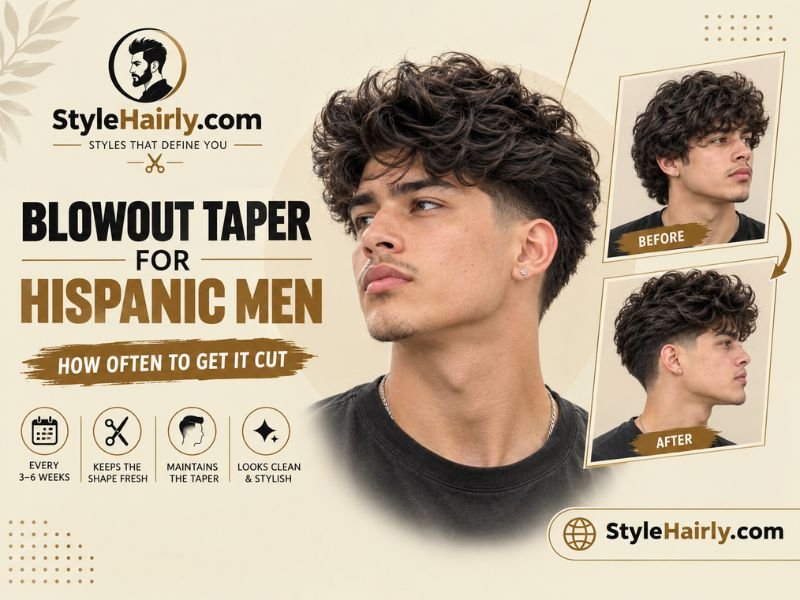
The blowout taper needs more frequent trims than a longer, low-maintenance style because the fade on the sides grows out visibly within a few weeks. Most men return every three to four weeks to keep the taper line crisp. Thicker hair can sometimes stretch that window slightly, since density hides early regrowth better than fine hair, but the top length and shape still benefit from regular upkeep to maintain the silhouette.
Common Mistakes to Avoid
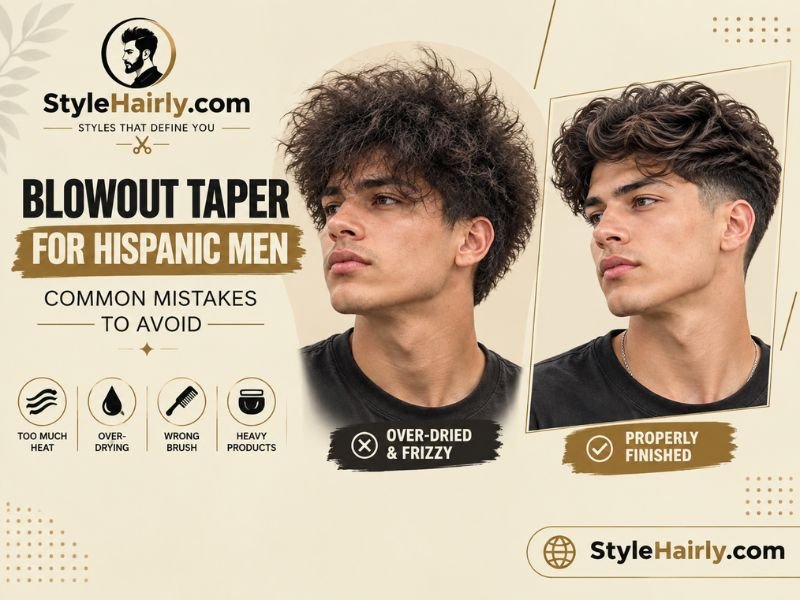
- Skipping the height specification. Saying “give me a blowout” without naming low, mid, or high leaves too much room for interpretation.
- Using heavy pomade on thick hair. It weighs the volume down instead of supporting it. Mousse or sea salt spray works better for lift.
- Cutting curly hair wet without discussing shrinkage. This is the most common reason curly-haired clients end up with a shorter result than expected.
- Over-drying with high heat. This can leave straight and wavy hair looking frizzy rather than smooth. Medium heat with a cool finish holds better.
- Not mentioning bulk. If your hair feels heavy after styling, say so. Point cutting and razoring solve this in one visit.
Blowout Taper for Hispanic Men FAQs
Is the blowout taper a good haircut for thick Hispanic hair?
Yes. Thick hair fills the volume a mid or high taper creates and holds the shape through the day better than fine hair does, which makes it one of the most reliable pairings in barbering.
What taper height works best for wavy Hispanic hair?
Mid or high both work well, since wavy hair has the natural body to fill a taller silhouette. A mid taper is the safer choice for a first-time cut.
Do I need different products for curly hair versus straight hair?
Yes. Curly hair benefits from leave-in conditioner and curl cream, while straight hair needs volumizing mousse to build the lift that straight strands don’t create naturally.
How do I stop my hair from feeling heavy after a blowout?
Ask your barber for point cutting or razoring on your next visit to remove internal bulk without shortening the length, and avoid heavy pomades that add weight.
Does the blowout taper suit every face shape?
It suits round, square, and oval faces best. If your face is long or rectangular, ask for a moderate top height rather than the tallest version of the cut.
How often should I get a blowout taper trimmed?
Every three to four weeks keeps the taper line clean, since the sides grow out faster than the top does.
Can curly hair hold a blowout taper without heat styling?
Yes, using curl cream and a Denman brush with air drying, though a blow-dry with medium heat builds more height and lasts longer through the day.
Conclusion
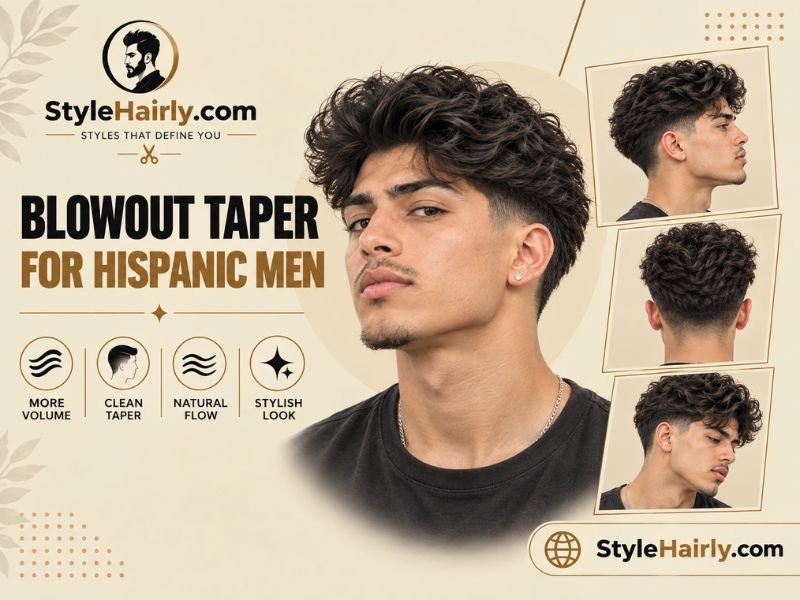
The blowout taper for Hispanic men works because it plays directly to the thickness most Hispanic hair textures share, whether that hair is straight, wavy, curly, or coily. The main decisions that matter are picking a taper height that matches your hair’s density and your face shape, choosing the right product for your specific texture, and being precise about length and bulk when you sit down in the barber’s chair. Get those three details right and the cut holds its shape with far less daily effort than most alternatives.

1 thought on “ Blowout Taper for Hispanic Men: Bold Style Guide 2026”