

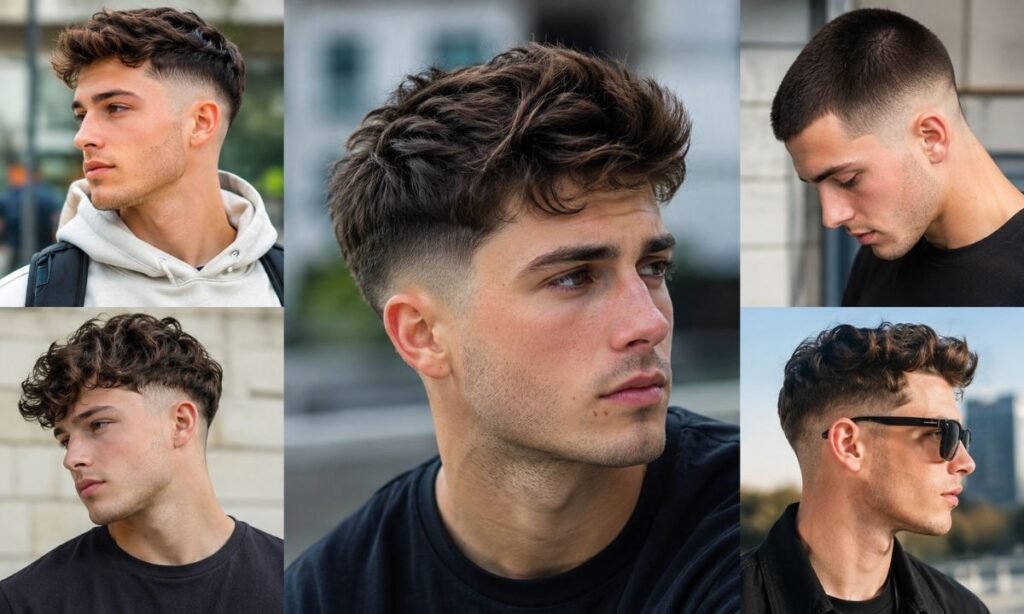
A low taper fade keeps the sides and back close near the ears and neckline while gradually blending into longer hair on top, without ever exposing bare skin the way a skin fade does. It’s become one of the most requested cuts for white guys because it flatters finer, straighter hair textures, softens an early receding hairline, and grows out gracefully between visits.
Below you’ll find the most popular low taper fade white guy hairstyles right now, how each one performs on different hair types and face shapes, and exactly what to say in the barber’s chair to get it right the first time.
At a Glance
| Detail | Quick Answer |
| Where the fade starts | Just above the ears, near the bottom of the ear line |
| Best hair types | Straight, fine, wavy, curly |
| Maintenance level | Low to moderate |
| Trim frequency | Every 2 to 5 weeks, depending on hair growth rate |
| Best face shapes | Oval, square, round, heart |
| Styling time | 3 to 10 minutes, depending on top style |
| Popular pairings | Textured crop, comb over, slick back |
Low Taper Fade White Guy Hairstyles Variations
The low taper fade is a finishing technique on the sides, not a single fixed look. What sits on top, curls, a comb over, dreads, or a blowout, is what actually defines the style. Here are the most requested variations right now.
Low Taper Fade + Curly Hair
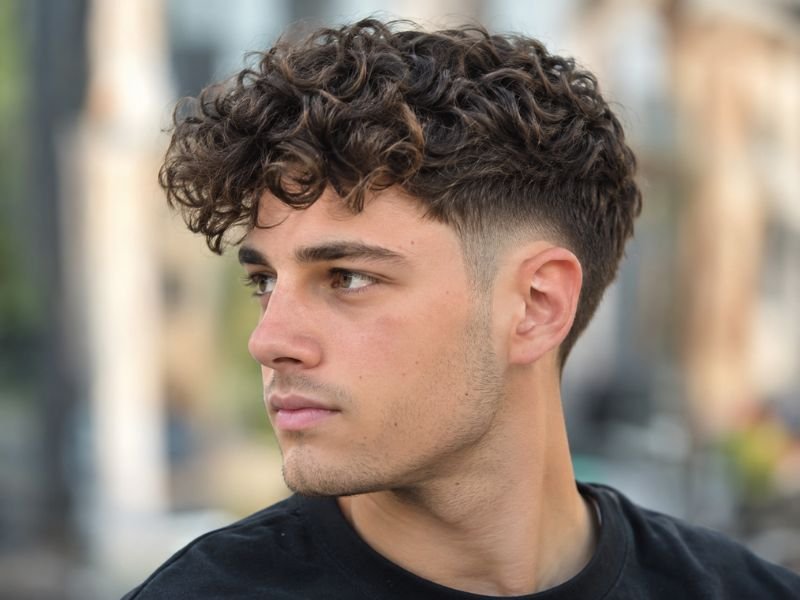
Natural curls stay on top while the fade keeps the sides clean, letting the curl pattern do all the visual work without turning into an uncontrolled mess. Best for type 2 and 3 curl patterns with medium to thick density. The key is length management: cut curls too short and they shrink up once dry, so most barbers leave a little extra length and let the curl pattern do the styling. Ask for scissor-over-comb on top rather than thinning shears, and finish with a curl cream or light-hold gel worked into damp hair.
Low Taper Fade + Slick Back
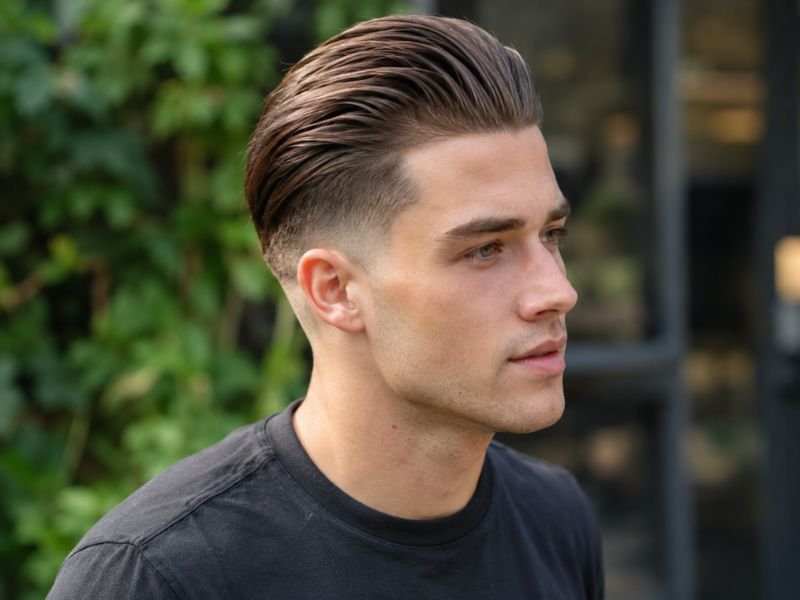
Hair is left long enough on top, usually two to three inches, to comb straight back, then set with a medium to strong-hold product for a polished, barbershop finish. Works best on straight to wavy hair and reads as dressed-up without much daily effort once the length is grown in. Note that the current version of this look is often pushed back with fingers for a matte, textured result rather than combed down wet and shiny.
Low Taper Fade + Comb Over
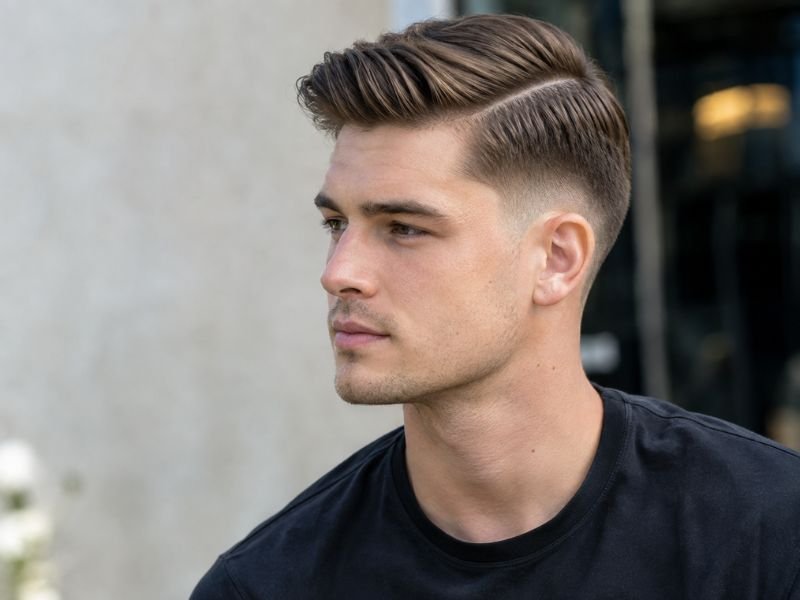
A defined side part with hair swept in one direction, paired with a low taper that adds contrast without looking dated. This is one of the safest, most versatile combinations on this list, suited to interviews, weddings, and every formal setting in between. Ask for a hard, shaved-in part for extra definition, or a soft razor part for a more natural look. Matte clay grips without shine, which matters when you’re after texture rather than a slicked finish.
Low Taper Fade + Textured Crop / Fringe
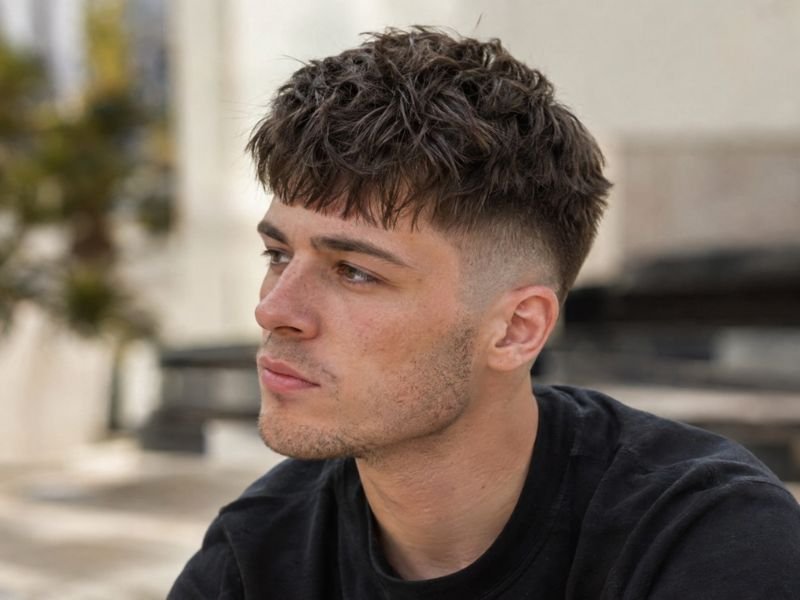
The top is cut short and choppy, then styled forward into a fringe that sits at or just above the brow. This is the most popular everyday version of the style right now because it needs almost no daily styling and it fakes thickness convincingly on straight or fine hair. Ask for choppy, point-cut ends instead of a blunt fringe, and finish with matte wax or a sea salt spray pushed forward with fingers, no comb needed.
Low Taper Fade + Buzz Cut
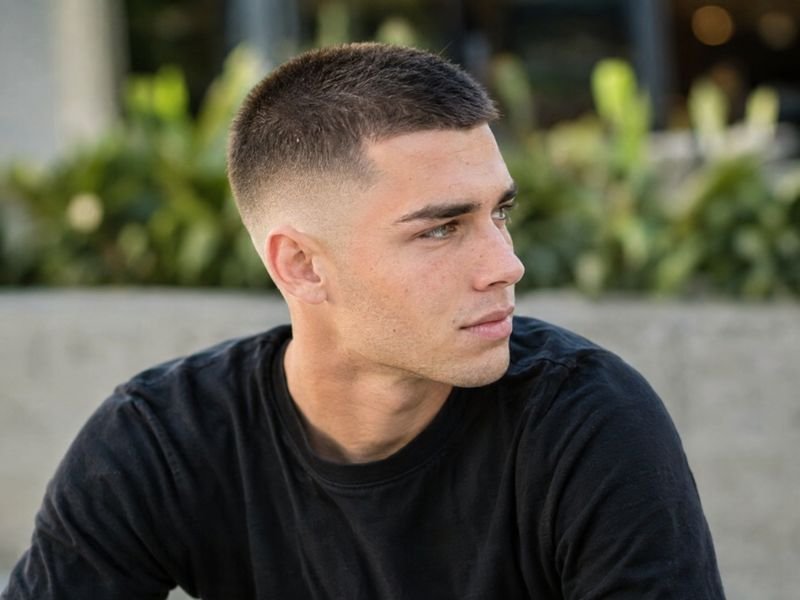
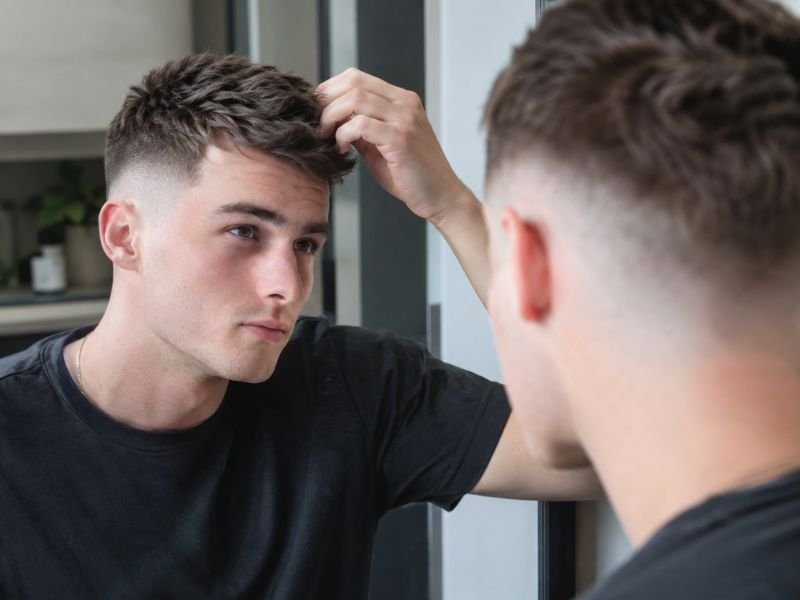
Short, uniform length on top, usually a number 2 or 3 guard, paired with a subtle taper underneath. One of the lowest-maintenance combinations available, and a strong option for guys dealing with thinning hair or an early receding hairline, since the even length avoids drawing attention to problem areas. Keep the taper tight to avoid a boxy silhouette.
Low Taper Fade + Undercut
A sharper, more visible contrast between the tapered sides and a noticeably longer top, which is then styled up, back, or forward depending on the look you want. Best suited to thick or wavy hair with enough length to style. Ask for a disconnected undercut for maximum contrast, or a blended low taper for a softer transition, and use a strong-hold paste to keep the longer top controlled through the day.
Low Taper Fade + Dreads
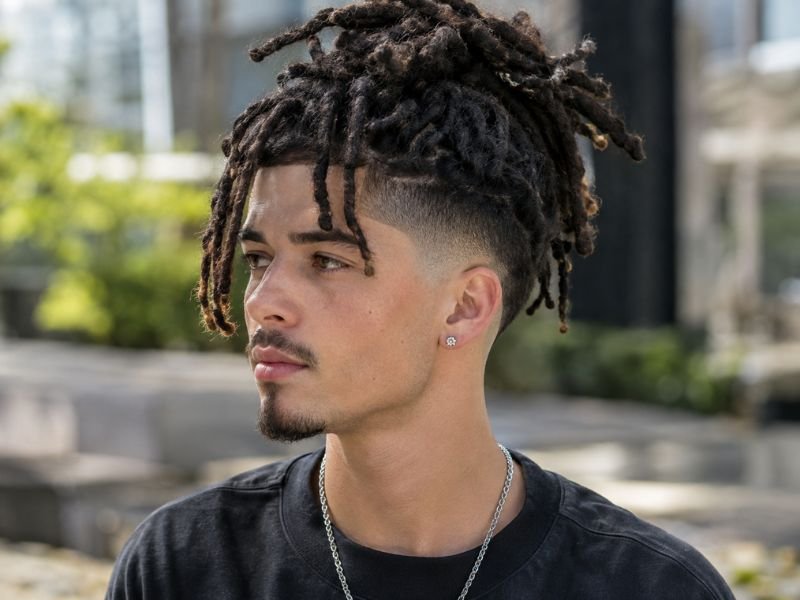
Sides stay clean and tapered while locs are left to grow and mature on top, creating one of the boldest contrast looks available. This combination is less about hair texture and more about maintenance commitment, since dreads take real time to form and require a barber experienced with the style. Re-lining the fade every two to three weeks keeps the contrast sharp as the dreads grow.
Low Taper Fade + Afro
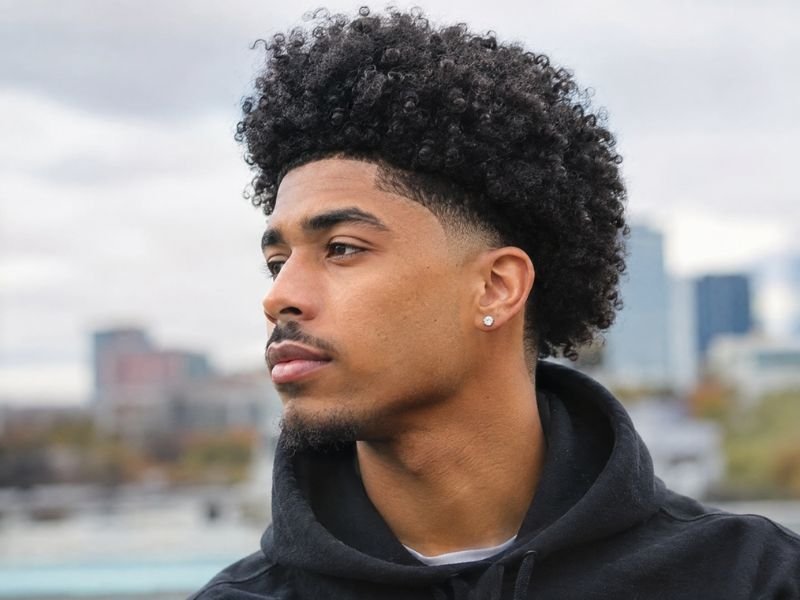
Natural volume and curl pattern take center stage on top while the low fade trims away bulk on the sides, keeping the overall shape rounded and controlled. Best for type 3c and 4 curl patterns. Use clipper-over-comb on the taper only, never on the afro itself, to preserve the round shape, and finish with a leave-in conditioner and a pick.
Low Taper Fade + Side Part
A defined part line separates the top, which is then combed to one side for a clean, intentional finish. The most versatile option for formal and casual settings alike, working especially well on straight or wavy hair. A subtle razor part looks more natural than a hard shaved line here, finished with a medium-hold pomade combed through while hair is still damp.
Low Taper Fade + Blowout
A high-volume, fluffy style especially popular with younger guys right now. Hair on top is blow-dried for maximum lift while the low taper keeps the sides structured and tight. Works best on straight or wavy hair with medium to thick density. Keep the taper tight so it contrasts against the voluminous top, and use a volumizing mousse before blow-drying, pushed upward with a round brush or fingers.
What is Low Taper Fade White Guy Styles
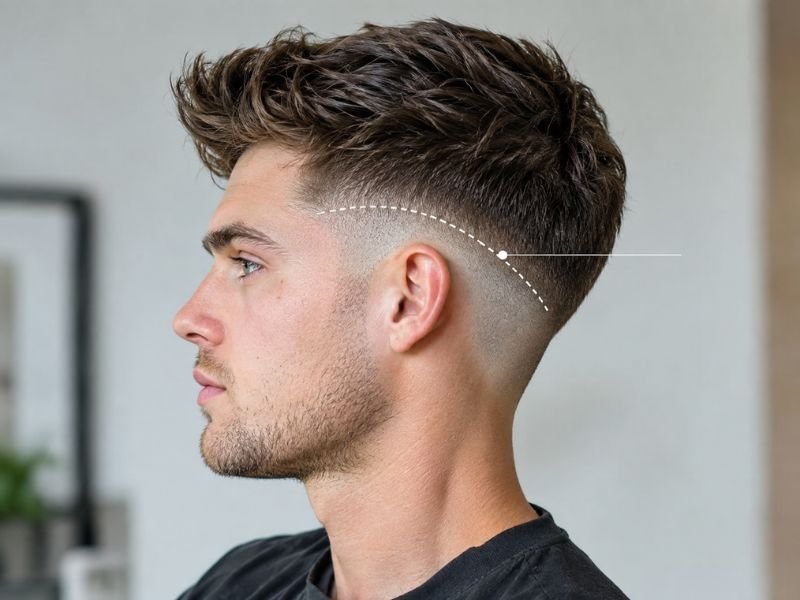
A taper is a gradual shortening of hair down the sides and back using progressively smaller clipper guards, without ever fully exposing bare skin. A low taper fade combines that technique with a fade line that sits low, usually starting just above the ears, so the blend stays close to the skin without climbing high up the head the way a mid or high fade does.
Because white hair textures range from pin-straight to loosely curly, barbers usually recommend a low taper over a high or skin fade for this group. Fine hair over a lighter scalp can make an aggressive skin fade look patchy, since every gap in density shows up against pale skin. A low taper avoids that by keeping more length on the sides and only dropping close to the skin in a small, narrow zone near the ear.
It’s also one of the more forgiving fades for an early receding hairline. A high or mid fade pulls the eye up toward the temple, right where recession often starts, while a low taper keeps the action down near the ears and away from the hairline.
Low Taper Fade vs Low Fade vs Mid Fade vs High Fade
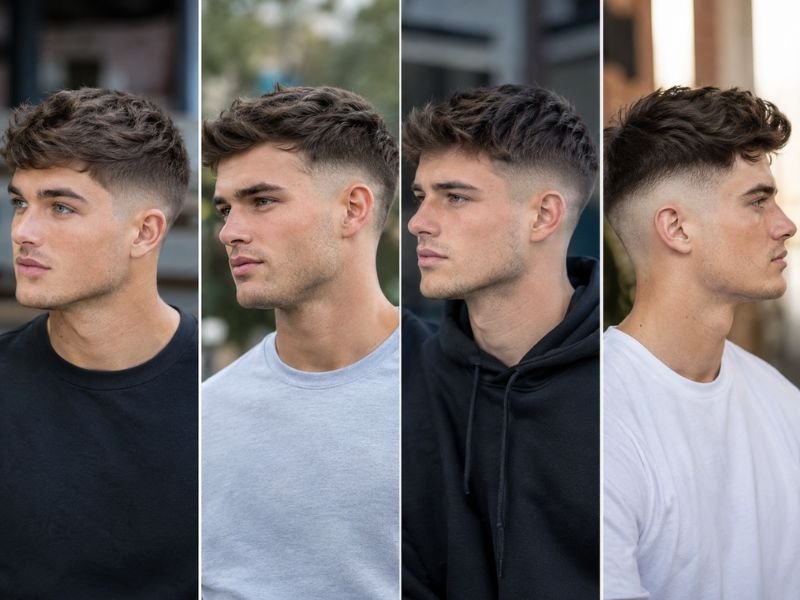
Guys often use “low fade” and “low taper” interchangeably, but among barbers they can mean two different things. A low fade typically means the clippers go all the way to bare skin at the very bottom of the fade zone. A low taper usually means the hair never gets shaved to skin, the shortest guard might be a 0.5 or 1, blending upward into longer guards, but skin never fully shows.
| Fade Type | Starting Point | Goes to Bare Skin? | Best For |
| Low Taper | Just above the ears | No | Straight, fine, or wavy hair; soft, professional look |
| Low Fade | Just above the ears | Yes, small patch | Guys who want a crisp, visible line without going high |
| Mid Fade | Around eye level | Yes | Most hair types; balanced contrast |
| High Fade | At or above the temple | Yes, most scalp shown | Thick or curly hair; bold, high-contrast look |
If you want a crisp, barbershop-photo look with a visible line, ask for a low skin fade. If you want something understated that grows out more forgivingly, say “low taper” or “taper fade, no skin showing.”
Which Low Taper Fade Style Works Best for Your Hair Type?
| Hair Type | Top Style | Best Product | Styling Time |
| Straight / Fine | Textured crop or side part | Matte clay or light pomade | 3–5 minutes |
| Wavy | Textured quiff or messy natural finish | Sea salt spray or texture powder | 5–7 minutes |
| Curly | Curly fringe or curl top | Curl cream or light-hold gel | 8–10 minutes |
| Coily / Locs | Afro or dreads on top | Leave-in conditioner, pick | 5–10 minutes |
Which Low Taper Fade Style Suits Your Face Shape?
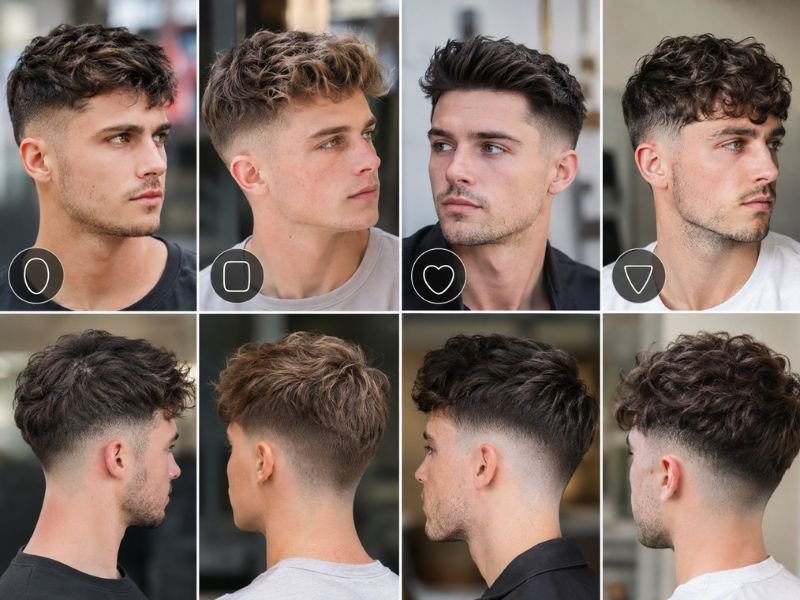
| Face Shape | Top Style to Pair With | Why It Works |
| Round | Textured crop or quiff, added height | Adds vertical length, balances width |
| Square | Slightly longer, softer texture on top | Softens a strong jawline without hiding it |
| Oval | Almost any style, side part or crop | Balanced proportions give the most flexibility |
| Long / Oblong | Fringe or textured top, less height | Shortens the visual length of the face |
| Heart | Side-swept texture, medium length | Balances a wider forehead with a narrower jaw |
These are starting points, not strict rules. A good barber will adjust top length within about thirty seconds of you sitting down.
What to Tell Your Barber for a Low Taper Fade
Walking in and saying “low taper fade” gets you most of the way, but a few extra details separate a haircut you like from one you love:
- Say it clearly: “Low taper fade, keep it soft, nothing above the ear, and leave length and texture on top.”
- Give guard numbers if you know them, or let the barber choose based on your hair type. A typical low taper runs a 0.5 or 1 at the bottom, blending into a 2 or 3.
- Bring a reference photo of someone with a similar hair texture to yours, since a low taper on curly hair won’t translate the same way to straight, fine hair.
- Mention any quirks upfront, cowlicks, a stubborn part, faster growth on one side, so the barber can work around them from the start.
- Ask for a mirror check partway through so you can flag anything that looks too short or too high before it’s final.
How to Style a Low Taper Fade
- Start with damp, not soaking wet hair. Towel-dry first for better product grip.
- Dry with purpose. Aim a blow dryer at the roots first, lifting as you go, then let the ends fall naturally instead of blasting heat straight down.
- Choose your product by finish. Matte clay or paste for a natural, textured look with no shine; a lighter pomade for a polished side part or slick back.
- Warm the product between your palms, then work it through with fingers from the back forward, following the direction hair naturally falls.
- Use fingers, not a comb, for texture. A comb smooths everything into one flat plane, which kills the separation this style depends on.
- Scrunch slightly for extra texture on wavy or curly tops.
How Often to Maintain a Low Taper Fade
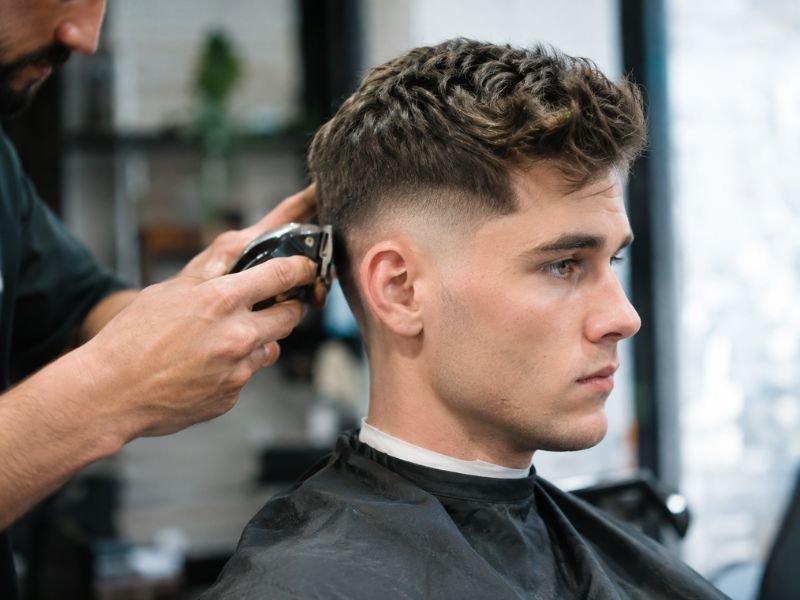
| Hair Growth Rate | Suggested Trim | What You’ll Notice Between Cuts |
| Fast | Every 2–3 weeks | Fade line softens quickly, top gets shaggy |
| Average | Every 3–4 weeks | Fade holds shape reasonably well through the month |
| Slow | Every 4–5 weeks | Stays clean-looking for longer stretches |
A low taper forgives a longer stretch between visits than a high or mid skin fade, since the fade zone is smaller and less obvious as it grows. Some guys split the difference with a quick neck-and-ear trim between full appointments to keep edges sharp without touching the overall blend.
Common Mistakes to Avoid With a Low Taper Fade
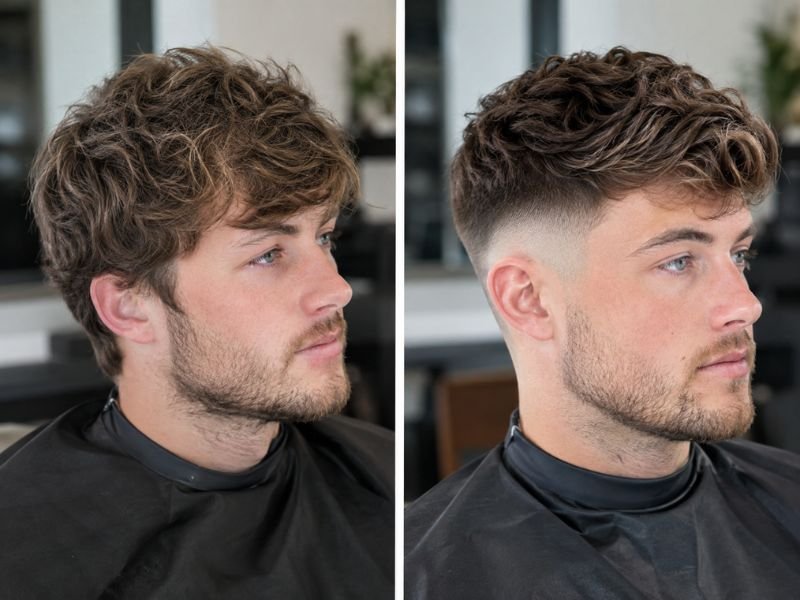
- Confusing it with a high or mid fade. Not specifying the starting point is the most common reason guys walk out with a harsher look than intended.
- Using too much product on top. This is one of the most common mistakes on fine or straight hair, and it usually ends in hair that looks greasy by early afternoon.
- Cutting curly hair too short. Curls shrink up once dry, so leave extra length if you have a curl pattern.
- Combing instead of finger-styling. A comb flattens the separation that gives this cut its texture.
- Judging a fresh cut too fast. Textured tops on fine hair can look thinner right after cutting, before the ends settle over a few days. Give it about a week before deciding.
FAQs
What is a low taper fade?
It’s a haircut where the sides and back gradually shorten starting just above the ears, blending upward using clipper guards without ever going down to bare skin.
Is a low taper fade good for white guys with straight hair?
Yes. Straight hair holds a comb over, side part, or slick back cleanly, and the gradual blend suits finer textures better than a high skin fade.
Does a low taper fade work with curly hair?
Yes. The fade cleans up the sides while the curl pattern on top provides its own natural volume, as long as enough length is left so the curls don’t shrink too much.
What’s the difference between a low taper fade and a low fade?
A low taper never goes fully down to bare skin, while a low fade includes a small patch of visible scalp at the shortest point.
How often do you need to get a low taper fade trimmed?
Every 2 to 5 weeks, depending on how fast your hair grows. Faster growth needs trims closer to the 2 to 3 week mark.
Can a low taper fade suit a receding hairline?
Yes. It keeps the fading action away from the hairline, so early recession at the temples is less obvious than with a high fade. Pairing it with a textured crop adds extra fullness on top.
Can any face shape get a low taper fade?
Nearly all of them. The cut itself flatters most face shapes, since the top style can be adjusted for height, length, or texture based on your features.
Final Takeaway
A low taper fade for white guys works because it adapts to what’s already on your head instead of forcing a dramatic change. Pick a top style that matches your hair type, whether that’s a comb over for straight hair, a textured crop for wavy hair, or a longer curly top for curl patterns, confirm the fade starts just above the ears without going to skin, and keep up with a trim schedule that matches your natural growth rate.
