

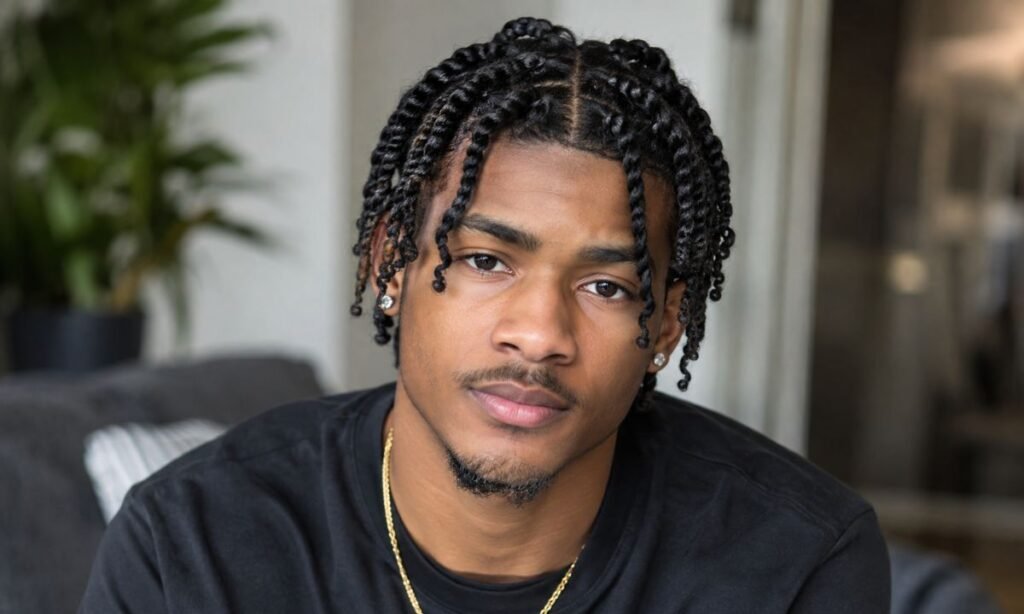
A two strand twist for men is created by sectioning the hair, splitting each section into two equal pieces, and wrapping those two strands around each other from root to tip. It is one of the most reliable protective styles for natural, coily, and curly hair, since it needs no extensions, holds for one to three weeks, and works on hair lengths from a few inches up to shoulder length.
This guide covers the full step-by-step process, the most popular twist variations by length and texture, how to choose the right style for your hair and face shape, which hair types actually hold a twist well, how it compares to other protective styles, and how to maintain twists once they are in. A complete FAQ and common mistakes section are included at the end.
At a Glance: Two Strand Twist For Men
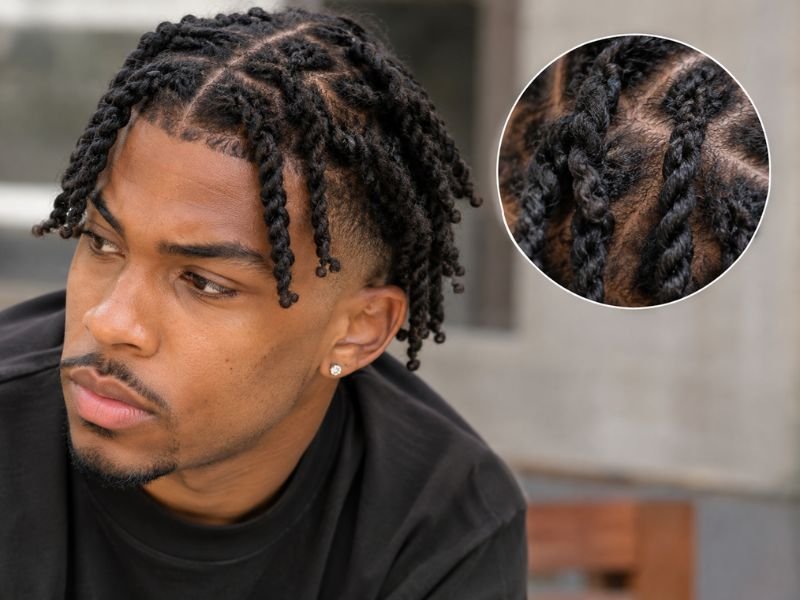
| Detail | Quick Answer |
| Minimum hair length | 2 to 3 inches |
| Best hair type | Coily, curly, or kinky natural hair |
| How long they last | 1 to 3 weeks |
| Styling time | 1 to 3 hours depending on twist size |
| Key products | Twist cream, leave-in conditioner, light oil or gel |
| Face shapes it suits | Oval, square, round, rectangular |
| Maintenance | Satin bonnet or durag at night, root touch-ups every 2 to 3 weeks |
What Are Two-Strand Twists?
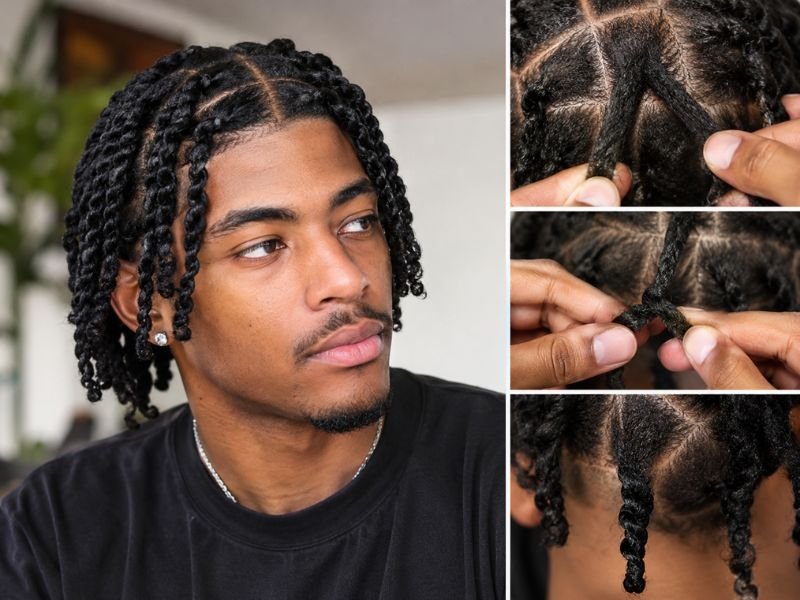
A two strand twist is a styling technique, not a single fixed look. Hair is parted into small sections, each section is divided into two equal strands, and the strands are wound around each other repeatedly from the root down to the end. The result is a rope-like twist that holds its shape without glue, thread, or added hair.
Twists can be worn as a short-term style that gets taken out after one to three weeks, or grown out over months to start the locking process for dreadlocks. A two strand twist for men stays the same technique regardless of twist size, hair length, or how long the style is meant to last.
Trending Two-Strand Twist Men Hairstyles
The same twisting technique produces very different looks depending on hair length, section size, and how long the twists are left in.
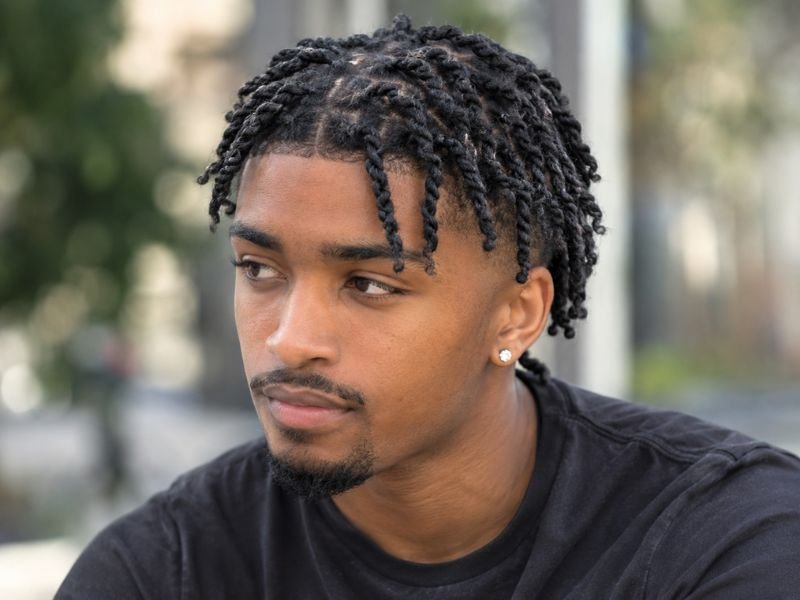
Two Strand Twist Men Short Hair
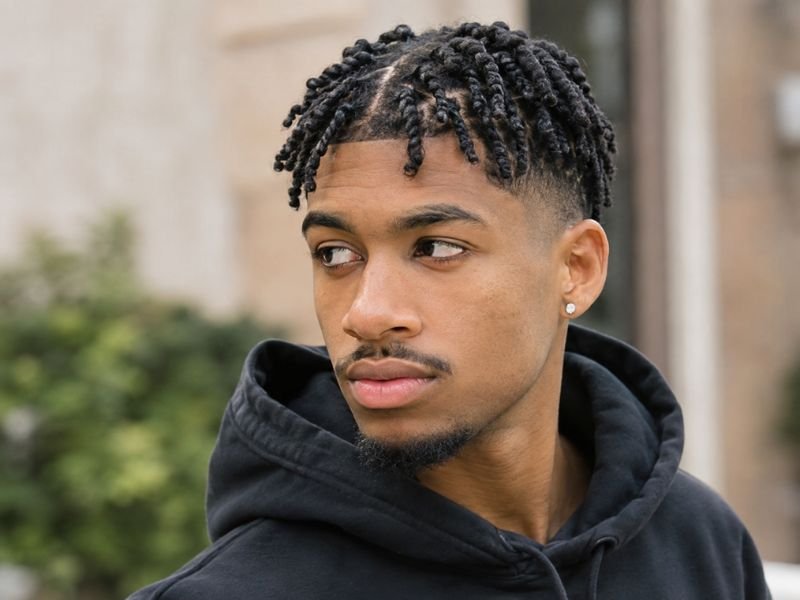
On short hair, twists sit close to the scalp and create a clean, low-profile texture that pairs well with a fade or lineup on the sides. Small, tight sections work best here, since short strands need extra grip to hold a twist without unraveling within a day or two.
Two Strand Twist Out Men
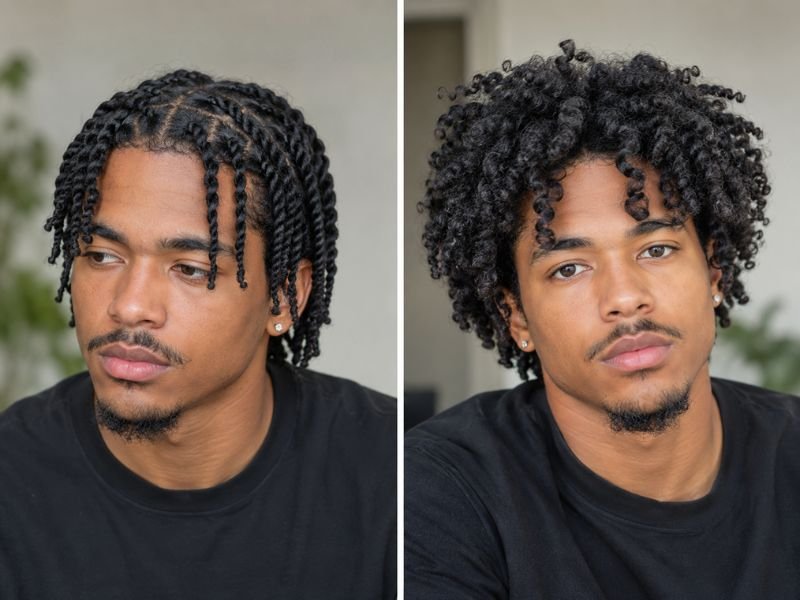
A twist-out is what happens after twists are taken down: the hair keeps the twisted shape but falls into a looser, fuller curl pattern instead of staying wound tight. This gives maximum volume and texture definition, and it is a common way to wear the style once the twists themselves have served their purpose.
Two Strand Twist Men Long Hair
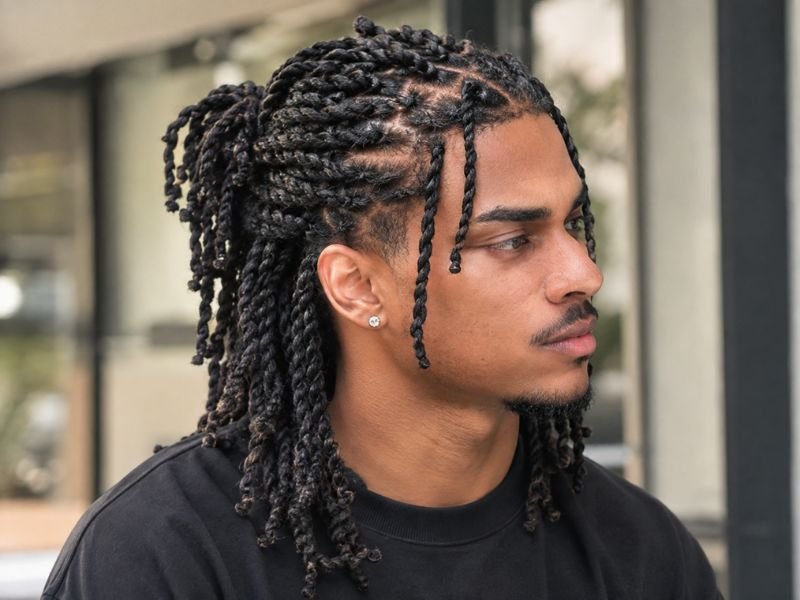
Longer hair gives twists more movement and allows them to be pulled back into a ponytail, half-up style, or bun. The extra length also means twists can be combined freely, split, or restyled without redoing the entire head.
Two Strand Twist Locs Men

Twists are the standard starting method for locs, since repeated twisting over several months trains the hair to lock on its own. Early-stage locs started this way often still look like loose twists for the first few months before the texture tightens and matting begins.
Two Strand Twist Dreads Men
Once locs have matured, two-strand twisting is often still used between retwist sessions to neaten the roots and keep new growth under control. This maintenance twisting is smaller and more frequent than the original starter twists.
Mini Twists Two Strand Twist Men Short Hair
Mini twists use very small sections across the whole head, which creates a dense, detailed texture that holds exceptionally well on short hair. They take longer to install than larger twists but tend to last closer to the three-week mark before needing a redo.
Two Strand Twist Braids Men
Some men combine the technique with a braided base, where the roots are braided flat against the scalp before the remaining length is twisted. This hybrid gives a sleeker foundation while keeping the twisted texture through the mid-lengths and ends.
Medium Two Strand Twist Men
Medium-sized twists strike a balance between the tight definition of mini twists and the bulk of thick twists, and they are the easiest size for most men to maintain without professional help. This is usually the recommended starting size for anyone trying the style for the first time.
Thick Two Strand Twist Men
Thick, chunky twists use larger sections and create a bold, high-volume look that suits dense, high-density hair best. They install faster than mini or medium twists but need more frequent root touch-ups to keep the larger sections from loosening.
Does This Style Work on Straight or Natural Hair?
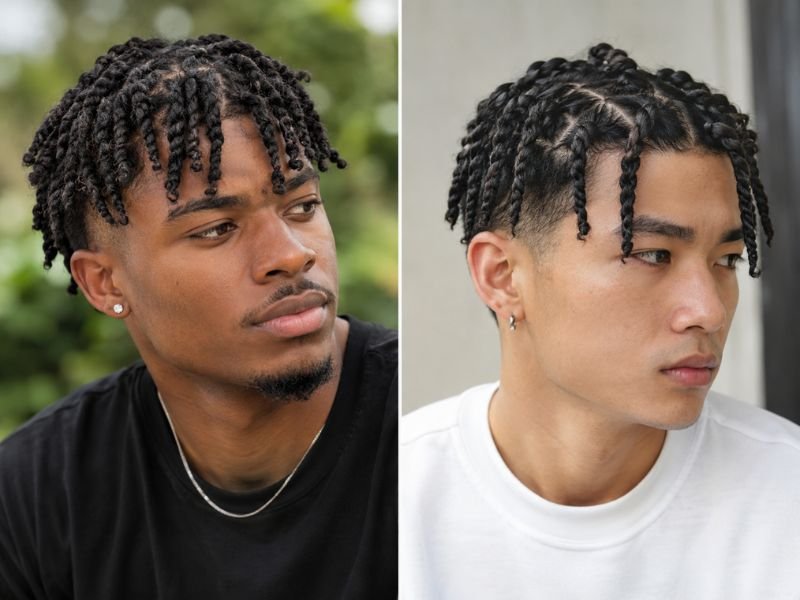
Two-strand twists were developed for and work best on coily, curly, and tightly textured natural hair, since that texture grips itself and holds the twisted shape without extra product. Straight hair can still be twisted, but the result behaves differently and needs more product and maintenance to hold.
| Hair Type | How Well Twists Hold | What’s Needed |
| Coily or kinky natural hair | Excellent, holds for 1 to 3 weeks | Twist cream and a light oil |
| Curly or wavy hair | Good, holds for several days to a week | Strong-hold gel or twisting butter |
| Straight hair | Limited, tends to unravel within a day | Heavy-hold gel, and twists are usually a temporary texture effect rather than a lasting style |
For straight hair, two-strand twists are better understood as a short-term styling effect used to add temporary waves or texture once taken down, rather than a style meant to hold its shape for weeks the way it does on natural hair.
How To Choose a Two Strand Twist Hairstyle For Men
The right version of this style depends on more than personal taste. Hair length, face shape, and daily routine all narrow down what will actually look and hold well.
Consider Your Hair Length
Hair under 2 inches usually cannot hold a twist at all, since there is not enough length to wrap one strand around the other. Hair between 2 and 4 inches works best for short, mini, or medium twists, while anything longer opens up long twists, twist-outs, and pulled-back styles.
Consider Your Face Shape
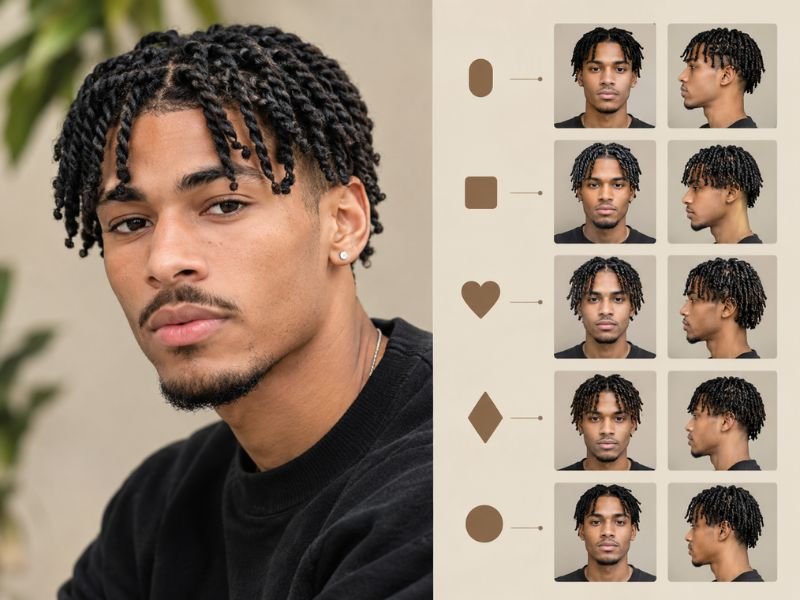
| Face Shape | Suitability | Styling Note |
| Oval | Excellent | Almost any twist size and length works |
| Square | Excellent | Medium to long twists soften strong jaw angles |
| Round | Good | Taller, higher-volume twists add visual length |
| Rectangular | Good | Shorter twists with width avoid over-elongating the face |
| Heart-shaped | Use caution | Favor fuller styles at the jawline over heavy top volume |
| Diamond | Use caution | Moderate twist size avoids over-emphasizing cheekbones |
Think About Your Lifestyle
Frequent gym sessions, swimming, or manual work call for smaller, tighter twists that hold up under sweat and friction, along with a durag or bonnet for protection. A more relaxed routine leaves room for larger, looser twists that need less frequent upkeep.
Choose the Right Twist Size
Smaller twists take longer to install but last longer and hold more detail, while larger twists install faster but need more frequent root touch-ups. Most first-timers do best starting with a medium size, since it is the most forgiving to maintain.
Avoid Excessive Tension
Twisting too tightly at the root pulls on the hairline and can lead to breakage or thinning over time, especially along the edges. A firm twist should feel secure, not painful, and any twist that causes a headache during or after installation is too tight.
The Evolution of Two Strand Twist Men
Two-strand twisting has roots in traditional African hair grooming practices that go back centuries, long before it became a mainstream men’s style. The technique was originally practical: it protected hair from damage, kept it manageable without daily combing, and served as a foundation for locing hair over time.
Why the Style Remains Popular
The style has stayed popular because it works with natural hair texture instead of against it, requires no added extensions, and adapts easily across short, medium, and long lengths. It also transitions cleanly into other styles, from twist-outs to full locs, which makes it a flexible long-term choice rather than a one-time look.
What You’ll Need
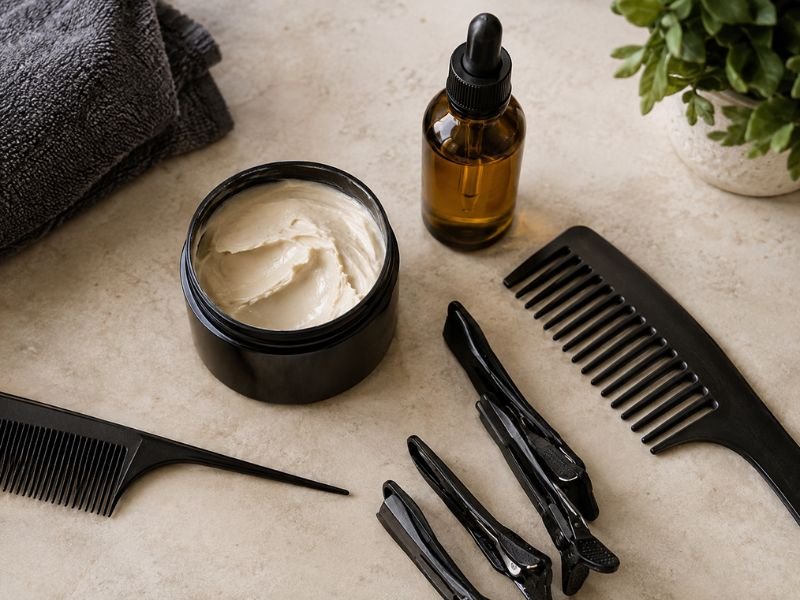
- Shampoo and conditioner
- Leave-in conditioner or detangling spray
- Twist cream, butter, or strong-hold gel
- A rat-tail comb for clean parting
- Hair clips to section the hair
- A light oil for sealing ends
- A satin bonnet or durag for overnight protection
How to Do a Two Strand Twist For Men, Step by Step
Step 1: Wash and Condition Your Hair
Start with clean hair, since product buildup and dirt make twists harder to form and cause them to unravel faster. A moisturizing shampoo followed by a conditioner that leaves hair soft, not stripped, gives the best base.
Step 2: Stretch or Slightly Dry the Hair
Twisting on soaking wet hair takes far longer to dry and can leave twists feeling limp. Towel-dry or blow-dry on low heat until hair is damp, or lightly stretch coily hair with a comb, so twists hold their shape as they finish drying.
Step 3: Divide the Hair Into Sections
Part the hair into even sections across the head using a rat-tail comb, sizing each section based on the twist size you want, smaller for mini twists, larger for thick twists. Clip unused sections out of the way to keep the process organized.
Step 4: Split Each Section Into Two Equal Pieces
Take one section at a time and divide it cleanly into two equal strands. Uneven strand sizes make the finished twist look lopsided, so take a moment to balance each half before starting to twist.
Step 5: Twist the Two Strands Together
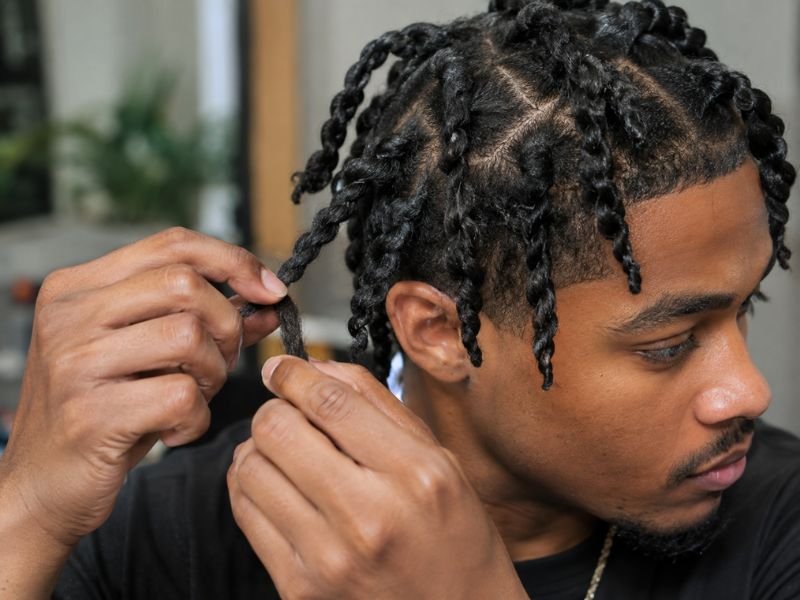
Apply a small amount of twist cream or gel, then wrap one strand over the other repeatedly, working from the root down to the end in one consistent direction. Keep even tension throughout so the twist looks uniform along its full length.
Step 6: Secure the Ends
Seal each twisted end with a small amount of oil, gel, or edge control to prevent unraveling. Some men also use a small rubber band at the tip for the first day or two while the twist sets.
Step 7: Let the Hair Set
Avoid touching, retwisting, or restyling the hair for the first 24 to 48 hours, since fresh twists need time to fully set. Sleeping with a satin bonnet or durag protects the twists while they lock into shape overnight.
How Long Do Two-Strand Twists Last?
Most two-strand twists on natural hair last between one and three weeks before the roots loosen enough to need a redo. Twist size plays the biggest role here: mini twists tend to last closer to three weeks, while thick, chunky twists usually need attention after one to two weeks as new growth pushes the roots looser.
Two Strand Twists vs Other Protective Styles
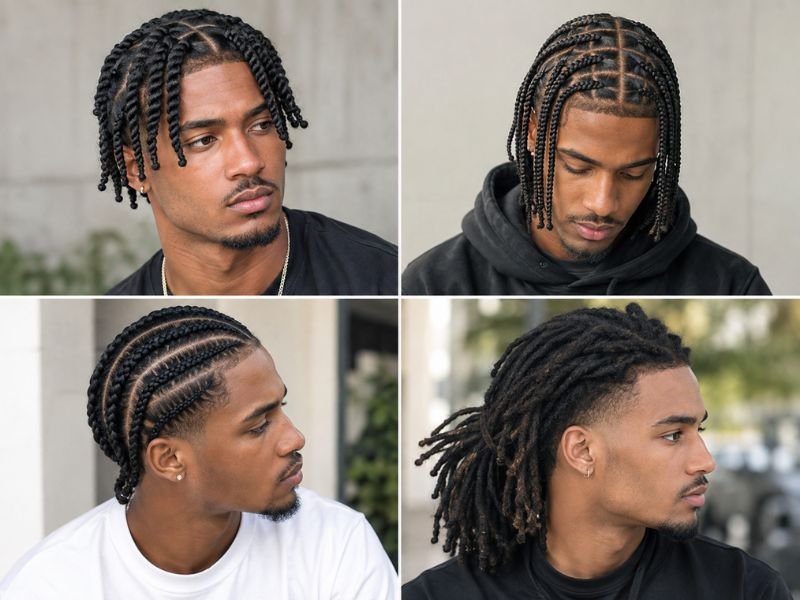
Comparing two-strand twists against other common protective and textured styles clarifies when this technique is the better choice.
| Style | Install Time | Typical Duration | Hair Needed | Standout Feature |
| Two strand twist | 1 to 3 hours | 1 to 3 weeks | Natural hair only, no extensions | Simple technique, works on short to long hair |
| Box braids | 3 to 6 hours | 4 to 8 weeks | Often uses added braiding hair | Longer-lasting, more styling versatility |
| Cornrows | 1 to 3 hours | 1 to 3 weeks | Natural hair only | Flat against the scalp, no bulk |
| Dreadlocks (mature locs) | Ongoing, grown over months | Permanent until cut | Natural hair, starts from twists or coils | Long-term, low daily maintenance once mature |
| Flat twists | 1 to 2 hours | 1 to 2 weeks | Natural hair only | Sleeker, closer to the scalp than standard twists |
Two-strand twists sit in the middle of this range: they last longer than cornrows or flat twists but need more frequent redoing than box braids or mature locs, which makes them a good option for anyone who wants texture without a multi-hour braiding session or a years-long commitment to locing.
How to Maintain Your Twists
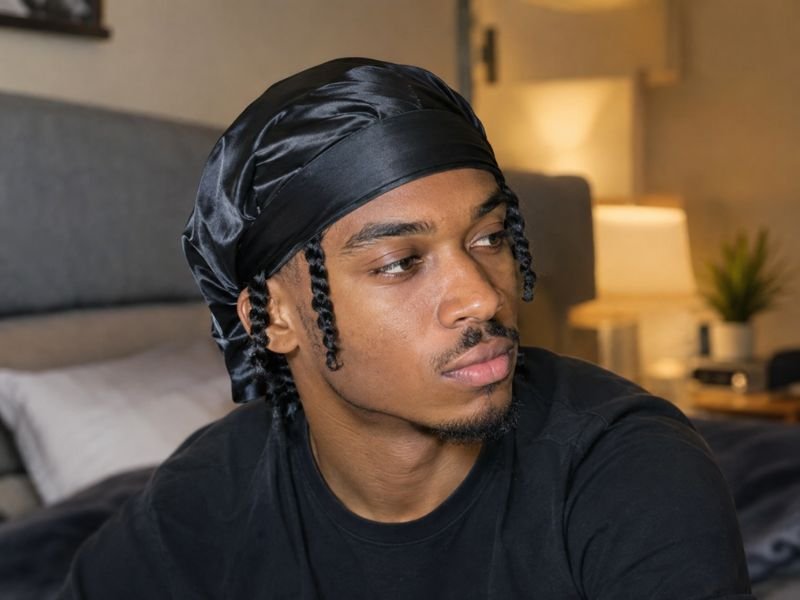
- Sleep with a satin bonnet or durag every night to prevent frizz and friction damage.
- Refresh twists with a light water and leave-in spray mix every few days to keep them moisturized.
- Avoid washing too frequently, since excess water exposure loosens twists faster than normal wear.
- Touch up the roots every 2 to 3 weeks as new growth starts to loosen the base of each twist.
- Use a small amount of oil on the ends if they start to look dry or frizzy between washes.
Common Mistakes to Avoid
- Twisting hair that is too short to hold a secure wrap, leading to twists that fall apart within hours.
- Using too much product, which weighs twists down and leaves them greasy rather than defined.
- Twisting too tightly at the root, which causes tension and can damage the hairline over time.
- Skipping nighttime protection, which leads to frizz and a shorter style life.
- Leaving twists in for too long without a root touch-up, which can cause matting if left unchecked.
Pros and Cons of Two Strand Twists for Men
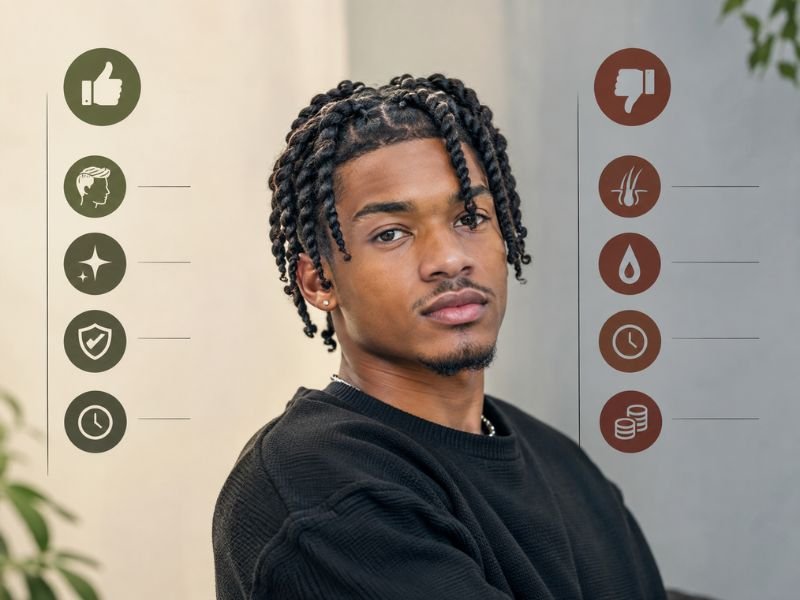
Pros
- Works without extensions or added hair
- Adapts to short, medium, and long hair lengths
- Low daily styling effort once installed
- Doubles as the starting technique for locs
Cons
- Takes real time to install, especially with smaller sections
- Holds poorly on straight hair compared to natural texture
- Needs regular root touch-ups to stay neat
- Tight twisting can cause tension damage if not done carefully
FAQ
How long should hair be for a two strand twist?
Hair needs to be at least 2 to 3 inches long to hold a secure twist, since shorter hair does not have enough length to wrap around itself.
Can you do a two strand twist on straight hair?
Yes, but the twist holds much less securely than on natural or curly hair and usually unravels within a day without heavy-hold product.
How often should twists be redone?
Most twists need a root touch-up every 2 to 3 weeks as new growth loosens the base of each section.
Is a two strand twist for men the same as a twist-out?
No, a twist-out is the looser, fuller curl pattern left behind after twists are taken down, while the twist itself is the tightly wound style worn beforehand.
Do two strand twists damage hair?
Done correctly with light tension and proper moisture, twists are considered a protective style, but twisting too tightly at the root can cause breakage over time.
What products work best for two strand twists?
A moisturizing twist cream or butter at installation, with a light oil to seal the ends, gives the longest-lasting and most defined result.
Can two strand twists turn into locs?
Yes, consistent re-twisting over several months is one of the most common methods used to start locs from scratch.
Conclusion
A two strand twist for men holds best on natural, coily, or curly hair, lasts one to three weeks depending on twist size, and works across short, medium, and long lengths without needing any added hair. Choosing a twist size that matches your hair length and lifestyle, keeping tension light at the root, and sticking to a consistent root touch-up schedule are what separate twists that look sharp for weeks from ones that unravel within days.
Quick Summary Table
| Consideration | Recommendation |
| Best hair type | Natural coily or curly hair |
| Best starting twist size | Medium |
| Minimum hair length | 2 to 3 inches |
| Typical duration | 1 to 3 weeks |
| Root touch-up schedule | Every 2 to 3 weeks |
