

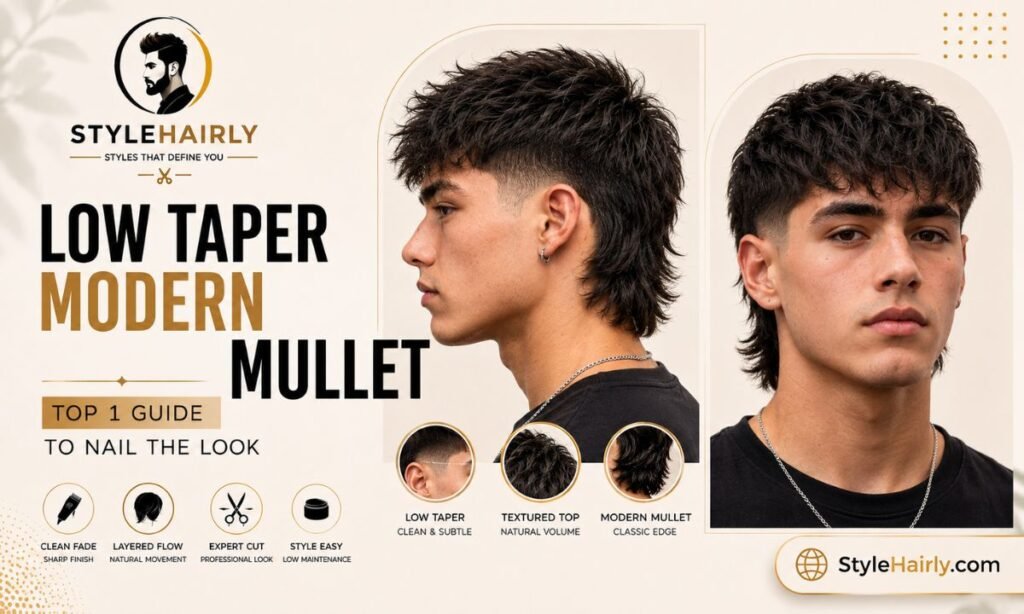
If you’ve seen the low taper modern mullet showing up everywhere from barbershop Instagram pages to street style photos, you’re probably wondering whether it would actually work on your hair and how to ask for it without ending up with something too short on the sides or too wild on top.
The short answer: a low taper modern mullet combines a close, gradual fade that starts low near the ears and neckline with longer, textured hair on top and at the back. It reads as more polished and wearable than the classic 80s mullet because the taper keeps the sides neat while the length on top does the styling work.
This guide covers what the cut actually looks like, which hair types and face shapes tend to suit it best, how to communicate it clearly to your barber, how to style and maintain it, and how it compares to other popular mullet and taper variations.
Low Taper Modern Mullet at a Glance
Best for: Straight, wavy, or loosely curly hair with some natural texture Hair length needed: Medium-to-long on top and back, short on the sides Maintenance level: Moderate regular trims and light daily styling Styling time: A few minutes with the right product Main feature: A subtle, low fade paired with longer, textured length on top and neck
What Is a Low Taper Modern Mullet?
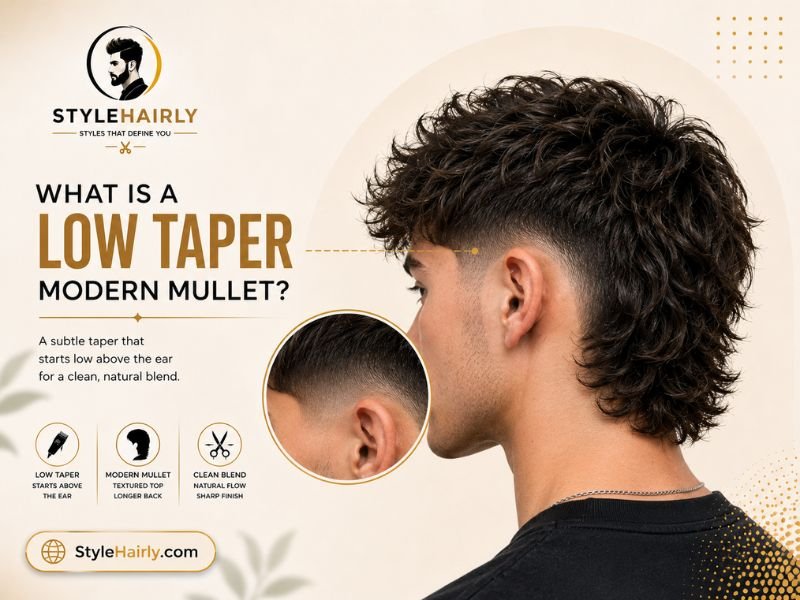
A low taper modern mullet is a contemporary take on the traditional mullet, where the sides and back are gradually shortened using a low taper instead of a high or skin fade, while the top and back sections are left noticeably longer and shaped for movement and texture.
Unlike the exaggerated mullets of past decades, the modern version is deliberately understated on the sides. The taper starts low, typically just above the ears and around the nape, which keeps the transition subtle rather than sharp. This makes the haircut easier to wear in everyday settings like work or school, since it doesn’t look as dramatic as a high-contrast fade paired with long hair.
The defining feature is the contrast between clean, low-maintenance sides and expressive, textured length on top that can be styled forward, back, or left loose depending on the look you want.
Low Taper vs. Mid or High Taper Mullet
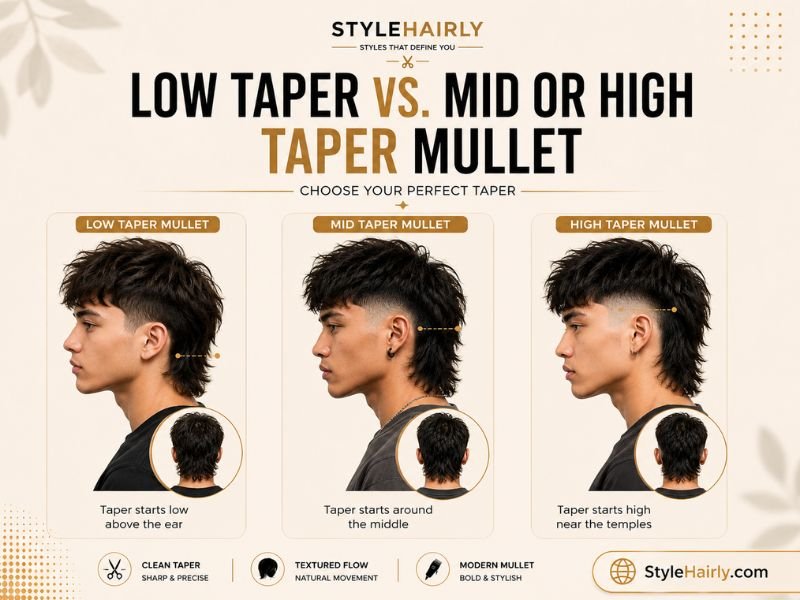
The taper height changes how bold the haircut looks and how much upkeep it needs.
| Taper Type | Fade Starting Point | Overall Look | Maintenance |
| Low taper | Just above the ears/nape | Subtle, blended, office-friendly | Lower — grows out gracefully |
| Mid taper | Mid-way up the sides | Noticeably shorter, more contrast | Moderate |
| High taper/fade | Near the temples | Bold, high-contrast, edgier | Higher — needs frequent touch-ups |
A low taper is generally the better choice if you want a mullet that reads as intentional and modern rather than attention-grabbing, and if you don’t want to visit the barber every two to three weeks to maintain a sharp fade line.
Is a Low Taper Modern Mullet Good for Your Hair Type?
This cut works across a range of hair types, but the amount of natural texture you have will change how much styling effort it takes.
Straight Hair
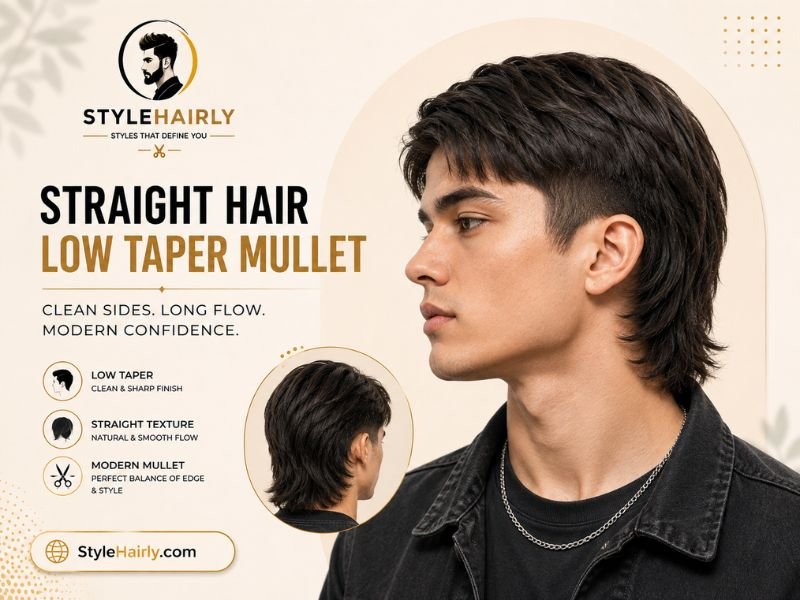
Straight hair can look clean and sleek with this cut, especially on top where the length can be styled into a slight flip or swept-back shape. Straight hair may need more product or a light blow-dry with a round brush to hold volume, since it tends to fall flat without help.
Wavy Hair
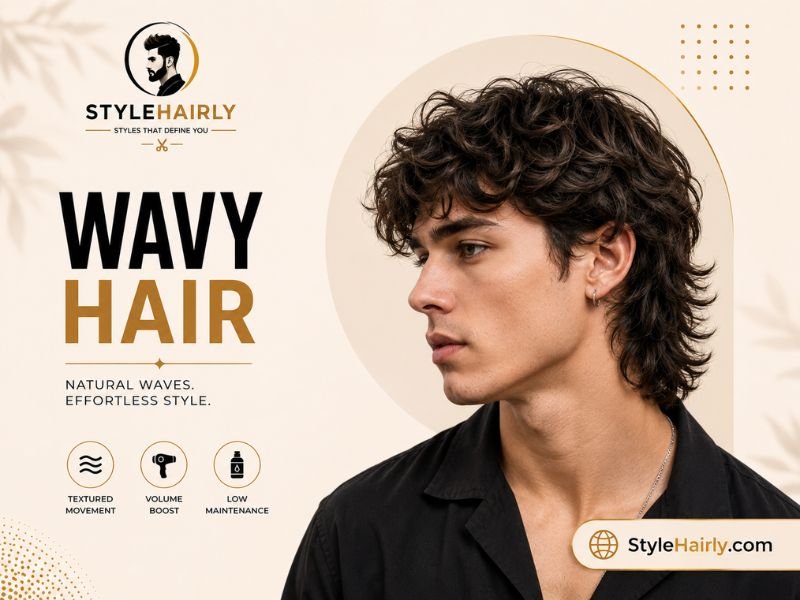
Wavy hair is often considered one of the best matches for a modern mullet because the natural movement adds texture to the top and back sections without much extra styling. A light texturizing product is usually enough to define the waves and keep the shape looking intentional.
Curly Hair
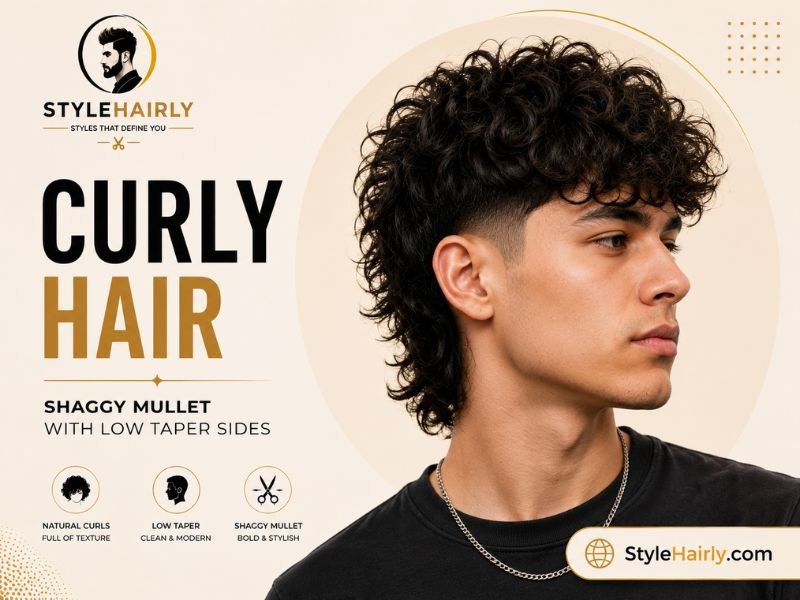
Curly hair can work well too, particularly for a fuller, shaggier mullet silhouette, but the taper on the sides may need more frequent maintenance since curls can shrink and reveal more scalp than straight hair at the same length. Talk to your barber about leaving slightly more length on the sides to account for shrinkage.
Fine Hair
Fine hair can still carry this style, but volume becomes the main consideration. Shorter layers on top combined with a volumizing product tend to work better than letting the hair grow very long and heavy, which can flatten fine strands.
Thick Hair
Thick hair naturally supports the shaggy, voluminous look associated with the modern mullet. The main consideration is regular thinning or point-cutting on top so the length doesn’t become bulky or hard to style.
Which Face Shapes Suit a Low Taper Modern Mullet?
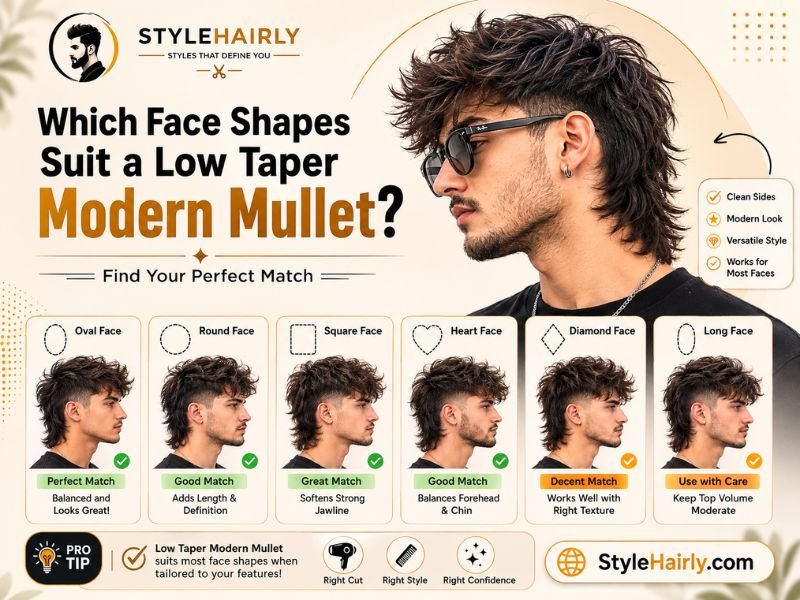
Face shape mainly affects how the top layers should be cut and styled, rather than whether the cut will work at all.
- Oval face: Most versions of this cut tend to work well, since an oval face shape doesn’t require much correction from the hairstyle.
- Round face: Height and volume on top, along with shorter sides, can help elongate the face. Avoid heavy fringe that adds width at the forehead.
- Square face: Softer, textured layers on top can balance a strong jawline. A slightly longer top with movement works better than a very structured, blunt shape.
- Long face: Keeping some length and fullness on the sides, rather than a very low, close taper, can help avoid making the face look longer. A fringe or slight forward styling on top can also help.
- Heart-shaped face: Volume is often best kept lower and at the back rather than stacked high on top, to avoid emphasizing a wider forehead.
These are general tendencies rather than fixed rules a skilled barber can adjust layer placement and length to work with most face shapes.
What to Tell Your Barber
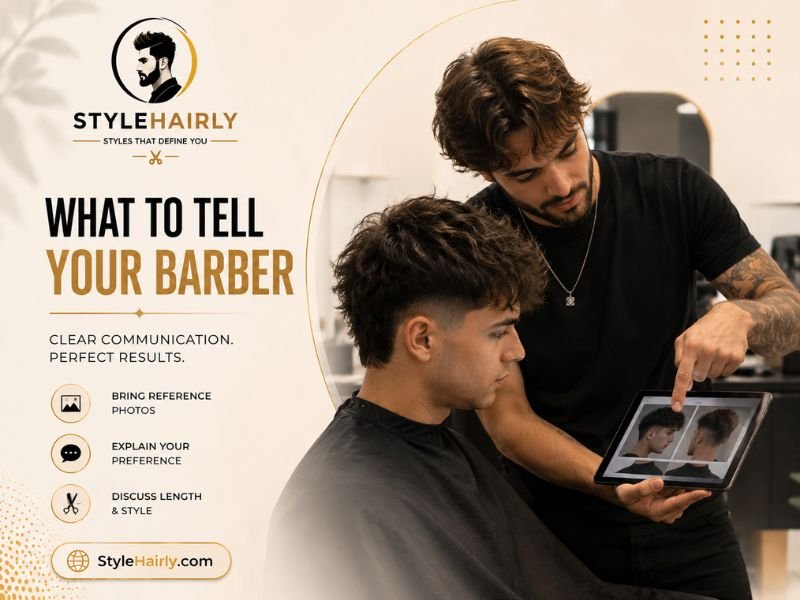
Being specific about length, taper height, and top texture will get you a much more predictable result than simply asking for “a mullet.”
- Taper height: Say clearly that you want a low taper, and point to roughly where you want the fade to start (just above the ear is a good reference point).
- Side and back length: Specify how short you want the sides a low taper can range from very close to a slightly longer, softer blend.
- Top length: Bring a reference photo if possible, since “long on top” can mean very different things to different people.
- Back length: Decide whether you want a subtle mullet with just a bit of extra length at the nape, or a more noticeable, longer back section.
- Texture preference: Mention whether you want the top thinned out for a lighter, shaggier look or left thicker for more volume.
- What to avoid: If you don’t want a hard fade line or an overly dramatic length difference, say so directly this is the detail most likely to get lost without clear communication.
How to Style a Low Taper Modern Mullet
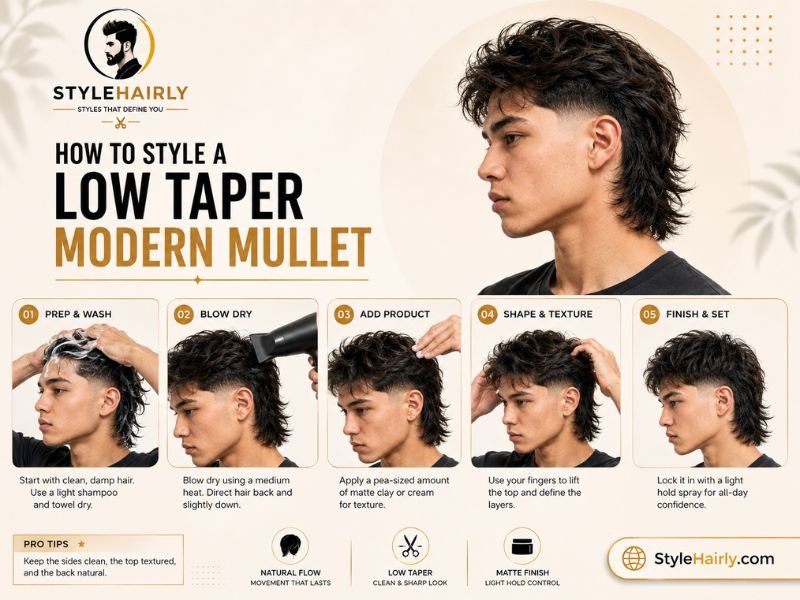
Styling this cut is fairly quick once you know your hair’s natural tendencies.
- Start with damp, towel-dried hair. Avoid applying product to soaking wet hair, since it won’t distribute evenly.
- Apply a lightweight styling product. A texturizing paste or sea salt spray works well for wavy or curly hair, while a light pomade or cream suits straight hair that needs more control.
- Rough-dry for volume. Using a blow dryer on a low-to-medium heat setting while lifting the roots with your fingers helps build volume on top. Always use a heat protectant if you’re applying direct heat.
- Shape the top. Push hair back, to the side, or leave it loose depending on the day this is one of the advantages of the longer top length.
- Finish and set. A small amount of matte clay or a light-hold spray helps the style last through the day without looking stiff or overly polished.
Maintenance and Growing It Out
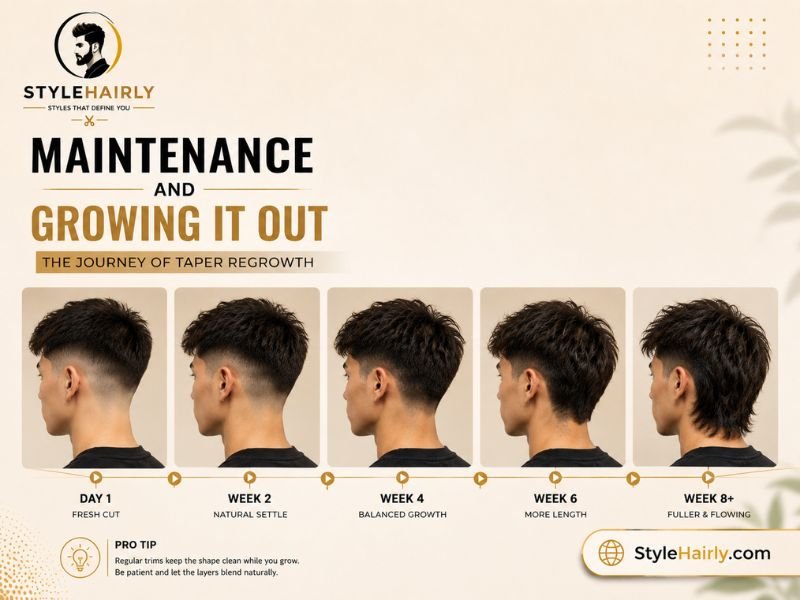
The low taper needs more frequent attention than the top length does. Because the taper is subtle, it tends to grow out more gracefully than a high, sharp fade, but the sides can still look uneven if left too long between trims.
Most people find that touching up the taper every three to five weeks keeps the shape clean, while the top and back length can go longer between cuts since the goal is to let it grow. If you’re intentionally growing the top out for a fuller mullet, tell your barber so they only trim split ends and shape the perimeter, rather than cutting length off the top layers.
Pros and Cons
Pros
- More versatile and workplace-appropriate than a high-fade mullet
- Grows out with less visible awkwardness than a high taper
- Works with a range of hair textures, from straight to curly
- Offers styling flexibility can be worn slicked back, tousled, or natural
Cons
- The top length still requires regular product and some styling time
- Uneven growth between the sides and top can require more frequent trims to keep the shape balanced
- A subtle taper can be harder for less experienced barbers to execute cleanly compared to a simple buzz or fade
Low Taper Modern Mullet vs. Classic Mullet
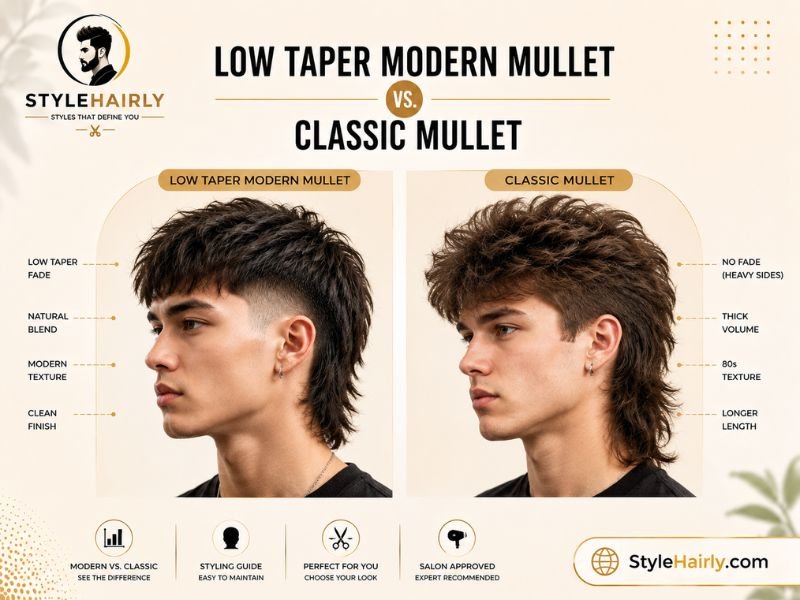
The classic mullet, often associated with 1980s style, typically features a much sharper length difference short, sometimes choppy hair on top and sides with a long, flowing back section. The low taper modern mullet softens this contrast considerably.
| Feature | Classic Mullet | Low Taper Modern Mullet |
| Side length | Often short and choppy, minimal blending | Smoothly tapered, low fade |
| Top length | Shorter, less structured | Longer, layered for texture |
| Back length | Very long, often dramatic | Moderate, shaped rather than left raw |
| Everyday wearability | More costume-like | Blends into everyday and professional settings |
If you like the concept of a mullet but want something you can wear to work without much comment, the low taper modern version is generally the more practical choice.
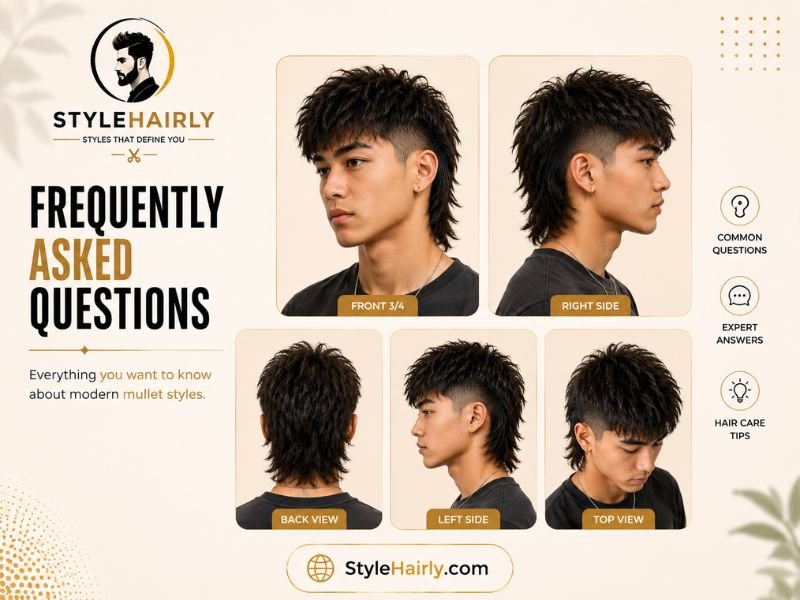
Frequently Asked Questions
Is a low taper modern mullet good for thin hair?
Yes, but volume needs extra attention. Keeping the top layers shorter rather than very long, and using a volumizing product, helps prevent thin hair from looking flat or weighed down.
Does a low taper mullet work on curly hair?
It can work well, especially for a fuller, textured look, though the taper on the sides may need more frequent trims since curls shrink up and can reveal scalp sooner than straight hair at the same length.
What face shape suits a low taper modern mullet best?
Oval and round face shapes tend to have the most flexibility, but layer placement and top volume can be adjusted for square, long, and heart-shaped faces as well.
Is a low taper modern mullet high maintenance?
It’s moderate. The taper needs touch-ups roughly every three to five weeks, and the top requires a few minutes of daily styling, but it’s generally easier to maintain than a high-contrast fade mullet.
How do I style a low taper modern mullet at home?
Apply a lightweight styling product to damp hair, rough-dry for volume while lifting the roots, then shape the top back, to the side, or loose depending on the look you want.
What should I ask my barber for?
Be specific about where you want the taper to start, how short you want the sides, how much length to keep on top and at the back, and whether you want a thinned, shaggy texture or fuller volume.
How long does the taper last before it needs reshaping?
Most people need a touch-up every three to five weeks to keep the taper looking clean, though this can vary based on how fast your hair grows.
Can I grow a low taper modern mullet from a shorter haircut?
Yes. Ask your barber to start tapering the sides low while leaving the top and back to grow out gradually, and get regular trims focused only on shaping rather than cutting length.
Conclusion
A low taper modern mullet works because it takes the boldest part of a traditional mullet — the length contrast — and pairs it with a fade that’s subtle enough to wear anywhere. It suits a wide range of hair types, with wavy and thick hair generally requiring the least styling effort, while fine and curly hair benefit from a few small adjustments in length and product choice.
If you’re deciding whether to try it, the clearest path is being specific with your barber about taper height, top length, and the texture you want, then committing to touch-ups every few weeks to keep the sides looking intentional while the top grows into its shape.

3 thoughts on “Low Taper Modern Mullet: Ultimate Style Guide (2026)”