

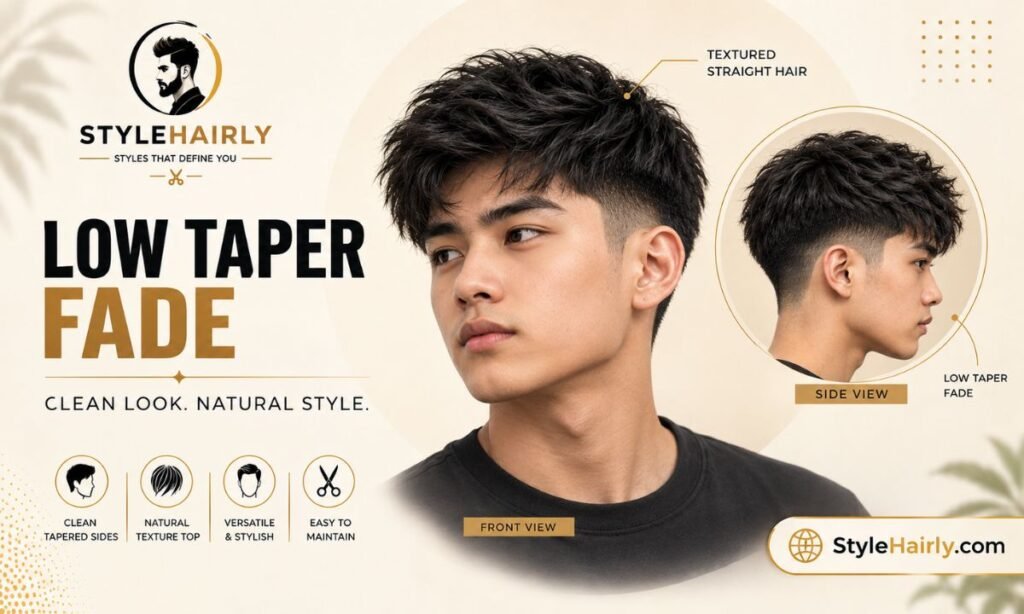
Asian hair tends to be straight, thick, and fast growing, which is exactly why a low taper fade works so well on it. The subtle blend at the sides keeps the strength and density of the hair intact on top while still giving a clean, controlled finish around the ears and neckline.
This guide covers how the low taper fade performs across different Asian hair textures and lengths, plus specific variations like textured tops, middle parts, blowouts, quiffs, and undercuts, so you can pick the version that fits your hair and your routine, along with real maintenance timelines and product guidance.
What a Low Taper Fade on Asian Hair Actually Is
A low taper fade is a haircut where the hair gradually shortens from full length on top down to a very short length near the skin, but that shortening only happens in a narrow band starting just above the ear and around the back of the neck. There is no hard line anywhere in the cut. The change in length is spread out slowly, so the shift from long to short looks smooth rather than stepped. On Asian hair this matters more than it does on finer or thinner hair types, because Asian hair is typically dense and grows in a strong, uniform direction. A blunt cut on hair this thick can end up looking heavy and box-shaped along the sides, so the gradual taper solves that by thinning the sides slowly instead of all at once, keeping the head shape proportional while leaving the crown and top untouched.
Hair Type and Texture Fit
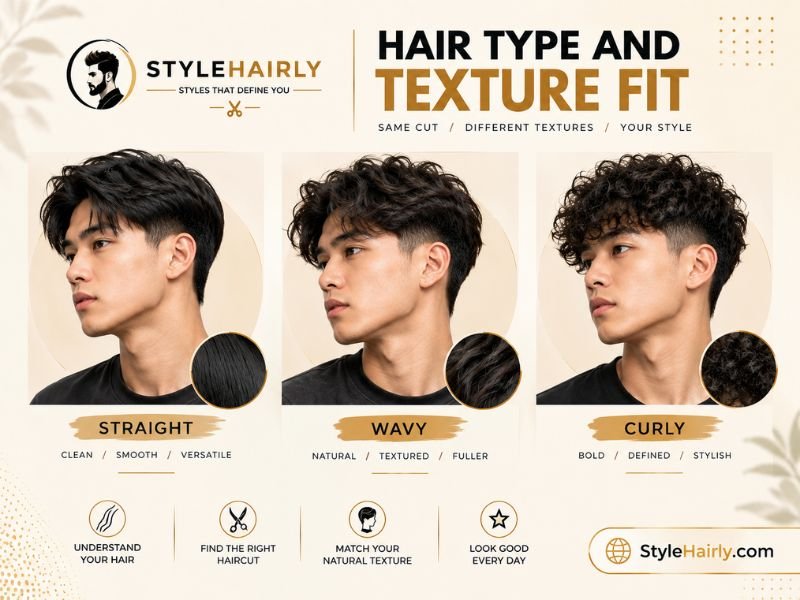
Straight Asian hair holds a low taper fade the cleanest since there is no curl pattern to blur the transition line. Curly and wavy textures blend the fade more softly. The table below breaks down how the approach usually shifts by texture and density.
| Asian Hair Type | Best Taper Approach | Recommended Top Style |
| Very straight | Soft, low blend | Textured top or middle part |
| Thick straight | Controlled taper with weight removal | Quiff or textured top |
| Fine straight | Light taper, minimal thinning | Layered top for added fullness |
| Slightly wavy | Soft low blend | Textured fringe or natural flow |
| Curly | Low taper with weight kept above it | Defined curls, minimal thinning |
| Long on top | Very gradual, low placement | Flowing or swept top |
Thick density is generally an advantage here since it gives the fade something substantial to work with, while very fine Asian hair may need extra texturizing to avoid looking sparse once the sides are shortened.
Face Shape Suitability
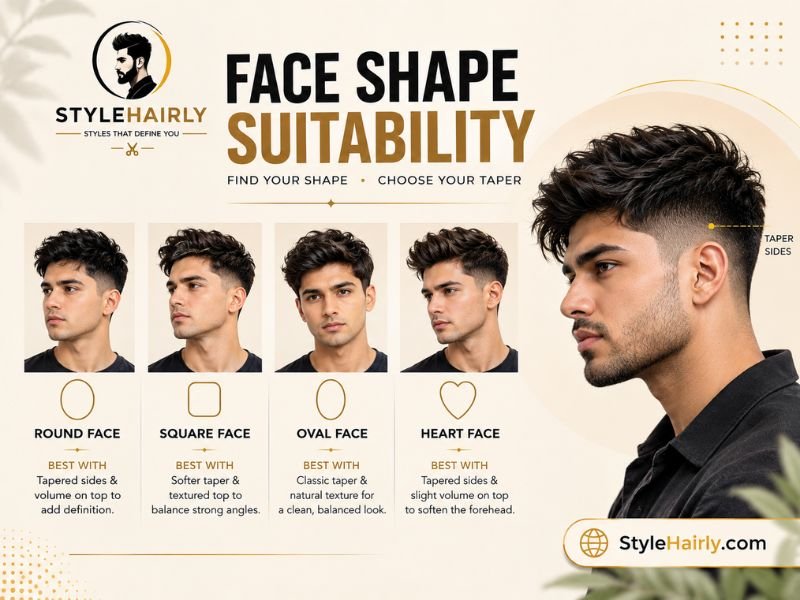
A low taper fade works across most face shapes because the sides stay close to the head without adding width, and the length kept on top can be adjusted to balance the face. Round faces often benefit from more height and texture on top since that adds visual length. Square faces tend to look good with a slightly textured, less blocky top that softens strong jawlines. Long or oval faces generally have the most flexibility and can wear the top shorter, longer, textured, or swept without it looking disproportionate. Heart-shaped faces often do well with a fuller top and a lower, softer fade line rather than a high-contrast one, since that keeps attention from concentrating too heavily near the temples.
Styling and Maintenance Timeline
Daily styling usually starts with towel-drying the hair to slightly damp, applying a small amount of matte paste, clay, or cream depending on the desired finish, then either air-drying, finger-styling, or blow-drying with a round brush for lift. A heat protectant is worth using whenever a blow dryer is part of the routine.
For upkeep, most people clean up the taper line around the temples and neckline every 2 to 3 weeks, since Asian hair often grows quickly enough to blur that edge before then. A full reshape of the top, where length and texture are adjusted, is usually only needed every 4 to 6 weeks. If you are growing the top out for a longer style, tell your barber to maintain the taper only and leave the top alone until it reaches your target length.
What to Tell Your Barber
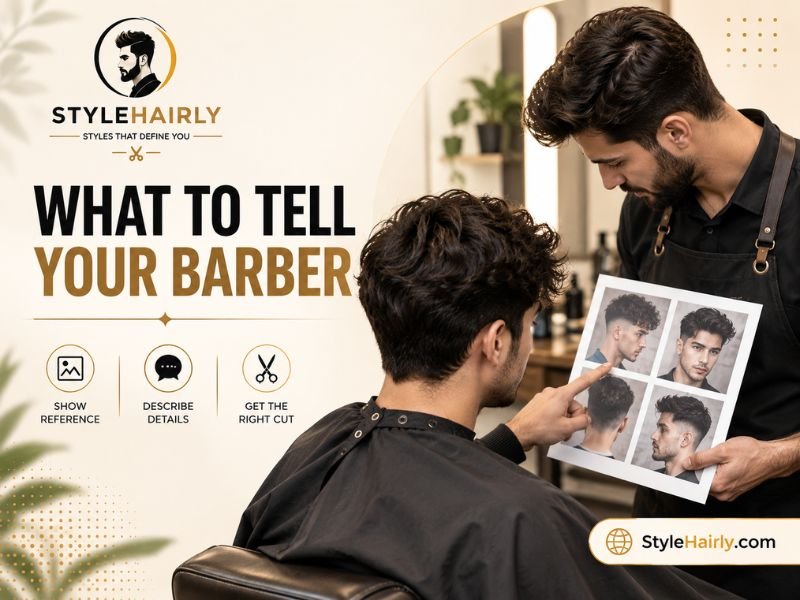
Instead of just saying “give me a low taper,” describe how you want the top and sides to behave together. A useful way to phrase it:
“Keep the taper low around my temples and neckline, and preserve as much density as possible on top. I want [textured top / middle part / blowout / quiff / comb over / longer top] with a soft, gradual transition, not a hard line.”
Then be specific about the top:
- Textured fringe for a casual, everyday look
- Middle part for a longer, relaxed finish
- Blowout for volume and height
- Quiff for a more structured, front-focused shape
- Comb over for a polished, professional look
- Long on top for maximum styling flexibility
If your hair is very thick, mention whether you want bulk reduced through internal thinning. Avoid asking for heavy thinning without discussing how it will affect the shape, since over-thinning straight hair can make the ends look weak.
Pros and Cons
Pros
- Keeps volume and density on top, which suits naturally thick Asian hair
- Grows out more gracefully than a mid or high fade since the transition sits low
- Works with straight, wavy, or curly textures without requiring a perm
- Adapts to many top styles, from short and textured to long and swept
Cons
- The fade line needs a touch-up every 2 to 3 weeks to stay sharp, especially with fast hair growth
- Straight hair can look flat on top without some texturizing
- Curly hair softens the fade line, so it will never look as crisp as it does on straight hair
- Longer top variations require more daily styling time than shorter ones
Common Mistakes to Avoid
- Taking the taper too high, which removes the natural density that makes the style look full
- Ignoring hair density and asking for the same fade height regardless of how thick the sides are
- Letting the top get too heavy, which can cause straight hair to collapse flat over the forehead
- Over-thinning straight hair, which can leave the ends looking weak or uneven
- Using too much product on already dense hair, which weighs it down instead of adding texture
Low Taper Fade vs Mid Taper Fade
| Feature | Low Taper Fade | Mid Taper Fade |
| Fade starting point | Just above the ear | Around the temple |
| Visual contrast | Subtle, soft transition | More noticeable contrast |
| Best for | Thick tops that need minimal side reduction | Very voluminous or bulky sides |
| Regrowth visibility | More forgiving as it grows out | Shows growth sooner near the temple |
| Face shape flexibility | Works with most face shapes | Best on rounder or fuller faces needing more taper |
A low taper fade is generally the better starting point if you are new to fades, since it is more forgiving as it grows out and suits a wider range of face shapes. A mid taper fade is worth asking about if your sides feel unusually thick or you want more definition near the temple.
Products That Work Well With This Cut
| Product | Best For | Finish |
| Matte clay | Thick, straight hair | Textured, non-shiny |
| Styling cream | Everyday natural looks | Soft, low hold |
| Volumizing mousse | Blowouts and quiffs | Lifted, full |
| Light pomade | Comb overs | Controlled, sleek |
| Curl cream | Curly Asian hair | Defined, non-frizzy |
| Texture powder | Fine hair needing lift | Dry, subtle volume |
| Heat protectant | Any blow-drying step | Protected, less damage |
Low taper fade asian hair men
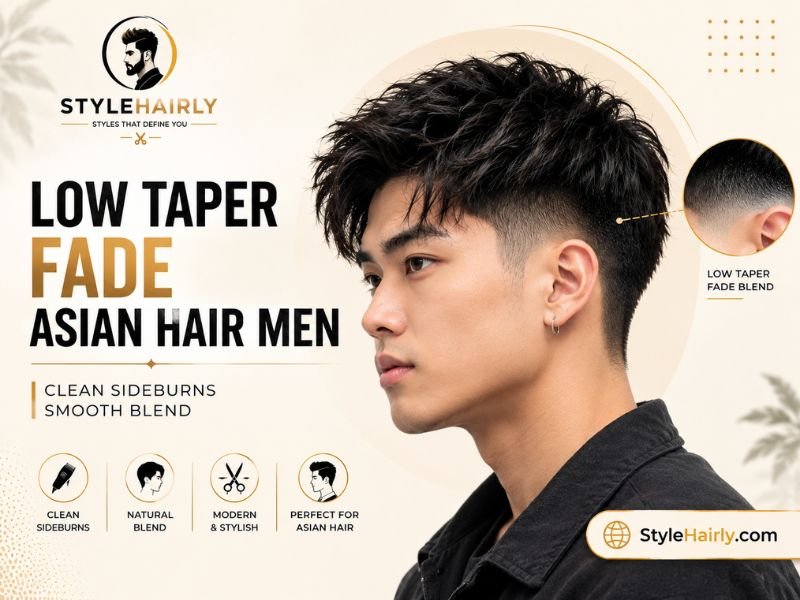
A low taper fade is one of the most requested cuts for Asian men because it keeps length and volume on top while gradually shortening the hair only near the hairline and ears. This makes it a low-maintenance option for thick, straight hair that would otherwise look bulky if cut too short all over, and it grows out more gracefully than a mid or high fade since the transition line sits lower.
Best for: Straight to wavy Asian hair with medium to high density. Styling tip: Apply a dime-sized amount of matte paste to damp hair and shape with fingers rather than a comb for a more natural finish. Maintenance: Touch up the taper every 2 to 3 weeks, full trim every 4 to 6 weeks.
Asian low taper fade with textured top
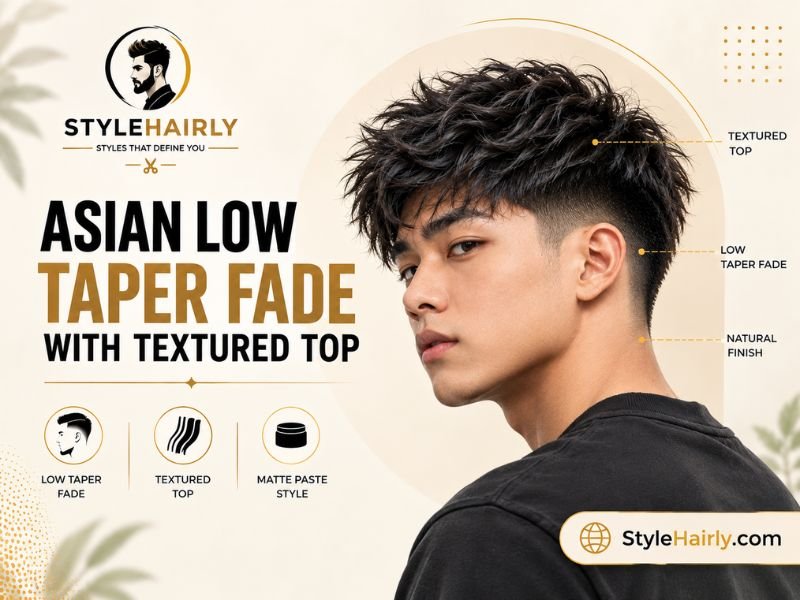
A textured top on a low taper fade means point-cutting or texturizing shears are used to remove weight from thick, straight strands so the hair moves instead of sitting flat. This is especially useful for Asian hair because the natural density can make a solid, blunt top look heavy, and texturizing breaks that up into a slightly matte, piecey finish.
Best for: Thick, straight Asian hair that looks heavy when left blunt. Styling tip: Work matte clay through damp hair and pinch small sections upward to define separation. Maintenance: Reshape the textured layers every 4 to 6 weeks, clean the taper every 2 to 3 weeks.
Low taper fade asian hair straight hair
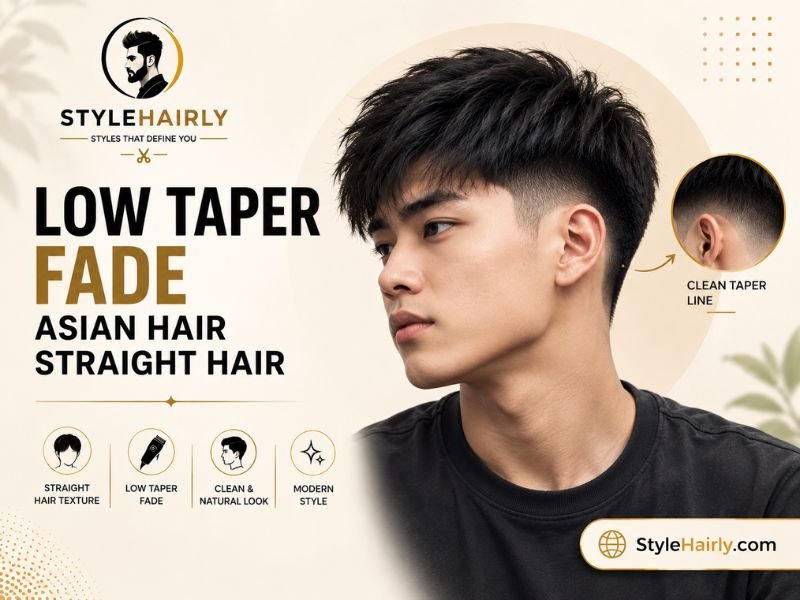
Straight hair holds the shape of a low taper fade cleanly because there is no natural curl pattern pulling the style in different directions, so the fade line stays crisp longer than it would on curlier textures. The trade-off is that straight hair can look flat on top if left too long without any layering.
Best for: Naturally straight, medium to high density hair. Styling tip: Use a lightweight styling cream on damp hair to keep control without adding unwanted shine. Maintenance: Every 2 to 3 weeks for the taper, every 5 to 6 weeks for a full reshape.
Low taper fade asian hair straight
Keeping straight Asian hair looking sharp with a low taper fade comes down to trim frequency and how much length is left on top, since straight strands do not naturally add volume the way wavy or curly hair does. Most barbers add light texturizing on top to prevent a flat, block-like appearance.
Best for: Straight hair that tends to sit flat without added texture. Styling tip: Blow-dry with a round brush at the roots before applying product to build lift first. Maintenance: Ask for a taper refresh every 2 to 3 weeks to keep the line from blurring.
Asian Low Taper Middle Part
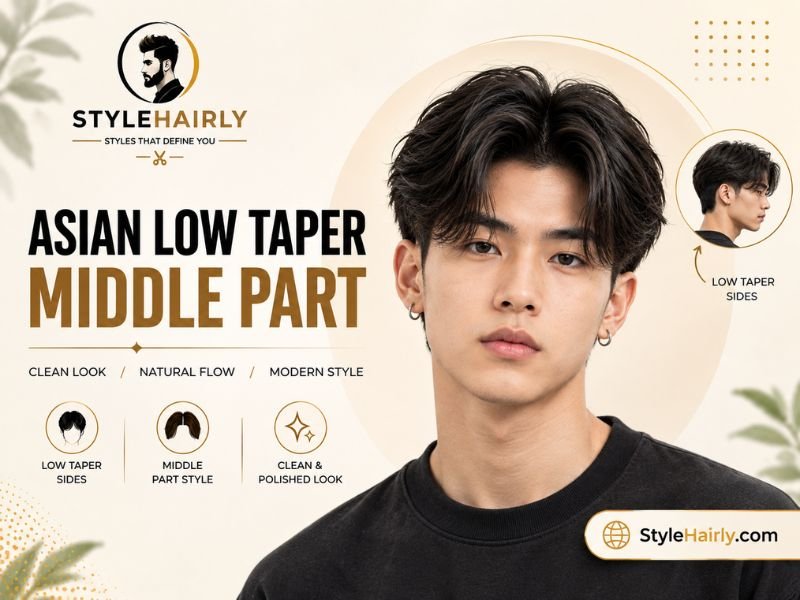
The middle part low taper fade splits the top section down the center and lets the hair fall naturally on both sides, which pairs well with straight, thick Asian hair because the part holds cleanly without much product. It works best once the top length reaches at least the eyebrows.
Best for: Medium to long, straight or slightly wavy top hair. Styling tip: Create the part while hair is damp using a fine-tooth comb, then blow-dry each side away from the center. Maintenance: Maintain the taper every 2 to 3 weeks and trim the front layers only when they start blocking the eyes.
Mid taper fade Asian hair
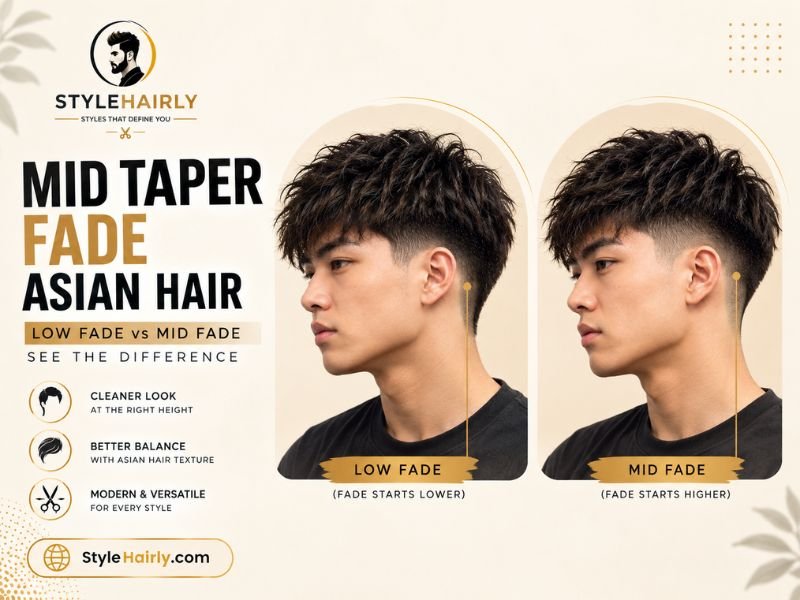
A mid taper fade starts the blend slightly higher than a low fade, usually around the temple instead of just above the ear, creating a bit more contrast. On Asian hair this can help balance out very thick or voluminous tops by visually reducing bulk along the sides.
Best for: Very thick or voluminous sides that need more visible reduction. Styling tip: Ask your barber to blend gradually from the temple rather than creating a sharp step. Maintenance: Every 2 to 3 weeks, since the higher starting point shows regrowth sooner than a low fade.
Low taper fade asian hair female
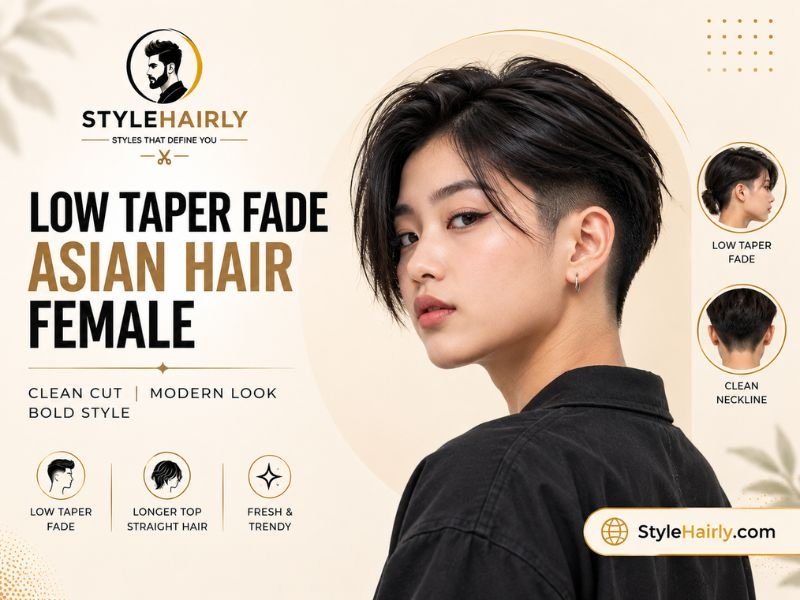
A low taper fade works on Asian women’s hair the same way it works on men’s hair, keeping length and volume through the crown while gradually tapering the sides and back. It is often paired with longer top sections styled straight, waved, or pulled back, which gives more versatility than a fully shaved undercut.
Best for: Medium to long top lengths on straight or wavy hair. Styling tip: Use a lightweight serum on the lengths to add shine without weighing down the taper area. Maintenance: Refresh the taper every 3 to 4 weeks, trim the top based on desired length.
Low fade
A low fade is a fade where the hair transitions from a very short length to longer hair starting just above the ear, rather than higher up near the temple, keeping most of the head covered in longer hair. This makes it one of the more subtle and versatile fade options for a range of face shapes.
Best for: Anyone wanting a subtle change without dramatically reducing overall volume. Styling tip: Keep styling on top simple since the point of a low fade is a soft, understated finish. Maintenance: Every 2 to 3 weeks to keep the transition from blurring into an ungroomed look.
Textured Top Asian Low Taper Fade
Texture on top of a low taper fade is created by cutting the hair at varying lengths and using thinning shears to remove internal weight, which prevents the classic heavy, block-like top common on thick, straight Asian hair. The result is visible separation and lift that can be styled with fingers alone.
Best for: Thick straight hair that needs weight removed without losing length. Styling tip: Apply product to towel-dried hair, not soaking wet hair, for better hold. Maintenance: Reshape texture every 4 to 6 weeks, taper touch-up every 2 to 3 weeks.
Korean Inspired Low Taper Fade
Korean-inspired hairstyles often combine a soft, low taper fade with a fuller, slightly longer top styled forward or with a natural side part, sometimes called a two-block style. This look relies on the low fade to keep the sides neat while the top carries most of the visual interest through length and natural shine.
Best for: Straight or slightly wavy hair with natural shine. Styling tip: Use a lightweight cream and blow-dry the fringe forward or slightly to the side, avoiding heavy hold products. Maintenance: Keep the neckline and temples tidy every 2 to 3 weeks while preserving top length.
Middle Part Low Taper Fade Asian Hair
Maintaining a middle part on a low taper fade means training the top section to fall evenly on both sides, which usually takes a few weeks of consistent parting. Straight Asian hair adapts to this fairly quickly since it lacks the volume that can push a part out of place.
Best for: Straight hair that has been grown past the eyebrows. Styling tip: Apply a light-hold cream while damp, then air-dry or diffuse to avoid disturbing the part. Maintenance: Trim the front layers only when they start to lose the deliberate part shape.
Blowout Low Taper Fade for Asian Hair
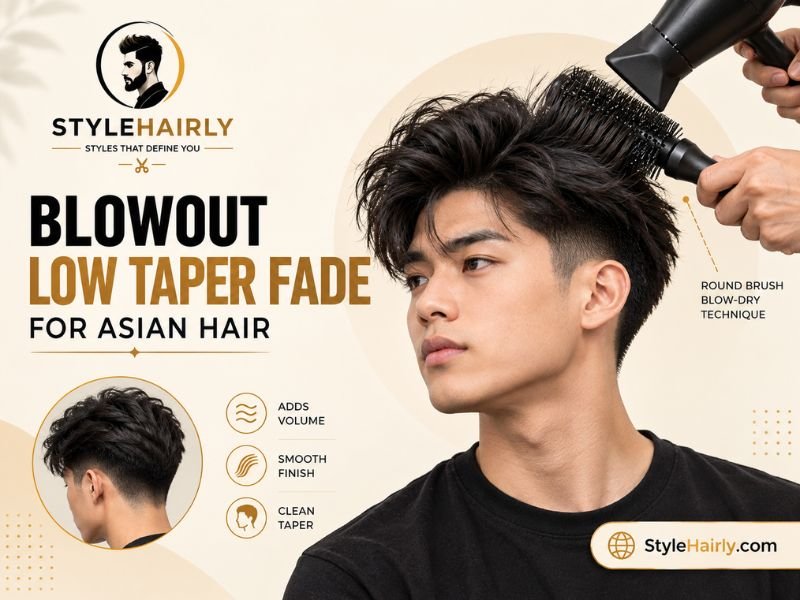
A blowout on top of a low taper fade adds height and volume through blow-drying with a round brush, lifting the roots as the hair dries. This is useful for thick, straight Asian hair that can sit flat, since it builds lift without needing a perm.
Best for: Thick, straight, or slightly wavy hair wanting more volume. Styling tip: Apply volumizing mousse to damp roots before directing hair upward and away from the face with the dryer. Maintenance: Refresh the taper every 2 to 3 weeks and keep products lightweight so the blowout does not turn heavy.
Straight Hair Low Taper Fade
For naturally straight hair, a low taper fade tends to need less daily maintenance than it does on wavy or curly textures, since the top falls into place without much manipulation. The main decision is how much length and texture to keep so the top does not look flat.
Best for: Straight hair with medium to high density. Styling tip: Choose a light cream for a natural look or matte paste if more texture is wanted. Maintenance: Every 2 to 3 weeks for the taper, ask your barber not to narrow the sides too much on thinner heads.
Textured Fringe Low Taper Fade
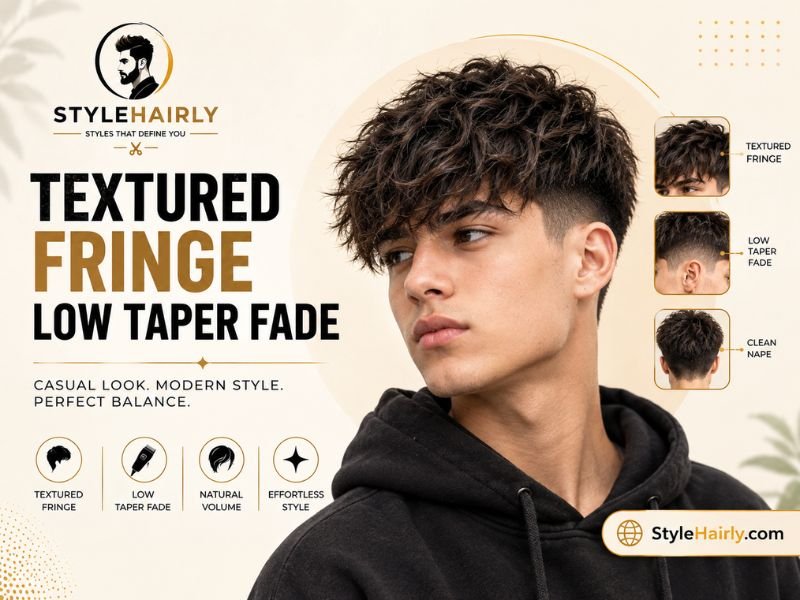
A textured fringe paired with a low taper fade brings the top hair forward over the forehead, with texturizing used to break the fringe into separated pieces rather than one solid curtain. This works well on straight Asian hair because the natural weight helps the fringe sit down and stay in place.
Best for: Straight to slightly wavy hair, medium density. Styling tip: Apply matte paste sparingly and dry with fingers rather than a brush to preserve the piecey look. Maintenance: Trim the fringe every 3 to 5 weeks to keep it above the eyes.
Soft Mullet-Inspired Low taper fade Asian
A soft mullet-inspired low taper fade keeps the classic low fade at the sides while letting the back grow slightly longer, creating a subtle mullet silhouette without going as extreme as a traditional mullet. This works on Asian hair because the thickness at the back holds shape without a perm.
Best for: Hair that grows in well at the nape and back. Styling tip: Keep the top textured and let the back flow naturally rather than using heavy product. Maintenance: Shape the back every 5 to 7 weeks, clean the taper every 2 to 3 weeks.
Curly Low taper fade Asian hair
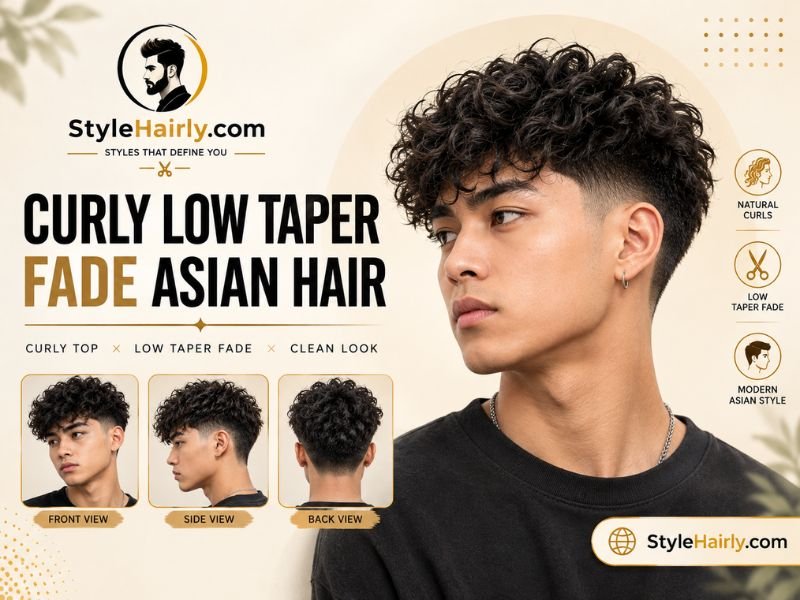
Curly Asian hair can carry a low taper fade, though the curl pattern makes the fade less crisp and more blended compared to straight hair, since curls naturally soften hard lines. The top usually needs extra length left in to let the curl pattern show without shrinkage making it look uneven.
Best for: Naturally curly or strongly wavy Asian hair. Styling tip: Use a curl-defining cream on damp hair and scrunch gently, then air-dry or diffuse. Maintenance: Avoid excessive thinning and reshape the curls every 5 to 7 weeks.
Long on Top Low taper fade Asian
Keeping the top long while fading the sides low creates strong contrast, which works well on thick, straight Asian hair that can support extra length without looking unmanaged. This version needs more daily styling and more frequent trims to keep the length balanced against the fade.
Best for: Thick hair and anyone who wants multiple styling options from one cut. Styling tip: Use a lightweight mousse for volume before blow-drying into your preferred direction. Maintenance: Keep the taper clean every 2 to 3 weeks while letting the top grow until it hits your target length.
Asian Low Taper Fade Comb Over
A comb over with a low taper fade directs the top hair to one side using a defined part, then blends into the low fade beneath it. This looks sharp on straight Asian hair because the strands hold a combed direction cleanly with just light product, making it a more polished, professional-leaning option.
Best for: Straight, dense, medium-length top hair. Styling tip: Blow-dry the top diagonally, then finish with a small amount of light pomade. Maintenance: Taper every 2 to 3 weeks, reshape the top every 5 to 6 weeks.
Quiff Low Taper Fade Asian Style
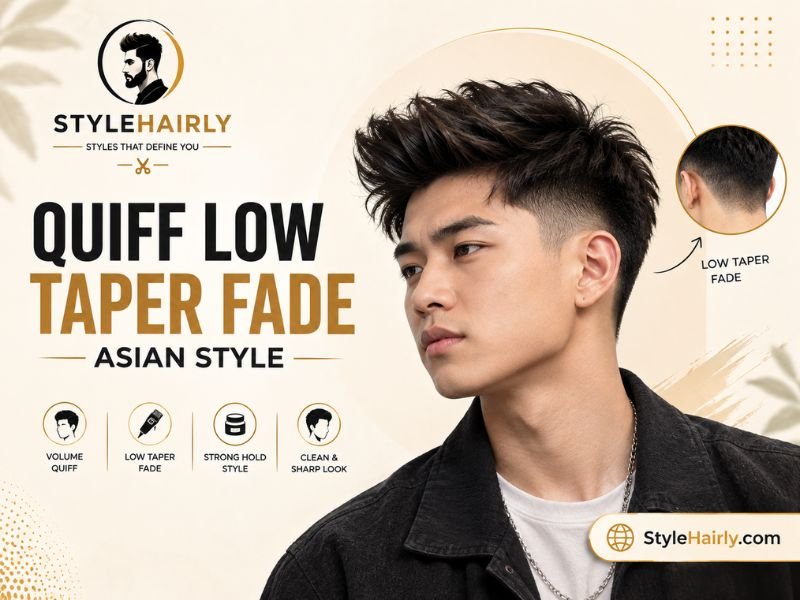
A quiff on top of a low taper fade involves brushing the front section up and back to create height at the hairline, then letting it fall back slightly. This requires enough length on top, generally two to three inches, and the natural density of Asian hair helps the quiff hold its shape once trained.
Best for: Thick, straight Asian hair with at least two inches on top. Styling tip: Apply volumizing mousse to damp roots, then blow-dry upward and slightly backward. Maintenance: Keep the front layers shaped every 4 to 5 weeks so they do not become heavy and flat.
Low taper fade Asian hair Undercut
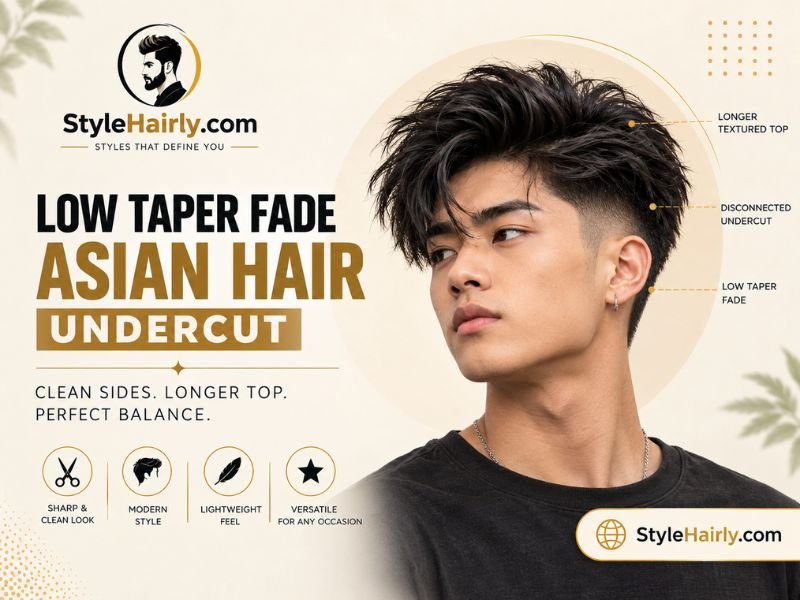
An undercut version of the low taper fade uses a much shorter, sometimes disconnected section at the sides and back, paired with noticeably longer hair on top, creating stronger contrast than a standard blended taper. Because the undercut portion grows out more visibly, it typically needs touch-ups more often than a soft taper.
Best for: Thick hair and anyone who prefers stronger visual contrast. Styling tip: Push the top backward or keep it textured to emphasize the contrast with the shorter sides. Maintenance: Sides every 2 to 3 weeks, top reshape every 5 to 7 weeks.
Frequently Asked Questions
Is a low taper fade good for thick Asian hair?
Yes, a low taper fade is often one of the better choices for thick Asian hair because it reduces bulk gradually at the sides instead of cutting the whole head short, which can help prevent a triangular or overly wide silhouette.
Does a low taper fade work on straight hair without a perm?
Yes, a low taper fade does not require a perm on straight hair. Length, texturizing, and light styling products can create movement and separation on top without needing to add curl.
How often do I need a trim to maintain a low taper fade on Asian hair?
Most people need the taper touched up every 2 to 3 weeks, since Asian hair often grows fast enough to blur the fade line before then, with a full reshape of the top every 4 to 6 weeks.
Can curly Asian hair get a low taper fade?
Yes, curly Asian hair can get a low taper fade, though the fade line will look softer and less sharp than on straight hair because curls blend the transition naturally.
What should I tell my barber for a low taper fade with Asian hair?
It helps to specify the top length you want to keep, whether you prefer a textured or smooth finish, and how low you want the fade to start, since “low” can be interpreted slightly differently between barbers.
Is a low taper fade high maintenance?
It is generally lower maintenance than mid or high fades because the transition sits close to the hairline and grows out more subtly, though the top styling requirements vary depending on which version you choose.
What is the difference between a low taper fade and a low fade?
A taper fade blends length very gradually with no hard lines, while a standard low fade can include a slightly more visible transition. In practice, many barbers use the terms interchangeably for a soft, low blend.
Can a low taper fade be combined with a mullet-inspired back?
Yes, keeping the sides on a low taper while allowing the back to grow slightly longer creates a softer, less extreme mullet-inspired shape rather than a traditional mullet cut.
Conclusion
A low taper fade suits Asian hair particularly well because it works with the natural thickness and straightness of the hair rather than against it, keeping volume on top while cleaning up the sides without demanding constant upkeep. The right variation depends mostly on how much length and texture you want to manage day to day, whether that is a simple textured crop, a middle part, a blowout with height, or a more dramatic undercut. Bring a clear reference of the specific version you want to your next appointment and mention your hair density, since small differences in top length and fade height can change the entire look.

1 thought on “Top 5 Essential Low Taper Fade Asian Hair Styles for 2026 : Hair Tips & Styling Ideas”