

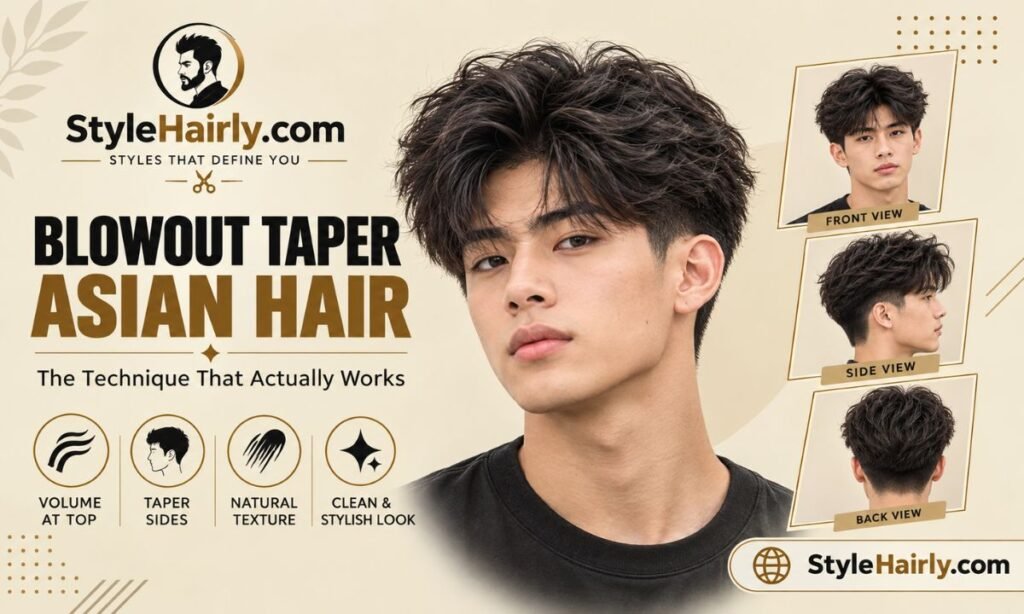
A blowout taper Asian hair cut works because it solves the exact problem most Asian hair textures create: thick, straight strands that resist lift and fall flat within hours of styling. The technique combines internal weight removal on top with a smooth, gradual taper on the sides, giving straight or wavy Asian hair the height and shape it will not hold on its own.
This guide breaks down what makes this cut different from a standard taper, the exact barbering steps that make it hold, which taper height suits which hair type, how to style it at home, and which face shapes and hair textures get the best results. Common mistakes and a full FAQ are included at the end.
At a Glance: Blowout Taper for Asian Hair
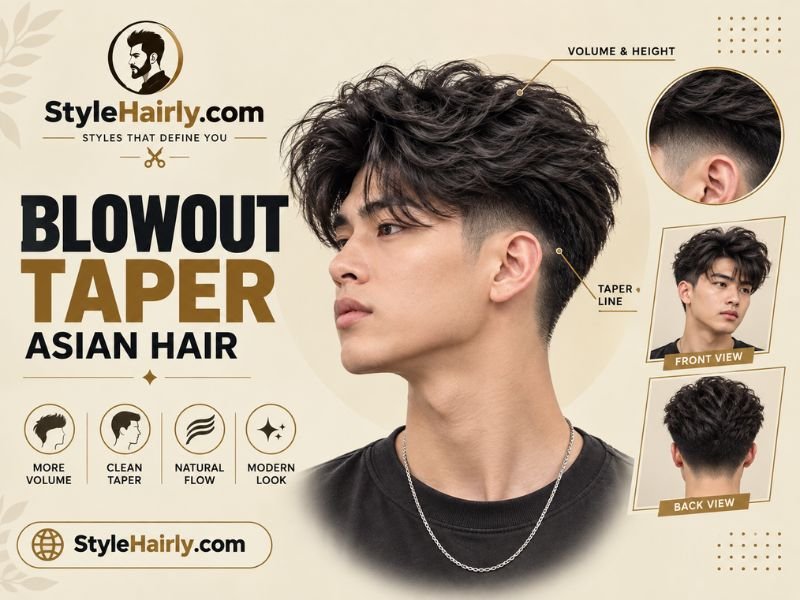
| Detail | Quick Answer |
| Best hair type | Thick, straight to wavy Asian hair |
| Top length | 3 to 5 inches |
| Recommended taper height | Mid taper (most versatile) |
| Maintenance | Trim every 3 to 4 weeks |
| Styling time | 5 to 10 minutes |
| Key tools | Round brush, blow dryer, light-hold cream or mousse |
| Face shapes it suits | Oval, square, diamond, round |
| Difficulty to style at home | Moderate |
Understanding Asian Hair for a Blowout Taper
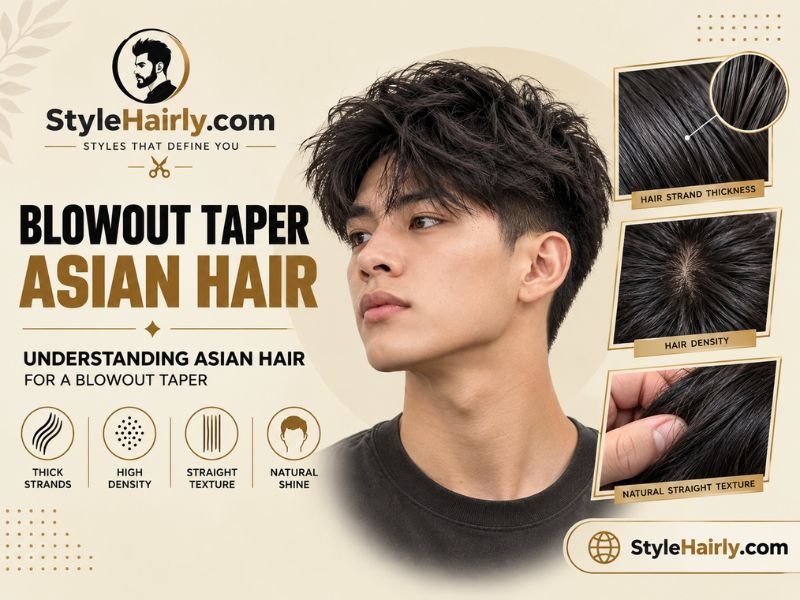
Asian hair typically has a rounder cross-section and a larger hair shaft diameter than other hair types, which makes each strand naturally stiffer and more resistant to bending. That stiffness is exactly why a plain blowout taper Asian hair style needs specific barbering work before it will lift and hold, rather than just relying on a blow dryer and brush.
Why Asian hair behaves differently under a blowout
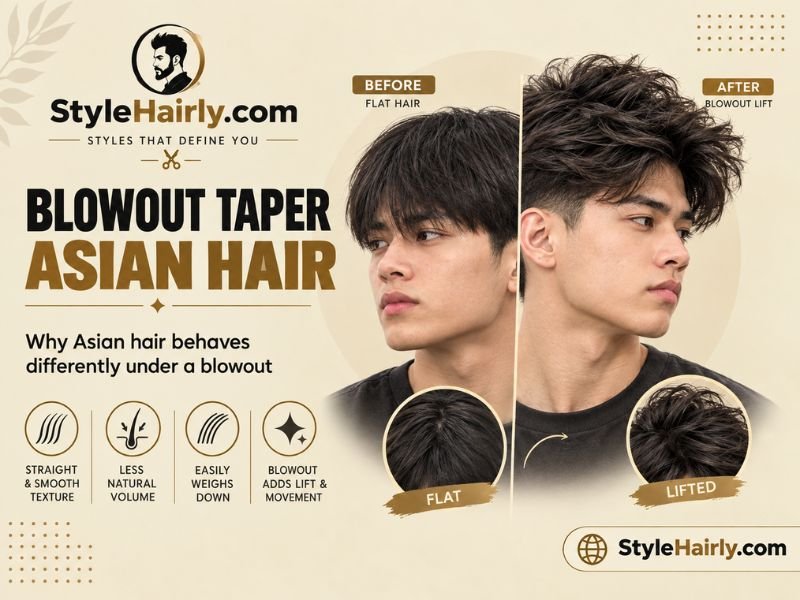
Straight Asian hair tends to grow downward and forward, following the direction of the hair’s natural fall rather than lifting away from the scalp. A blow dryer alone can create temporary volume, but without the right cutting technique underneath, that volume collapses within a few hours, especially in humidity.
Hair density and thickness factors
Density matters as much as texture. Someone with high density and coarse strands needs more internal thinning than someone with fine, sparse Asian hair, or the top will look bulky and heavy instead of lifted. A barber should always assess density and strand thickness separately, since two clients can share a hair type but need very different amounts of weight removal.
Which Taper Height Works Best on Asian Hair
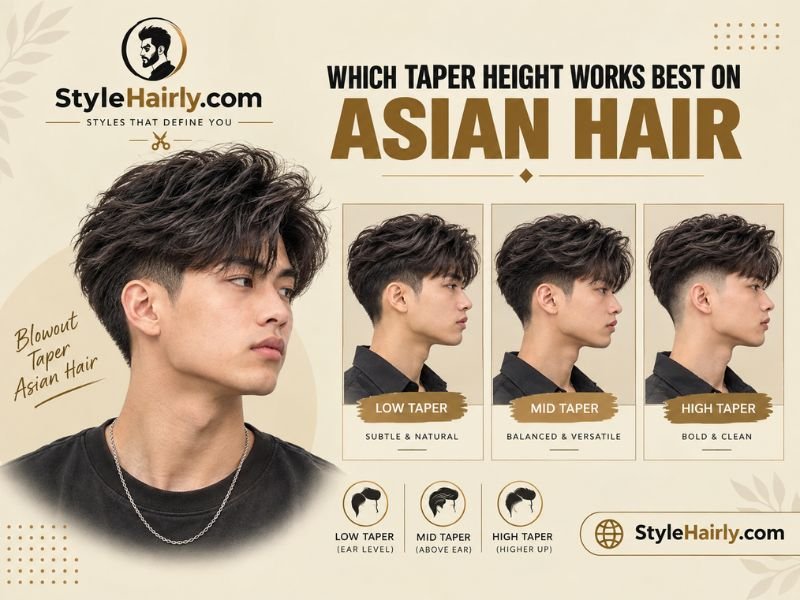
The taper height changes how much contrast sits between the blown-out top and the sides, and Asian hair’s thickness plays a direct role in which height looks cleanest.
| Taper Height | Best For | Contrast Level | Maintenance |
| Low taper | First-time clients, workplace settings | Subtle | Every 4 to 5 weeks |
| Mid taper | Most Asian hair types, balanced look | Moderate | Every 3 to 4 weeks |
| High taper | Thick, dense hair that needs more contrast to read as lifted | Strong | Every 2 to 3 weeks |
A mid taper is usually the safest starting point for a blowout taper Asian hair cut, since it gives enough contrast for the top to look intentional without demanding frequent touch-ups. High taper versions suit clients with very thick or coarse strands, since the extra contrast on the sides makes the volume on top read as more deliberate.
The Barber Technique for Blowout Taper on Asian Hair
The cutting technique is what separates a blowout taper Asian hair style that lasts all day from one that falls flat by lunchtime. Three techniques do most of the work.
Internal bulk removal is essential
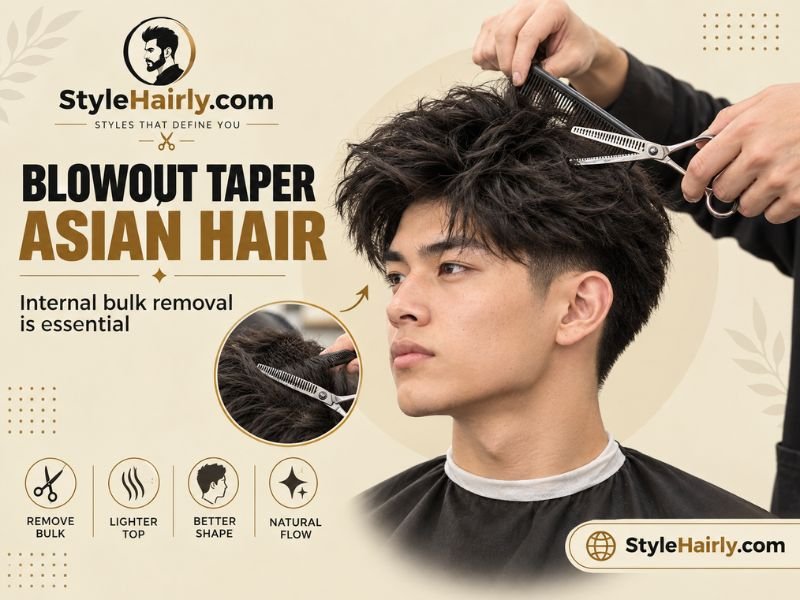
A barber uses thinning shears or a texturizing razor inside the top section, well below the visible surface layer, to remove excess weight without shortening the overall length. This step is non-negotiable on thick Asian hair, since the natural density otherwise weighs the top down and blocks any lift the blow dryer creates.
Cut against the natural fall
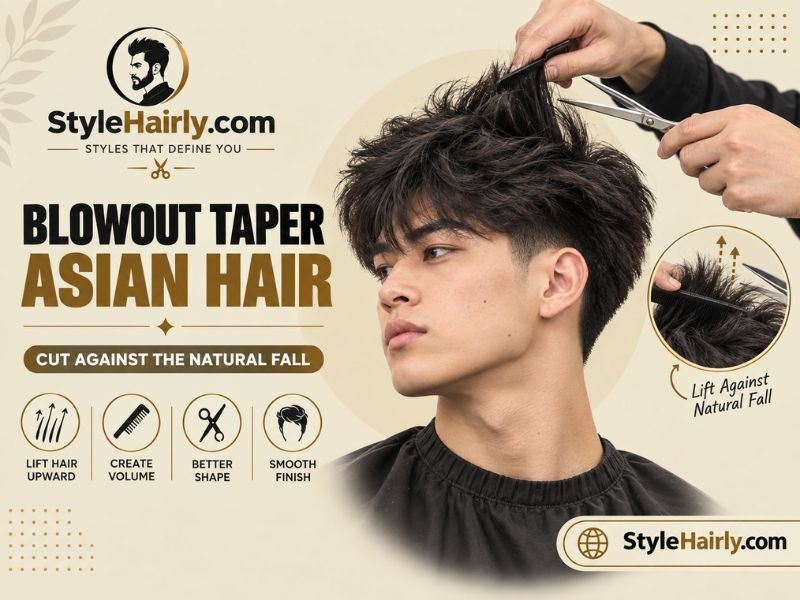
Instead of cutting with the hair lying in its natural forward or downward direction, the barber lifts and cuts the top section against that fall. This disrupts the hair’s default growth pattern and gives the strands a starting point for standing upward, rather than fighting the direction they naturally grow in every single day.
Point cutting for texture
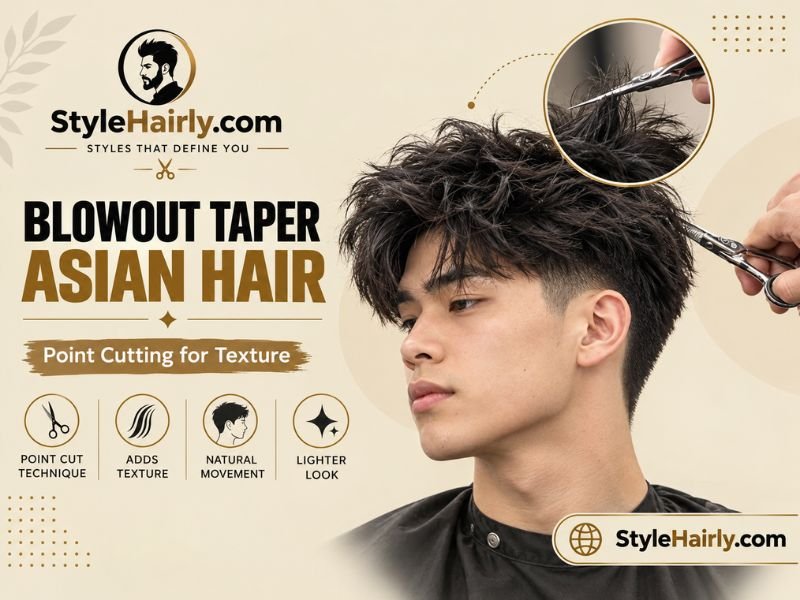
Point cutting, where the scissors are angled into the ends rather than cut straight across, softens the line at the top and adds texture the fingers and a round brush can grip during styling. Without point cutting, a blunt edge on thick Asian hair looks heavy and resists the tousled, lifted finish a blowout is meant to create.
Blow-drying technique during the cut
Many barbers blow-dry the top while cutting, working in sections with a round brush to see exactly how the hair lifts and falls before finalizing the length. This step catches problem areas, like a stubborn cowlick or a section that refuses to lift, before the client leaves the chair.
Face Shape Suitability for the Blowout Taper
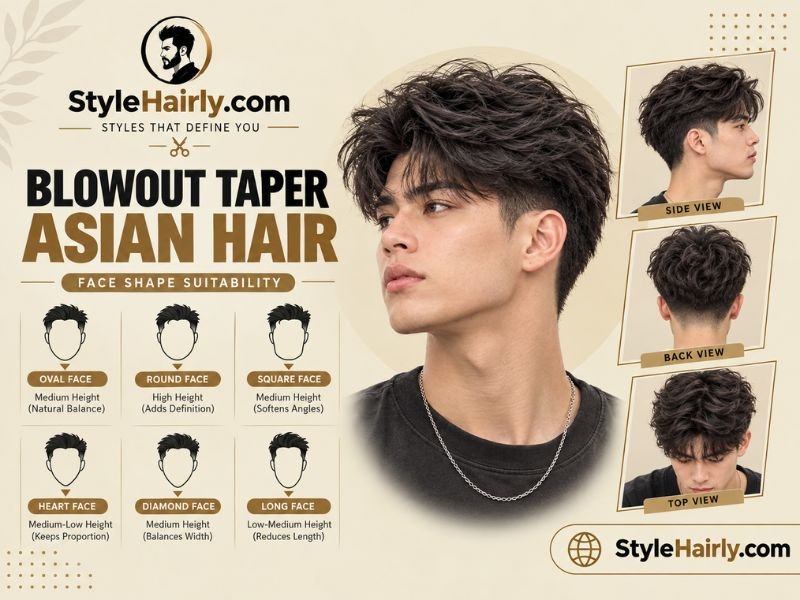
Face shape affects how much height and width the blowout should carry, and getting this wrong is one of the most common reasons a blowout taper Asian hair cut looks off-balance.
| Face Shape | Suitability | Styling Note |
| Oval | Excellent | Nearly any height and taper combination works |
| Square | Excellent | Softer, rounder top balances strong jaw lines |
| Diamond | Good | Moderate height avoids exaggerating cheekbones |
| Round | Good | Taller, narrower top adds visual length |
| Long/Rectangular | Use caution | Keep height moderate to avoid elongating the face further |
| Heart-shaped | Use caution | Add width at the sides rather than pure height |
Blowout Taper vs Other Popular Cuts
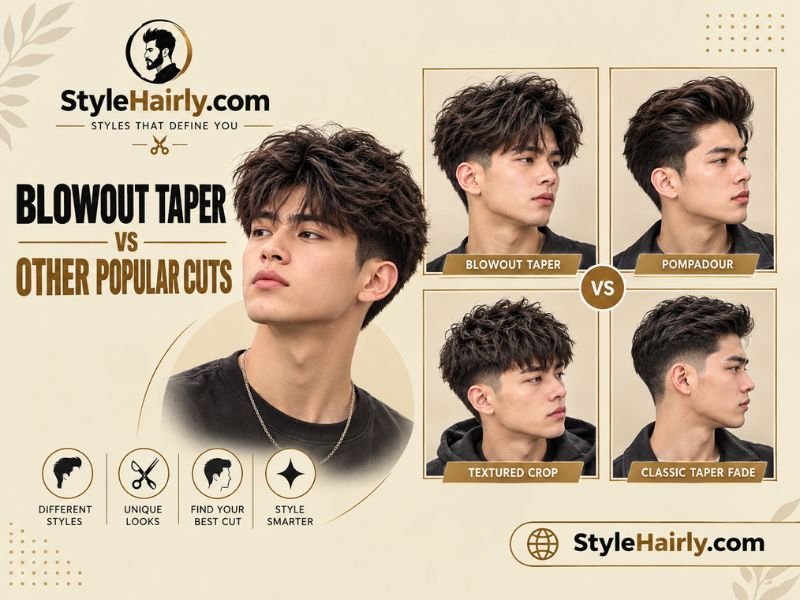
Comparing the blowout taper against other common men’s cuts makes the differences, and the decision, much clearer.
| Cut | Volume Placement | Best Hair Type | Styling Effort | Standout Feature |
| Blowout taper | Lifted, upward on top | Thick, straight to wavy | Moderate | Height with a smooth faded transition |
| Pompadour | Swept back and up | Straight to wavy, medium density | High | Sharp, structured silhouette |
| Textured crop | Forward, choppy on top | Wavy to curly | Low | Effortless, low-maintenance texture |
| Classic taper fade | Minimal, close to scalp | Any hair type | Low | Clean, conservative shape |
| Quiff | Forward and upward | Fine to medium hair | Moderate | Casual, tousled front lift |
The blowout taper stands apart because it puts the volume straight up rather than forward or back, which is why it works especially well on thick, straight Asian hair that resists forward-swept styles like the quiff.
At-Home Styling Routine for Asian Hair Blowout Taper
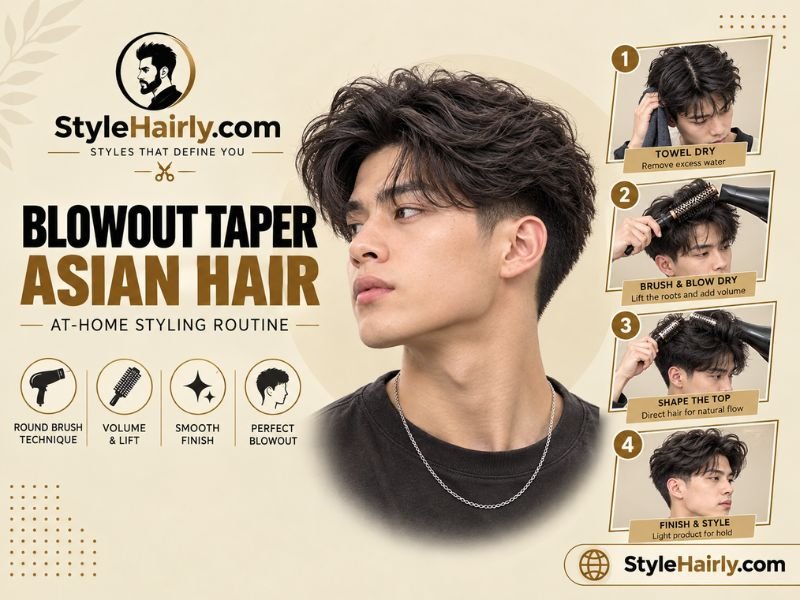
Recreating a barber-level blowout taper Asian hair look at home comes down to product, technique, and drying direction.
- Towel-dry hair until it is damp, not soaking wet.
- Apply a dime-sized amount of light-hold mousse or styling cream, focusing on the roots of the top section.
- Use a round brush to lift the roots straight up and slightly back while blow-drying on a medium heat, low airflow setting.
- Work in small sections, holding each section under tension with the brush until it cools slightly before releasing.
- Finish with a small amount of matte paste or light pomade, worked through the ends only, to define texture without weighing the top down.
- Use a fine-tooth comb or fingers to separate strands for a natural, undone finish rather than a stiff, sprayed look.
Avoid heavy waxes and thick gels, since they flatten the internal lift the barber built into the cut and can leave thick Asian hair looking greasy rather than voluminous.
Maintenance and Barber Visit Schedule

The sides of a blowout taper grow out faster than the top, so regular trims keep the contrast sharp instead of blurry.
- Trim the taper every 3 to 4 weeks to maintain a clean line between the sides and the top.
- Get the internal bulk reassessed every second visit, since hair regrowth can slowly add weight back to the crown.
- Wash with a lightweight, non-stripping shampoo two to three times a week to avoid drying out thick Asian hair strands.
- Use a leave-in conditioner or light oil on the ends if hair runs dry or coarse, keeping product away from the roots.
Common Mistakes to Avoid
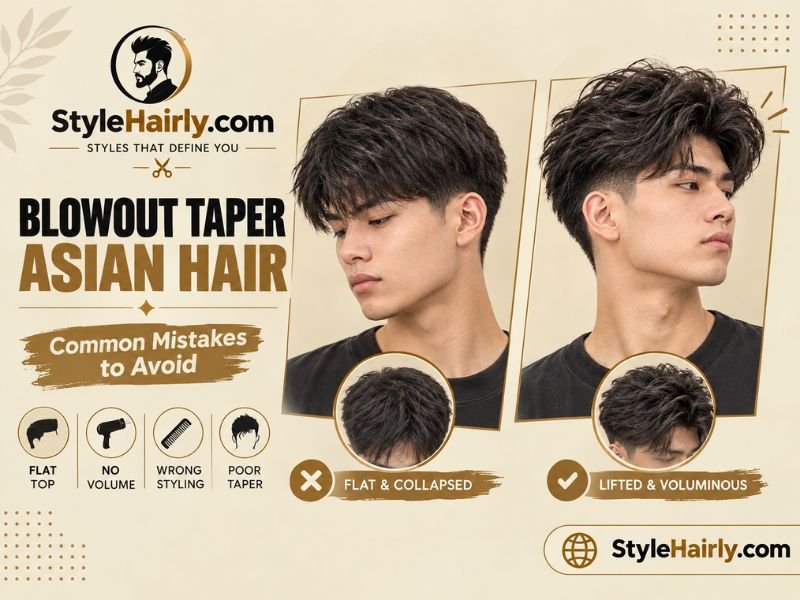
- Skipping internal thinning and expecting the blow dryer alone to create lasting lift.
- Choosing a taper height that is too high for a first-time client, creating more contrast than the hair type or face shape can support.
- Using heavy pomade or wax at the roots, which collapses the volume within a few hours.
- Blow-drying on high heat and high airflow, which can create frizz on thick Asian hair rather than smooth lift.
- Waiting too long between trims, letting the taper grow out and blur the line that defines the cut.
Pros and Cons of the Blowout Taper on Asian Hair
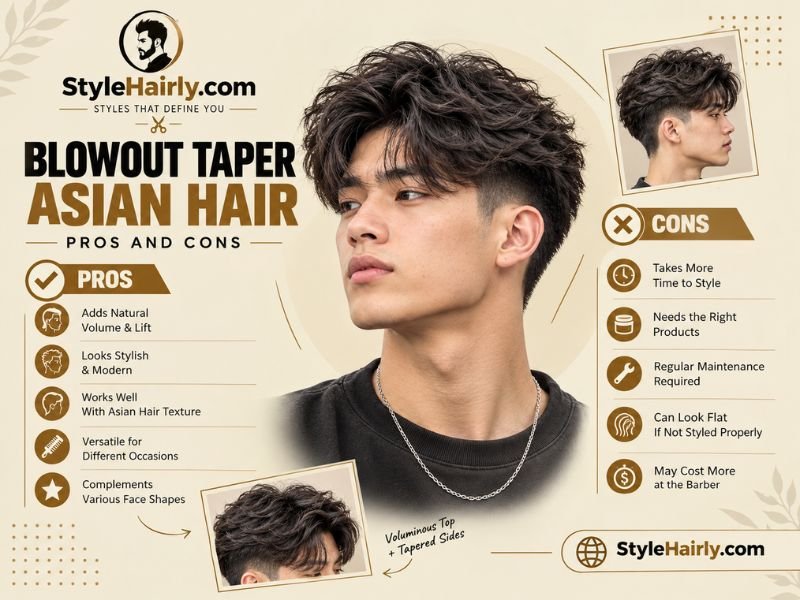
Pros
- Adds noticeable height and volume to naturally flat, thick hair
- Works across straight and wavy Asian hair textures
- Pairs well with beards, clean shaves, and hair designs
- Suits most face shapes with minor height adjustments
Cons
- Requires more daily styling effort than a low-maintenance crop
- Needs frequent trims to keep the taper line sharp
- Humidity and moisture can shorten how long the lift lasts
- Not ideal for very fine or thin Asian hair without added texture work
FAQ
Does a blowout taper work on straight Asian hair?
Yes. Straight Asian hair is actually one of the best candidates for this cut once the internal bulk is removed properly, since the smooth strand gives the top a clean, defined lift.
How often should I get my blowout taper trimmed?
Most people need a trim every 3 to 4 weeks to keep the taper line sharp and prevent the sides from growing out unevenly.
Can I get a blowout taper with thin Asian hair?
Yes, but the barber should focus on point cutting and texture rather than heavy thinning, since thin hair needs the opposite treatment from thick, dense hair.
What products work best for styling a blowout taper on Asian hair?
A light-hold mousse or cream for lift at the roots, paired with a small amount of matte paste on the ends, gives the cleanest, longest-lasting result.
Is the blowout taper high maintenance?
It requires more daily styling than a simple fade or crop, but the actual barber visits follow a normal 3 to 4 week schedule, similar to most taper cuts.
What is the difference between a blowout taper and a regular taper fade?
A regular taper fade keeps the top relatively flat and close to the head, while a blowout taper is specifically cut and thinned to create upward volume on top.
Does this cut suit round faces?
Yes, a taller, narrower blowout on top adds visual length to a round face, which is one of the more flattering height adjustments for that face shape.
Conclusion
A blowout taper Asian hair cut delivers real, lasting height only when the barber removes internal bulk, cuts against the hair’s natural fall, and uses point cutting to build in texture, rather than relying on styling alone. Choosing the right taper height for your hair density, matching the top height to your face shape, and keeping a consistent 3 to 4 week trim schedule are the three factors that decide whether this cut looks sharp or falls flat by the end of the day.

1 thought on “Blowout Taper Asian Hair: The Bold, Proven Guide for 2026”