

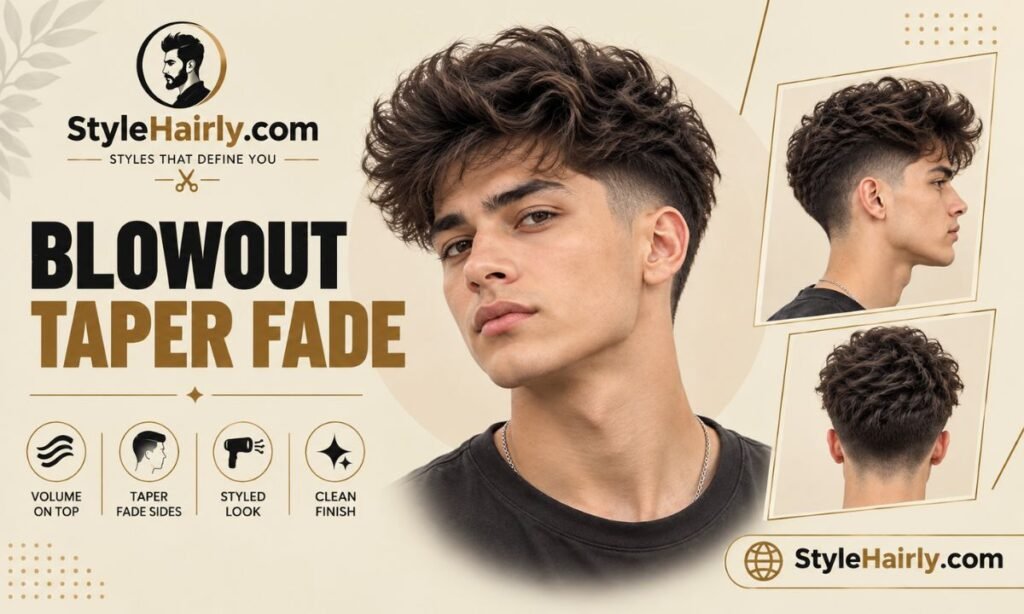
A blowout taper fade combines a lifted, voluminous top with a fade that drops all the way down to skin or near-skin at the sides and back, rather than stopping at a soft taper line. It gives thick or dense hair real height on top while keeping the sides tight, sharp, and completely low maintenance between trims.
This guide covers the exact difference between a plain blowout taper and a blowout taper fade, the low, mid, and high fade variations, which hair types and face shapes suit it best, how it looks on straight versus afro and curly hair, and what to actually say to your barber to get it right the first time. Styling steps, maintenance, common mistakes, and a full FAQ are included below.
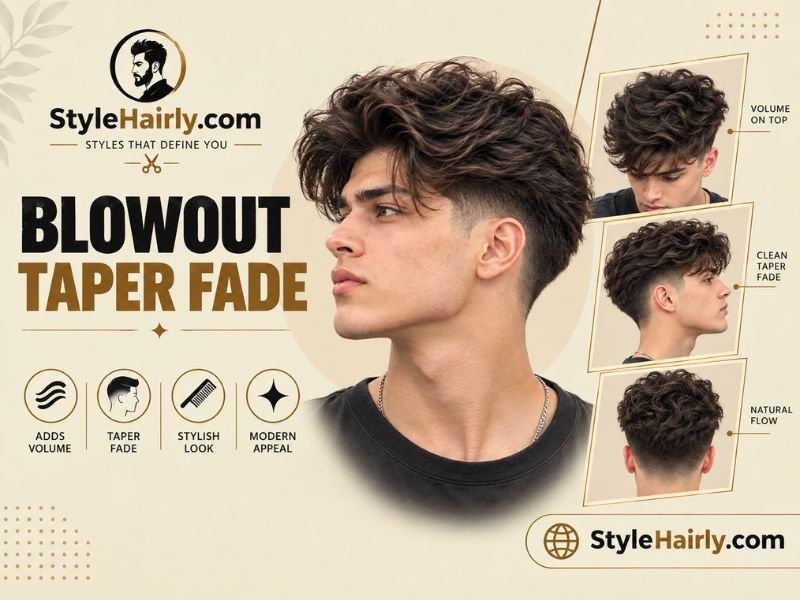
At a Glance: Blowout Taper Fade
| Detail | Quick Answer |
| Top length | 3 to 5 inches |
| Side and back finish | Skin fade or near-skin fade |
| Best hair type | Thick, dense straight, wavy, or coily hair |
| Recommended fade height | Mid to high fade for most face shapes |
| Maintenance | Trim every 2 to 3 weeks |
| Styling time | 5 to 10 minutes |
| Key tools | Round brush, blow dryer, light-hold cream |
| Face shapes it suits | Oval, square, round, diamond |
What Is a Blowout Taper Fade?
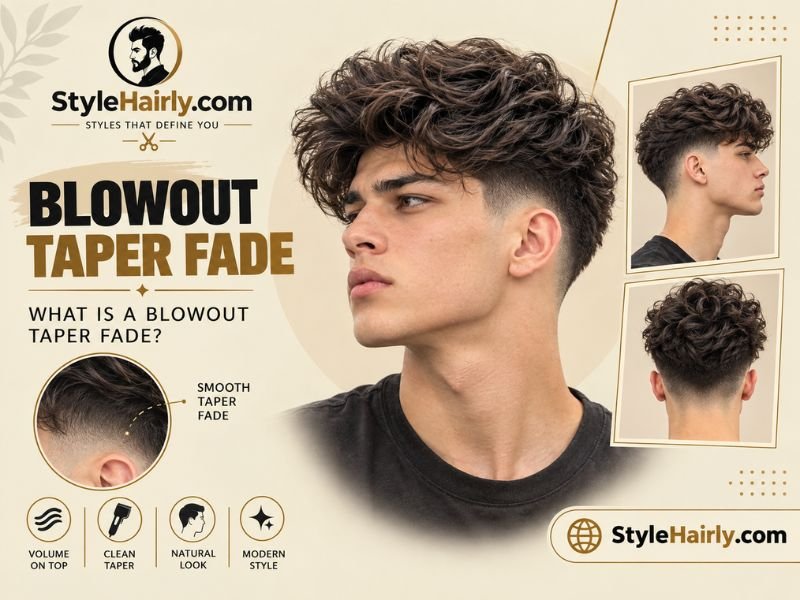
A blowout taper fade is a haircut where the top section is cut and styled to stand up and outward, while the sides and back are faded down to skin using clippers. The word “blowout” describes what happens on top, upward volume created with a blow dryer and round brush, and “fade” describes what happens on the sides, a gradual clipper transition from long to bare skin.
The combination works because the skin fade removes all visual bulk from the sides, so every bit of attention goes to the height and shape on top. This makes it a stronger, more graphic look than a softer taper, and one that reads well from every angle, not just from the front.
Blowout Taper vs Blowout Taper Fade: What’s the Exact Difference?
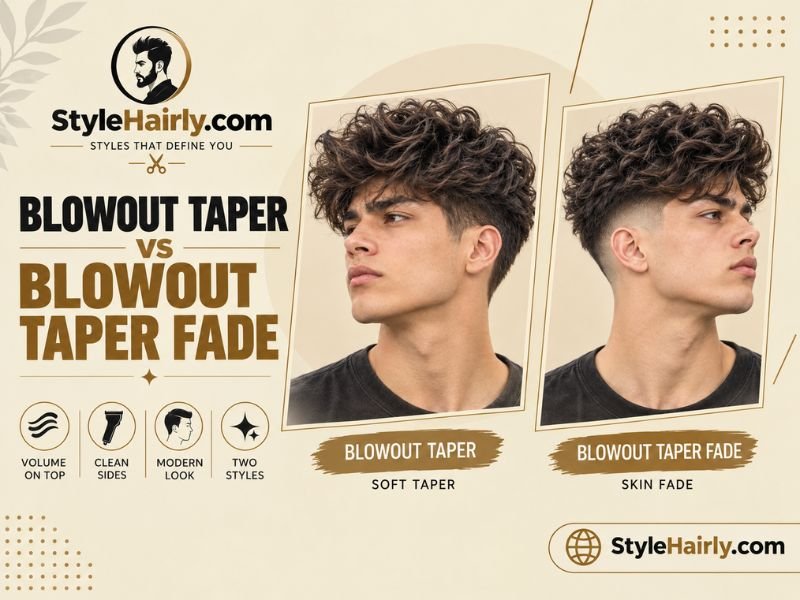
The two names get used interchangeably online, but they describe two different amounts of contrast on the sides.
| Feature | Blowout Taper | Blowout Taper Fade |
| Side finish | Gradual taper, some length left at the bottom | Full fade down to skin or near-skin |
| Contrast level | Moderate | High |
| Maintenance frequency | Every 3 to 4 weeks | Every 2 to 3 weeks |
| Best for | Conservative or workplace settings | Bold, statement styling |
| Visual effect | Softer transition between top and sides | Sharp, graphic separation |
A plain blowout taper leaves a small amount of length at the bottom of the sides, so the transition into the top is gentler. The fade version removes that length entirely, which is what gives it the sharper, more dramatic look most people picture when they search for this cut.
Low, Mid, and High Blowout Taper Fade Variations
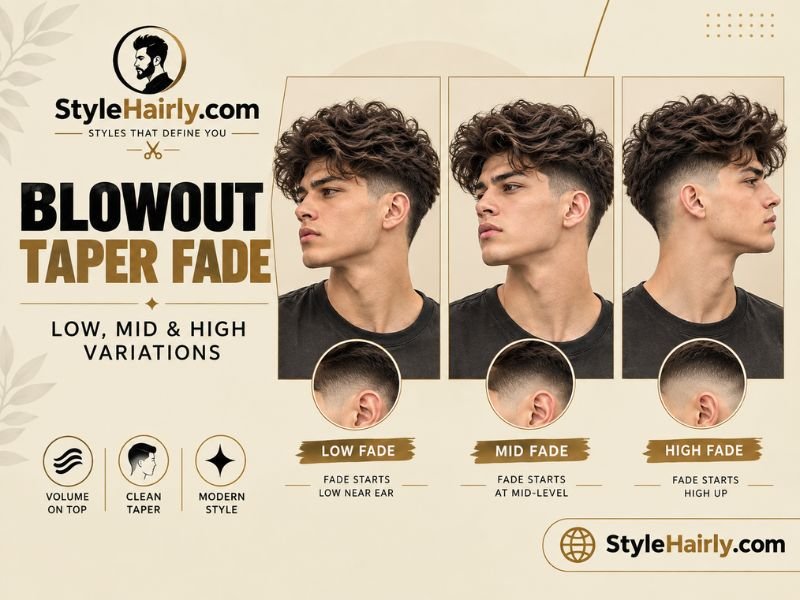
Fade height changes how much of the side is skin and how much contrast sits under the blown-out top.
| Fade Height | Fade Starts At | Contrast With Top | Best For |
| Low fade | Just above the ear | Subtle to moderate | First-timers, workplace-appropriate looks |
| Mid fade | Mid-way up the side of the head | Strong | Most face shapes and hair densities |
| High fade | Just below the crown | Very strong | Thick, dense hair that needs maximum contrast to look lifted |
A mid fade is the most common starting point for this cut, since it balances a sharp look with enough coverage that it does not need a trim every single week. A high fade suits people who already wear bold haircuts and want the top height to be the clear focal point.
Who Should Get a Blowout Taper Fade?
This cut works best on hair with enough length and density to actually stand up once it is lifted and dried.
Best hair types and densities
Thick, straight or wavy hair with medium to high density holds this style the longest through the day, since there is enough hair mass for the round brush to shape and for the style to hold its lift. Coily and afro-textured hair also works well, often needing less daily styling effort since the natural texture already provides lift and volume.
Face shape suitability
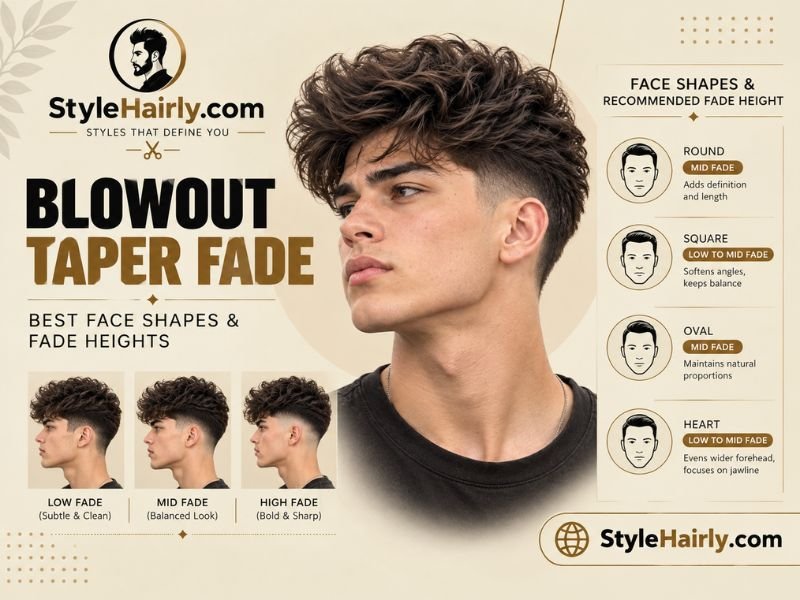
| Face Shape | Suitability | Styling Note |
| Oval | Excellent | Nearly any fade height and top volume works |
| Square | Excellent | A rounder top softens strong jaw angles |
| Round | Good | Taller, narrower top and a high fade add length |
| Diamond | Good | Moderate top height avoids over-emphasizing cheekbones |
| Long or Rectangular | Use caution | Keep top height moderate, avoid excess added length |
| Heart-shaped | Use caution | Favor width over height to balance a narrower jaw |
When I’d Tell You to Get the Pure Blowout Taper Instead
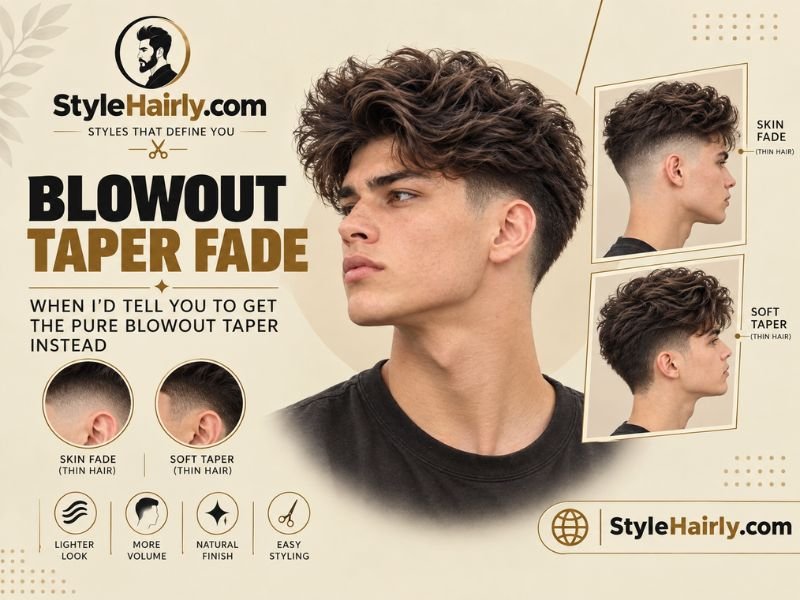
A blowout taper fade is not always the better choice, even though it looks sharper in photos. If your hair is fine or low density, the skin fade can expose too much scalp contrast against a top that struggles to build real volume, making the cut look unbalanced rather than sharp. A plain blowout taper, which keeps a little length at the bottom of the sides, is usually the better call here.
The same applies in more conservative workplaces or industries where a full skin fade reads as too bold. A blowout taper gives most of the same lifted, voluminous top without the stronger visual statement a full fade makes. It is also the lower-maintenance option, since a soft taper grows out far more gracefully than a skin fade does.
Blowout Taper Fade on Straight Hair vs Afro and Curly Hair
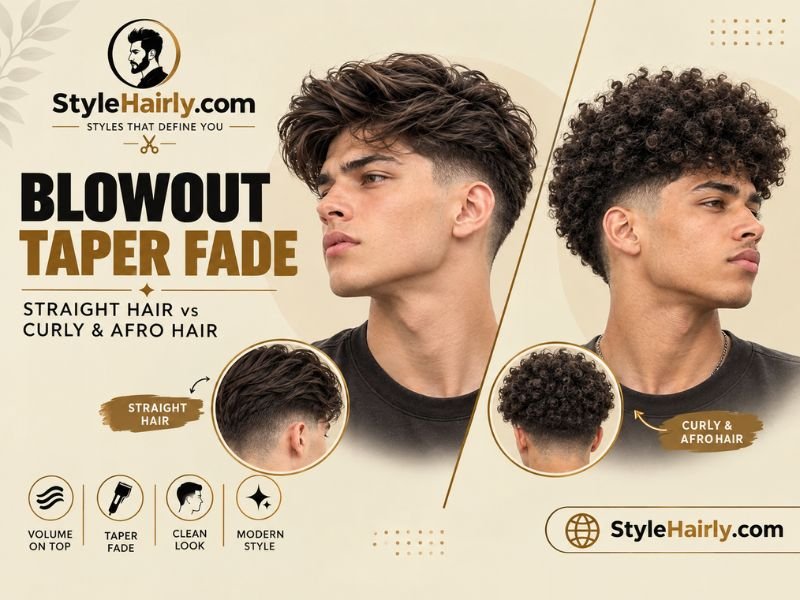
The same haircut name produces noticeably different results depending on the natural curl pattern underneath it.
| Factor | Straight Hair | Afro or Curly Hair |
| How volume is created | Blow-drying with a round brush against the fall | Natural curl pattern plus light diffusing |
| Styling time | 5 to 10 minutes daily | Often less, since curl pattern holds shape |
| Risk of falling flat | Higher without proper internal thinning | Lower, curl pattern resists collapsing |
| Product needed | Light-hold cream or mousse | Curl cream or light oil to define texture |
| Trim frequency | Every 2 to 3 weeks | Every 3 to 4 weeks, since fades on coily hair show growth less obviously |
Straight hair needs more deliberate cutting work, internal thinning and cutting against the natural fall, to hold height without daily styling effort. Curly and afro-textured hair often needs less manipulation, since the curl pattern itself does much of the volume-building work a blow dryer would otherwise have to create.
Blowout Taper Fade vs Other Popular Fades
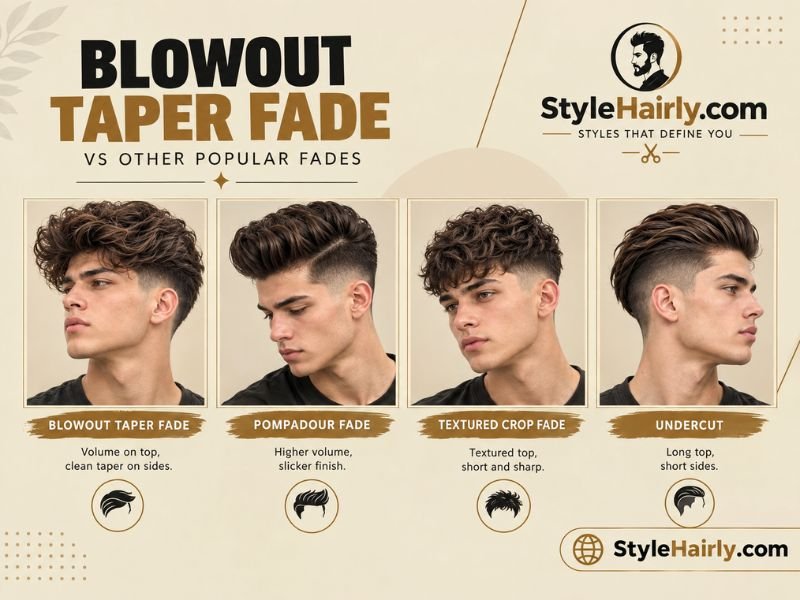
Comparing this cut against other well-known fade styles clarifies what makes it distinct.
| Cut | Top Volume | Side Finish | Best Hair Type | Standout Feature |
| Blowout taper fade | High, upward | Full skin fade | Thick, dense, straight to coily | Maximum height with maximum contrast |
| Pompadour fade | Swept back and up | Skin or mid fade | Straight to wavy | Structured, slicked silhouette |
| Textured crop fade | Forward, choppy | Low to mid fade | Wavy to curly | Effortless, low-effort texture |
| Undercut | Slicked back or side part | Disconnected skin fade | Straight to wavy | Sharp, hard line at the part |
| Classic taper fade | Minimal | Gradual fade, no true skin line | Any hair type | Conservative, all-purpose shape |
It stands out because it pairs the boldest possible side contrast with the tallest possible top volume, which is why it reads as a more statement-making cut than a pompadour fade or a classic taper fade.
How Do You Ask for a Blowout Taper Fade?
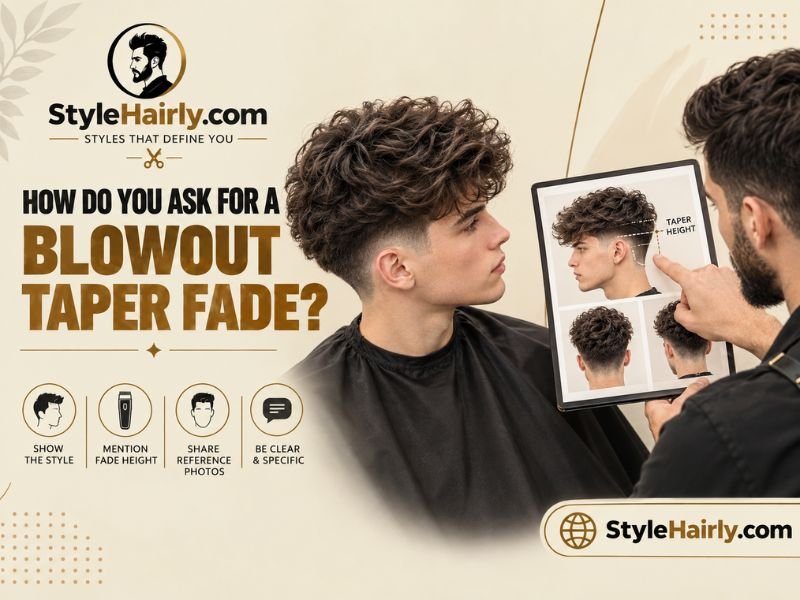
Walking in with the right wording helps a barber understand the exact combination you want, since “blowout taper fade” alone can still be interpreted differently by different barbers.
Useful phrases to use during the consultation:
- “I want a skin fade on the sides, taken up to about here” while pointing to the desired fade height.
- “Leave enough length on top so I can blow it out and get real height, not just a flat top.”
- “Thin out the top from underneath so it doesn’t look bulky once it’s blown out.”
- “I want the fade to be sharp and high contrast, not a soft gradual taper.”
Bringing a reference photo of this exact style, not just a regular taper, avoids the most common miscommunication: getting a softer taper on the sides when a full skin fade was actually wanted.
At-Home Styling Steps for a Blowout Taper Fade
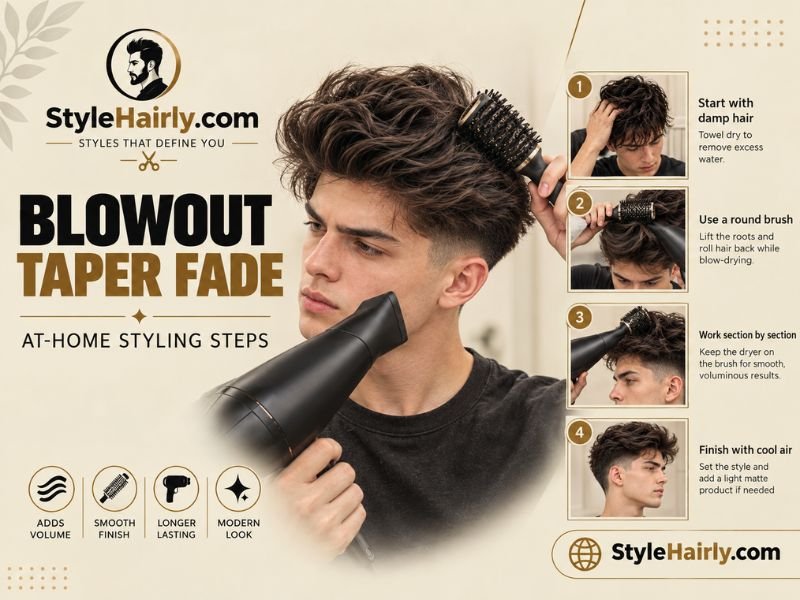
- Towel-dry hair until damp, not dripping.
- Apply a small amount of light-hold mousse or cream at the roots of the top section only.
- Use a round brush to lift the roots up and slightly back while blow-drying on medium heat and low airflow.
- Hold each section under light tension until it cools before releasing the brush.
- Finish with a small amount of matte paste worked through the ends for texture and separation.
- Check the fade line in a mirror and use a comb to blend any flyaways at the transition point.
Keep product light and focused on the roots and ends only. Heavy product applied all over collapses the lift this style depends on and can make the top look greasy rather than voluminous.
Maintenance and Trim Schedule
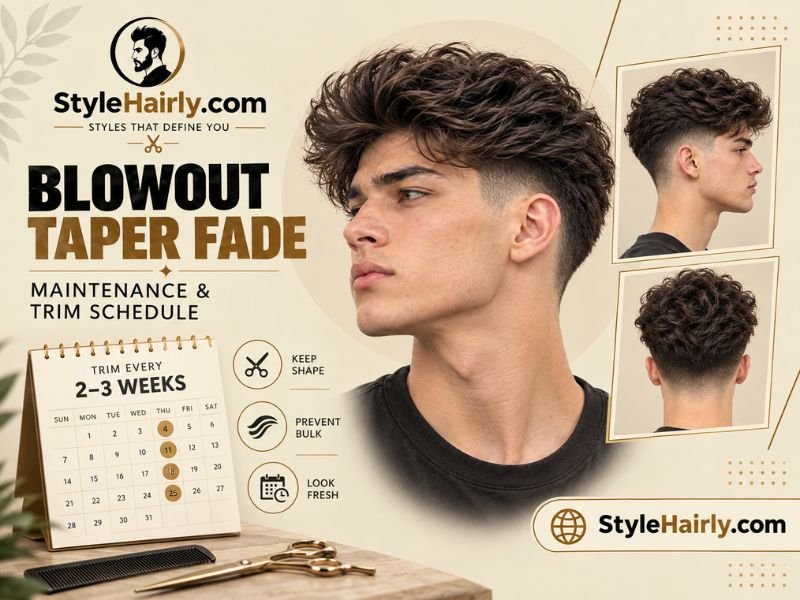
- Trim the fade every 2 to 3 weeks, since a skin fade grows out and loses its sharp line faster than a soft taper.
- Keep the top length reassessed every second visit so internal bulk does not build back up.
- Wash two to three times a week with a lightweight shampoo to avoid product buildup weighing down the top.
- Use a light oil or leave-in conditioner on the ends only if hair runs dry, keeping it away from the roots where lift is needed.
What Does a Blowout Taper Fade Cost?
Pricing depends heavily on the barbershop, city, and how much detail work the fade requires, but this cut generally costs the same as, or slightly more than, a standard fade haircut, since the skin fade and the blowout styling both take extra time in the chair. Ask your barber directly for their current pricing, since this varies widely by location and shop tier.
Why Does a Blowout Taper Fade Look Flat or Messy?
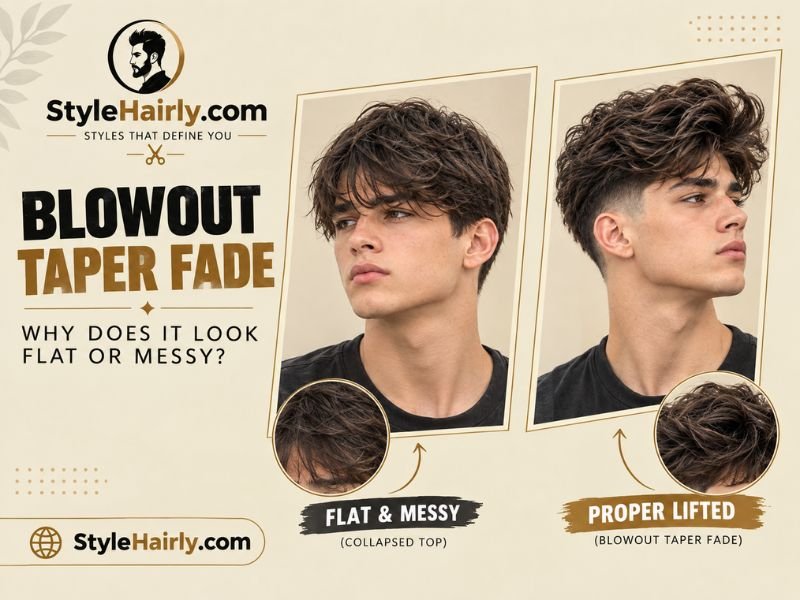
This haircut usually looks flat or messy for one of a few avoidable reasons, not because it does not work on your hair.
- Too much internal bulk left on top, which weighs the hair down and blocks lift no matter how it is blown out.
- Heavy product applied at the roots, which collapses volume within a few hours.
- Blow-drying without a round brush, which dries hair in its natural fall instead of training it to stand upward.
- A fade line left too soft, which blurs the sharp contrast that makes this cut look intentional rather than just short on the sides.
- Waiting too long between trims, letting the fade grow out and the top lose its shape at the same time.
Pros and Cons of the Blowout Taper Fade
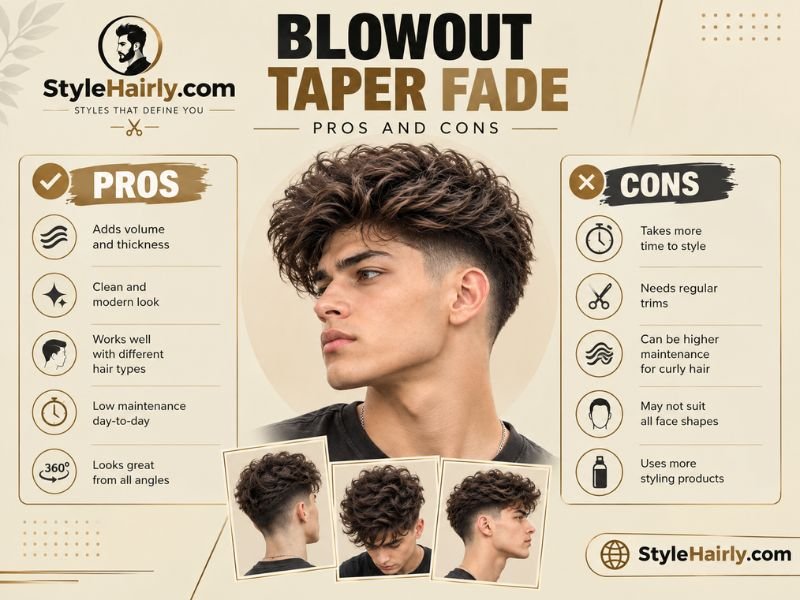
Pros
- Maximum height and volume contrast against the sides
- Works on straight, wavy, and coily hair with minor technique adjustments
- Reads as a bold, deliberate style from every angle
- Pairs well with beards and hair designs cut into the fade
Cons
- Needs more frequent trims than a soft taper
- Requires daily styling effort to maintain the lifted top
- Too much contrast for very conservative workplaces
- Not ideal for fine, low-density hair without added texture work
FAQ
What is the difference between a blowout and a blowout taper fade?
A blowout describes the lifted, voluminous top styling, while a blowout taper fade adds a full skin fade on the sides underneath that same lifted top.
How high should a blowout taper fade be?
A mid fade suits most face shapes and hair densities, while a high fade works best on thick hair that needs extra contrast to look lifted.
Does a blowout taper fade work on curly hair?
Yes, curly and afro-textured hair often holds the volume with less daily styling effort, since the natural curl pattern does much of the lifting work.
How often do I need to get a blowout taper fade trimmed?
Every 2 to 3 weeks, since a skin fade grows out and loses its sharp line faster than a softer taper would.
Can I style a blowout taper fade without a blow dryer?
It is possible with a lot of natural volume or curl pattern, but a round brush and blow dryer give the most consistent, all-day lift on straight and wavy hair.
Is this haircut high maintenance?
It needs more frequent trims and more daily styling effort than a plain taper, though the actual barber visit itself takes a similar amount of time.
What should I say to my barber for a blowout taper fade?
Ask for a skin fade at your preferred height, extra length left on top for blow-drying, and internal thinning underneath so the top does not look bulky once styled.
Conclusion
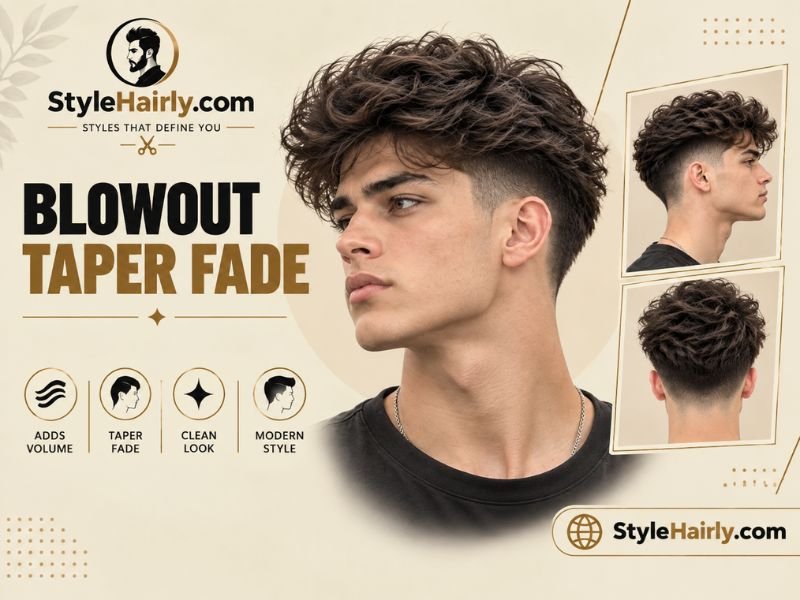
A blowout taper fade delivers the sharpest possible contrast between a lifted, voluminous top and a full skin fade on the sides, and it works best on thick to medium density hair with enough length to actually hold that lift through the day. Choosing the right fade height for your face shape, communicating clearly with your barber about where the fade should start, and keeping a consistent 2 to 3 week trim schedule are what separate a sharp result from one that looks flat or grown out.
Quick Summary Table
| Consideration | Recommendation |
| Best fade height for most people | Mid fade |
| Best hair type | Thick to medium density, straight to coily |
| Trim frequency | Every 2 to 3 weeks |
| Best face shapes | Oval, square, round |
| Alternative if hair is fine or thin | Plain blowout taper, no skin fade |

1 thought on “Blowout Taper Fade: The Bold, Complete 2026 Style Guide”