

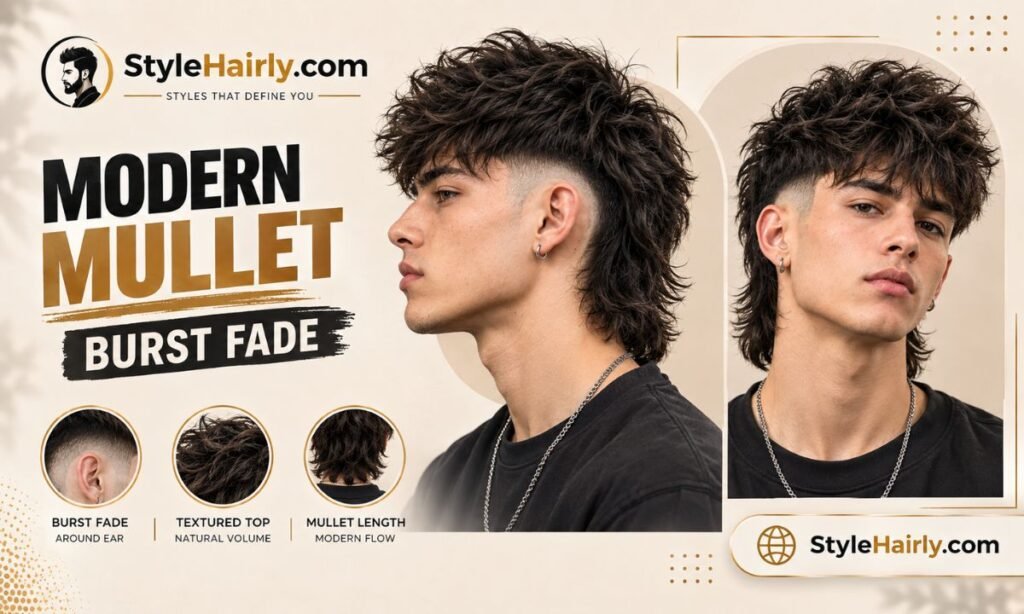
Anyone comparing fade options for a mullet eventually runs into the burst fade, and it is easy to get confused about how it actually differs from a regular taper or fade around the ears. The curved shape around the ear changes how the whole haircut reads, and picking the wrong fade type for your hair texture or face shape can throw off the balance of the entire cut.
A modern mullet burst fade combines a fade that curves around the ear in a rounded, sunburst-like shape with the classic mullet structure of shorter sides and a longer, more textured top and back. The result is a cut that looks sharper and more deliberate around the ear while still keeping the loose, retro-modern length that defines a mullet. It works across straight, wavy, curly, and thick hair, though the exact fade height and top length should shift depending on texture and face shape.
This guide covers what a burst fade actually is, which hair types and face shapes it suits, how to style and maintain it, how it compares to a standard fade mullet, and a full breakdown of the most searched burst fade mullet variations, from curly and wavy versions to skin fade, low fade, and blonde takes on the style.
Modern Mullet Burst Fade at a Glance
| Detail | Overview |
| Best for | People who want a fade with more shape around the ear than a standard taper |
| Hair length | Short to medium sides, medium to long top and back |
| Hair types | Straight, wavy, curly, and thick hair, with texture adjustments |
| Maintenance | Trims every 2 to 4 weeks to keep the burst shape clean |
| Styling | Light to moderate, depends on top length and desired texture |
| Main feature | A rounded fade that curves around and behind the ear |
What Is a Modern Mullet Burst Fade?
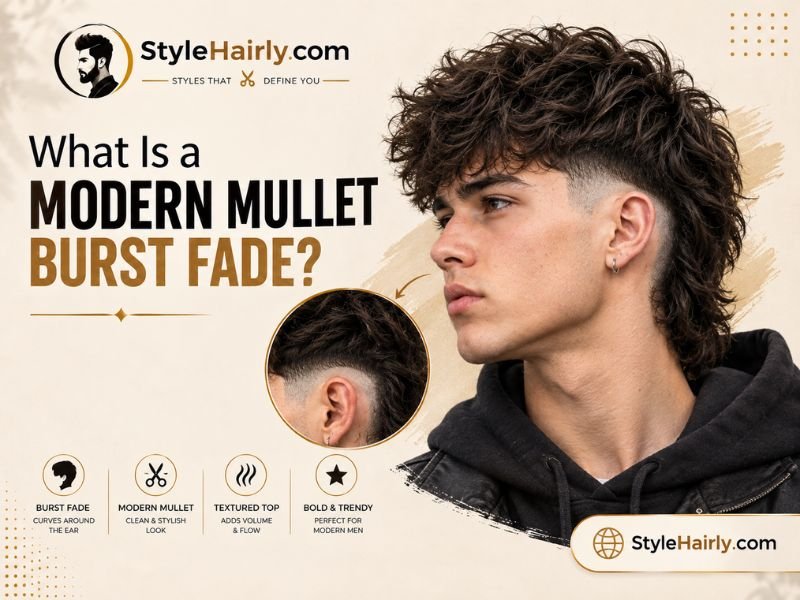
A burst fade is a fade pattern that curves around the ear instead of running in a straight horizontal or diagonal line down the side of the head. The blend fans out from the ear like rays, which is where the name comes from. When this fade is paired with a mullet, the sides and the area around the ear are faded down close to the skin or to a very short length, while the top, crown, and back keep noticeably more length, creating the classic mullet silhouette with a sharper, more sculpted edge near the ear.
The appeal of this combination is that it gives an otherwise loose or shaggy mullet a defined anchor point. Instead of the sides just tapering down in a straight line, the curved fade draws the eye toward the ear and creates a cleaner transition between the short and long sections of the cut.
How a Burst Fade Differs From a Regular Fade
A regular fade or taper usually follows a straight or slightly angled line that runs from the top of the head down toward the sideburn and neckline. A burst fade breaks that straight line and curves it around the ear, so the shortest hair sits directly around and behind the ear rather than along a straight edge. On a mullet, this means the fade looks more contained to the ear area, while the rest of the sides can keep slightly more length than they would with a traditional fade, which often makes the burst fade feel less severe and more blended into the longer mullet hair above it.
Which Hair Types and Textures Work Best?
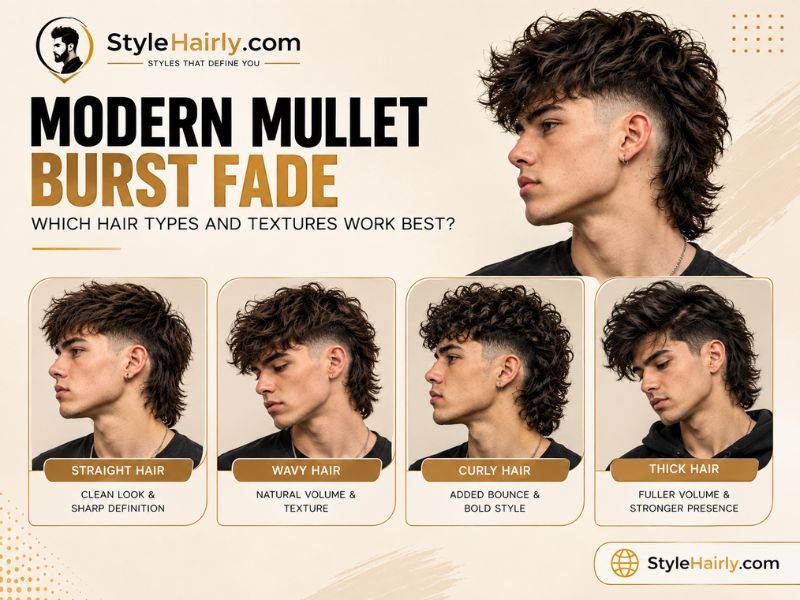
Straight, wavy, curly, and thick hair can all carry a modern mullet burst fade, but the way the fade and the top length are cut should change with texture to keep the style looking balanced rather than bulky or flat.
| Hair Type | How It Works With a Burst Fade Mullet |
| Straight hair | Shows the clean fade lines clearly; top often needs texturizing to avoid looking flat |
| Wavy hair | Blends naturally into the fade and adds movement without much extra styling |
| Curly hair | Needs a slightly higher fade start point since curls shrink; top is usually left longer for shape |
| Thick hair | Handles the length contrast well; sides may need more thinning to fade smoothly |
| Fine hair | Fade should be kept subtle since thin hair can make the contrast look too harsh |
Fine hair in particular benefits from a fade that is not cut too aggressively close to the skin, since a very low, sharp fade next to thin, longer top hair can make the top look sparser by comparison. Thicker or curlier hair generally has more room to handle a bolder skin fade because there is more visual density above it to balance the contrast.
Which Face Shapes Suit a Modern Mullet Burst Fade?
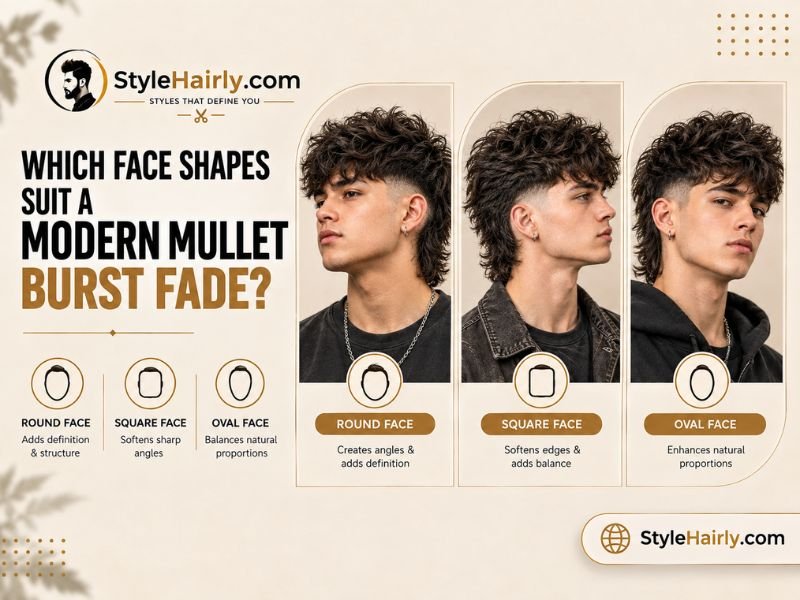
Most face shapes can wear a burst fade mullet, but the fade height and the amount of length left on top should be adjusted based on face shape to keep the proportions looking intentional.
| Face Shape | Recommended Approach |
| Oval | Very flexible, most burst fade heights and top lengths work well |
| Round | A slightly higher fade and more height on top help elongate the face |
| Square | A mid burst fade with softer, textured top layers balances strong jawlines |
| Heart | Keep more width at the temples and avoid an extremely high, skin-tight fade |
| Long | A lower burst fade with fuller sides adds width instead of extra height |
Someone with a round face may want to avoid a very low burst fade paired with heavy volume on top, since that combination can widen the face further. A square face often looks more balanced when the top is left slightly textured and tousled rather than sharply structured, which softens the strong jaw and forehead lines.
Styling a Modern Mullet Burst Fade
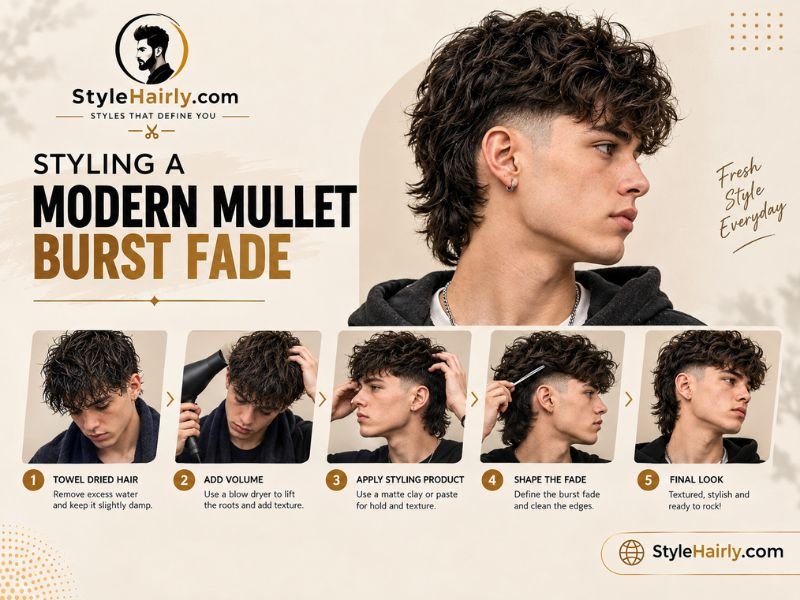
- Start with clean, towel-dried hair rather than fully wet hair, since fully soaked hair is harder to control and can make the top sit too flat once it dries.
- Apply a lightweight styling cream or sea salt spray through the mid-lengths and ends of the top and back sections, avoiding the faded sides.
- Blow-dry the top and back with a round brush or your fingers, lifting at the root for volume and directing the ends outward or backward depending on the desired shape. Always use a heat protectant spray before applying heat.
- Once mostly dry, add a small amount of matte paste or clay to define pieces and separate the ends without making the hair look wet or greasy.
- Lightly comb or finger-style the faded sides so they lie flat against the head and blend cleanly into the burst area around the ear.
Finishing and Maintenance
A light hold hairspray can lock the shape in place without stiffening the hair, which matters for a mullet since the style relies on natural movement rather than a rigid finish. Between cuts, keep the fade sharp by visiting a barber for a fade refresh every 2 to 3 weeks, since fades grow out faster and look noticeably less defined than the longer top and back sections.
Pros and Cons of a Modern Mullet Burst Fade
Pros
- The curved fade line looks more custom and tailored than a straight taper
- Works across most hair textures with minor adjustments
- Keeps the bold, retro mullet silhouette while looking more modern around the ear
Cons
- Requires more frequent barber visits than a mullet without a fade
- The precise curve is harder to maintain at home between salon visits
- Not every barber is equally skilled at cutting a clean burst shape
Modern Mullet Burst Fade vs Regular Mullet Fade
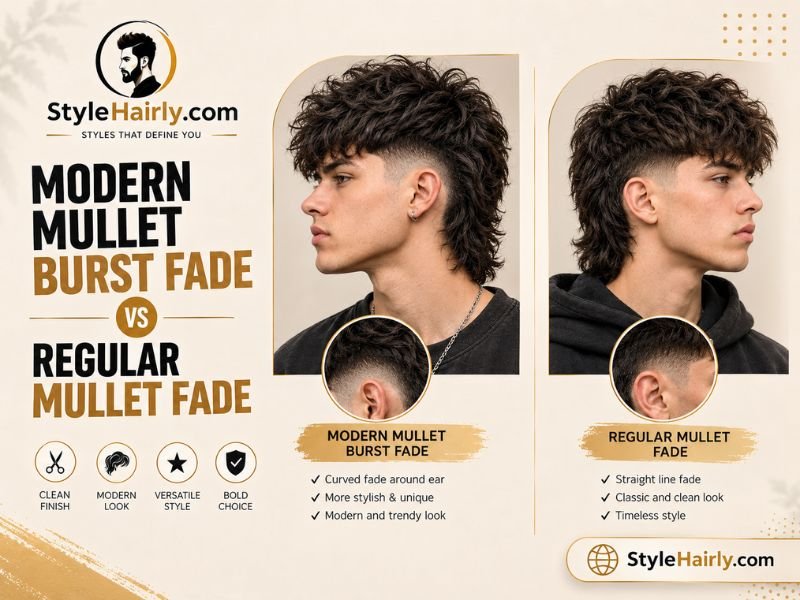
| Feature | Burst Fade Mullet | Regular Fade Mullet |
| Fade shape | Curves around the ear | Straight or diagonal line |
| Visual effect | More sculpted and detailed near the ear | Cleaner, more uniform side profile |
| Maintenance | Slightly higher, curve needs regrowth upkeep | Slightly lower, easier to touch up |
| Best for | Those wanting a more distinctive, detailed fade | Those wanting a simpler, low-fuss fade |
What to Tell Your Barber
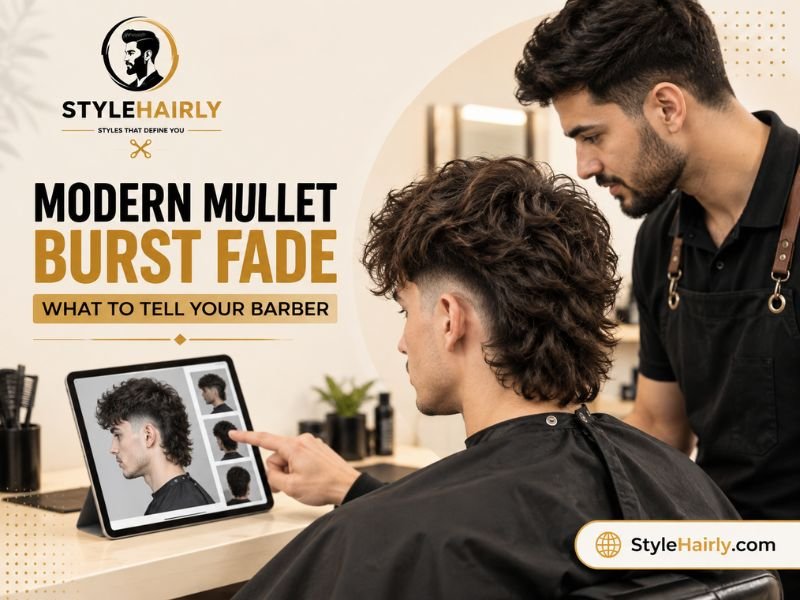
Bring a clear reference photo, since “burst fade” can be interpreted differently between barbers. Beyond that, it helps to specify:
- How close to the skin you want the fade to start (skin fade, low fade, or mid fade)
- How much length you want left on top and in the back mullet section
- Whether you want the burst to wrap fully around the ear or stay more contained to the front
- How much texture or thinning you want on the top to avoid bulk
- Anything you want avoided, such as an overly aggressive skin fade or too much length removed from the back
Taper Modern Mullet Burst Fade
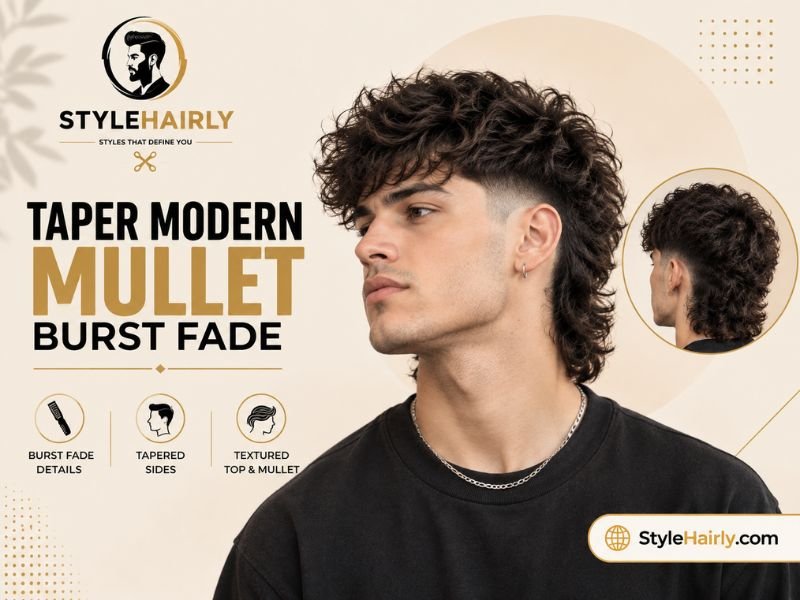
A taper burst fade mullet softens the transition by gradually shortening the hair rather than cutting it down to the skin. This version suits people who want the burst shape without the stark contrast of a full skin fade, and it tends to be more forgiving as it grows out. It works particularly well for more formal or professional settings where a very bold fade might feel out of place.
Best For: Workplaces with a more conservative dress code or anyone easing into fades for the first time Styling Tip: Keep the top slightly longer to balance the softer taper below it Maintenance: Needs a trim every 3 to 4 weeks since the gradual taper hides regrowth longer than a skin fade
Low Fade Modern Mullet Burst Fade
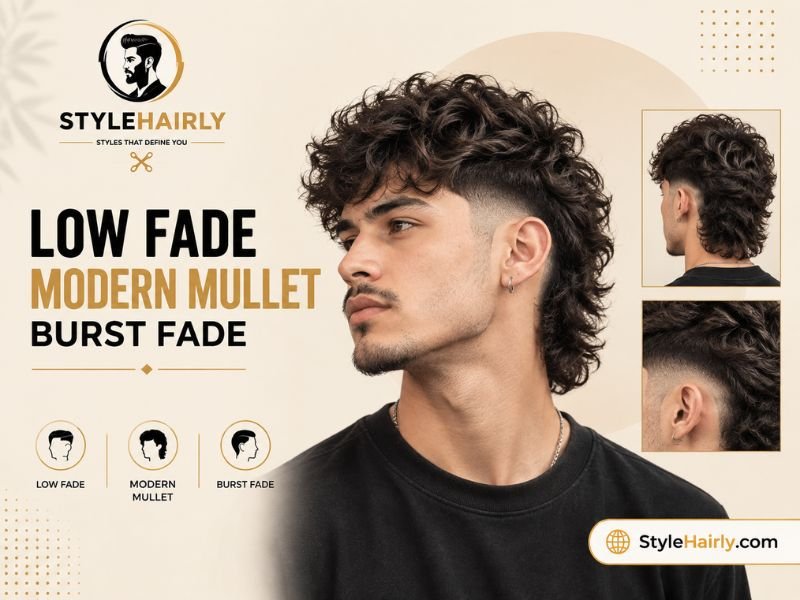
A low fade burst mullet keeps the fade starting close to the hairline and ears rather than higher up near the temple, leaving more length and density on the sides overall. This is a subtler take on the burst fade, appealing to people who like the curved detail around the ear but do not want a dramatic, high-contrast cut. It also tends to suit older or more mature client preferences that lean toward understated styling.
Best For: Anyone who wants a subtle fade with more coverage on the sides Styling Tip: A light matte product on top keeps the look understated rather than flashy Maintenance: Grows out more gracefully than a high fade, so touch-ups every 4 weeks are usually enough
Modern Mullet Skin Fade Burst Fade
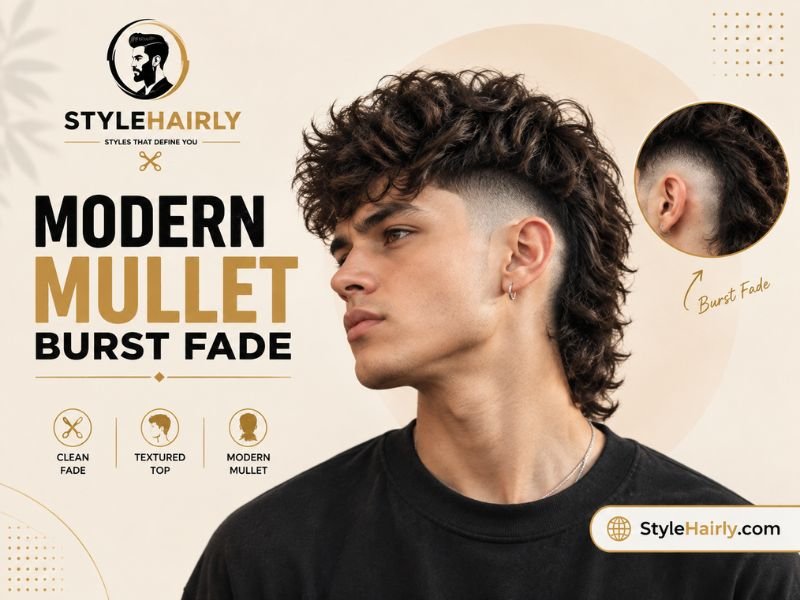
A skin fade burst mullet takes the contrast to its most dramatic point, fading all the way down to bare skin before curving around the ear. Paired with a longer mullet top, it creates one of the sharpest visual contrasts available within the burst fade family, since bare skin sits directly against noticeably longer hair. This version photographs well and reads as intentional and edgy, but it also shows regrowth the fastest of any fade height.
Best For: People who want maximum contrast and a bold, editorial look Styling Tip: Keep the top textured rather than sleek so the length doesn’t look disconnected from the bare sides Maintenance: Needs the most frequent upkeep, ideally every 2 weeks to keep the skin-level fade crisp
Modern Mullet Curly Burst Fade
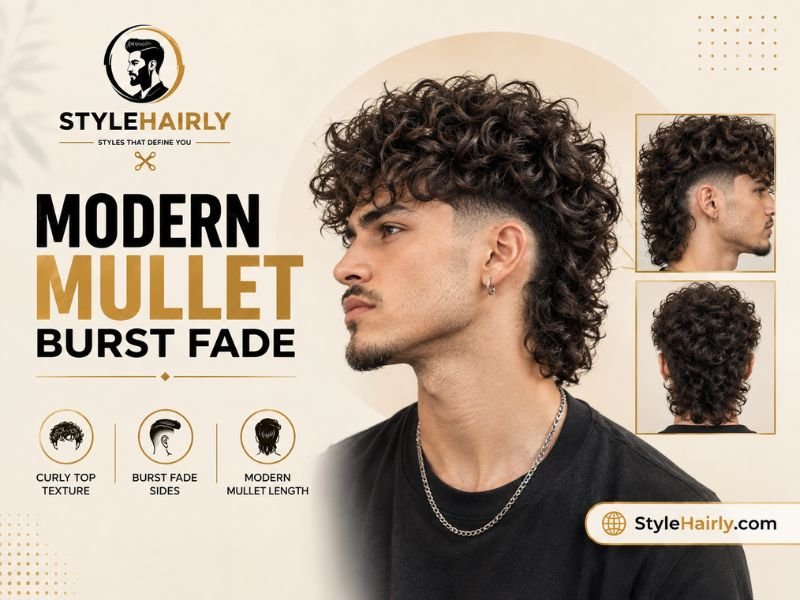
Curly hair adds natural volume and definition to the top and back of a burst fade mullet, and the curl pattern tends to camouflage some of the harder lines of the fade for a softer overall effect. Because curls shrink up as they dry, barbers often start the burst fade slightly higher on curly hair than they would on straight hair to account for that shrinkage once the curls settle.
Best For: Naturally curly or coily hair types wanting definition without heavy styling Styling Tip: Use a curl cream on damp hair and let it air dry or diffuse to avoid frizz Maintenance: Curl shrinkage means fades can look higher than intended within a couple of weeks, so slightly longer trim intervals of 4 weeks often work
Modern Mullet Straight Burst Fade
Straight hair shows off the clean geometry of a burst fade more clearly than any other texture, since there is no natural wave or curl to soften the lines. This makes precision especially important, as any unevenness in the curve around the ear will be visible. The top often benefits from point-cutting or texturizing to prevent it from looking like a flat, heavy slab of hair against the sharply defined fade.
Best For: Straight hair types who want a crisp, graphic fade line Styling Tip: Texturizing spray or clay helps break up straight hair’s tendency to sit flat and heavy Maintenance: Regrowth is very visible on straight hair, so trims every 2 to 3 weeks keep the line sharp
Modern Mullet Burst Textured Fade
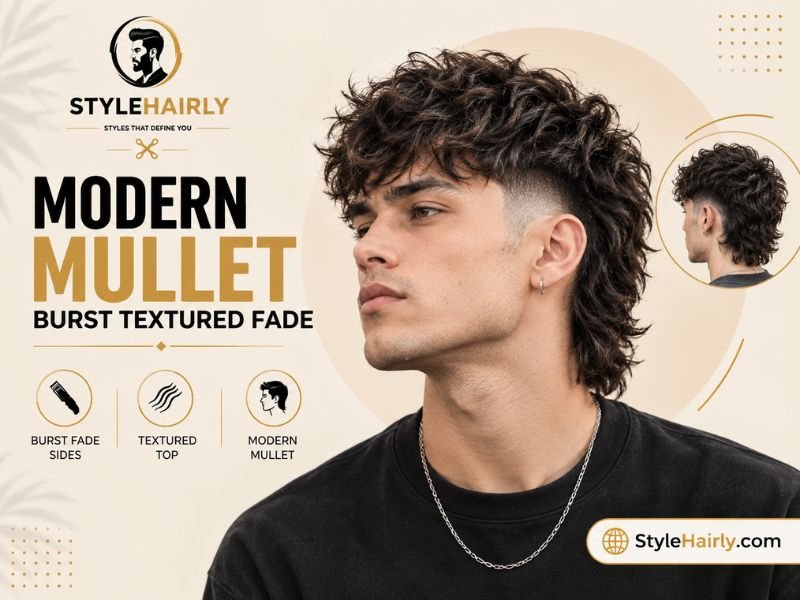
A textured burst fade mullet focuses on choppy, piece-y detailing throughout the top and back rather than a smooth, uniform finish. This version leans into a deliberately undone, lived-in look that contrasts with the precision of the fade itself, which is part of why it has become one of the more popular modern takes on the style. Texturizing scissors or a razor are typically used on top to create that broken-up movement.
Best For: Anyone who wants a fade with a more casual, less polished top section Styling Tip: Apply a matte texture paste and scrunch upward from the ends rather than combing smooth Maintenance: Textured tops hide slight regrowth better than sleek styles, so trims every 4 weeks are typically fine
Modern Mullet Burst Short Fade
A shorter version of this cut keeps both the fade and the top length more compact, resulting in a lower-maintenance style overall while still preserving the mullet’s signature longer back. It is a practical option for people who want the burst fade look without committing to the longer, more dramatic mullet lengths on top.
Best For: People wanting a manageable, easy-care take on the burst fade mullet Styling Tip: A small amount of pomade is usually enough since there is less length to control Maintenance: Shorter styles show regrowth faster on the fade but need less overall shaping, roughly every 3 weeks
Modern Mullet Burst Long Fade
The long version pushes the top and back length further, creating a more dramatic contrast between the sharply faded sides and a fuller, flowing mullet section. This variation is closer to the classic exaggerated mullet silhouette and tends to require more active styling to keep the longer sections from looking unshaped.
Best For: Those who want a bold, statement-making mullet with a defined fade Styling Tip: Blow-dry with a round brush to add shape and prevent the longer sections from falling flat Maintenance: The fade needs regular upkeep every 2 to 3 weeks, though the longer top can go longer between trims
Modern Mullet Wavy Burst Fade
Wavy hair sits in a middle ground between straight and curly, offering natural texture and movement that pairs well with the sculpted look of a burst fade. The waves add visual interest to the top and back without requiring heavy styling, and they tend to blend smoothly into the curved fade line without looking disconnected.
Best For: Naturally wavy hair that wants texture without full curl maintenance Styling Tip: A sea salt or texturizing spray enhances natural wave pattern without extra heat styling Maintenance: Waves hide regrowth reasonably well, so trims every 3 to 4 weeks usually keep the shape intact
Modern Mullet Asian Burst Fade
Asian hair is frequently thicker, straighter, and more resistant to holding curl or wave than other hair types, which affects how a burst fade mullet is cut and styled. Barbers often need to thin the top more aggressively to prevent it from looking bulky, and the fade itself may require extra blending work since dense, straight hair can create a harder line than the barber intends.
Best For: Thick, straight hair types looking for a fade that doesn’t feel overly heavy on top Styling Tip: A lightweight, low-shine cream helps manage thickness without adding unwanted weight Maintenance: Fast-growing, dense hair often needs fade touch-ups every 2 to 3 weeks to stay sharp
Modern Mullet Blonde Burst Fade
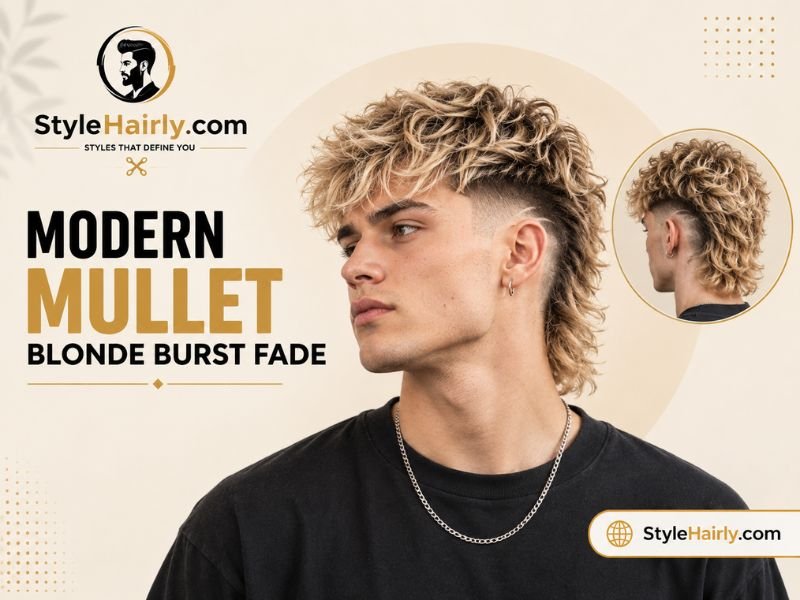
Adding blonde, whether through full bleaching or lighter money-piece highlights, increases the visual contrast between the faded sides and the lighter, longer top and back sections. This combination tends to draw more attention to the shape of the burst fade itself, since the lighter color makes the transition between short and long hair more visually distinct.
Best For: Anyone wanting extra dimension and a bolder overall look Styling Tip: Use color-safe styling products and a purple or toning shampoo periodically to prevent brassiness Maintenance: Color needs its own upkeep on top of fade maintenance, typically a root touch-up every 4 to 6 weeks alongside regular fade trims
Modern Mullet Messy Burst Fade
A messy burst fade mullet intentionally avoids a polished, combed finish on top, instead favoring a tousled, undone texture that contrasts against the precision of the fade below. This version has become popular because it feels less formal and more wearable day-to-day, since it does not require exact styling to look intentional.
Best For: Low-effort daily styling with a deliberately casual finish Styling Tip: Scrunch a texturizing paste through damp hair and let it air dry for natural, undone movement Maintenance: Forgiving between cuts since messiness hides minor regrowth, though the fade line itself still needs refreshing every 3 weeks
Modern Mullet Fluffy Burst Fade
The fluffy variation emphasizes volume and softness on top, often achieved by blow-drying the hair upward and outward rather than flattening it down. This creates a rounder, fuller silhouette on top that contrasts sharply with the close-cropped sides, and it tends to suit thicker or coarser hair types that can support extra volume without extra product.
Best For: Thicker hair types wanting a rounded, voluminous top Styling Tip: Blow-dry upward with a round brush and finish with a light-hold volumizing spray Maintenance: Regular trims every 3 to 4 weeks maintain the rounded shape and keep the fade from growing out unevenly
Modern Mullet Middle Part Burst Fade
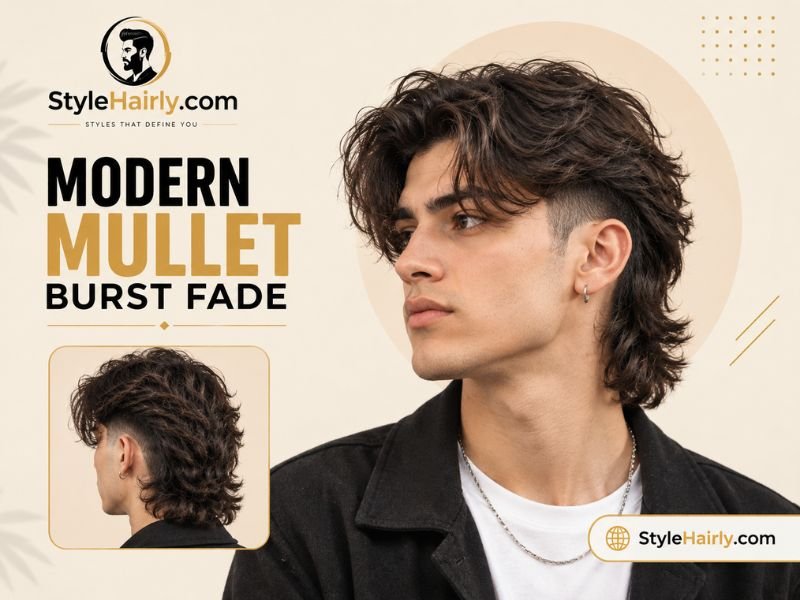
A middle part adds a distinctly modern, almost skater-influenced look to the burst fade mullet, splitting the top hair down the center and letting it fall to either side. This works best with hair that has enough length and either natural or styled flatness on top to hold a center part without flipping back into place.
Best For: Medium to long top lengths with straight to wavy texture Styling Tip: Use a fine-tooth comb to set the part while hair is damp, then let it air dry or diffuse to hold the shape Maintenance: The part itself needs no extra maintenance, but top length should be trimmed every 4 to 6 weeks to keep it from becoming too heavy
Modern Mullet Fringe Burst Fade
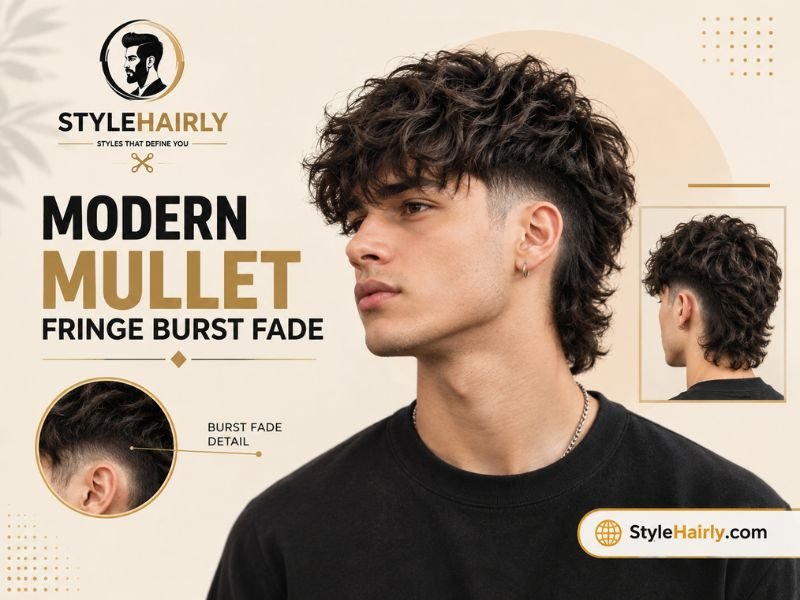
Adding a fringe brings the longer top hair forward over the forehead instead of pushing it back or to the sides, creating a softer frame around the face that pairs with the sharper burst fade below. This version tends to work well for people who want to partially cover the forehead or soften angular facial features.
Best For: Square or heart-shaped faces wanting a softer frame around the forehead Styling Tip: Blow-dry the fringe forward and downward while it is damp, then set with a light matte paste Maintenance: Fringes grow out quickly and can start falling into the eyes, so trims every 3 to 4 weeks keep the length manageable
Frequently Asked Questions
Is a burst fade mullet good for thin hair?
It can work, but a very low or skin-level fade next to thin top hair can exaggerate how sparse the top looks. A mid or low fade with a slightly fuller top usually looks more balanced on fine hair.
Does a burst fade mullet work on curly hair?
Yes, curly hair works well with this style. Barbers typically start the fade a bit higher to account for curl shrinkage once the hair dries and settles into its natural shape.
What face shape is best for a modern mullet burst fade?
Oval faces have the most flexibility, but round, square, heart, and long face shapes can all wear the style with adjustments to fade height and top volume, as covered in the face shape section above.
Is a modern mullet burst fade high maintenance?
It requires more frequent trims than a mullet without a fade, generally every 2 to 4 weeks depending on fade height, since fades grow out and lose their sharp shape faster than longer, looser sections of hair.
How do I style a burst fade mullet at home?
Apply product to damp hair, blow-dry the top and back for volume or texture using a heat protectant, then finish with a matte paste or clay while keeping the faded sides brushed flat, as detailed in the styling section above.
What should I ask my barber for?
Bring a reference photo and specify the fade height, how much top and back length to leave, whether the burst should wrap fully around the ear, and how much texture you want on top.
How long does a burst fade mullet last before it needs reshaping?
The fade itself typically needs a refresh every 2 to 3 weeks, while the longer top and back sections of the mullet can usually go 6 to 8 weeks before needing a full trim.
Can I get a burst fade mullet with a beard?
Yes, many barbers blend the burst fade into a beard fade for a more cohesive look, though this should be discussed directly with your barber since it affects how the fade curves around the ear and jawline.
Conclusion
A modern mullet burst fade works because the curved fade around the ear gives an otherwise loose, retro-inspired mullet a sharper, more deliberate finish. The right version for you depends mainly on hair texture, face shape, and how much contrast and maintenance you are willing to take on, from the low-key taper and low fade options to the bold, high-contrast skin fade. Whichever variation you choose, walking into the barbershop with a clear reference photo and specific instructions on fade height, top length, and texture is the most reliable way to get a result that actually matches what you pictured.

1 thought on “7 Modern Mullet Burst Fade Styles That Actually Work”