

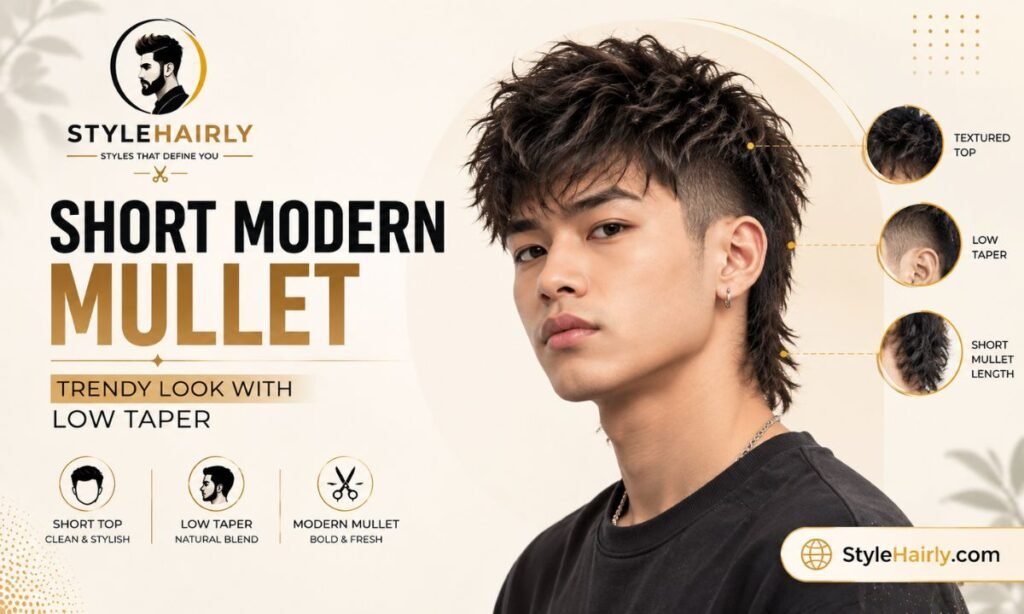
The short modern mullet has become one of the most requested cuts at barbershops right now, and for good reason. It gives you the attitude of a mullet without the commitment of a full one. The sides stay tight, the top carries texture, and just enough length survives at the back to keep the shape recognizable, without looking like a costume from another decade.
Most guides on this topic stop at showing you 50 photos and calling it a day. This one goes further. It covers how the cut actually behaves as it grows out, what it looks like on day two or three without a full restyle, how to avoid the most common barber miscommunications, and how to tell if it’s genuinely the right call for your hair and your workplace before you commit to it.
Short Modern Mullet at a Glance
| Feature | Details |
| Best for | Men wanting a distinctive style with low daily effort |
| Hair length needed | Short on top and sides, slightly longer at the back |
| Hair types | Straight, wavy, curly (with adjustments) |
| Maintenance | Trim every 4–6 weeks |
| Chair time | Roughly 20–40 minutes depending on detail work |
| Styling time | Usually under 5 minutes once you know your routine |
| Main feature | Tapered or faded sides with retained length at the nape |
What Is a Short Modern Mullet?
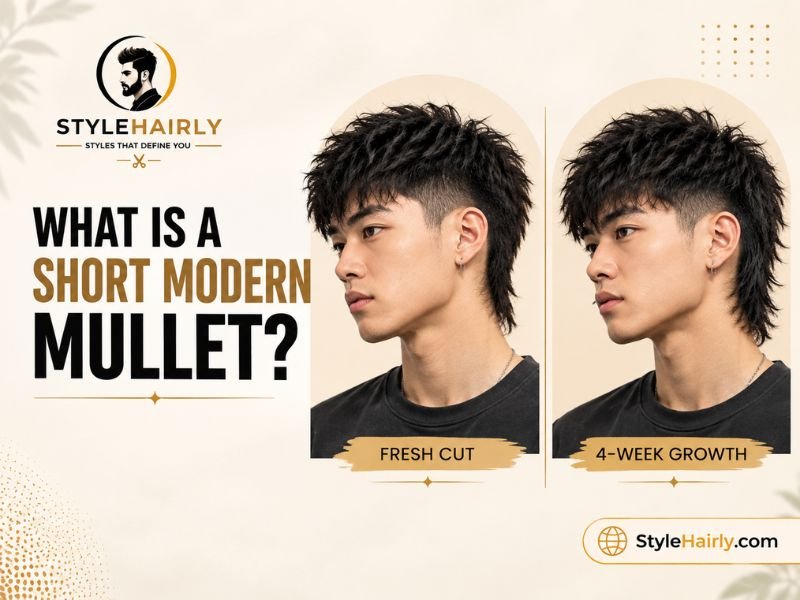
A short modern mullet takes the classic mullet’s short-front, long-back structure and tightens every part of it. The sides are tapered or faded, the top carries movement and texture, and the back keeps a modest amount of extra length rather than the dramatic drop seen in older mullets. Because the contrast is smaller, it reads as intentional rather than retro, which is why it moves more easily between casual and semi-formal settings than a traditional mullet ever could.
The part most guides skip is what happens between visits. Because the taper and the back length grow at different visual rates, the cut doesn’t stay static. In the first week or two after a fresh cut, the contrast is sharpest. By week three or four, the sides soften and the back starts to catch up in length, which actually makes the style look a little fuller and more blended. Most men find this middle stretch the easiest to style. It’s only past the five or six week mark that the shape starts to lose its definition and needs a trim.
Which Hair Types Work Best
Is a short modern mullet good for all hair types?
Yes, though the length and layering approach should shift depending on your texture and density.
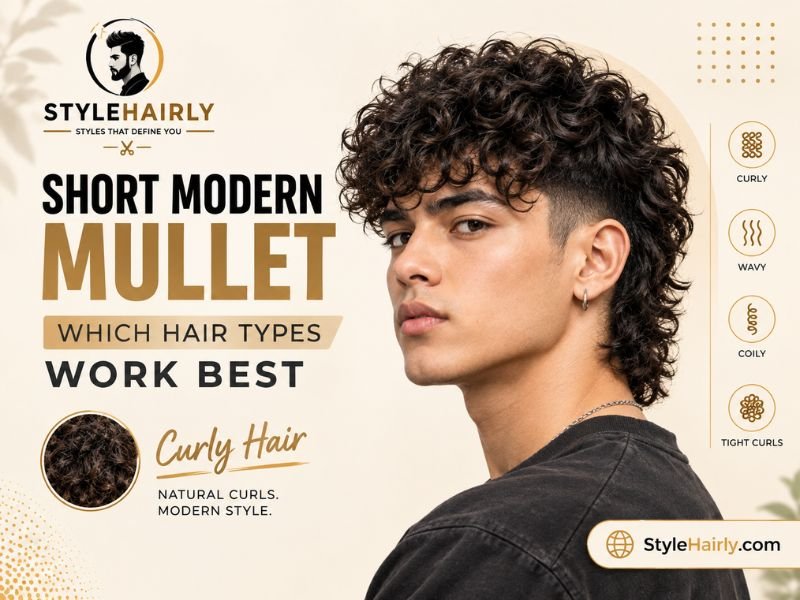
Straight hair shows the taper lines cleanly and holds a crisp shape, but tends to sit flat on top without a texturizing product. Wavy hair does a lot of the work by itself, since natural movement at the crown and back reduces how much product is needed. Curly hair looks great with this cut too, but curls shrink noticeably as they dry, sometimes by half an inch or more depending on curl pattern, so it’s worth asking your barber to leave visibly more length than you think you need, especially at the back where the mullet shape actually reads.
Density changes the approach as well. Thick hair can support a bolder length contrast and usually benefits from some internal thinning so the top doesn’t look bulky. Fine or thin hair tends to look better with shorter, lighter layering and a lower taper instead of a hard skin fade, since heavy contrast next to thin hair can make it look even sparser by comparison.
| Hair Type | Recommended Approach | Watch Out For |
| Straight | Clean taper, texturizing paste on top | Flat-looking crown without product |
| Wavy | Light layering, minimal product needed | Uneven wave pattern from front to back |
| Curly | Extra length left for shrinkage | Cut too short, losing the mullet shape once dry |
| Thick | Internal thinning to reduce bulk | Top looking heavy or boxy |
| Fine/Thin | Lower taper, lighter layering | Sparse look from too much contrast |
Which Face Shapes Suit This Cut
Which face shapes suit a short modern mullet best?
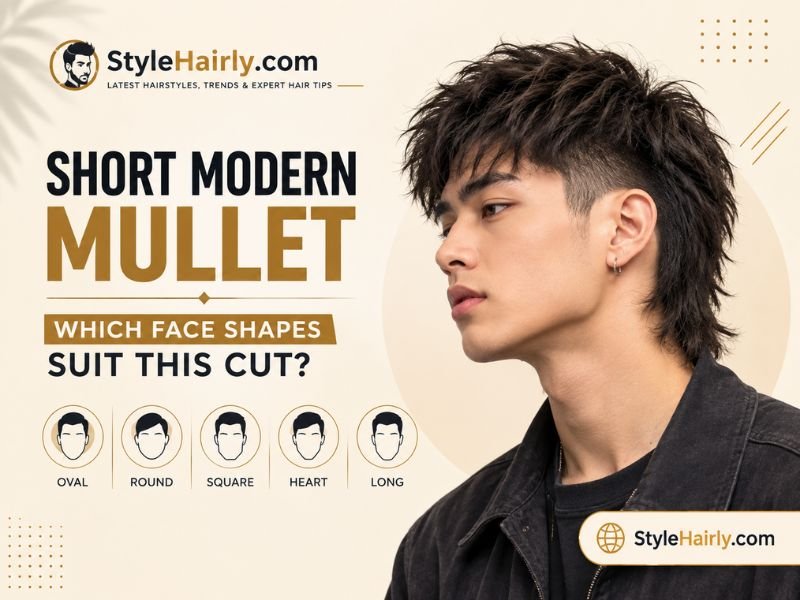
Oval and square face shapes tend to suit it with almost no adjustment, since balanced or angular proportions work naturally with the structured taper.
Round faces generally look better with more height built into the top to visually add length to the face. Diamond face shapes can soften sharper cheekbones with a slightly longer fringe piece at the front. Heart-shaped faces often benefit from a bit more width and texture at the sides to balance a narrower chin against a wider forehead. None of these are hard rules. A skilled barber can adjust proportions for almost any face shape, but knowing your starting point helps you have a more specific conversation in the chair.
Popular Variations Worth Knowing
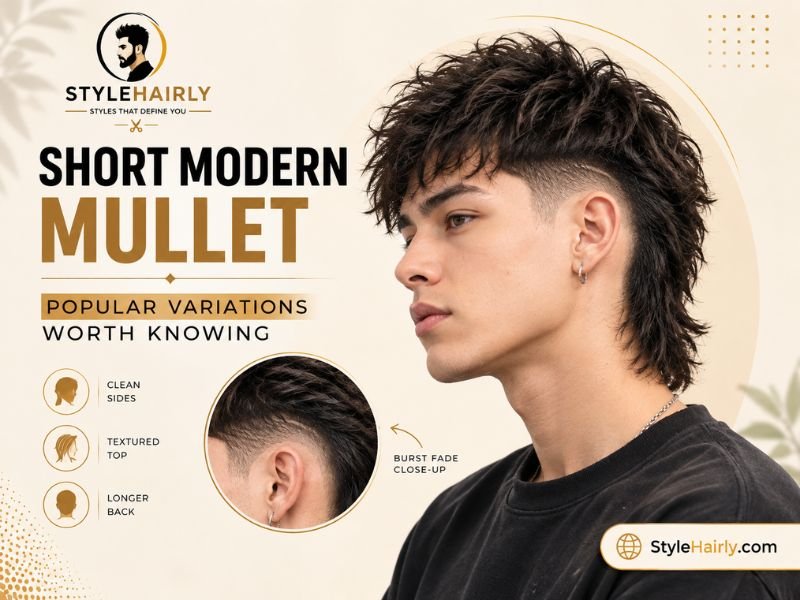
The short modern mullet works more like a category than a single fixed haircut, which is part of why it has stayed popular. A low taper mullet keeps the contrast subtle and tends to work best in conservative workplaces, while a burst fade mullet curves the fade around the ear for a more rounded, dynamic transition. A mid taper sits between the two, offering visible contrast without going as sharp as a full skin fade.
For texture-driven looks, a textured or messy short modern mullet relies on point cutting and a matte product for a choppy, undone finish, while a version with a fringe adds a forward-swept piece at the front for a softer overall look. Curly and wavy modern mullets lean into natural texture instead of fighting it with heat tools. A blonde or color-treated short modern mullet uses contrast to highlight the layering itself, and a more professional short modern mullet keeps proportions tighter with a shorter back length for anyone who needs the cut to read as neat in a formal environment.
How to Style It, Including Second and Third Day Hair
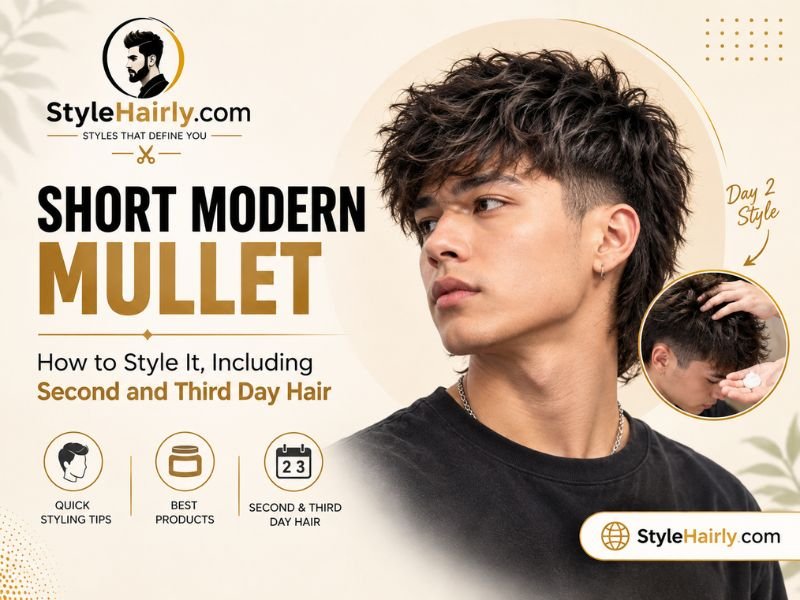
Styling a fresh short modern mullet is fairly quick. Start with damp, towel-dried hair rather than soaking wet, since wet hair is harder to control. Apply a heat protectant if you’re blow-drying, then work in a small amount of product depending on the finish you want: a matte clay for texture, a light sea salt spray for natural volume, or a pomade for a slicked-back look. Curly versions do better with a curl cream that defines rather than a heavier paste that weighs curls down. Use your fingers or a wide-tooth comb to shape the top, then check the back, since that section is what actually reads as the mullet.
What most guides leave out is how the style behaves after day one. On day two, hair usually has slightly more natural texture and holds product better than freshly washed hair, so a light spray of dry shampoo at the roots and a quick finger-comb is often all that’s needed. By day three, the back section may start looking slightly looser. A small amount of pomade or clay reapplied just to the back and crown can revive the shape without a full restyle.
Common Styling Mistakes
The most frequent mistake is using too much product on top, which flattens texture instead of enhancing it. Other issues to watch for include skipping heat protectant before blow-drying, not being specific enough with the barber about how much length to leave at the back, over-texturizing fine hair until it looks thin rather than full, and letting the cut grow out past six weeks, which causes the taper and the back to blend together and lose the mullet’s defining shape.
Talking to Your Barber Without Miscommunication
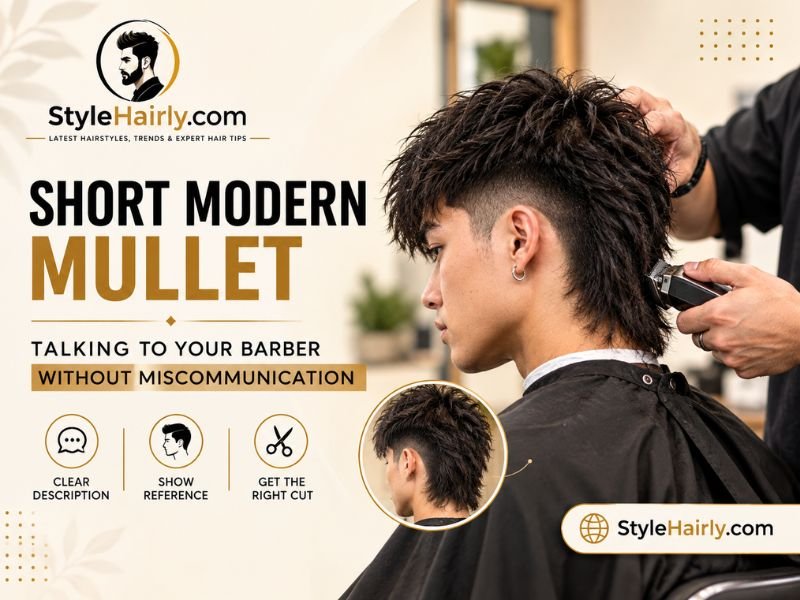
A lot of disappointing results with this cut come down to vague instructions rather than a bad cut. Saying “I want a short mullet” leaves too much open to interpretation, since one barber’s short mullet might be another’s regular taper with a slightly longer nape.
Be specific about the guard number or length for the sides, for example a number 2 or 3. State clearly how much extra length should stay at the back in relative terms, such as “about an inch longer than the sides” rather than just “a little longer.” Clarify whether you want a taper or a full skin fade, how much texture should be left on top, and how you plan to style it day to day, since that affects how the layers are cut. If you have curly or coily hair, mention that you want extra length accounted for shrinkage before the barber starts cutting, not after.
A reference photo helps enormously, but only if it’s close to your actual hair type. Bringing a photo of a straight-haired model when you have thick curly hair often leads to a result that doesn’t match what you pictured, since the same length looks completely different across textures.
Maintenance and Aftercare
Most people need a trim every four to six weeks to keep the fade or taper line clean, though this varies with how fast your hair grows and how sharp you want the lines to stay. Because the back section is more exposed to daily friction from collars and jacket zippers, using a shampoo suited to your hair type and doing occasional deep conditioning helps keep it from drying out or becoming brittle.
One detail competitors rarely mention: freshly faded or tapered necklines can be sensitive for the first day or two, particularly for men with sensitive skin. A gentle, fragrance-free aftershave balm on the nape can reduce irritation, and it’s worth avoiding tight collars right after a fresh cut if your skin tends to react to close clipper work.
Cost and Time Expectations
Pricing varies significantly by region and barbershop tier, but a short modern mullet typically takes longer in the chair than a basic short haircut because of the detail work involved in blending the taper into the longer back section. Expect somewhere in the range of 20 to 40 minutes for the cut itself, and mention to your barber upfront that you’re looking for mullet-specific shaping, since some walk-in barbershops default to a standard fade unless asked otherwise.
Pros and Cons
Pros
- A modern, wearable update to a retro style
- Adapts across straight, wavy, and curly hair with adjustments
- Faster daily styling than longer mullet variations
- Works across casual and semi-formal settings
- Looks intentional even as it grows out, unlike some fades that need constant upkeep
Cons
- Needs more frequent trims than a basic short haircut to keep the fade line sharp
- Curly hair requires extra planning around shrinkage before the first cut
- Fine hair needs a lighter hand with product and layering
- Not every workplace or school environment is equally receptive to the silhouette
- Freshly faded necklines can feel sensitive for a day or two
Is It Workplace Appropriate?
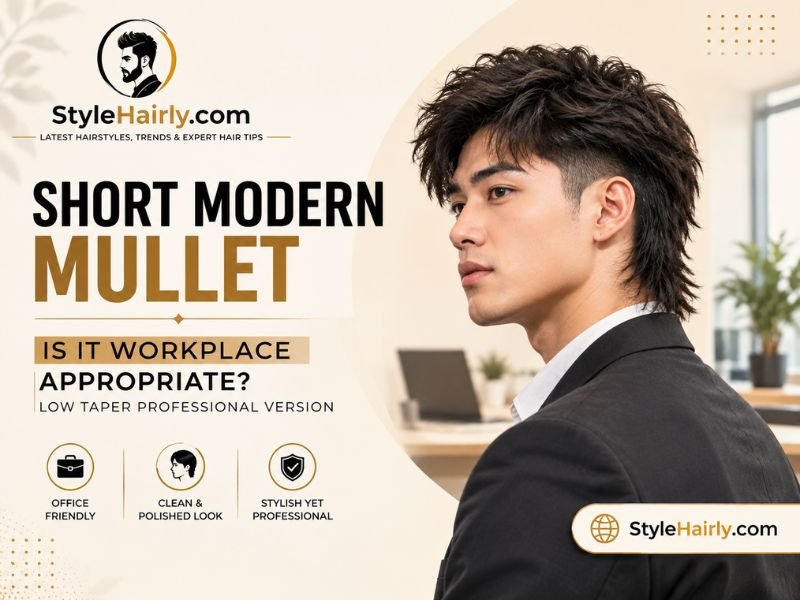
This depends heavily on the specific workplace rather than the haircut itself. A low taper version with a shorter, more subtle back length tends to read as neat and professional in most office environments. A bolder burst fade or a longer, more visible mullet shape leans more toward creative industries, hospitality, or casual workplaces. If you’re unsure, it’s worth asking your barber for the more conservative version first. It’s easier to grow into a bolder mullet later than to explain a dramatic one in a conservative office the week after getting it.
How It Compares to Similar Cuts
| Style | Key Difference |
| Modern mullet | Leaves more overall length, especially at the back |
| Burst fade mullet | Uses a rounded fade around the ear for a bolder transition |
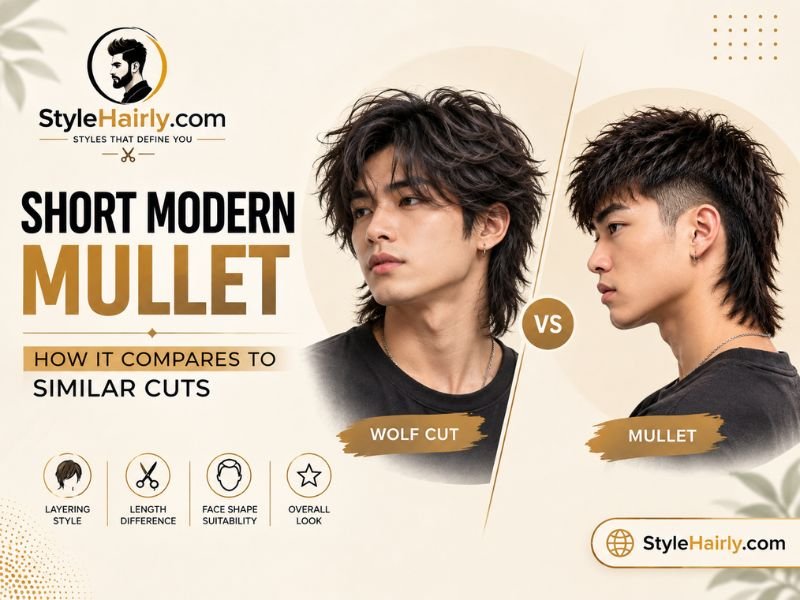
| Wolf cut | Combines shaggy layering throughout with mullet-length hair at the back |
| Taper fade mullet | Refers specifically to a gradual fade technique on the sides |
| Low fade mullet | Keeps the fade line closer to the ear for a subtler, more conservative look |
| Classic mullet | Longer, less blended sides with a much bigger overall length contrast |
Compared to the wolf cut specifically, the short modern mullet stays cleaner and more defined, since the wolf cut leans into shagginess across the entire head rather than concentrating contrast between the sides and the back.
Is It Worth Getting?
A short modern mullet is worth considering if you want a haircut that stands out slightly without demanding a large daily time investment, and if your workplace or school environment leaves some room for personal style. It adapts to most hair types and face shapes with the right adjustments, though it does ask more of your trim schedule than a standard short haircut. If you’re on the fence, starting with a low taper version gives you most of the look with the least commitment, since it’s easier to grow into something bolder later than to walk it back immediately.
Frequently Asked Questions
Is a short modern mullet good for thin hair?
Yes, though it works best with lighter layering and a shorter back length so it doesn’t look sparse. Heavy texturizing products are usually best avoided on fine hair, since they can make it look flat rather than full.
Does it work on curly hair?
Yes. Since curls shrink noticeably as they dry, it’s worth asking your barber to leave extra length at the back and top before the first cut, so the mullet shape still reads once your hair is fully dry.
What face shape suits it best?
Oval and square face shapes tend to suit it with minimal adjustment. Round faces often look better with added height on top, and diamond or heart-shaped faces can be balanced with fringe length or extra side texture.
Is it high maintenance?
It needs more frequent trims than a basic short cut, typically every four to six weeks, to keep the fade or taper defined. Daily styling itself is usually quick, especially by the second or third day.
How do I style it on day two or three without washing it again?
A light dry shampoo at the roots followed by a small amount of pomade or clay reapplied to the back and crown usually revives the shape without needing a full restyle.
What should I tell my barber to avoid a bad result?
Give a specific guard number for the sides, describe the back length in relative terms like “an inch longer,” and clarify whether you want a taper or a fade. Mention your hair type, especially if it’s curly, so shrinkage gets accounted for.
How long does it last before needing a trim?
Usually four to six weeks, depending on hair growth rate and how sharp you want the lines to stay. Past six weeks, the taper and back length tend to blend together and lose definition.
Is it appropriate for an office job?
A low taper version with a shorter back length generally reads as professional in most offices. Bolder versions like a longer burst fade mullet lean more casual or creative, so it’s worth matching the style to your specific workplace culture.
Final Thoughts
The short modern mullet earns its popularity by being genuinely practical, not just trendy. It adapts across hair types and face shapes with the right adjustments, holds its shape reasonably well between trims, and gives you room to dial the boldness up or down depending on where you’re wearing it. The details that actually determine whether you’ll be happy with it, like how you communicate the back length to your barber and how you handle it on day two or three, matter more than which of the dozens of variations you pick.

1 thought on “9 Short Modern Mullet Tips Barbers Rarely Explain”