

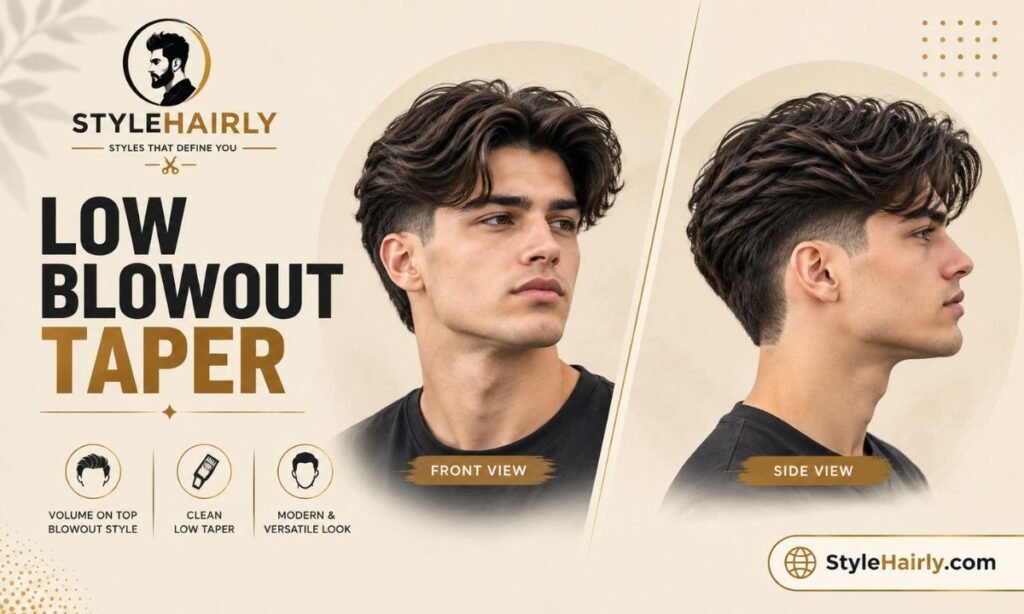
If you want a fade that doesn’t scream for attention but still keeps your hair looking sharp between visits, the low blowout taper is worth understanding before your next barber appointment. It sits close to the natural hairline, which is exactly why it tends to age better between cuts than fades that start higher up.
A low blowout taper is a gradual fade that begins just above the ears and neckline, blending short hair at the bottom into longer hair on top with a soft, barely-there transition. It works because the fade line stays low enough that new growth doesn’t create an obvious gap, which is the main complaint people have with higher tapers and fades.
This guide covers what makes a low blowout taper different from a mid or high fade, which hair types and face shapes it suits best, how to style and maintain it, and exactly what to say to your barber so you leave with the version you actually wanted.
Low Blowout Taper at a Glance
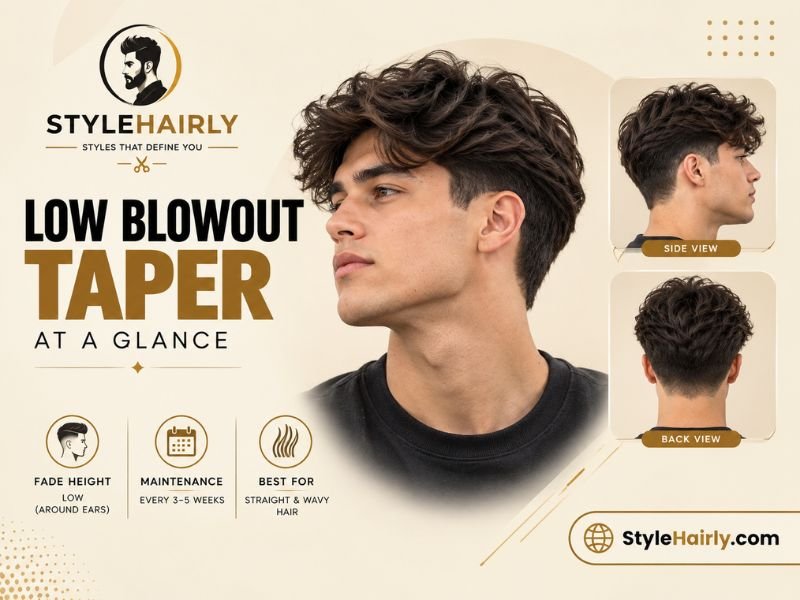
| Feature | Details |
| Fade starting point | Just above the ears and around the neckline |
| Best for | Straight to wavy hair, business or low-maintenance looks |
| Hair length on top | Medium to long, left mostly untouched |
| Maintenance | Lower than mid or high fades |
| Styling effort | Minimal, works with natural texture |
| Main appeal | Grows out without an obvious hard line |
What Is a Low Blowout Taper?
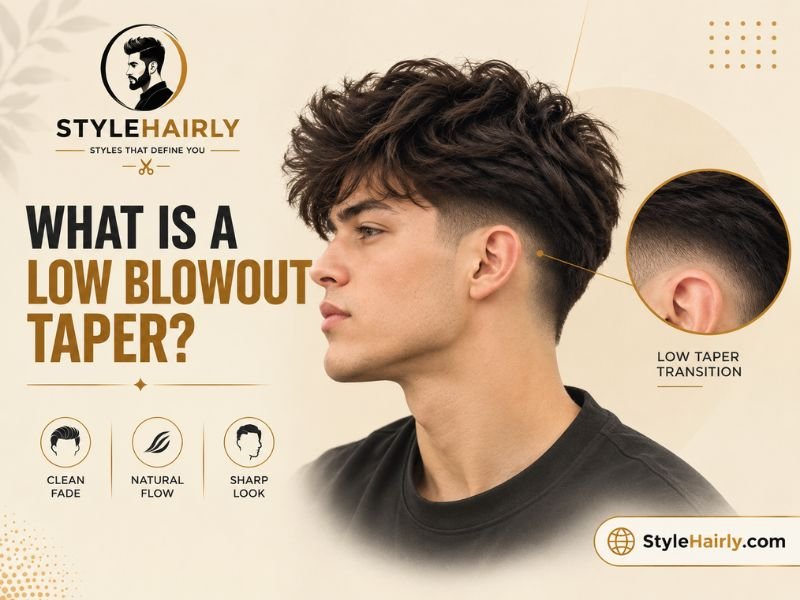
A low blowout taper keeps the fade contained to a narrow band around the bottom of the head. The sides and back go from very short to a soft blend within an inch or two, and the top length is left long enough to comb, brush, or blow out into place, which is where the “blowout” part of the name comes from. Unlike a skin fade or a high taper, there’s no dramatic contrast between short and long sections, so the cut reads as neat rather than styled.
The low placement is the entire point. Because the fade sits so close to the natural hairline, the transition zone between cuts is much smaller than it is with a mid or high taper. That means fewer trips to the barber if you’re trying to stretch out appointments, and less visible regrowth in the weeks after a fresh cut.
One practical detail worth knowing before your appointment: the blowout on top generally needs at least two to three inches of length to work properly. Shorter than that, and there isn’t enough hair for a brush and blow dryer to create real lift, so the top will look more like a standard taper than a blowout.
Hair Type and Texture Suitability
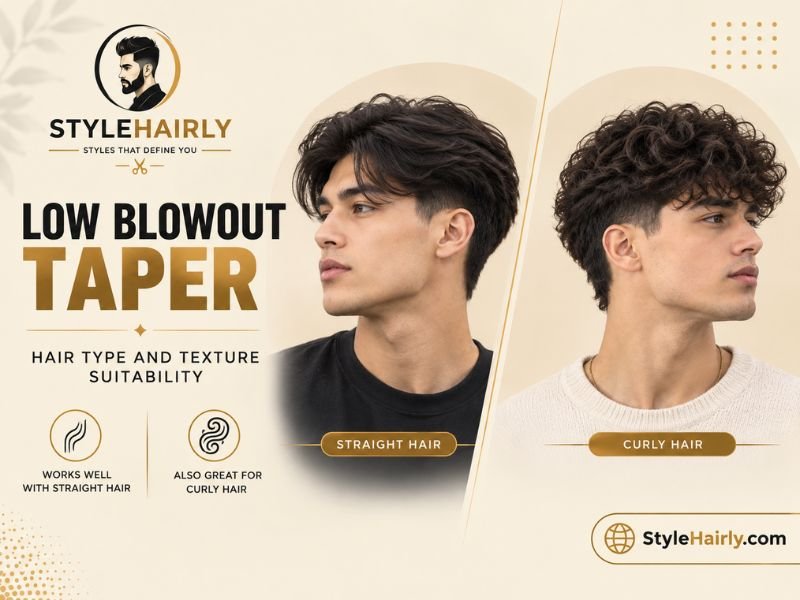
Straight and wavy hair usually show off a low blowout taper most clearly, since the smoother texture makes the gradual blend easy to see and the top section easy to style with a brush or comb. Thick, straight hair holds the blowout shape well without much product.
Curly and coily hair can still wear a low blowout taper, but the fade itself will read differently. Tight curls tend to shrink up and compress the transition, so a barber may need to cut the fade slightly tighter to keep it visible once the curl pattern settles. If you have coarse or curly hair and want the fade to stay noticeable, mention that to your barber so they can adjust the blend accordingly.
Fine hair generally works well with this cut because the low fade doesn’t require heavy volume to look finished. Thicker or coarser hair may need occasional thinning on top so the blowout style doesn’t sit too heavy or block-like.
Face Shape Suitability
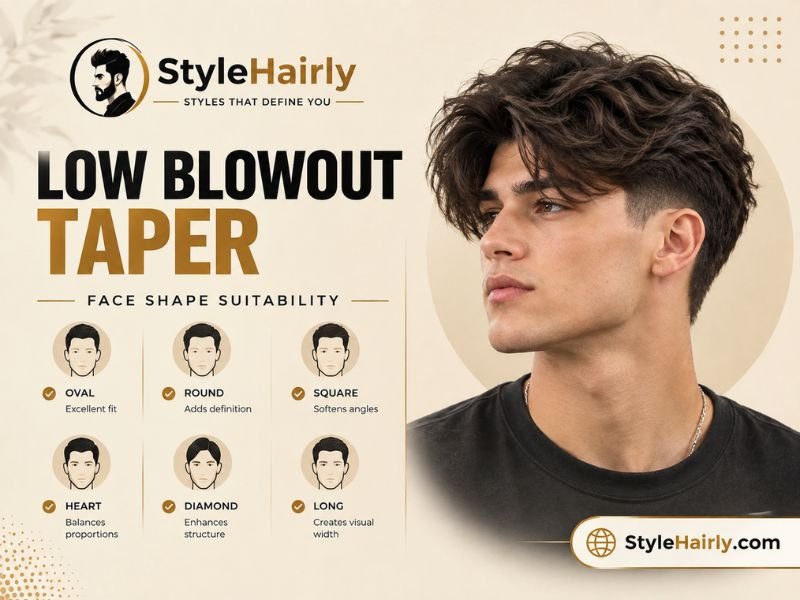
A low blowout taper is fairly forgiving because it doesn’t add height or width the way a pompadour or high fade does. It tends to work particularly well for round or square faces, since keeping the sides tight without drawing the eye upward avoids adding extra visual width.
For longer or narrower face shapes, a bit of volume or a slight side part on top can balance the low, tight sides so the face doesn’t look elongated. This isn’t a strict rule, since layer placement and personal preference matter as much as face shape, but it’s a useful starting point when discussing the cut with your barber.
Low Blowout Taper vs Low Fade
These two terms get mixed up constantly, even in barbershops. A low blowout taper uses graduated clipper guards the whole way down, so the sides never reach bare skin, just very short hair blending into longer hair. A low fade, by contrast, tapers all the way to skin at the base before blending upward.
The practical difference shows up in maintenance and appearance. A fade gives sharper, more defined contrast but grows out faster since skin becomes visible hair within a week or two. A taper’s softer transition means it holds its shape longer and hides regrowth more effectively, which is a big part of why it pairs so well with a low, low-maintenance placement. If you want the subtlest possible look with the least upkeep, ask specifically for a taper rather than a fade, since the two names are not interchangeable even though people use them that way.
Styling and Maintenance
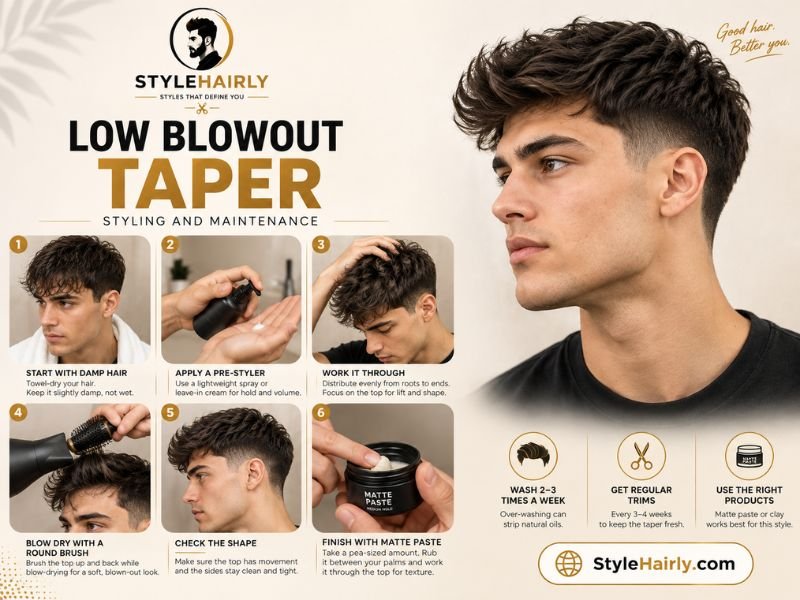
Styling a low blowout taper at home is straightforward because most of the visual interest lives in the fade itself rather than an elaborate top style.
- Start with damp, towel-dried hair. Avoid dripping wet hair since it takes longer to set and can flatten the shape.
- Apply a lightweight styling product, such as a sea salt spray, light pomade, or volumizing mousse, depending on whether you want texture, shine, or lift.
- Blow-dry with a round or paddle brush, lifting the roots at the crown if you want more volume, or brushing hair forward or to the side if you prefer a flatter, more natural finish. Always use a heat protectant spray before applying direct heat to reduce damage.
- Comb or finger-style the fade area so the transition blends smoothly into the top section rather than sitting as two separate zones.
- Finish with a small amount of matte paste or light hold spray if you want the style to hold through the day without looking stiff.
For maintenance, a low blowout taper typically needs a full trim every three to four weeks to keep the taper line clean. Many people also get a quick neckline and edge touch-up around the two-week mark, which resets the sharpest part of the cut without requiring a full reshaping appointment. This two-step rhythm, a full cut roughly monthly with a light cleanup in between, is what keeps the style looking intentional the entire time rather than sharp for one week and soft for the next three.
Pros and Cons
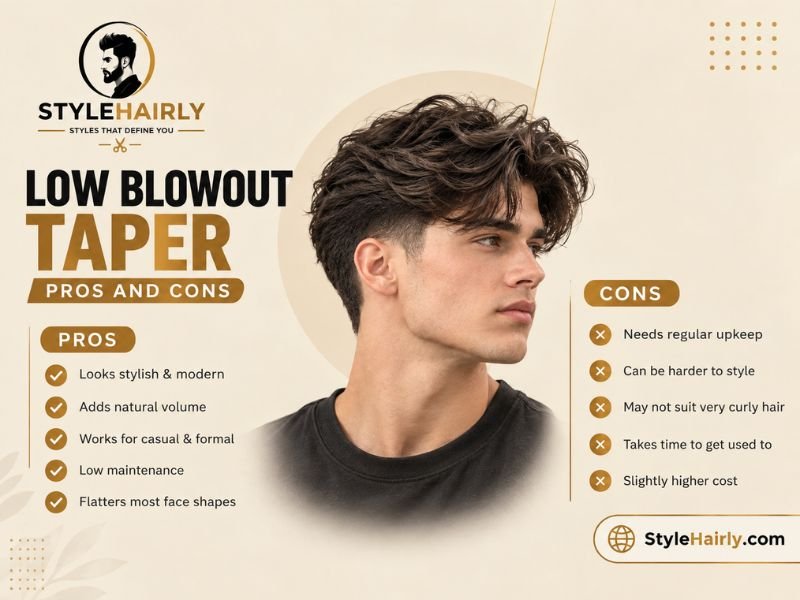
Pros
- Grows out gradually, so there’s no harsh line once new hair starts coming in
- Works with a wide range of hair textures and lengths on top
- Lower maintenance than mid or high fades, with longer gaps possible between trims
- Suits both casual and professional settings without looking overly styled
Cons
- The fade is subtle enough that it may not stand out on very dark, dense hair without careful blending
- Curly or coily textures may need extra attention to keep the transition visible
- Doesn’t offer the same dramatic, high-contrast look that a skin fade or high taper provides
What Makes a Low Blowout Taper Different
The defining feature of a low blowout taper is where the fade actually starts. Because it stays close to the ears and neckline instead of climbing up the sides, it avoids the sharp, high-contrast look associated with skin fades or high tapers. This makes it a practical option for anyone who wants a clean, barbered finish without a style that needs constant upkeep to look intentional.
Low Blowout Taper vs Mid and High Taper
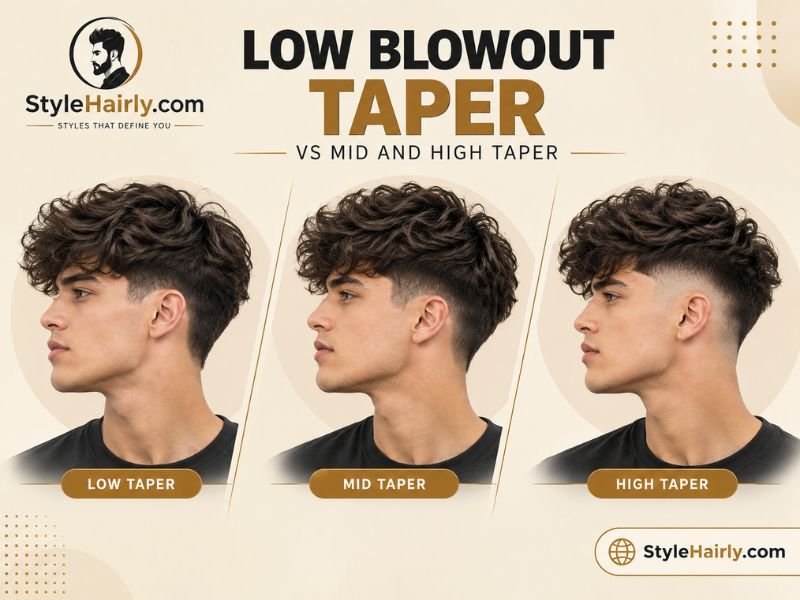
| Feature | Low Taper | Mid Taper | High Taper |
| Fade start point | Above ears, at neckline | Between ear and temple | Near the temple or higher |
| Visual contrast | Subtle | Moderate | Strong |
| Regrowth visibility | Low | Moderate | Higher |
| Trim frequency | Every 3-5 weeks | Every 2-4 weeks | Every 2-3 weeks |
| Best suited for | Business, low-maintenance looks | Balanced, versatile styling | Bold, statement styles |
A mid taper starts higher and creates more visible contrast between the short and long sections, which suits people who want a more defined shape without going too bold. A high taper pushes that contrast even further up the head, closer to a high fade, and needs more frequent trims to stay sharp. If you want the lowest-maintenance option of the three while still having a defined fade, the low version is generally the easiest to live with.
Who the Low Blowout Taper Suits Best
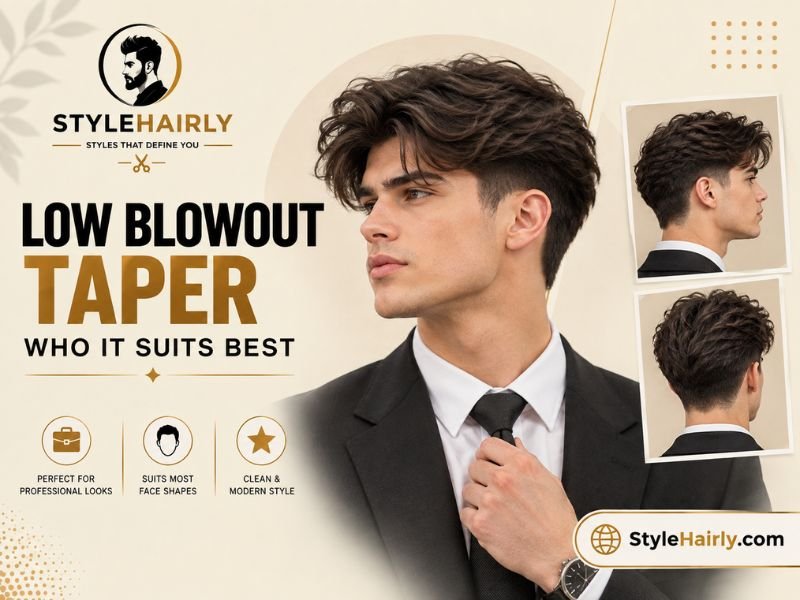
This cut tends to suit people who want a polished look for work or everyday wear without spending much time styling each morning. It’s also a solid choice for anyone growing out a shorter fade, since the low placement makes the in-between stages far less noticeable.
Straight and wavy hair types, along with round, square, or oval face shapes, often get the cleanest results, though a skilled barber can adapt the blend for most hair textures and face shapes with small adjustments to layer placement.
When to Choose a Different Height
A mid or high taper may be a better fit if you want more visible contrast or a bolder overall look, especially if you’re pairing the fade with a textured or voluminous top style that benefits from a sharper base. People with very short hair overall, or those who want the fade itself to be a focal point rather than a subtle detail, often lean toward a higher placement.
If your hair is extremely curly or coily and you’re worried the low fade will disappear into the curl pattern, a mid taper can offer more visible definition without requiring dramatically different maintenance.
How to Ask for a Low Blowout Taper
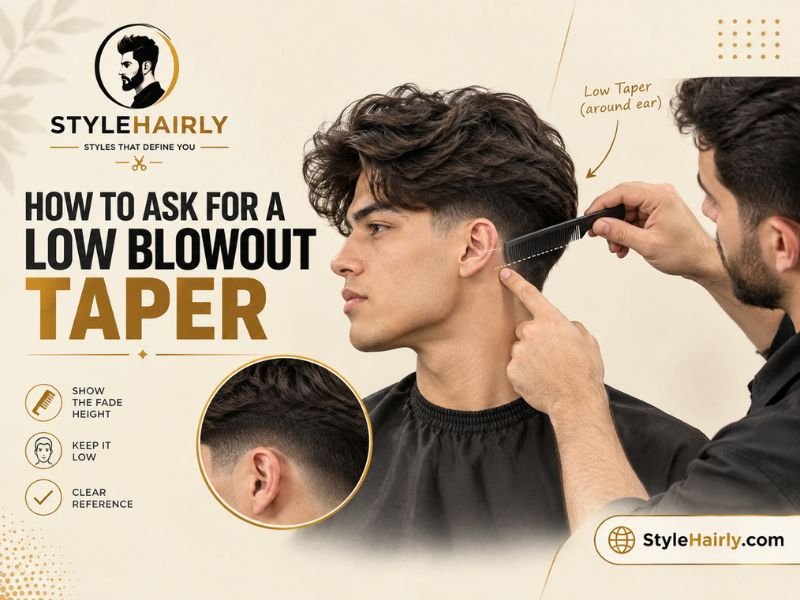
Clear communication with your barber makes the biggest difference in getting the result you want. Bring a reference photo if possible, and be specific about these points:
- “I want the fade to start low, right above my ears and around the back of my neck.”
- Mention how much length you want left on top for a blowout style, such as two to three inches.
- Let them know if you want more or less contrast in the blend.
- Say whether you want the sides tapered with scissors, clippers, or a combination, since this affects how soft or crisp the fade looks.
- Ask them to keep enough length at the crown if you want volume when blow-drying.
- If you have straight hair, specifically ask them to remove some internal weight from the lower sides. This is a small request that prevents the top from pushing outward instead of lifting up once you blow-dry it.
Avoid vague requests like “just clean it up,” since that leaves too much room for interpretation and can result in a fade that’s higher or more aggressive than intended.
Common Mistakes to Avoid
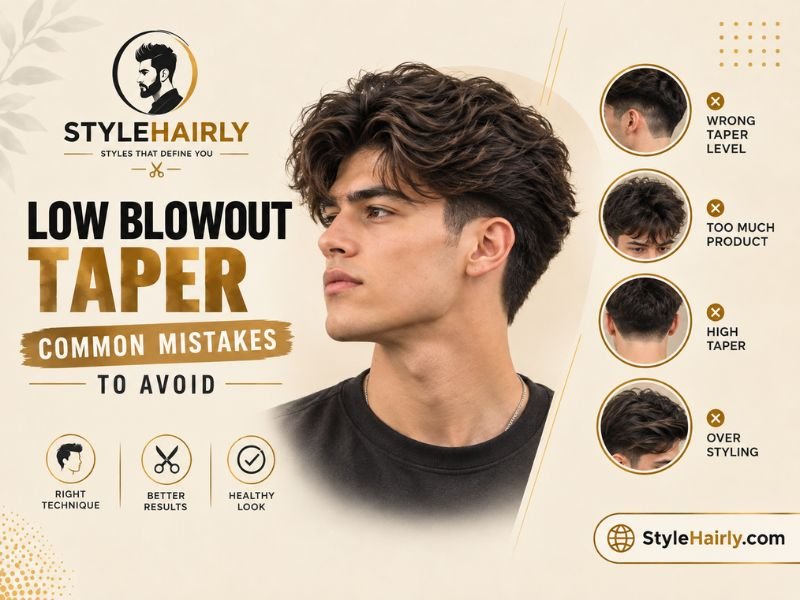
A few habits tend to shorten the life of a low blowout taper or make it harder to style at home.
- Skipping heat protectant before blow-drying, which can dry out the top section over time
- Waiting too long between trims, which allows the neckline to lose its clean shape even if the top fade still looks fine
- Using too much heavy product, which weighs down the blowout and flattens the volume it’s meant to create
- Not communicating fade height clearly, which is the most common reason people end up with a mid or high taper instead of the low version they wanted
- Leaving too much internal bulk on straight hair, which causes the top to puff outward into a wide, rounded “mushroom” shape instead of lifting up when blow-dried. Asking your barber to remove weight, not length, from underneath usually fixes this
How Often You’ll Need a Trim
Most people can stretch a low blowout taper to three or four weeks before the fade starts to look grown out, and some can go closer to five weeks if the neckline is kept tidy with occasional at-home clipper touch-ups. This is one of the main reasons people choose the low placement over a mid or high fade, since the longer gap between visits fits more easily into a busy schedule.
Frequently Asked Questions
Is a low blowout taper good for thick hair?
Yes, thick hair generally works well with a low blowout taper since there’s enough density on top to create volume during styling. Occasional thinning may help if the top feels too heavy or block-like.
Does a low blowout taper work on curly hair?
It can, though curly or coily hair may compress the fade visually once the curls settle into their natural pattern. Letting your barber know you have curly hair helps them adjust the blend so it stays visible.
How long does a low blowout taper last before it needs reshaping?
Most people can go three to five weeks before the fade needs a refresh, which is longer than the typical window for mid or high tapers.
Can I style a low blowout taper without heat tools?
Yes, air-drying with a light styling product and finger-styling the top section works fine for a more natural, low-effort look. Heat styling simply gives more lift and shape if that’s the finish you want.
Is a low blowout taper high maintenance?
No, it’s one of the lower-maintenance fade options because the subtle blend hides regrowth better than higher placements, meaning fewer trips to the barber.
What should I tell my barber for a low blowout taper?
Ask specifically for the fade to start above your ears and around the neckline, specify how much length to leave on top, and mention your preferred level of contrast in the blend.
What is the difference between a low taper and a low fade?
A low taper blends the sides using graduated clipper guards without ever reaching bare skin, while a low fade tapers all the way down to skin before blending upward. Tapers tend to hold their shape longer and hide regrowth better, while fades give sharper, more defined contrast.
What face shapes suit a low blowout taper best?
Round and square face shapes often benefit most since the low, tight sides avoid adding extra width, though most face shapes can wear this cut with small adjustments to the top length and volume.
Conclusion
A low blowout taper is a practical choice if you want a clean, barbered fade that doesn’t demand constant upkeep. Because the blend sits close to the natural hairline, regrowth is far less noticeable than it is with mid or high tapers, which means longer stretches between trims and fewer awkward in-between stages. The best results come from clear communication with your barber about fade height, top length, and how much contrast you want, along with a simple styling routine using heat protectant and a lightweight product. If you want more visible contrast or a bolder statement, a mid or high taper might suit you better, but for a low-maintenance, versatile everyday cut, the low blowout taper is hard to beat.

1 thought on “Low Blowout Taper: 3 Best Tips for a Cut That Grows Out Clean”